The seemingly invincible Andy Divine pronounces on Sanders, as if it were holy writ. While Sarah Jones offers the ‘Super Delegates’ as the potential usurpers of the Sanders Insurgency. Old Socialist comments

Mr. Divine leaves aside his usual political hysteria, in favor of an invidious comparison of Sanders with Jeremy Corbyn. Eliding from his narrative that Corbyn lost that election by not supporting Brexit, to engage in reductivism. Such was Corbyn’s political miscalculation. Mr. Divine resorts to an utterly weak sarcasm, that loses its rhetorical force, the further the reader goes in the body of his polemic.

Headline: Bernie Sanders the American Version of Jeremy Corbyn? Gulp.

With Bernie Sanders’s relentless rise, the specter of Jeremy Corbyn now hangs over the Democratic race. At times, it’s uncanny how similar the two left-populist leaders are. An outlier long at odds with his party’s establishment? Check. A legislator with decades of voting who has almost no legislation to call his own? Yep. A 70-something beloved by 20-somethings? Check. An insurgent movement with cultish overtones that took over the party from more moderate figures? Yes. A more left-wing platform than any in his party’s history? Uh-huh. A man with many, many embarrassing connections in the past with hard-left figures across the globe? Oh yeah. Someone who hasn’t changed his mind on almost anything since the 1970s? Pretty much. Some highly unsavory hangers-on and followers? To put it mildly.

https://nymag.com/intelligencer/2020/02/is-bernie-sanders-the-american-version-of-jeremy-corbyn.html

A bit further in his essay Mr. Divine offers this observation on Sanders:

And yet I worry. Watching Sanders in the South Carolina debate, he became aggressive, shouty, and angry. His visceral hatred of actual billionaires like Mike Bloomberg — and not just the system that creates billionaires — was striking to me. He’s all but incapable of nuance. I remember my own interaction with him on the Bill Maher show, where I begged him to consider at least that there might be a middle ground between clobbering the pharmaceutical companies’ profits and encouraging research and development in the private sector. He wouldn’t. The profit motive in health care was evil, even if it had saved and extended countless lives.

To conclude his essay, the reader is grateful of reaching its end, Mr. Divine further describes his ‘worry’. His annoying paternalism is ever-present:

So yes, I worry, given the huge stakes in November. I much prefer Bernie to Corbyn, but the closer you look, the more parallels you can see. What has happened to the Labour Party these past few years has a striking resemblance to what has happened to the Democrats. And in Britain, even when left populism really did strike a chord, as it did in 2017, and even when it faced a far less impressive politician than Trump in Theresa May, it was never enough to actually, you know, win.

https://nymag.com/intelligencer/2020/02/is-bernie-sanders-the-american-version-of-jeremy-corbyn.html

Compare Mr. Divine’s hectoring with what Sarah Jones offers in her insightful essay about Sanders and the Democratic Party:

Headline: Who’s Afraid of Bernie Sanders?

Senator Bernie Sanders has a long road to travel before he becomes the Democratic Party’s nominee for president. But he’s inching closer with each primary result, and most polls predict a strong showing for the Vermont senator on March 3 (a.k.a. Super Tuesday), when a large number of states hold their primaries. Some people, predictably, are freaking out about the prospect of momentum for Sanders. The primary is so crowded that top candidates, including Sanders, have been unable to open up a gap between them and the rest of the field. Even if he does well on Super Tuesday, it’s possible that Sanders could reach the convention with a plurality of delegates, rather than an outright majority. In this scenario, Sanders would not be able to claim the nomination on the first ballot, for which voting is restricted to delegates won during the primaries and caucuses. And in this scenario, some centrists see an opportunity.

On the second ballot, Democratic superdelegates — party members who are permanent delegates and thus not assigned by primaries or caucuses — will be allowed to cast a vote, and dozens of them told the New York Times that they are prepared to try to deny Sanders the nomination if convention voting goes to a second round. The tactic carries with it the stench of desperation, and if carried out, superdelegates could mortally wound a party they claim to want to save. The gap between the average Sanders voter and the average party official looks as wide as it’s ever been.

https://nymag.com/intelligencer/2020/02/bernie-sanders-superdelegates-and-the-contested-convention.html?utm_source=tw&utm_campaign=nym&utm_medium=s1

To quash the Sanders Insurgency the ‘Super Delegates’ will be used, after the first ballot, to deny the nomination to Sanders. A ‘deadlocked convention’ is the pretext that will enable the Clinton Coterie, to quash that insurgency by undemocratic/extra-democratic  means. Mr. Divine pursues his invidious comparison of Corbyn/Sanders, while missing, or more pointedly eliding that potential political melodrama, from his and his readers conceptual grasp. The Corbyn comparison offers a potential reason why Mr. Divine would make the rhetorical thrust of the Corbyn comparison the primary propaganda choice.

Old Socialist


Posted in Uncategorized | Leave a comment

@nytdavidbrooks, @GarettJones, @TheEconomist consider The Populist Menace: Bernie Sanders, in various keys. Old Socialist comments

What to say about David Brooks’ latest Anti-Sanders political hysterics? Not a surprise coming from a nearly recovering Neo-Con, who has discovered ‘The Second Mountain’ ? The New Democrats, and their current political allies the Neo-Cons, are under threat from the Sanders Insurgency, from within the Democratic Party. The New Democrats have lost control of a large portion of its membership. The why of that is of no interest to Brooks.

His potted political history of American Liberalism is so selective as to constitute self-serving propaganda: his specialty is describing a political landscape: the territory looks familiar, yet is altered to serve his purposes of moment.
Mr. Brooks in his rapturous description of ‘Liberalism’ has missed this history of his hobbyhorse:

Note how Brooks first describes F.D.R.

There was a period around 1936 or 1937 when Roosevelt was trying to pack the Supreme Court and turning into the sort of arrogant majoritarian strongman the founders feared. But this is not how F.D.R. won the presidency, passed the New Deal, beat back the socialists of his time or led the nation during World War II. F.D.R. did not think America was a force for ill in world affairs.

Is  the political evolution of F.D.R. relevant to the political present? Yes, if only he evolves from an almost arrogant majoritarian strongman, into a ‘Liberal‘ as described  by Brooks.

The last three paragraphs of his essay point to the ‘corrosive populists of both right and left’, yet the Centrists, the advocates/apologists for Neo-Liberalism, and America’s Wars of Empire, escape Brooks’ critical gaze! Perhaps, because he is an integral part of that coterie

There is a specter haunting the world — corrosive populisms of right and left. These populisms grow out of real problems but are the wrong answers to them. For the past century, liberal Democrats from F.D.R. to Barack Obama knew how to beat back threats from the populist left. They knew how to defend the legitimacy of our system, even while reforming it.

Judging by the last few debates, none of the current candidates remember those arguments or know how to rebut a populist to their left.

I’ll cast my lot with democratic liberalism. The system needs reform. But I just can’t pull the lever for either of the two populisms threatening to tear it down.

https://www.nytimes.com/2020/02/27/opinion/bernie-sanders.html?action=click&module=Opinion&pgtype=Homepage

To use Barack Obama as the most current leader of Liberalism-should the evidence of Obama as unflagging supporter of TPP, even in the waning days of his administration, be indicative of Liberalism or Neo-Liberalism?

Compare Brooks’ polemic to this Book Review in The Economist that essentially fights the same battle against political irrationalism, born of the Neo-Liberal Swindle’s collapse, in a more ‘reasoned’ key? If more obliquely. ‘The Centrists’ are replaced by the equally nebulous ‘The Elites‘.

Headline: Why an excess of democracy can lead to poor decisions

Sub-headline: Cutting back on people power can be beneficial, thinks Garett Jones

https://www.economist.com/books-and-arts/2020/02/13/why-an-excess-of-democracy-can-lead-to-poor-decisions

The title of Mr. Jones’ book gives the game away! ‘10% Less Democracy: Why You Should Trust Elites A Little More and the Masses A Little Less. ‘The Posh Boys and Girls’ at The Economist show a bit of restraint, after the defeat of Corbyn – although these editors were capable of political hysteria, as this testifies:

What better defender of an ‘incremental trust’ in ‘The Elites’, than a graduate of Brigham Young University, and former economic adviser to Sen. Orrin Hatch? The wisdom of the elites from my vantage point, of almost 75 years, tells me that Mr. Jones is an ideologue of the political Right, seeking to squelch The Populist Menace . This makes Mr. Jones a fellow traveler of Mr. Brooks. Although Mr. Jones presents arguments in another key, the commonality is almost self-evident.

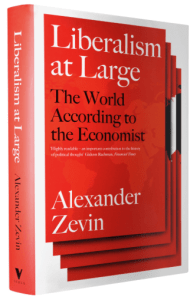
With the publication of ‘Liberalism at Large:The World According to the Economist’ by Alexander Zevin :

Has proven that The Economist is a ‘newspaper’ whose loyalty is to Capitalism and its economic/political Elite.

The Economist reviewer presents Jones as the victim of the ‘hostile reaction’ of not just students to his defence of Elites but a widening circle of critics. That reaction convinces Jones that he has a potential book, given the negative reaction.   The Economist’s interpolations on the themes of Mr. Jones

This is a fertile time for critiques of democracy. In light of the use of state apparatus by elected leaders to undermine an opponent in America, murder people in the Philippines, render a religious minority stateless in India, threaten judicial independence in Poland, and rob the public purse in South Africa, the system which has long provided the rich world with a satisfying mix of moral superiority and stable government is looking a bit ropy. A report last month from the Centre for the Future of Democracy at Cambridge University found that support for democracy had declined sharply in most of the world since the 1990s, including in America and western and southern Europe. The world’s biggest autocracy, meanwhile, is bringing prosperity to its own population and extending its influence round the world.

But as Mr Jones discovered, criticising democracy in the West is still a bit like launching a broadside against the pope in 15th-century Europe—or against a modern-day authoritarian president. You can suggest that all is not going to plan, but you will get a friendlier reception if you pin the blame on dodgy advisers or foreign interference, rather than on the concept itself.

Mr. Jones, as presented in this ‘review’, believes in a maladroit economic reductionism to describe politics.

By contrast, Mr Jones plants responsibility squarely on the shoulders of the voters. As an economist, he approaches democracy as a production system whose output is governance, and examines how it can be tweaked to improve the product. The core of “10% Less Democracy” is thus research on whether more or less democracy produces better or worse outcomes for countries and citizens.

Mr. Jones’ 10% resembles a more current expression of The Founders and their checks against too much democracy, in the Electoral College and the bicameral legislature. Or  more contemporary thinkers like Walter Lippmann, whose faith in ‘technocrats’ , experts,  as a necessary check against too much democracy. Yet the contemporary ‘technocrats’ expertise have proven to be not just misbegotten but catastrophic.

The writers at The Economist, in these two paragraphs, first celebrate the ‘insights’ of Mr. Jones, and then face the fact, that his polemic suffers from the drawbacks of his maladroit use of this perennial literary genre.

Mr Jones musters plenty of convincing evidence that fewer elections and more distance between voters and decisions make for better governance. But he stretches the argument for limiting democracy far beyond that observation. He is attracted by the idea of “epistocracy”, or rule by clever people; he advocates giving an official role in decision-making to bondholders, who already constrain governments’ freedom by raising the costs of lending to badly managed countries.

These arguments expose the flaw at the centre of this interesting and enjoyable book. Mr Jones looks at democracy as an economic system. But for most people, democracy’s moral component is also essential. It is an expression of the belief that everybody is equal in the sight of God or the presence of the ballot box, and that a country’s people should have power over their government. Less democracy may mean more sensible outcomes, but it also means less legitimacy.

https://www.economist.com/books-and-arts/2020/02/13/why-an-excess-of-democracy-can-lead-to-poor-decisions

Brooks, Jones and The Economist’s writers all warn the reader of the dangers of ‘political irrationalism’ : Brooks inveighs against the unhinged populism of Sanders, Mr. Jones against ‘too much democracy’ and  offers the haven of a lesser incremental trust in ‘Elites’ , the Economist writers ‘review’ Jones’ book, as part of using argument to make the case against the phantom, that has its roots in the failed social/political engineering of Neo-Liberalism.

Old Socialist


Posted in Uncategorized | Leave a comment

Raghuram Rajan ‘reviews’ Thomas Piketty’s new book, ‘Capital and Ideology’ in The Financial Times. Old Socialist comments

Who better than Raghuram Rajan, formerly of the  Reserve Bank of India, and The University of Chicago Booth School to ‘review’ Piketty’s latest book.  Rajan a contemporary iteration of a ‘Chicago Boy’? The record of Chicago Boys and Bankers is/are well established! Not to speak of record of The Financial Times.

In the world view of the defenders of ‘Capital’ , any critique of that, what to call it?, the inexorable frame of the whole of human existence on Earth? is in need of an antidote to even the slightest expression of critical apostasy.

Compare the short review of Piketty’s Capital in 2014 in The Economist:

Headline: Thomas Piketty’s “Capital”, summarised in four paragraphs

Sub-headline: A very brief summary of “Capital in the Twenty-First Century”

It is the economics book that took the world by storm. Capital in the Twenty-First Century, written by the French economist Thomas Piketty, was published in French in 2013 and in English in March 2014. The English version quickly became an unlikely bestseller, and it prompted a broad and energetic debate on the book’s subject: the outlook for global inequality. Some reckon it heralds or may itself cause a pronounced shift in the focus of economic policy, toward distributional questions. The Economist hailed Professor Piketty as “the modern Marx” (Karl, that is). But what is his book all about?

https://www.economist.com/the-economist-explains/2014/05/04/thomas-pikettys-capital-summarised-in-four-paragraphs

In the ‘Book Club’ section of The Economist, R.A., in London, provided a chapter by chapter ‘Reading’ of ‘Capital’:

https://www.economist.com/free-exchange/2014/03/13/reading-capital-chapter-1

https://www.economist.com/free-exchange/2014/03/20/reading-capital-chapter-2

https://www.economist.com/free-exchange/2014/03/27/reading-capital-chapters-3-and-4

https://www.economist.com/free-exchange/2014/04/04/reading-capital-chapters-5-and-6

https://www.economist.com/free-exchange/2014/04/11/reading-capital-chapters-7-8-and-9

https://www.economist.com/free-exchange/2014/04/17/reading-capital-chapters-10-11-and-12

https://www.economist.com/free-exchange/2014/04/25/reading-capital-part-4-conclusion-and-recap

I printed a copy of each of the parts of The Economist’s ‘Reading’ of ‘Capital’, and still have it next to my computer, as I write. What would drive the editors of this publication to write an ideologically freighted ‘review’ summery in four paragraphs, call this an utterly reductive caricature, even polemic, and then publish an extensive ‘Reading’ subsequent to that, which consisted in a chapter by chapter presentation on Capital?

The reader is assured by  Mr. Rajan that Piketty’s new book, in its English translation, is over 1,000 pages long. It appears, that that thousand pages has been granted approximately 1,787 words of reply, from Mr. Rajan. The Economist in its ‘Reading’ at the least treated Piketty, as if he were worthy of a substantive evaluation/critique. Even after their insulting four paragraph polemic, calculated to appeal to their reactionary readership!

Should the Neo-Liberals, who were the authors of the 2008 Market Collapse, and its issue ‘The Gig Economy’- the Chicago Boys coterie, who exported that Economic/Political poison to Chile, remain unquestioned for their catastrophic ideological toxicity. Mr. Rajan, in this review, acts as a surrogate of those misbegotten ‘technocrats’.

Old Socialist

https://www.ft.com/content/5a393b5a-4f23-11ea-95a0-43d18ec715f5


Posted in Uncategorized | Leave a comment

Niall Ferguson & Edward Luce on Michael Bloomberg. Old Socialist comments

Compare Mr. Luce’s ‘political wisdom’, or should it be properly named a collection of reportorial, rhetorical cliches, a product of lazy thinking, that could have been written in haste? to that of Niall Ferguson’s essay of Sunday 23, 2020:

https://www.thetimes.co.uk/past-six-days/2020-02-23/comment/michael-bloomberg-leads-in-cash-but-trails-in-charisma-hvjd33zxm

Mr. Ferguson is an admiring  ‘friend ‘ of Bloomberg and offers some insight into his political calculation, that are in fact Ferguson’s own:

So long as Sanders does not collect a majority of delegates by the time of the convention (in Milwaukee, Wisconsin, in mid-July), Bloomberg can hope that the Democratic Party elite will hand it to him, not only to stop Sanders but also to channel all that lovely money to the races for the Senate and House held on the same day as the presidential election.

The second reason is simple: that caustic wit of Bloomberg’s — so effective on Wall Street — does not work well in the political arena. Mike, seriously: no one outside New York ever says: “What am I, chicken liver?”

In the end, politics — even in the United States — is about more than money. It’s about mass communication. It’s about charisma. And, to judge by Bloomberg’s miserable performance as a punchbag in last week’s debate (watched, unfortunately for him, by a record 19.7 million viewers), those things cannot be bought.

Mr. Ferguson’s essay is then a prescriptive rhetorical, political meander, with a coda that tells his ‘friend’ the news, that money can’t buy what he wants to purchase.

Mr.Luce’s strategy, in his essay, differs from the panic of the Neo-Liberals and Neo-Conservatives: his essay is not Chris Matthews’ unhinged intervention comparing Sanders win in Nevada to the ‘Fall Of France’ on MSNBC, nor the political anguish of  rabid Neo-Conservative Jennifer Rubin. Mr. Luce places the ‘blame’ on Bloomberg as if this rhetorical sleight of hand, call it a political diversion, in service to the Neo-Liberal/New Democratic candidates subject to the Sanders Juggernaut.

Mr. Luce then engages in the sure fire resort of Corporate Media pundits, with the utterly dependable ‘horse race’ of American Politics:

There are two other striking similarities with Mr Trump. The first is that mainstream Republicans kept reassuring themselves that Mr Trump had a ceiling of support — he never seemed to get much above 30 per cent. The same applies to Mr Sanders. They underestimated the advantage of Mr Trump’s solid floor, which other candidates lacked. The same absence of core support applies to Mr Sanders’ rivals. Pete Buttigieg came equal first in Iowa and second place in New Hampshire. Polls show he would be lucky to make fourth place next weekend in South Carolina. The same applies to his Super Tuesday prospects. Joe Biden came fourth and fifth respectively in the first two contests. Even if he wins South Carolina, he is probably too deeply wounded to regain his mojo. Elizabeth Warren had a strong debate in Las Vegas on Wednesday. But she directed most of her ire at Mr Bloomberg. Her real rival is Mr Sanders. While the former New York mayor remains in the race, the rest of the field cannot afford to ignore him.

Cliche follows cliche, in the above paragraph, followed in the next paragraph with the obligatory appearance of Putin: The New Cold War is an article of faith of both the Neo-Liberal and Neo-Conservative coteries , a reference point for the loyalists to political conformity. Not to ignore Mr. Luce’s  final paragraph, suffused with what can only be called ‘magical thinking’ , that demonstrates a kind of exhaustion of rational thought in favor of what?

Old Socialist

https://www.ft.com/content/446000f6-55cd-11ea-abe5-8e03987b7b20

______________________________________________________________

My reply to : Wenren

Thank you for your comment. I Just finished reading ‘At The Origins of Neo-Liberalism : The Free Economy And The Strong State, 1930-1947’ by Ben Jackson of Oxford University. And published in The Historical Journal ,53, I (2010) pp. 129-151 that I downloaded from JSTOR :

https://www.jstor.org/stable/25643886?Search=yes&resultItemClick=true&searchText=at&searchText=the&searchText=origins&searchText=of&searchText=neo-liberalism&searchUri=%2Faction%2FdoBasicSearch%3FQuery%3Dat%2Bthe%2Borigins%2Bof%2Bneo-liberalism%2B%26amp%3Bfilter%3D&ab_segments=0%2Fbasic_SYC-4946%2Fcontrol&refreqid=search%3Afb360e631acb58faaf2c3dc5864f19fe&seq=1#metadata_info_tab_contents

Thinking and writing presents certifiable problems, except that the notion of reactions:  ‘that’s quieter than a Wuhan mall.’ , which partakes of a contemporaneous hipster mentality- what really matters in writing polemic is to use the tools of discourse, laced with invective, as part of the tool-chest, in its various iterations, to open up a conversations, or just to subvert and inflame. My model is Karl Kraus refracted through many texts, that began with ‘Wittgenstein’s Vienna’ in 1976.

Regards,

StephenKMackSD


Posted in Uncategorized | 1 Comment

janan.ganesh@ft.com on Trump’s ‘practicality’ vs. Democratic ‘Idealism’ and other pressing questions. Political Observer comments

Mr. Ganesh goes where others might fear to tread! The re-negotiated NAFTA agreement is 1800 pages long. What can the reader reasonably expect from any Chinese Trade Agreement?
Instead of presenting empirical evidence, Mr. Ganesh opines on the ‘political metaphysics’ of this vexing, even befuddling issue, he ‘compares’ the – but first he, in his own maladroit way, engages in the ‘Yellow Peril’ mythology, once the calling card of Neo-Con Niall Ferguson:

From defence secretary Mark Esper there was certainty about China’s threat to the west and Europe’s naivety in the face of it. From Nancy Pelosi, the speaker of the House of Representatives: certainty about China’s threat to the west, and Europe’s naivety in the face of it.

Is China a threat because this totalitarian regime is/are better  practitioners of capitalism than Western Democracies? The most prominent myth of Capitalists was that the Free Market could only exist within a Democratic frame? How can Hayek’s revered ‘pricing system’ exist in a former ‘command economy’ ,that now practices Capitalism?

In rhetorical terms Mr. Ganesh presents Trump’s ‘practical terms’ and the free floating ‘idealism’.

For all his militant jingoism, President Donald Trump views China in practical terms

It is idealism that has the far messier potential.

That ‘idealism’ then finds its root in Rep. Pelosi:

As for Huawei’s role in Europe, to let it build 5G networks would be “to choose autocracy over democracy,” says Ms Pelosi, with the Manichean crudeness that nothing — not even the fiasco of Iraq, which it helped to beget — can kill off in Washington. Light and dark, good and bad, free and unfree: this stuff still trips off the tongue. 

Mr. Ganesh continues his intervention with the added gloss of strategic walk-ons by David Ricardo, Pyle, of Graham Greene’s novel The Quiet American, George Kennan, and borrows from and or extemporizes on Samuel P. Huntington in ‘The clash of values’ , Cheshire Cat smiles.

The prime political actor in his last paragraph is the utterly amorphous entity  ‘a diplomatic firmament’ dominated by idealistic Democrats obsessed by an ‘idea’ rather than an ‘idealism’ .The question remains isn’t diplomacy, in all its various iterations, based on pragmatism rather than an ‘idea’ or ‘idealism’? Or in this context should ‘pragmatism’ be considered a kind of ‘idealism’ ?

A new president would need staff and these would come from a diplomatic firmament that hews to much of what the Democrats are saying. The same belief in America as an “idea”. The same wariness of China as the opposite of it. And the same affront that nations from Britain to the Philippines, without a market of $21tn to fall back on, do not see things with such piercing clarity.

Political Observer

https://www.ft.com/content/7e5e7620-52f8-11ea-90ad-25e377c0ee1f

Posted in Uncategorized | Leave a comment

Edward Luce’s ‘Bill of Attainder’ against Bernie Sanders. Old Socialist comments

Joe McGinniss wrote a best selling book on the Richard Nixon campaign, published in 1969. ‘The Selling of the President, 1968’.  In the ‘Age of Bloomberg’ an enterprising journalist should write a book about the 2020 Election, and its Plutocratic candidate Bloomberg, with the title ‘The Purchasing of the American Presidency’. Certainly no one at The Financial Times would author such an attack, on the hallowed institution of the vote! Except under a pseudonym?

Mr. Luce, being born in 1968 is probably not familiar with the McGinniss book? The unmasking of the Nixon public relations campaign was a valuable act of journalistic practice. Mr. Luce is safely moored in the ‘exceptional political present’ where history is defined by what happened in 2016, and perhaps no further, except when it is part of making an ideological point.

Mr. Luce’s opening paragraph is chock-a-block with the- should I have used the more pertinent term ‘political melodrama’?

Its onset has been visible for some time; such is the nature of slow-motion wrecks. Unfortunately we cannot press the fast-forward button. Wednesday night’s debate in Las Vegas was the Democratic party’s nastiest so far — with Michael Bloomberg its clear loser. At some point, nevertheless, the Democratic race is likely to boil down to a fight between him and Bernie Sanders. There are few ways that a zero-sum contest between a self-funded old billionaire and a stubborn old socialist could end in a friendly armistice. There are many in which the collision could play out. Almost none, barring the least likely — a sweeping victory by one over the other — entails a happy ending for Democrats.

First to entree stage -left is Sanders, burdened by Mr. Luce’s invidious comparison to Trump: just recall the Clinton coterie’s Bernie Bros. of 2016, its the Neo-Liberal Party Line. Mr. Luce is one of this myth’s ardent rhetorical allies. Add to the crimes of the Bernie Bros. they were disloyal to the institution of the Party! (Stalinism?)

The similarities between Mr Sanders’s campaign and Donald Trump’s in 2016 are apt. Each has militant supporters who are happy to indulge in social media harassment and character assassination. Barely half of Mr Sanders’ supporters would vote for Mr Bloomberg if he became the nominee, according to a recent poll. That share would almost certainly rise as the spectre of a Trump second term loomed. But Mr Trump would only need to capture a slice of the “Bernie Bro” constituency — the politically incorrect element of the US senator’s base — to tip the election his way. That is what happened in 2016. An estimated tenth of Mr Sanders’ supporters voted against Hillary Clinton.

The political melodrama reaches its second act with Sanders still the dramatis personae engaging in a ‘hostile takeover’ of the Democratic Party. Note the use of a metaphor used to describe the Corporate Raider, making concrete in the mind of the reader, that Sanders is illegitimate! Rather than a reform movement against the sclerotic, corrupt Clinton coterie: its representatives in Luce’s melodrama are Biden and Warren.

Mr Sanders is trying to do a Trump-like hostile takeover of the Democratic party. He enjoys similar tactical advantages. Like Mr Trump, Mr Sanders has benefited from a packed field of conventional candidates who have spent most of their firepower attacking each other. Wednesday’s debate was the most combustible example of that so far. Like Mr Trump at the same point in 2016, Mr Sanders is spurned by his party’s establishment. Nowadays that is taken as a virtue. A single Iowa legislator endorsed the senator from Vermont before the state’s caucus this month against double-digit endorsements for most of the others, including Joe Biden and Elizabeth Warren. Mr Sanders nevertheless won the most votes.

Not content with his unrealized melodrama, which is just an extended screed of Anti-Sanders cliches.

Finally, like the US president, Mr Sanders believes he is heading a movement, not a campaign. People who lead causes do not drop out. They fight to the bitter end.

All of which presents a looming dilemma for Democrats. Mr Sanders wants a revolution. Mr Bloomberg wants a restoration. The contours of one increasingly likely collision came at the end of Wednesday’s debate. Every candidate, barring Mr Sanders, said they would accept the rules of a brokered presidential convention. Mr Sanders alone insisted that the candidate with the most votes should be the nominee — even if they had less than half the delegates.

In another democracy, Mr Sanders would belong to a different party to the rest. Mr Bloomberg would too. The first calls himself a socialist. The second is essentially what used to be called a Rockefeller Republican.

In practice, Mr Sanders and the other candidates see New York’s former mayor as a plutocrat who bought the silence of sexually harassed former employees as well as his place on the Democratic stage. Mr Sanders, meanwhile, is seen as an ageing coronary patient whose extravagant promises would deliver Mr Trump a second term.

Mr. Luce’s melodrama disappoints because it descends into a predictable Anti-Sanders screed, garnished with the notion that plutocrat Bloomberg represents a ‘Political Restoration’. These last two sentences close his polemic …

The writer, Jorge Luis Borges, once likened the UK-Argentina war over the Falkland Islands to two bald men fighting over a comb. It would also serve as an apt forecast of a Bloomberg-Sanders showdown.

Old Socialist

https://www.ft.com/content/c850259a-5397-11ea-90ad-25e377c0ee1f

____________________________________________________________


In reply to One thought
I watched the 1964 Republican Convention  on television, and vividly recall Rockefeller being booed when he made a speech to the convention.
Here is a link to a Politico’s ‘History Dept.’ that describes the all its melodramatic particulars, for readers in the 21st Century:

Headline; Nelson Rockefeller’s Last Stand The 1964 Republican National Convention and the fall of the party’s moderates.

https://www.politico.com/magazine/story/2014/10/nelson-rockefellers-last-stand-112072

This  marked the beginning of the generational purge of ‘Liberals’ from the Republican Party.
But the real monument to Rockefeller’s ‘Liberalism’ was his handling of Attica;

Headline: Rockefeller on the Attica Raid, From Boastful to Subdued 
… 

‘Hours after 1,000 New York State troopers, sheriff’s deputies and correction officers stormed Attica prison to crush a four-day inmate revolt in 1971, Gov. Nelson A. Rockefeller telephoned President Richard M. Nixon to claim victory unambiguously.

At the time, it appeared that State Police sharpshooters who had fired on the prison yard had killed mostly inmates, not some of the prison guards who had been held hostage inside. And because the inmates were black and the guards white, the governor and the president seemed to suggest, the American public would undoubtedly endorse the state’s assault on Attica.
“They did a fabulous job,” Rockefeller told Nixon. “It really was a beautiful operation.” In a follow-up conversation the next day, as grimmer details began to emerge about the assault, in which 29 inmates and 10 hostages were killed, a more subdued Rockefeller acknowledged that his initial boast about the sharpshooters’ precision was premature.

https://www.nytimes.com/2011/09/13/nyregion/rockefeller-initially-boasted-to-nixon-about-attica-raid.html

StephenKMackSD

_________________________________________________________________________________


Posted in Uncategorized | Leave a comment

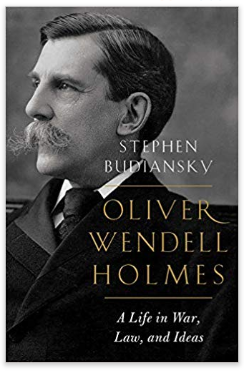
Stephen Budiansky and the toxic myth of the virtue of Oliver Wendell Holmes. American Writer comments

I saw a copy of this latest biography of Oliver Wendell Holmes by Stephen Budiansky, today, at my local library. I searched, out of curiosity, for the Buck vs. Bell case. This being a valid test of an actual biography of Holmes, warts and all, or just more of the same apologetics, for this misogynist and misanthrope, and one of the decisions that establishes without fail this American jurist’s reputation.

Here, from G. Edward White’s Oliver Wendell Holmes : Law and The Inner Self:

From pages 407 and 408 some telling information that has escaped Mr. Budiansky’s attention ?  That I recalled this portion of Prof. White’s biography can be attributed to the fact that Holmes was a very particular kind of American Monster!

The second feature of Buck v. Bell is that it concerned a legislative “reform” about which Holmes did not have his customary skepticism. On the contrary, he was an enthusiast for population control devices, particularly those that promised to reduce “incompetence” in the population. He had no reason to doubt many of the assumptions of the eugenic reformers: that mental disabilities were inherited; that mental disability was linked to crime; that the very persons who were candidates for sterilization were the least likely to control their sexual impulses. He had written Pollock in 1920 that “I should be glad . . . if it could be arranged that death should precede life by provisions for a selected race,” because “every society rests on the death of men,”(130) and that “[y]our remark that the men fit for military service on the whole are the better type . . . is precisely the reflection that makes me believe that it would be possible to breed a race.”(131)

He had written Laski in 1923 that “I do not regard the great multiplication of the species as a benefit.”(132) and in 1925 that “I don’t believe in millennia and still less in the possibility of attaining one . . . while propagation is free and we do all we can to keep the products, however bad, alive.”(133) He wrote Lewis Einstein in 1927, after the Buck decision, that “establishing the constitutionality of a law permitting the sterilization of imbeciles . . . gave me pleasure.”(134) And he wrote Laski that when he wrote the opinion in the Buck case he “felt that I was getting near to the first principle of real reform.”(135)

It therefore proves too much to associate Holmes’ opinion in Buck v. Bell with a skeptical tolerance for “social legislation” of all sorts, which does not capture his attitude toward Virginia’s sterilization statute. The notoriety of Buck v. Bell has increasingly cut into Holmes’ image as a civil libertarian; it played an important part in the first major revision of that image by critics in the 1960s.(136) The question remains, however, how that image first surfaced, given Holmes’ repeated skepticism about the efficacy of “progressive” legislation, indifference toward civil rights claims, disinclination to grant aliens any rights against the state, and ultrapositivist theories of sovereignty.

https://epdf.pub/justice-oliver-wendell-holmes-law-and-the-inner-self.html

Also see Law without Values : The Life, Work, And Legacy Of Justice Holmes by Albert W. Alschuler :  Chapter Five , Holmes’s Opinions pages 65, 66 and 67 that reiterates the historical evidence that White presents.

The Cult of Oliver Wendell Holmes is politically and civically toxic!  Mr. Budiansky is another Holmes acolyte.

American Writer


Posted in Uncategorized | Leave a comment

janan.ganesh@ft.com as Political Fabulist. Political Observer comments

I still think that Mr. Ganesh’s novel is still a work in progress! But to earn a living he writes in the most hybrid of forms: the feuilleton blended with political commentary, I think that these two rhetorical practices are immiscible, that might even be thought of as a misbegotten marriage of opposites?
Consider these two ideas/constructs presented by Mr. Ganesh in his latest essay :

‘tribal Democrats (the strategist James Carville)’

Not ‘tribal’ but in fact Neo-Liberal, who warns in his Financial Times polemic on the dangers of Sanders, as the recrudescence of McGovern. I was a voter in 1972 and cast my vote for McGovern! Mr. Ganesh wisely leaves this alone.

‘and Republican apostates (the writer David Frum)’

Mr. Frum’s rise is the Horatio Alger mythology turned upside-down: Canadian Posh Boy makes good in America, by becoming a propagandist for Bush The Younger. He worked from January 2001 to February 2002, and in his very short White House career authored the ‘axis of evil’ propaganda. He is and remains a Neo-Conservative, who has re-invented himself, in the political present, as the ‘Wise Republican Elder’, in this guise he is the agreeable house-pet of Corporate Media.

As I find Mr. Ganesh’s political chatter causes something akin to ennui, I will skip to the last two paragraphs:

Just because Mr Sanders can win does not mean that a party so monomaniacal about unseating Mr Trump should take the chance. Former South Bend mayor Pete Buttigieg, Tuesday’s runner-up, is more saleable to the moderates who turned Democratic in 2018. Minnesota senator Amy Klobuchar has similar views and a pugilist’s edge, so essential against this president. It is just that those of us who swore off political certitude after 2016 are amazed how much of it survives in the form of the Sanders bears. If he is the nominee, it would not be a Democratic forfeiture of the White House.

Mr. Ganesh here speculates, in an unsurprisingly negative way, about the ‘thought’ or ‘conjecture’ of the Democratic Party, as if it were a singular sentient being, who wills the defeat of Trump, while not factoring in the costs incurred, by the possibly of winning in 2020, with Sanders as its nominee. This, almost dazzlingly highfalutin preamble to Buttigieg and Klobuchar, as the more ‘rational choice’ for the sentient being that is the Democratic Party. That is if I have managed to decipher Mr. Ganesh’s nearly serpentine argument?

Not content with the above, Mr. Ganesh , with the aid of the personages of Thomas Jefferson and John Adams, constructs a fable of Sanders and Trump as the harbingers of a yet to be completed secularising imperative, in the foreseeable political present. Yet Ganesh expresses an ersatz puzzlement over his gangling rhetorical creature. Mr. Ganesh shift of both subject and register leaves this reader in a state of bewilderment!

What it would be is a cultural moment. Thomas Jefferson and John Adams expressed their doubts in a grander register, but Mr Sanders and Mr Trump would be among the least religious contestants for the presidency. They tend not to even go in for the muddled spirituality of the confessional memoir and the damp-eyed stump speech. With a combined age of 151, these men are a curiously future-facing pair, heralds of a nation that is, albeit in fits and starts, secularising. Theirs would make for an unusual showdown, and one whose outcome is not as foregone as lately billed.

https://www.ft.com/content/e7a1837e-4d77-11ea-95a0-43d18ec715f5

Political Observer


Posted in Uncategorized | Leave a comment

@FT Courtney Weaver & Lauren Fedor on the Sanders’ victory in New Hampshire. Political Observer comments

The headline below and its ‘reporting’:

Headline: Sanders secures narrow victory in New Hampshire primary

https://www.ft.com/content/fe58cccc-4c4f-11ea-95a0-43d18ec715f5

Added to this headline and sub-headline:

Bernie Sanders’ early strength worries Democratic leaders

Prospect of nomination of most anti-establishment presidential candidate since 1972

https://www.ft.com/content/d38e6b52-4d24-11ea-95a0-43d18ec715f5

The McGovern comparison shows that James Pinketon’s political obsession travels well over the decades. (It happens that Mr. Pinkerton graduated high school in 1975, which makes him approximately fifteen years old in 1972.) Add to this Courtney Weaver and Lauren Fedor have made good use of the New Democratic ‘technocrats’  who are advising Sen. Sanders opponents. Not to forget, and two anonymous personages:

Zac Petkanas, Roger Lau, ‘One Democratic donor’ and by ‘one Democratic strategist’

Add to this toxic mix, the hysterical comments of the two Corporate Media hirelings,  Chuck Todd and Chris Matthews, and the political grotesques Mika & Joe and their coterie.  Let me ‘revise’ Zbigniew Brzezinski’s comment on Joe, who in another political context called Joe’s knowledge ‘stunningly superficial’.

Courtney Weaver and Lauren Fedor aquit themselves with more political/ideological aplomb, while carefully following the Party Line on Left-Wing Social Democrat Sanders: the Neo-Liberal’s will not go quietly!

Political Observer


Posted in Uncategorized | Leave a comment

La République En Marche and Macron, in the pages of The Financial Times. Almost Marx comments

Headline:Problems for Macron as defecting MPs believe the party is over

Sub-headline: French president’s La République en Marche is losing ground ahead of elections

Unreported in the pages of this newspaper, The General Strike since its inception in December 2019, has had a devastating effect on M. 37%’s putative ‘landslide victory’ as declared with numbing regularity.
Why is Macron M. 37% ? In the final round in the election 36.5% of voters rendered their ballots ‘spoiled’ or otherwise uncountable.

M. Mallet’s reporting touches in the briefest  possible way on the gilets jaunes/gilets noirs and the General Strike that has been blacked out by the Financial Times editors, except when it is usable to provide political context. Call it by its name Stalinist erasure, practiced in the political present. With the caveat that it will  fail, in a world as diverse as our own, in terms of  propaganda masquerading as ‘news’, while other sources of  information are readily available for those who choose to seek it out!

More than 15 months of demonstrations by the gilets jaunes — the movement began with motorists complaining about a green tax on fuel, but later developed into broader anti-government protests — have been followed since December by disruptive public sector strikes and marches against Mr Macron’s pension reform. Trade unions have announced another big strike day for Paris on Monday.

What is utterly unavoidable as the almost primary reason for Macron’s political erosion? Besides the open rebellion of not just the Lower Orders, but of Fireman, Teaches, Lawyers, Doctors even Students.

What is primary in M. Mallet’s argument? He constructs a Political Melodrama, about the disenchantment of the politicians that are the members of En Marche. A large cast of characters, that takes its power from its profusion of ‘walk-ons’ , aided by brief speaking parts.

Some LREM MPs, who joined the movement in the wave of enthusiasm for a new style of politics that accompanied Mr Macron’s rise, are uncomfortable with party discipline on unpopular laws. As hostility to the president has grown, they are also facing harsh realities of day-to-day political life — including personal abuse in the streets and attacks by militants and vandals on MPs’ constituency offices.

https://www.ft.com/content/e2b914cc-4cdb-11ea-95a0-43d18ec715f5

Both M. Mallet, and the En Marche office holders, fail to realize that their time is waning: M. Mallet exhausts the reader’s patience, the En Marche office holders now face the contempt of the French people, who have seen enough of Police Violence committed against their fellow citizens, under the orders of a ruthless enarque: he acts as if he were a Bourbon!  Or the Police attacking striking Fireman. The videos of these crimes are available on twitter, Kant’s words echo: dare to know!

Almost Marx

https://www.ft.com/content/e2b914cc-4cdb-11ea-95a0-43d18ec715f5


https://www.ft.com/content/e2b914cc-4cdb-11ea-95a0-43d18ec715f5

Posted in Uncategorized | Leave a comment