Editor: The first two paragraphs of this execise, in a bubious approximation, of the intellectual giant Bagehot?
In retrospect, the signs were there. In February 2025 Peter Mandelson was asked by the Financial Times about his relationship with the deceased sex offender Jeffrey Epstein. The soon-to-be British ambassador to America offered a forthright response. “I’m not going to go into this. It’s an FT obsession and frankly you can all fuck off. OK?”
Exactly a year on, Lord Mandelson has gone, and Sir Keir Starmer’s government is embroiled in Britain’s worst political scandal of this century. The peer lost his job in September, after emails emerged in which he questioned Epstein’s conviction for procuring a minor. On January 30th another tranche of emails revealed an intimate relationship. Lord Mandelson and Epstein giggled about strippers and joked about “a well hung young man”, in between discussing multi-million-dollar jobs post-politics and casually leaking confidential government documents. A political embarrassment has become a criminal investigation. Lord Mandelson’s behaviour raises depressing questions about the past but a more intriguing one about the present. What is the point of Sir Keir staying in office?
Editor: Let me engage in a bit of self-serving prestidigitation! The Reader might even conjecture, that I follow the well worn a pastisch of what an ‘actual Bagehot’ might opine?
…
“Keir’s not driving the train. He thinks he’s driving the train, but we’ve sat him at the front of the DLR,” a driverless train in east London, which has a pretend control panel for the enjoyment of toddlers. Somehow the Starmer train has still crashed.
…
To add insult, former ministers shuffled to the backbenches last year were surprised to learn that Lord Mandelson had offered advice on the reshuffle, in between canapés at the White House. It is one thing to lose your job; it is another to do so at the behest of a man who will go down as a 21st-century John Profumo, a Tory minister whose exit because of sex, lies and spies became the benchmark for government-crushing scandal.
…
Sir Keir’s failings on Lord Mandelson were common across parts of the Labour Party, which could never resist the charms and talents of the former minister, despite his flaws. More gifted politicians than Sir Keir have fallen prey to them.
…
In a rare bout of clear-eyed analysis, Sir Keir saw the damage being done by the Mandelson scandal. He warned his cabinet that “the public don’t really see individuals in this scandal, they see politicians.” For all the prime minister’s failings, he understands the seriousness of the moment, even if he does not himself possess the means to meet it. Sir Keir is correct that the shamelessness personified by Lord Mandelson is a fatal poison for the body politic. But if he truly believed what he said, he too would go.
Editor: The Reader of this essay might even come to the unwelcome conclusion, that David Cameron, Theresa May, Boris Johnson, Liz Truss, Rishi Sunak and Kier Starmer represent the utter failure of the whole British Political Class! How telling that Jeremy Corbyn was/is a possible represetative of a politics of reliability, and steadfastness, that even the shade of Bagehot might have found …?
Reader: With all its faults Los Angeles Times on its editorial pages provinded space to Robert Scheer, Walter Lippmann and Arianna Huffington, Erwin Chemerinsky!
Hollywood Boulevard’s glory days bullshit rules the political present!
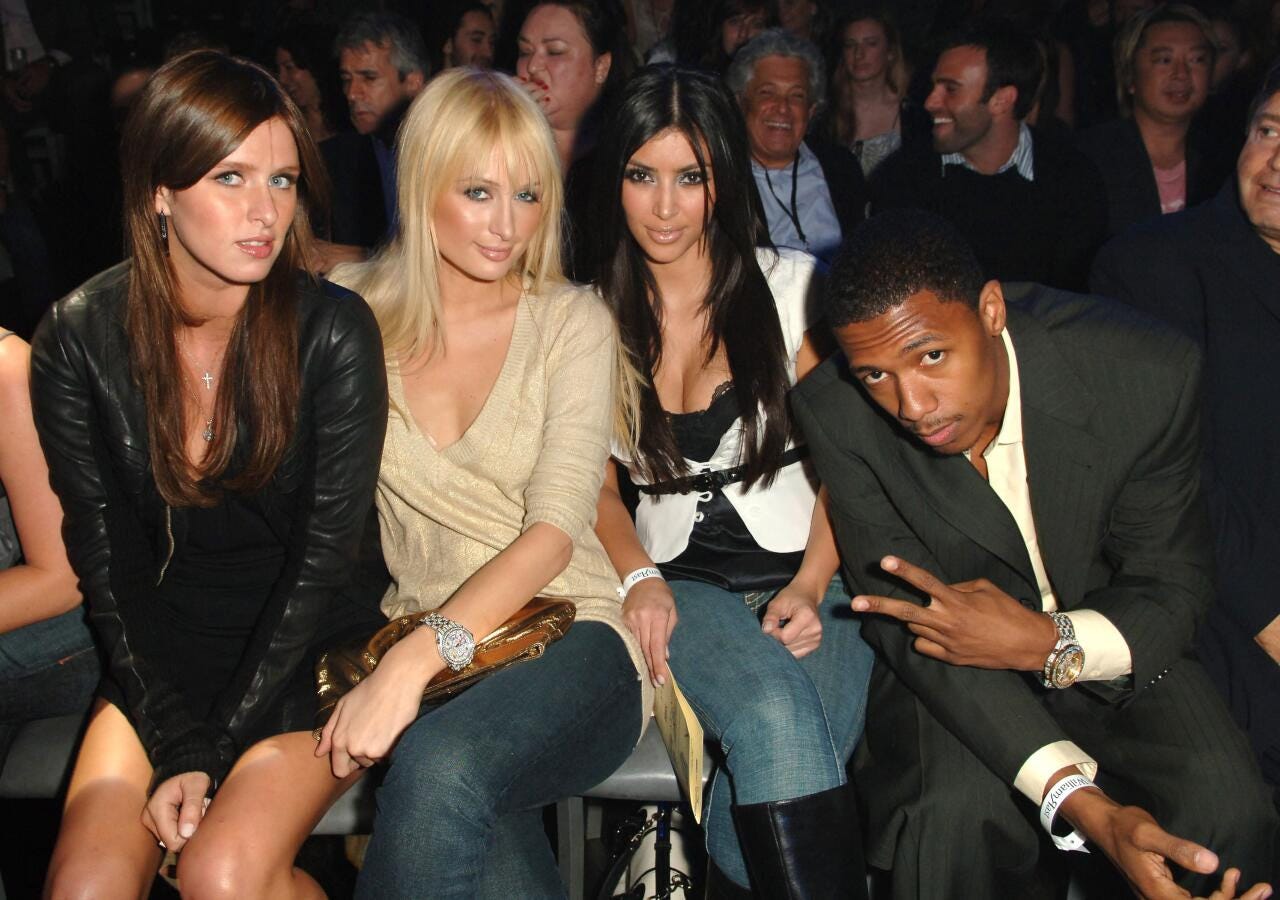
Nicky Hilton, Paris Hilton, Kim Kardashian and Nick Cannon during the “Young Hollywood” heyday. (Michael Caulfield Archive)
After months of AI-generated disaster porn on the sad state of Los Angeles, something decidedly more gentile took over my feed this week as the city waited for all the ballots to be counted.
It was a simple, strangely calming 2-minute, 48-second video showing Hollywood Boulevard on a clear morning 20 years ago, cars and buses passing, shots of tourists milling around landmarks like the Chinese Theater, Capitol Records tower and Hollywood & Highland complex. No explosions. No SWAT situations. No overt political perspectives.
But this was L.A. on election week, and the video quickly became just one more vessel for that eternal question: Is the city doomed? Some commenters cited it as an example of L.A.’s long-lost golden days, before the hellscape. Their message: Hollywood Boulevard in 2006 was a lot better than Hollywood Boulevard in 2026.
Is it true?
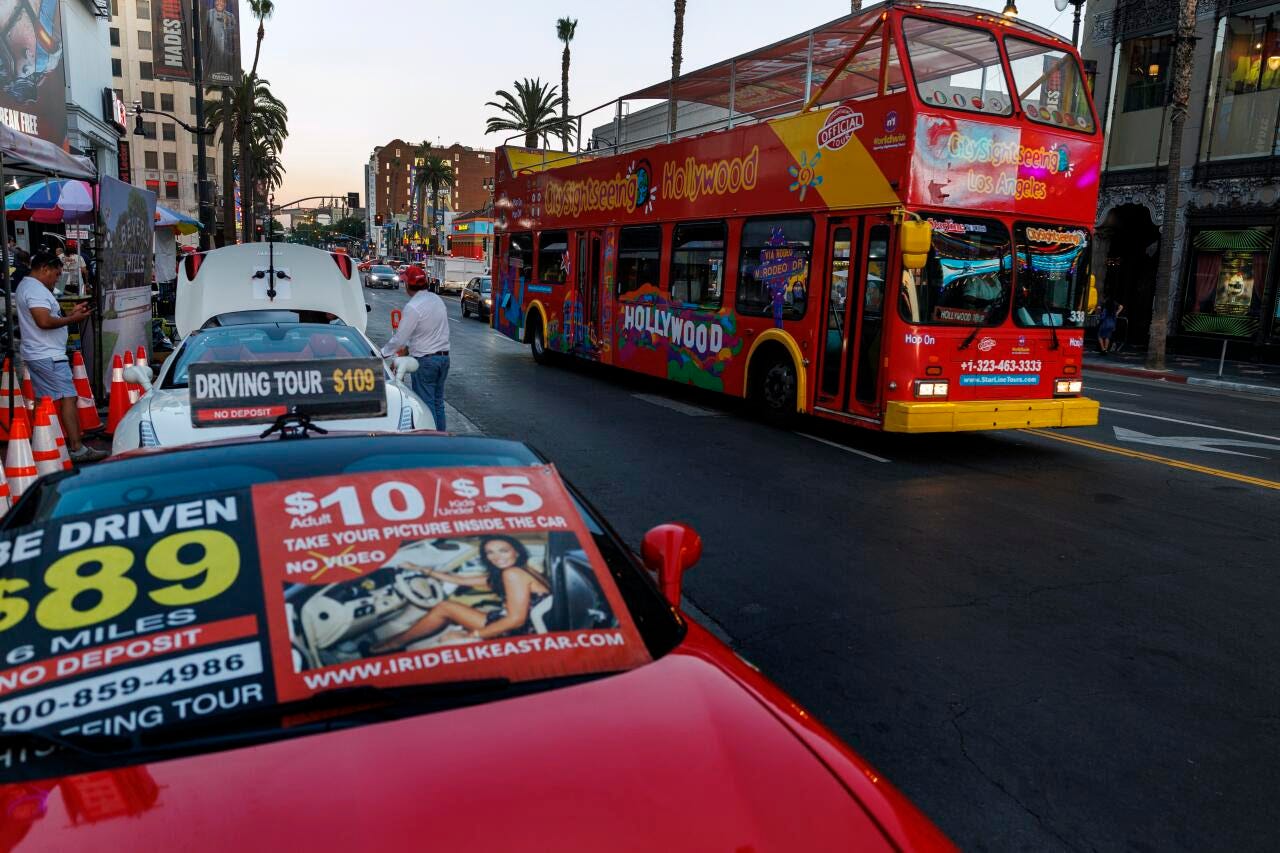
A double-decker sight-seeing bus in Hollywood in 2025 (Gina Ferazzi/Los Angeles Times)
‘Young Hollywood’ rises from the ashes
There is no doubt that 2006 was a pivotal year for Hollywood. It was the beginning of a building boom that altered the district’s skyline with new luxury condos, luring some entertainment types back from the Valley and Westside.
Buildings were set on fire during the L.A. riots. Movie palaces closed. The construction of the Red Line subway caused portions of the Hollywood Walk of Fame to collapse. Crime was such a hot topic that Paramount Pictures released “Jimmy Hollywood,” in which Joe Pesci plays a down-on-his-luck actor turned attention-starved vigilante who takes on the bad guys after his car radio is stolen. “This place used to sparkle. [You] could rub shoulders with movie stars walking along the Boulevard,” Jimmy laments. “Look at Hollywood now.”
But by 2006, Hollywood was roaring back, and yes, that included celebrities. A new generation of stars dubbed “Young Hollywood” rediscovered the Boulevard, and a crop of nightclubs and restaurants became destinations for them and the paparazzi. It was a golden age for celebrity tabloids: Editors awoke each morning to pore over the overnight photos and write about what trouble Paris, Nicole and Britney got into the night before.
“If you said five years ago that Paris Hilton was going to get into a car accident in Hollywood, no one would have believed you, because Paris Hilton wouldn’t have been in Hollywood,” then-Councilman Eric Garcetti told the paper in 2006.
My former colleague David Pierson embarked on a series of stories that year to capture the transformation. One it-club of that era was cycling through so many models, actors, musicians and sports figures each night, it needed a sophisticated logistics system to make it work.
In another story, he chronicled the legions of young people from around the country who rode the “Holly Trolley” all night and morning, hitting various clubs and hoping to share some shots with Leo.
“Coming from Oregon, Hollywood had a reputation for being ghetto,” said one young woman on the circuit. “It actually has a different persona. I love it.”
Hollywood Boulevard was so ascendant during that period that it was stealing thunder from the granddaddy of L.A. nightlife, the Sunset Strip, which suddenly felt so old. Pierson went to the Strip’s most famous hotel and found signs of Hollywood envy, writing “the girl in the glass tank at the Standard lobby is looking needy.”
Losing the cool factor
There have been many stories written about the decline of the “Young Hollywood” scene, with the rise of the iPhone, social media and annoying influencers often cited as among the culprits.
By 2017, E! News concluded, “A-listers no longer have to rely on a [Hollywood club] sighting to stay in the news cycle; they can give us pre-selected tidbits on Instagram whenever they want.”
On top of that, the district began struggling with the same issues challenging so much of L.A.: Homelessness, gentrification and the affordability crisis. 2020 was a grim year. The tourist economy dried up. Many businesses shuttered, including some icons like the ArcLight theater. Things have gotten better in recent years, but most people say Hollywood still has a long way to go.
The international tourist trade — a key source of Hollywood foot traffic — had a tough 2025 amid the fires and Trump’s foreign and trade policy gambits. “It used to be shoulder to shoulder out here,” one merchant told Cerys Davies.
The L.A. Times broadcasts a livestream of Hollywood Boulevard on our website. I checked it out on a split screen with that 2006 video. The current boulevard didn’t look terrible. Some of the big landmarks, like the Virgin Records Megastore, were gone. There were more big new buildings.
Editor: I recall the times I got lost in Pickwick Book Shop!
Pickwick Book Shop was an independent bookstore located at 6741-6745 W. Hollywood Boulevard in Hollywood, California. The store was popular with many film and literary figures, and was known as the “supermarket of books.”
‘The West’s Greatest Innovation—An Independent Judiciary Trump is returning America to the dark days of personalist rule.’ Fukyama erases Shelby County v. Holder & RBG Telling Dissent?
This coming weekend marks the 61st anniversary of Bloody Sunday, so it’s an appropriate time to survey the state of voting rights in America. The short version: Not good. For the past 15 years, the Supreme Court has been on an anti-voter tear. Before it hands down its decision in Louisiana v. Callais, a redistricting case that is likely to weaken the 1965 Voting Rights Act even further, let’s shine a light on the man who made so much of it possible: Chief Justice John Roberts.
You may recall that during Roberts’s confirmation hearings in 2006, he was asked about his position on the law, often referred to as the crown jewel of the civil-rights movement. “The existing Voting Rights Act, the constitutionality has been upheld, and I don’t have any issue with that,” he said.
In retrospect, it’s clear the Voting Rights Act — one of the most transformative laws in American history — was doomed the moment Roberts was confirmed as chief justice.
Roberts’s animus toward the act, and toward the broader struggle to address centuries of racial discrimination in America, has been in plain sight since he served as a young lawyer in the Reagan administration, drafting memos attacking the law and devising legal arguments to undermine it.
The significance of the Voting Rights Act cannot be overstated. Its passage was the long-overdue realization of the 15th Amendment’s guarantee, a century before, that no one’s right to vote could be denied or abridged on account of race. And yet from his earliest days, Roberts has expressed more concern about the unequal treatment of states than the unequal treatment of people. As he put it in one 1982 memo, the law represents “the most intrusive interference imaginable by federal courts into state and local processes.” That same year Congress voted to reauthorize it; crucially, it added to Section 2 of the law the provision, known as the “effects test,” that is at issue in the Callais case.
This test was a response to a 1980 ruling by the Supreme Court which determined that Section 2 required evidence that a state voting law was passed with the intent to racially discriminate before it could be blocked. Following this interpretation, lawmakers, especially in the South, got wise about masking their intent, so the act needed to be updated. Its protections would be of little use if they only worked when lawmakers said out loud, “I want to keep Black people from voting.” The new test applied to any state law that would have a racially discriminatory effect, regardless of any evidence of intent to discriminate. The revision was, effectively, a rebuke of the Supreme Court’s narrow interpretation of the Voting Rights Act.
The update was a success: The number of cases brought under Section 2 increased rapidly, from 3 in 1981 to 175 in 1988. Notably, a huge percentage of these cases were brought by voters themselves, which enhanced the enforcement of the statute. The next time the Voting Rights Act came up, in 2006, it passed by a unanimous vote in the Senate and an overwhelming majority in the House. The process went as it was supposed to: the people’s elected representatives holding months of hearings and considering reams of data before reaffirming a longstanding and popular law.
But John Roberts wasn’t going to let it go that easily. 2006 was his first year as chief justice, and he is nothing if not a patient man. He knew his chance would come before long. In a 2009 case, he flagged another key part of the Voting Rights Act, Section 5, as raising “serious constitutional concerns.” Section 5 provides for the federal oversight of states and jurisdictions, most of them in the South, with a history of racial discrimination in voting. In those places, officials are required to seek approval from the federal government before making any changes to their voting laws.
Roberts believed that the map used to determine who had to go through this “preclearance” process was badly out of date and did not reflect current realities on the ground. Racism was not as bad as it had been in 1965, he believed — after all, didn’t America just elect a Black president?
Four years later, in 2013, he got his first clear shot at the law, and he took it. Writing for a bare majority of the court in Shelby County v. Holder, he effectively destroyed Section 5 by invalidating the preclearance map. “Things have changed dramatically” in the South, Roberts wrote. And because the states have “equal sovereignty” (a principle he more or less pulled out of a hat), it was not fair to continue to subject some of them to the trouble and, more important, the humiliation of extra screening without evidence that they were still practicing discrimination. Congress was free to draw up a new map based on current circumstances, he said.
The chief justice was being disingenuous. He knew as well as anyone that in 2013, a sharply divided Congress was not going to manage that. He was also confronted with mountains of evidence showing that while things had indeed improved, voting discrimination continued to be a chronic problem in the South and other covered areas, one that might worsen without Section 5. Nonetheless, he had succeeded in killing off the heart of the Voting Rights Act based on a made-up principle and at the same time deflected the blame onto another branch.
Meanwhile, states that had spent decades under the preclearance requirement acted like they were the beneficiaries of a jailbreak; some enacted new discriminatory voting laws with a speed unheard of among legislatures, making a mockery of Roberts’s high-minded claims about how much they had changed.
But Roberts’s disingenuousness about Congress and the states paled in comparison to another part of his Shelby County decision, one in which, you might say, the chief was masking his own intent. Anticipating the charges that the Voting Rights Act would be hobbled without a functional Section 5, Roberts reassured readers of the continued power of Section 2 — the provision he had attacked three decades earlier. Unlike Section 5, he wrote, “Section 2 is permanent, applies nationwide, and is not at issue in this case.”
Today, barely more than a decade since those words, Roberts and the other right-wingers are almost certain to disable Section 2 in Callais like they did Section 5 before it.
What happened? You might say that things have changed dramatically. Or, perhaps more accurately, nothing has changed. The chief justice’s reassurance about Section 2 in 2013 was roughly as believable as was his defense of the constitutionality of the Voting Rights Act at his confirmation hearing.
None of this should be surprising. With Shelby County, Roberts’s four-decade project to unburden America of its commitment to racial and political equality finally came to fruition. Did anyone really think he’d drop the ball at the one-yard line? To the contrary, he and his right-wing colleagues have spent the last several years doing an end-zone dance on the back of voting rights.
In 2019, the justices ruled that state legislators can gerrymander their districts as much as they please, disenfranchising tens or hundreds of thousands of their own voters in order to hold onto power, and the federal courts can’t do a thing about it.
In 2021, they began hacking away at Section 2 itself — the last meaningful leg of the VRA. That case, Brnovich v. Democratic National Committee, involved a challenge to two Arizona voting policies that had been found to discriminate against voters of color. The Ninth Circuit ruled for the challengers and blocked the Arizona policies, but the now-supermajority of right-wing justices reversed. In the process they announced new standards, again out of thin air, that make it far harder to bring challenges under Section 2’s effects test. So hard, in fact, that while there were dozens of successful Section 2 lawsuits in the first two decades of this century, only one has succeeded at the Supreme Court since Brnovich.
Even before Callais is decided, we can see the impact of Roberts’s anti-voting crusade. A 2024 Brennan Center report found that the participation gap between white and black voters has been growing steadily since 2012, after narrowing for decades thanks to the Voting Rights Act. One way to illustrate the impact of this gap is that without it, 9 million more ballots would have been cast in the 2020 presidential election — more than Joe Biden’s margin of victory in the popular vote. And the gap is growing fastest in the parts of the country that had been covered by Section 5. So much for “things have changed dramatically.”
John Roberts has taken pains to cast himself as a kinder, gentler version of his ideological predecessors, most notably William Rehnquist, the chief justice for whom he clerked before joining the Justice Department in the early 1980s. Rehnquist opposed much of the civil rights movement, insisting that Brown v. Board of Education was wrongly decided and defending the odious principle of “separate but equal.” He held a similar disdain for the Voting Rights Act itself. “The enforcement provisions of the Civil War Amendments were not premised on the notion that Congress could empower a later generation of blacks to ‘get even’ for wrongs inflicted on their forebears,” Rehnquist wrote.
Roberts doesn’t speak so bluntly, but the sentiment that the Voting Rights Act is about “getting even” — as though its purpose is revenge instead of basic racial equality — is a through line of both men’s jurisprudence. And because Rehnquist and Roberts together have combined to lead the Supreme Court for the last 40 years and counting, we are now faced with two divergent trends in American law and politics: On one hand, Congress (present session excepted) for years responded to an increasingly diverse nation by passing laws to make voting more accessible and less discriminatory; on the other hand, the Supreme Court has repeatedly played the role of reactionary counterweight, first under Rehnquist and then under Roberts.
While the American people’s elected representatives have sought, however imperfectly, to redress centuries of racial discrimination by passing laws for a fairer future, the highest court has been steered for nearly half a century by two men who appear intent on undoing as much of that progress as possible, dragging us back to a darker, more unequal past.
LOVE IN A TIME OF HATE: Art and passion in the shadow of war, 1929–39
Translated by Simon Pare
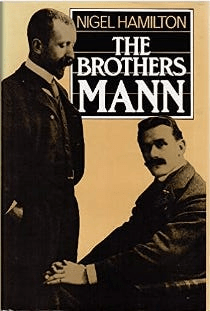
As a reader of ‘The Brothers Mann: The Lives of Heinrich and Thomas Mann, 1871-1950 by Nigel Hamilton of 1975.
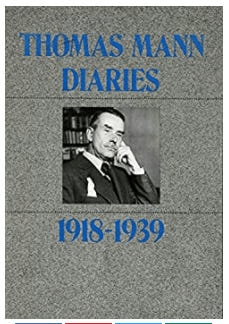
And Thomas Mann’s ‘Diaries, 1918-1939’ of 1982:
I had some knowledge of the milieu, the persons/characters and their shared fates, that is the subject of the the two books under review. This final paragraph of Chamberlin’s review is evocative of the that whole milieu:
They were all enemies of Nazism, certainly. But what kind of politics, what kind of society, would have best suited this licentious, aesthetic-minded generation, with its gigantic artistic talents and potential for deep moral waywardness? Presumably, our ultra-liberal own. Perhaps that’s why Illies remains so reserved in his moral judgements, finding the antisemitic vamp Alma Mahler pretty nasty, but only the Hitler-loving film-maker Leni Riefenstahl (“there was a strong streak of elitism to her nymphomania”) “diabolical”. He’s rather lenient, to this reviewer’s mind, and rather hard on Thomas Mann’s “noun-heavy moralizing”. I would have liked to hear him call Brecht not only a great artist, but also a pernicious moral fraud. Illies engages with some relish in his tale, where Wittstock, two generations older, is outraged and sad. In making these observations, though, I may be the product of a staider generation. So let me conclude by saying that, for all the compelling studies on the Weimar Republic, no one will want to miss either of these well-translated books on Weimar writers and Weimar in love.
Let me recommend Chamberlain’s ‘Motherland: A Philosophical History of Russia’.
The First two paragraphs of Marcus Wheeler’s essay seem to contradict what Mark Lilla offers in The New York Times review , below this entry:
Headline: Motherland: a Philosophical History of Russia by Lesley Chamberlain
Sub-headline: Marcus Wheeler is provoked by Lesley Chamberlain’s history of Russian philosophy.
This book is a tour de force if only in that it encompasses an enormous subject – the ‘long tradition’ of Russian philosophical thought from 1815 to 1991 – in fewer than 350 pages. The author is not a professional or academic philosopher but a writer and journalist: she has however studied Russian and German language and literature and philosophy, and the present work is informed by a deep understanding of these three intellectual disciplines. When she writes on the last page that Russian philosophy “is a branch of German philosophy, perhaps even of German poetry”, she restates, albeit in a deliberately provocative way, what British philosophy students used to be told fifty years ago – that philosophy in Russia was wholly derivative from Hegel and German Idealism (and, by implication, not worth bothering with). Like many of us, Lesley Chamberlain was first drawn to 19th century Russian thought by the writings of Isaiah Berlin – his celebrated articles in Encounter on “A Marvellous Decade” and these and the other essays assembled in Russian Thinkers and elsewhere. Chamberlain surprisingly presents Berlin himself as a philosopher in the Russian tradition: in fact, his claim to fame rests far less on his original, recognisably Western-style contributions to philosophy than on his work as a historian of social and political ideas.
Chamberlain owes much not only to Berlin but to more systematic historians of Russian thought, such as Andrzej Walicki, Frederick Copleston and James Scanlan (though she does not mention Derek Offord, who has published extensively in this field in recent years). She sets herself however the ambitious and original aim of distinguishing in the Russians between social and political ‘thought’ and ‘philosophy’ proper and of relating their teachings to the general tradition of Western philosophy from Descartes to present-day post-modernism. To this end she has divided the book into four parts. Part I – entitled “The Making of the Intelligentsia” – is a lucid and straightforward sequential summary of the principal figures and movements from 1815 to 1917 – Chaadaev, Westernisers and Slavophiles, Populists, Marxists and fin-de-siècle ex-Marxists and religious thinkers. The title of Part II – ‘The Making of Russian Philosophy’ – leads the reader to expect a parallel treatment of the evolution of philosophical views, but its three component chapters are more or less discrete self-contained essays. In the first of these, as at intervals throughout the book, Hegel appears prominently. The author is thoroughly versed in his teachings (to her credit, since in British universities Hegel and Idealism have been virtually mothballed since World War II) and explains cogently why his view of society as constantly subject to change through conflict appealed to young Russians suffocated by their static autocracy; as also why his identification of reality and rationality came to offend Belinsky and others by seeming to ignore human suffering and injustice. She presents nearly all the Russian dissident liberals (whom, confusingly, she later calls “anarchists”) as “Counter-Rationalists” preaching a “Counter-Enlightenment”. This, since she describes herself as a “Cartesian rationalist”, may account for her harsh judgment that Russian philosophical history amounted to “two short centuries of intellectual and moral defeat for Russia.”
Now, understanding the soul is also well and good. But what happens when soulfulness stands in the way of rational philosophy and science? Isn’t there a price to be paid? That is the question Lesley Chamberlain poses in “Motherland: A Philosophical History of Russia.” The question is not new, nor are most of her answers. There are very fine studies of 19th-century Russian thought available in English — by Isaiah Berlin, Joseph Frank, E. H. Carr, Martin Malia — and the interested reader will want to turn to those first. But by focusing specifically on how Western philosophical ideas from Descartes through Marx were absorbed into Russian thinking, Chamberlain does complicate the received picture somewhat. As she sees it, the decisive struggle was not simply between Westernizers and anti-Westernizers, but between Russians who stood by the philosophical legacy of France and England, and those who drew sustenance from the far murkier thinkers of modern Germany.
…
What did the Russians learn from the Germans? This is hard to make out from the badly confused accounts of Kant, Fichte, Hegel and Schelling given by Chamberlain, an English journalist and novelist. The main story, though, she gets about right. What the 19th-century Russian intellectuals found in, and partly projected onto, Germany was a romantic alternative to the supposedly cold, heartless logic of Descartes and his progeny. They were especially drawn to F. W. J. Schelling, whose philosophy of nature, a hash of intuition and metaphysical speculation, was closer to theosophy than to modern science. (Lots about “life,” nothing about the pancreas.) Schelling’s doctrines proved to be infinitely adaptable and unfalsifiable, and thus served as useful defenses against French and English rationalism. Like Napoleon’s troops, the modern ideas of Bacon, Descartes, Locke and Hume were turned back at the gates of Moscow and beat a slow retreat through the snow.
…
Marcus Wheeler seems to contradict Mr. Lilla’s assertions that somehow Chamberlain is less of an Historian than ‘ Isaiah Berlin, Joseph Frank, E. H. Carr, Martin Malia’? Does the question regarding Chamberlain reading of that History, about Lilla’s preference for himself and his brother Historians were more reliable? In the long quotation by Marcus Wheeler, above, I’ve placed in a bold font, his comment on Chamberlain reliance on Berlin’s scholarship. As a subscriber of The New York Review Of Books, of the time, I too read Berlin’s ‘Russian Thinkers’ and others.
Here is Chamberlain’s review of ‘Doubt, Atheism, and the Nineteenth-Century Russian Intelligentsia’ by Victoria Frede in 2012.
Headline: Between Belief and Despair
Sub-headline: A group of thinkers tried to explain Russia to a West that could understand it only in terms of “communism” or “freedom.”
We are used to thinking of a great parting of the ways dividing the Russian 19th century unevenly in half, from around 1860, with a rather uncouth and propagandizing atheism of “New Men” taking over from the subtle rhetoric of their more spiritual predecessors. Something of the kind did happen under the influence of materialist philosophies spreading from the West. But partly too—as Ms. Frede shows in a highly original study of minor figures attending the revolutionary Petrashevsky Circle in 1849—it happened because nonbelief was a daring political move in a cruel, inert country. No great theory of personal conduct or philosophical insight was required. Nonbelief itself could be a simple act of defiance. Dostoevsky, another young participant in the Circle who was nearly executed for his apparent political intentions, would later evoke doubt as an essential feature of Russian spiritual life.
Ms. Frede ends her study with a portrait of the radical critic Dmitri Pisarev, a man of the 1860s who is remembered, if at all, for once declaring that a pair of boots was more valuable than the works of Shakespeare. Pisarev deserves his rediscovery by Ms. Frede as the psychologically complex figure he is. Desperate to extract himself from a controlling family, Pisarev latched onto doubt, and the materialism of the body, as the only way he could secure his personal freedom. He spent time in prison and had a mental breakdown and might be best re-imagined as a figure in some unwritten novel, representing one of the many possibilities of Russian dissent.
“Doubt, Atheism, and the Nineteenth-Century Russian Intelligentsia” is an encouraging example of what the end of the Cold War has meant for Russian scholarship. In both Russia and the West, vested interests have been removed from the business of “atheism.” We can see much more clearly now how Lenin, who needed the commitment of the old spiritual intelligentsia but not their inwardness, used atheism as a tool. We can also see how Western historians upholding Enlightenment values underplayed Russian doubt, confusing it with irrationality and missing an enduring clue to what was culturally at stake.
I purchased and read “Doubt, Atheism, and the Nineteenth-Century Russian Intelligentsia” onChamberlain’s recommendation. Victoria Frede’s book was revelatory, to say the least! Chamberlain is part of a long and indispensable tradition, of Writers, Book Reviewers, Critical Intellectuals, who before the Internet nourished my mind in the Age Of Print, and into the Political Present!
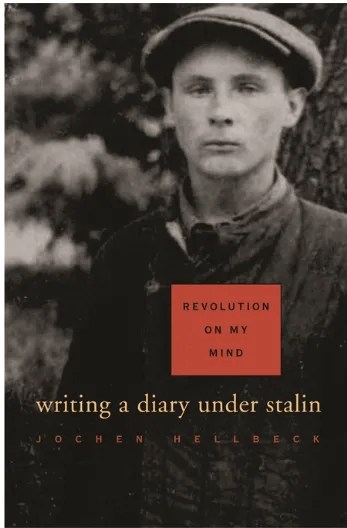
Below is a link to Jochen Hellbeck’s ‘Revolution on My Mind: Writing a Diary under Stalin’ an example of a revelatory History of the Soviet Union, with its focus on individual lives of its citizens.
Andy Divine doesn’t begin his latest essay here, but it is framed by the authorial duo of Haidt and Lukianoff and the title of their book uses an expression, that anyone who lived through the American ’60’s will recognise, as … Continue reading →
Political Observer. stephenkmacksd.com/ Sep 23, 2025 Editor: Greg Lukianoff is co-author, with Jonathan Haidt, of “The Coddling of the American Mind: How Good Intentions and Bad Ideas Are Setting Up a Generation for Failure.” These political hacks, moderled themselves after … Continue reading →
Political Cynic comments upon ‘The Sky Is Falling Political Melodrama’ . Carol Tavris reviews two books for The Times Literary Supplement of February 9, 2024. I’ll focus on one of her enthusiasm: ‘The Canceling of The American Mind: How cancel culture undermines … Continue reading →
Queer Atheist (Thank you : @DouthatNYT) MAY 13, 2023 The final paragraph of Nathan Pinkoski essay about Americas most notorious intellectual charlatan, that term is old but descriptive of Fukuyama as Political/Moral Prophet: in sum it doesn’t take much to … Continue reading →
stephenkmacksd.com/ Sep 01, 2021 stephenkmacksd.com/ Jan 31, 2025 Anne Applebaum’s re-published essay: ‘The New Puritans’ from October 2021. That is framed by Nathaniel Hawthorne’s Hester Prynne. Note that brevity is not an attribute of Neo-Cons: exhausting the readers patience, and short circuiting … Continue reading →
Political Observer comments, briefly! stephenkmacksd.com/ Jan 05, 2025 Recall that Haidt used a riff on Bloom’s ‘The Closing of the American Mind’ to sell his ‘The Coddling of the American Mind’. Note his title as ‘A professor of ethical leadership at New York University’ call … Continue reading →
Philosophical Apprentice comments. The framing of this latest David Brooks essay, in which he ponders ‘the decline of the American psyche’ what ever that might be? What are the credentials that Brooks offers The Reader? His long apprenticeship to Wm. F. Buckley … Continue reading →
Philosophical Apprentice collects some of the evocative dross of his ‘Class Day Ceremony’. JUN 8, 2023 Stephens always plays the victim: This is a speech about speaking your mind when other people don’t want you to. To those of you … Continue reading →
The viewer/reader is confronted with Catch Phrases masquerading as descriptive of Thought. E.g., ‘The Closing of the American Mind’, ‘The Clash of Civilizations’ , ‘The End of History and the Last Man’, ‘Tenured Radicals’, ‘Illiberal Education’ , ‘The Right Nation’, … Continue reading →
The reader can look to Mr. Ganesh’s essay of November 27, 2020 for his latest rhetorical strategy: Headline: What the dream hoarders get wrong about parenting Sub-headline: The rich screen their children from the hardships that form genius https://www.ft.com/content/b3b92ba4-f6e7-4fd1-bc61-6a73272e8b49 It’s … Continue reading →
Editor: Can the reader even be surprised by Bret Stephens … what to name it but Zionist Apolgetics, mauled and debased to support a kind of riff on Storm of Steel by Ernst Jünger, in a key remineient of Benjamin Netanyahu’s murderious onslaught against his neighbors. Bret Stephens as political provacateur that also has a certain kinship with The Picture of Dorian Gray (1890) by Oscar Wilde? Or is this just an instance of… or my own detetestation of Stephens, as a ersatz political moralist wallowing in Jewish Victimhood, under the klieg lights of the NYT?
Editor: Stephens intervention is World Historical?
There are powerful reasons to dislike, even despise, Israel’s current leadership: the prime minister, Benjamin Netanyahu, who repeatedly puts his political interests ahead of the national one; the national security minister, Itamar Ben-Gvir, who hung a portrait in his living room of the Jewish mass murderer Baruch Goldstein; radical settlers who, to little apparent pushback from this government, abuse, terrorize and sometimes kill their Palestinian neighbors in the West Bank.
There are also reasons (less persuasive to me, but subject to opinion) to object to the way Israel went to war in Gaza, with its heavy toll in civilian lives and a result that left Hamas in power. The same goes for Israel’s strategy toward Iran, which so far has gotten rid of neither the regime nor its nuclear program. Not least, there’s Israel’s overall approach to the Palestinians, which has resigned itself to a bleak and interminable status quo.
Valid or not, these sorts of objections to Israel are criticism, not hate. It is not a country of saints. As is true of every other country, the United States not least, plenty of sins past and present can be laid at Israel’s door. They include allegations, by Israelis and others, regarding cases of abuse of prisoners in Israeli jails. Those cases should be thoroughly investigated, just as in the United States the 8,628 allegations of staff-committed sexual misconduct victimizing adult inmates tallied in 2020 alone by the U.S. Bureau of Justice Statistics need to be deeply investigated.
Editor: Here is where Stephens actual political self is manifested!
Yet this kind of good-faith criticism of Israeli leaders and policy has for years been giving way to something darker. It’s a hyperbolic and often conspiratorial hatred of the country. It’s a belief that Israelis are perpetually out for the blood of their enemies, even when it comes at the cost of the blood of their friends. It’s the sense that it’s socially acceptable to boycott, assail and sometimes assault Israelis for the supposed sins of their government. It’s a conviction that Israel, alone among the nations, was a mistake to begin with and has no right to exist now.
Editor: It takes patience to cover the Stephens self-assigned mandate thus quotation is an instructive tool!
More broadly, the fashionable frenzy that is today’s loathing of Israel, coming from the far right but especially from the far and not-so-far left, is a sign of the degradation of the West.
…
I’ve been closely covering the Israeli-Palestinian conflict for over 25 years. It’s given me something of a front-row seat to this degradation.
…
I remember the story of Muhammad al-Durrah, the Palestinian boy who in 2000 became a global icon of Palestinian martyrdom and Israeli perfidy after allegedly being shot dead by Israeli troops — and then James Fallows presented a detailed and dispositive case in The Atlantic that the fatal bullet could not have been Israeli.
…
Editor: The final paragraphs of Stephens diatribe does not mention the on going Gaza Genocide, nor the attacks by Israel on Lebanon that are ongoing!
How is it that hatred of one country can wind up doing more damage to the haters than the hated?
All prejudice, mindless or deliberate, is mind-warping; obsessive prejudice, of the kind Israel disproportionately attracts, is even more so. There are today millions of people around the world who, with considerable media and academic assistance, have convinced themselves that the major, if not sole, cause of injustice in the Middle East and even the world is Israel’s occupation of parts of the West Bank and Gaza.
As a result, this obsession has contributed to the relative neglect of the region’s other fundamental problems, above all the abiding grip of authoritarian politics in places like Cairo and Ankara and totalitarian religious fundamentalism in Gaza and Tehran. When was the last time you heard of an American campus protest against the treatment of Kurds by Turkey (a NATO ally and longtime beneficiary of U.S. security guarantees), or the genocide in Sudan? Why is this year’s arts biennale in Venice being roiled by the inclusion of Israel, but not of China? Why has the recent report detailing the extensive documentation of systematic use of rape and sexual torture by Hamas and its collaborators received little attention?
These aren’t just questions of hypocrisy or double standards. They are evidence of minds that have lost the capacity to think dispassionately and critically. What we should really be worried about isn’t the future of Israel; it’s the fate of the West.
Moral judgments should be made about Israel according to the same standards by which we judge other countries faced with similar circumstances. It’s when Israel is demanded to be a saint — and then, as it invariably falls short, is damned as the worst sinner — that we lose our sense of perspective and proportion.
“Everyone expects the Jews to be the only real Christians in this world,” observed the philosopher Eric Hoffer in 1968. That remains true today. Hatred of Israel has become the sty in Western eyes that, as it grows larger, risks making too many people blind.
Editor: Recall that Eric Hoffer was the only Public Intelectual that LBJ could muster, as an apologist for the Vietnam War. Like Hoffer Stephens wallows in the self-serving ahistorical!
I have plenty of time to explore the avalance of office seekers, and the many attendent other office seekers. Yet as I ponder this selection of office seekers: The Toxic New Democrats, led by the toxic duo of Bill & Hillary, and there lateast political aqisition Adam Schiff, a Zionist lapdog . And the various iterations of Trumpian mendacity in all its vulgar iterations.
The defeat of Thomas Massie is the evidence that America is under threat from insider itself , via AIPAC loyalist and Miriam Adelson money! Reader look to the most powerful venal New Democrat Chuck Shumer.
Chuck “Shomer” Schumer has not only called for a resolution to support genocide, but he also visited the Genocider’s command post in Israel to get a front-seat view of ethnic cleansing in action.
As Paramount closes in on its acquisition of Warner Bros. Discovery, I’m told that members of the senior leadership team have had informal discussions about changing Bari’s mandate at CBS News—and, eventually, CNN—in ways that would give her less control over the linear product. Paramount would look to bring in an executive who could manage that business.
No plans have been telegraphed or formally enshrined, and it’s unclear how involved David himself has been in the discussions. But sources with knowledge of the conversations said that Bari would likely cede day-to-day control over Evening News, CBS Mornings, and 60 Minutes to this more experienced, as-yet-unnamed executive, shifting her focus to the news division’s digital growth while maintaining broad editorial influence across all the company’s platforms. (A spokesman for Paramount responded: “Bari has the full support of Paramount and David Ellison as the editorial leader overseeing CBS News and 60 Minutes. Reports suggesting otherwise are inaccurate.”)
The conversations, I’m told, reflect Paramount leadership’s newfound acceptance that Bari was given too broad a mandate for someone without previous experience in television, as well as some irritation with the ceaseless barrage of negative press. After all, before founding The Free Press—which Paramount acquired last year for a handsome $150 million—Bari had only ever served as an editor and writer. Nevertheless, David put her in charge of the news division, with a direct reporting line to him, while entrusting that network president Tom Cibrowski, a TV news veteran, would pick up the slack. But even withTom in place, sources inside CBS News and 60 Minutes complain that Bari is drastically overstretched, and lacks the experience and managerial skills necessary to run the network.
For now, it’s unclear whether leadership would enlist current CNN C.E.O. Mark Thompson for the linear role, though David has met with him in recent days, I’m told. Sources said it was unlikely that David would elevate Cibrowski, a capable broadcast manager but not necessarily the right fit for a combined mandate across CBS and CNN. Meanwhile, it remains very possible that they could bring in someone from outside the building. As you’ll recall, former Paramount president Jeff Shell had informal conversations with former CBS News president David Rhodes about serving in a similar role. Many CNN veterans still fantasize about the second coming of Jeff Zucker, who has quietly advised Bari at times, but most doubt that David would want to risk antagonizing Trump by hiring his old nemesis. In any event, as one source noted, David & Co. have come around to the view that they need to “let her be her.”
Bari has her supporters and detractors, to be sure, but it would be entirely unfair to pin this misadventure solely on her. She took a nine-figure deal that most people in their right minds would have accepted and held her head mostly high amid an unprecedented situation. Ellison is also concurrently trying to close his $111 billion WBD deal in order to stand up a bona fide media kingdom —and may have been working through his own learning curve during this experiment. In this sort of dynamic environment, big decisions have been made quickly, even if they need to be undone relatively quickly too.
That said, it’s hard to imagine that the pace of change is going to slow down anytime soon—not at CBS News or Paramount Skydance or, eventually, WarnerMount. Closing this merger will require a massive pro forma-ing of thousands of people and finding billions in synergies. In a way, this potential new role could be a gift for Bari. Despite all the headaches she’s had to manage, the next person is going to have to deal with much worse.
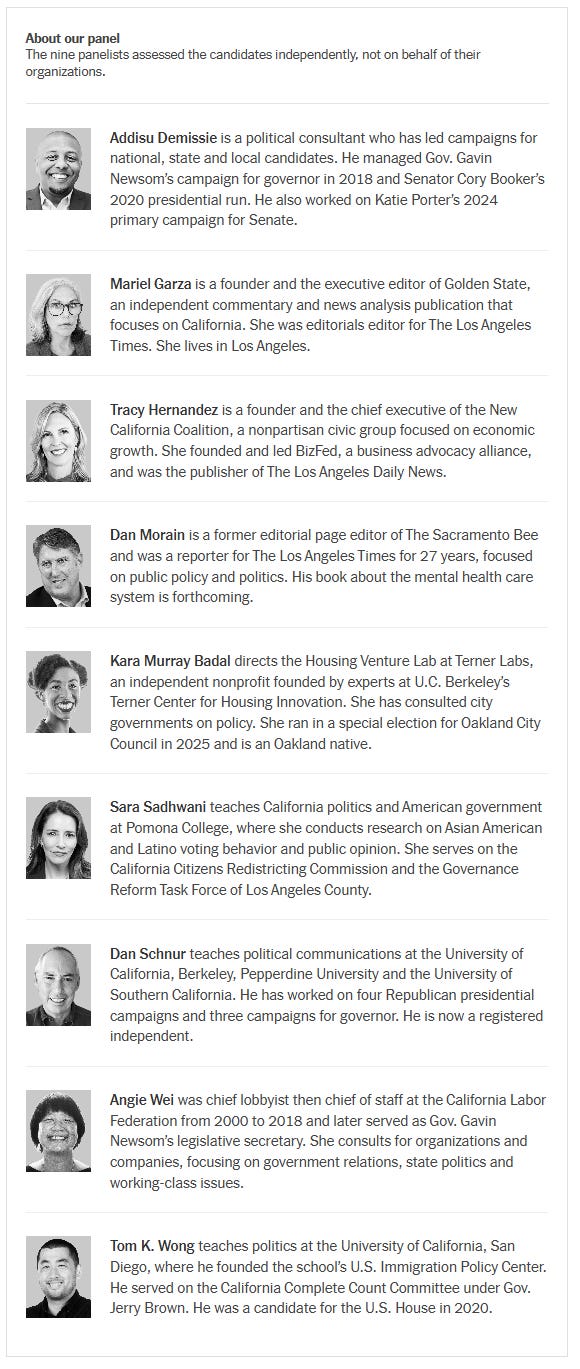
Editor: What this panel failes to even touch upon, is the fact that the current Governer of California, is the son of Willian Newsom, the administrator of the Getty family trust, how can that be? The pretence of ‘objectivily’ just falls flat! NYT does not just aid and abet the facts of California Political Life: as refeacted through the collective ‘lenses’ of various experts, but abandons political objectivity for a proffered cadre of experts, listed below !
Opinion
The Choice
Who Should Govern California?
Feb. 26, 2026
Share full article
194
Jump to topicPanelists’ RatingsThe CandidatesHousingClimate and EnergyCalifornia’s FinancesRegulating A.I.President Trump
California is the site of a series of interlocking problems: It’s just too expensive for many people. There aren’t enough homes, or at least enough affordable ones. The insurance market is a challenge. Homelessness is difficult. Immigration and Customs Enforcement is splitting up families. Federal cuts to universities and health care are rampant. Gasoline and electricity are expensive. Water rights are complicated. Fires and floods and the effects of climate change are already savage. The state is also home to the biggest economic story of our age, artificial intelligence, and remains one of the most beautiful places in the country, where millions want to live.
Whom should voters choose to deal with all of this? The California governor’s race has been chaotic and confusing. Democratic candidates are offering up their party’s full range of choices, from technocratic moderates to progressive populists.
Times Opinion assembled a panel of experts with a range of viewpoints for a new installment of The Choice, aimed at guiding voters — and in California, especially Democratic voters — through the complex issues in this election.
The Choice was prepared by Times Opinion editors, based in part on a round-table conversation with the panelists held on April 24 and a survey from which Times Opinion averaged the panelists’ responses.
Our Panel’s Ratings
We asked panelists to rate the leading candidates on how they would approach governing. Each chart reflects an average of their individual ratings.
Political Observer.Political Observer on the connection with Newsom: Father and Son and Getty Family Trust!
Editor: What this panel failes to even touch upon, is the fact that the current Governer of California, is the son of Willian Newsom, the administrator of the Getty family trust, how can that be? The pretence of ‘objectivily’ just falls flat! NYT does not just aid and abet the facts of California Political Life: as refeacted through the collective ‘lenses’ of various experts, but abandons political objectivity for a proffered cadre of experts, listed below !
Opinion
The Choice
Who Should Govern California?
Feb. 26, 2026
Share full article
194
Jump to topicPanelists’ RatingsThe CandidatesHousingClimate and EnergyCalifornia’s FinancesRegulating A.I.President Trump
California is the site of a series of interlocking problems: It’s just too expensive for many people. There aren’t enough homes, or at least enough affordable ones. The insurance market is a challenge. Homelessness is difficult. Immigration and Customs Enforcement is splitting up families. Federal cuts to universities and health care are rampant. Gasoline and electricity are expensive. Water rights are complicated. Fires and floods and the effects of climate change are already savage. The state is also home to the biggest economic story of our age, artificial intelligence, and remains one of the most beautiful places in the country, where millions want to live.
Whom should voters choose to deal with all of this? The California governor’s race has been chaotic and confusing. Democratic candidates are offering up their party’s full range of choices, from technocratic moderates to progressive populists.
Times Opinion assembled a panel of experts with a range of viewpoints for a new installment of The Choice, aimed at guiding voters — and in California, especially Democratic voters — through the complex issues in this election.
The Choice was prepared by Times Opinion editors, based in part on a round-table conversation with the panelists held on April 24 and a survey from which Times Opinion averaged the panelists’ responses.
Our Panel’s Ratings
We asked panelists to rate the leading candidates on how they would approach governing. Each chart reflects an average of their individual ratings.