May 18, 2026

May 17, 2026
Is Britain ungovernable?
Recorded on May 14th · 47 min
Episode summary
Sir Keir Starmer—Britain’s beleaguered prime minister—has played a good hand terribly. When Labour ousted the Tories in the last general election it won a thumping majority and a mandate to revive a stagnating country. Two years on, Sir Keir’s poll numbers have collapsed, his party has been hammered in local elections and his MPs and ministers are turning on him. The prime ministership that was supposed to show Europe how to save centrism now looks unsaveable.
What went so wrong? Is Sir Keir uniquely incompetent or has Britain itself become ungovernable? Join Edward Carr, our deputy editor, and a panel of our journalists as they make sense of the chaos in Westminster, explain why Britain can’t seem to keep a prime minister and ask whether centrist politics has a future—in Britain or anywhere else.
https://www.economist.com/insider/the-insider/is-britain-ungovernable
Editor: Without the stern guiding hand of Zanny Mention Beddoes, and the utter absence, as always, of a viable transcript, with which the reader might check the arguments of the participents, the listener then is at the whim of political chatters, and the vagaries of memory !
Newspaper Reader.
May 17, 2026
All my investigations are free to read, thanks to the enormous generosity of my readers. Independent journalism nonetheless requires investment, so if you value this article or any others, please consider sharing, or even becoming a paid subscriber. Your support is always gratefully received, and will never be forgotten. To buy me a coffee or two, please click this link.
On April 15th, Declassified UK published a bombshell investigation exposing how in the mid-1990s, senior British political and military officials were well-aware NATO expansion into Central and Eastern Europe “would provoke [the] Russians,” and likely trigger all-out war. Hitherto unreported Ministry of Defence files reveal London knew Moscow’s “sensitivities” over a “hostile military alliance” enlarging up to its borders were profound, and based on very “real” concerns. Yet, NATO’s dangerous crusade to absorb Central and Eastern Europe continued apace, ultimately producing the Ukraine proxy conflict.
Since the so-called Special Military Operation’s February 2022 eruption, British officials have relentlessly reiterated the mantra the proxy war was “unprovoked”. However, a declassified March 1995 Foreign Office memo noted “there was a widespread psychological and intellectual perception in Moscow that NATO was a real threat.” In May that year, then-Prime Minister John Major succinctly articulated Russian anxieties to his Irish counterpart John Bruton, as a “fundamental fear…of encirclement.” Concerns about EU membership were comparatively muted:
“For the Russians, NATO had a much more threatening symbolism and political resonance…The Baltics were particularly difficult, with extreme sensitivity for Russia. It would be very hard to have a NATO border directly against Russia.”
Still, in 1997 NATO invited Czechia, Hungary, and Poland to join, which they did two years later. In 2004, Estonia, Latvia and Lithuania simultaneously joined the military alliance. So too did ex-Warsaw Pact members Bulgaria, Romania, Slovakia, and former Yugoslav republic Slovenia. Declassified UK shows how back in August 1996, British Defence Intelligence prepared a NATO enlargement study specifically forecasting that these countries joining could trigger war, and an alliance military operation launched via Article 5 of the NATO treaty in response.
This refers to collective self-defence, under which NATO members are obligated to come to each other’s defence if attacked. In the scenario, Defence Intelligence assumed “Russia has vehemently opposed NATO membership for the Baltic states and has threatened retaliation to preserve her own security against a perceived hostile military alliance on her borders.” In the real world, Boris Yeltsin made at-times irate public statements about NATO enlargement into the Baltics at the time, while lobbying US President Bill Clinton on the issue behind closed doors.
NATO expansion continued regardless. In December 1996, Declassified UK reports then-Russian premier Viktor Chernomyrdin privately warned Major: “Russia could not stop NATO enlarging, but this would create a fragile situation which could explode.” Other declassified files from this time show senior apparatchiks in London were acutely aware of Moscow’s “concern,” “fears,” “hostility,” “negative attitudes,” and “resentment” over alliance enlargement. Both Major and his successor Tony Blair explicitly pledged in person to Kremlin officials that NATO wouldn’t “move up to Russia’s borders.”
However, a secret September 1996 policy paper made clear Britain was committed “to enlarge NATO to the East,” even if “Russian acquiescence is not possible.” In February 1997, Russia’s deputy foreign minister Nikolai Afanasievsky angrily branded public discussions in Western capitals of admitting former Soviet republics to the alliance a “blatant provocation” in a meeting with Jeremy Greenstock, Britain’s ambassador to Moscow. Greenstock reassured his Russian opposite number NATO had “no intention” of admitting former Soviet states “at this stage” – which, technically, was true.
…
“Ukrainian entry into NATO is the brightest of all red-lines for the Russian elite (not just Putin). In my more than two and a half years of conversations with key Russian players, from knuckle-draggers in the dark recesses of the Kremlin to Putin’s sharpest liberal critics, I have yet to find anyone who views Ukraine in NATO as anything other than a direct challenge to Russian interests…a [membership] offer would be seen…as throwing down the strategic gauntlet…Russia will respond.”
Declassified: UK Knew NATO Expansion ‘Would Provoke’ Russia War
24 days ago · 19 likes · 3 comments · Kit Klarenberg
Political Observer offers the reader just a portion Kit Klarenberg’s political wisdom!
May 16, 2026
While reading the first chapter of Helen Hackett’s book ‘The Elizabethan Mind : Searching for the Self in an Age of Uncertainty’ I was struck by the ideas about the mind , and the part played by Humours and Melancholy in the lives of the Elizabethans
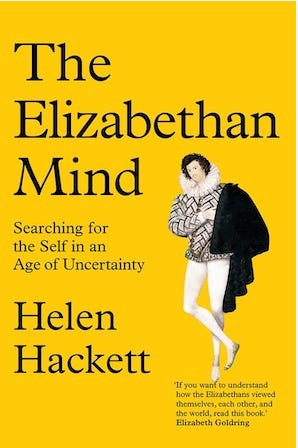
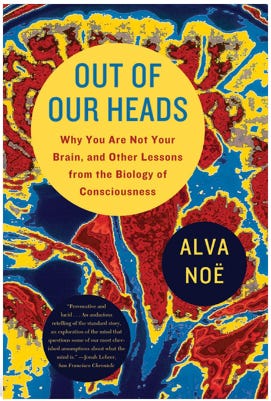
I thought first of ‘Out of Our Heads: Why You Are Not Your Brain, and Other Lessons from the Biology of Consciousness’
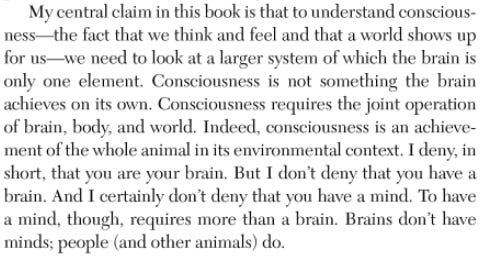
And this quotation from Noë’s book on Consciousness:
And Julian Jaynes book:
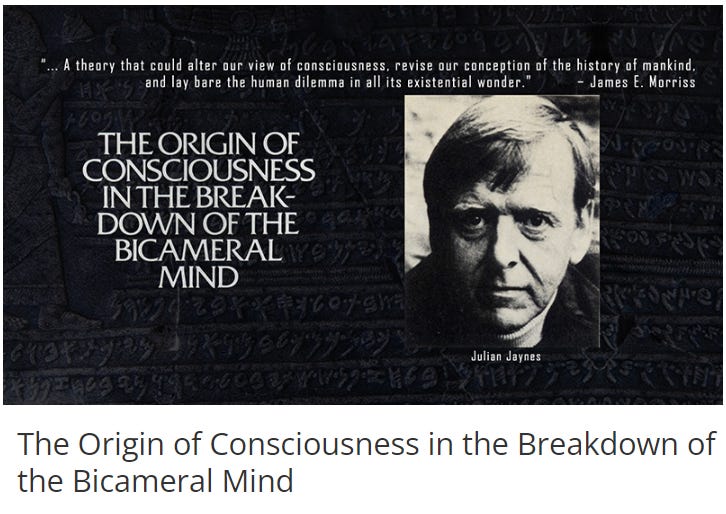
I must confess that I purchased this book in 1976, and had not yet read it. Yet when I thought of Noë’s book, I knew where I had Jaynes book stored. My intellectual ambition is subject to a disturbing lack of discipline, allied to a fear of my possible lack of ability to understand. Yet Jaynes’ style is always lucid and at times poetic , I was more that a little intimidated by the subject matter. And my lack of experience with Consciousness. I have not read these books, in their entirety: yet I was struck that The Elizabethans made me think about their view of the world, themselves and the vitality of their milieu. Both Noë and Jaynes offer thoughts on ‘Consciousness’ … perhaps further reading of both their books will offer further insights on the possible interaction between the two?
Philosophical Apprentice
May 16, 2026
Nicholas Kristof and the Collapse of Journalistic Standards
COMMENTARY
By Nancy Jacobson
How can the American people know what to believe anymore? They’re supposed to be able to turn to the New York Times and other legacy newspapers for impartial facts. Although that aspirational view was never as true as many of us supposed it to be, it’s become scandalously untrue today.
The Times this week played host to one of the most astonishing examples of journalistic malpractice in recent memory. It was perpetrated by Nicholas Kristof – a Pulitzer Prize-winning journalist turned progressive columnist and aspiring Democratic politician. Hiding under the cloak of the Times’ opinion section, Kristof ran a report alleging shocking and lurid claims of widespread, systemic sexual assault by Israeli prison guards against Palestinians.
This would be horrifying if true, except we have little reason to believe it is. To justify his claims, Kristof relies on Hamas-linked organizations, anti-Israel activists, and anonymous accounts that lack any semblance of independent verification. He also regurgitates a monstrous claim – that Israel trains dogs to rape prisoners – that is widely believed to be impossible, let alone unsubstantiated.
Let’s start with Kristof’s marquee source: the Euro-Med Human Rights Monitor. He calls it “a Geneva-based advocacy group often critical of Israel,” which is like calling the DNC “a Washington-based political group often critical of Republicans.” Euro-Med exists to oppose Israel. Many of its leaders, including its founder and chairman, are linked to Hamas. The group has a track record of promoting unverified or false anti-Israel claims, including the exact “dogs trained to rape prisoners” story Kristof repeated.
…
Viewed that way, the op-ed begins to look much like the rest of the discourse from aspiring candidates in America – where facts take a backseat to agendas, and claims are measured more by whether they hurt the opposition than whether they capture the truth.
The difference is, this claim appeared in the New York Times, bringing us back to the question: How can the American people know what to believe?
…
Editor: Reader note that this hystical chatter is yet further evidence of the loyalty of a Zionist Apologist. I trace the evolition of a her politics over time.
Nancy Jacobson is a founder of No Labels, a national organization of Democrats, Republicans and independents dedicated to a new politics of problem solving.
No Labels
Jacobson founded No Labels in 2010 with the stated goal of promoting bipartisanship.[9] The organization has put forth ideas that it claims will “put problem solving above politics”,[10] and purports to support centrist, moderate social and economic policies.
The No Labels group has been instrumental in the creation of the Problem Solvers Caucus.[11][12][13] A number of proposals supported by the group have been signed into law.[14][15][16] In 2021, the Problem Solvers Caucus, composed of an equal number of Democrats and Republicans, released a “Building Bridges” blueprint for a bipartisan infrastructure deal. It was the first deal to be endorsed by Republicans and Democrats during that budget cycle.[17][18] In connection with her work with No Labels, New York Times columnist David Brooks described her in 2016 as an “undeterrable” leader.[1]
No Labels has also been criticized of fostering a toxic environment by former employees, according to Politico.[19]
Other Activities
Jacobson is serving as a co-chair of the 2026 Jerusalem Post Miami Summit, an event focused on strengthening support for Israel amidst rising global antisemitism. In an interview prior to the summit, Jacobson emphasized the ‘unbreakable bond’ between the U.S. and Israel, arguing that their shared democratic values and cooperation against common threats make the world safer for Americans and ‘free-thinking people everywhere’.[20]
Editor : That Jacobson was the co-chair of the 2026 Jerusalem Post Miami Summit, an event focused on strengthening support for Israel amidst rising global antisemitism. Is demonstartive of her actual loyalties!
Political Observer.
May 16, 2026
Nicholas Kristof and the Collapse of Journalistic Standards
COMMENTARY
By Nancy Jacobson
How can the American people know what to believe anymore? They’re supposed to be able to turn to the New York Times and other legacy newspapers for impartial facts. Although that aspirational view was never as true as many of us supposed it to be, it’s become scandalously untrue today.
The Times this week played host to one of the most astonishing examples of journalistic malpractice in recent memory. It was perpetrated by Nicholas Kristof – a Pulitzer Prize-winning journalist turned progressive columnist and aspiring Democratic politician. Hiding under the cloak of the Times’ opinion section, Kristof ran a report alleging shocking and lurid claims of widespread, systemic sexual assault by Israeli prison guards against Palestinians.
This would be horrifying if true, except we have little reason to believe it is. To justify his claims, Kristof relies on Hamas-linked organizations, anti-Israel activists, and anonymous accounts that lack any semblance of independent verification. He also regurgitates a monstrous claim – that Israel trains dogs to rape prisoners – that is widely believed to be impossible, let alone unsubstantiated.
Let’s start with Kristof’s marquee source: the Euro-Med Human Rights Monitor. He calls it “a Geneva-based advocacy group often critical of Israel,” which is like calling the DNC “a Washington-based political group often critical of Republicans.” Euro-Med exists to oppose Israel. Many of its leaders, including its founder and chairman, are linked to Hamas. The group has a track record of promoting unverified or false anti-Israel claims, including the exact “dogs trained to rape prisoners” story Kristof repeated.
…
Viewed that way, the op-ed begins to look much like the rest of the discourse from aspiring candidates in America – where facts take a backseat to agendas, and claims are measured more by whether they hurt the opposition than whether they capture the truth.
The difference is, this claim appeared in the New York Times, bringing us back to the question: How can the American people know what to believe?
…
Editor: Reader note that this hystical chatter is yet further evidence of the loyalty of a Zionist Apologist. I trace the evolition of a her politics over time.
Nancy Jacobson is a founder of No Labels, a national organization of Democrats, Republicans and independents dedicated to a new politics of problem solving.
No Labels
Jacobson founded No Labels in 2010 with the stated goal of promoting bipartisanship.[9] The organization has put forth ideas that it claims will “put problem solving above politics”,[10] and purports to support centrist, moderate social and economic policies.
The No Labels group has been instrumental in the creation of the Problem Solvers Caucus.[11][12][13] A number of proposals supported by the group have been signed into law.[14][15][16] In 2021, the Problem Solvers Caucus, composed of an equal number of Democrats and Republicans, released a “Building Bridges” blueprint for a bipartisan infrastructure deal. It was the first deal to be endorsed by Republicans and Democrats during that budget cycle.[17][18] In connection with her work with No Labels, New York Times columnist David Brooks described her in 2016 as an “undeterrable” leader.[1]
No Labels has also been criticized of fostering a toxic environment by former employees, according to Politico.[19]
Other Activities
Jacobson is serving as a co-chair of the 2026 Jerusalem Post Miami Summit, an event focused on strengthening support for Israel amidst rising global antisemitism. In an interview prior to the summit, Jacobson emphasized the ‘unbreakable bond’ between the U.S. and Israel, arguing that their shared democratic values and cooperation against common threats make the world safer for Americans and ‘free-thinking people everywhere’.[20]
Editor : That Jacobson was the co-chair of the 2026 Jerusalem Post Miami Summit, an event focused on strengthening support for Israel amidst rising global antisemitism. Is demonstartive of her actual loyalties!
Political Observer.
May 16, 2026
In a last-ditch attempt to save his dying leadership, Keir Starmer had a message for millions of people who are sick and tired of soaring rents, rising bills and endless war: it’s not that bad. ‘Like every government, we’ve made mistakes’, he said, ‘but we got the big political choices right.’ In the wake of Labour’s disastrous local election results, pressure has mounted for the Prime Minister to resign, and lobby journalists have been lining up to ask Starmer how he intends to cling onto power. I would have asked him a different question: why have you failed to use this power to improve ordinary people’s lives?
If the establishment media won’t scrutinise Starmer’s claim that he has got the big political choices right, then we will. Cutting winter fuel. Slashing disability benefits. Refusing to scrap the cruel and immoral two-child benefit cap. After fourteen years of Conservative rule, you’d think that a Labour government would be bursting with impatience to deliver policies to benefit working people. This Labour government couldn’t wait to impoverish them.
Eventually, twenty months into office, following speech after speech in which the government told us they simply did not have the money to lift children out of poverty, they were finally forced to scrap the two-child benefit cap. In doing so, they admitted they had been keeping children in poverty for no reason whatsoever. At the same time, the Labour leadership boasted about record increases in military spending. Austerity for the poor. Profits for war. From the moment this government was elected, it has decided there isn’t any money to feed, house or care for people — but there is always money to bomb, kill and injure them.
Another of Starmer’s ‘big political choices’ was to allow failing water companies to rip us off. Soaring profits. Sewage in our rivers and seas. This is the consequence of our government’s dogmatic refusal to do the common-sense thing: bring water into public ownership. It could have ended the failure of privatisation. Instead, it decided that ordinary people should pay the price for corporate negligence and greed.
This government chose not to bring in wealth taxes, not to implement rent controls, not to make the kind of public investment in council-housing that is needed to tackle the housing crisis, and chose not to redistribute resources from those who wield it to those who need it. It chose to give a top political job to a man with an established relationship to a convicted sex offender — a man who just so happened to pride himself on his opposition to our mass movement for social justice and peace.
Rather than rewriting the rigged rules of corporate Britain, the government also chose to blame a different group of people for the problems in our society: migrants and refugees. It went after the rights of migrants who have contributed so much to this country and demonised human beings seeking asylum. It mimicked the politics of Reform UK and rolled out the red carpet for Nigel Farage.
There is perhaps one political decision that will leave the greatest stain of all. As Israel embarked on the mass murder of Palestinians in Gaza, this government could have defended international law and called for peace. Yet it chose to facilitate war crimes, crimes against humanity and genocide. And it chose to launch a systematic assault on the civil liberties of those who protested against the government’s complicity (alongside its outrageous decision to erode jury trials, the cornerstone of our justice system). This government’s enduring legacy will be its complicity and participation in the greatest crime of our age. And we will never, ever forget.
These decisions are the root cause of the chaos that Starmer is now trying to temper — and unless these root causes are addressed, we will continue to lurch from one political crisis to the next. It’s not enough for Starmer to go. What needs booting out is the politics he represents: corporate greed, anti-migrant policies and endless war.
For much of our media, the past few weeks and months have been a golden opportunity to indulge the endless psychodrama of Westminster and speculate about Starmer’s successor. For millions of ordinary people, they have been a depressing reminder of how yet another government has refused to implement policies that can improve their lives. I support calls for the Prime Minister to resign for the same reason I refuse to get excited about any of his possible replacements: our political class is unwilling to bring about the transformative change this country needs. I haven’t heard anything from his main contenders about the need to end corporate greed, the need for rent controls, or the need for a mass redistribution of wealth and power. I certainly haven’t heard any calls for an investigation into British complicity in genocide — presumably because that investigation would implicate them as well.
In his speech yesterday, Keir Starmer broke the record for the most number of cliches in half an hour. Yet he managed to hide the real record beneath his rhetoric: child poverty, inequality and genocide. Those are the government’s big decisions. And that is how this government will be remembered.
If we want real change, then we need to mobilise in our hundreds and thousands for the kind of policies Starmer could — and should — have implemented from the start: rent controls, caps on energy prices, controls on basic food prices, public ownership, a National Care Service, an uplift in child and disability benefit, a defence of our civil liberties; and a redistribution of resources away from weapons and war, toward education, housing and our NHS.
We are at a critical juncture in British politics — but we have hope on our side. During last week’s elections, we saw Your Party-backed independents, Green Party candidates and others fighting back against austerity, privatisation and fear. They proved what can happen when grassroots campaigns stand up for all communities, defend the humanity of Palestinians, and vow to make life affordable for all. Alone, there is only so much we can achieve. Together, we can change British politics forever. And we can bring about a new kind of society built on a radical idea: that everyone deserves to live in dignity.
Jeremy Corbyn is the Member of Parliament for Islington North and a member of the Independent Alliance group of MPs.
May 14, 2026
Editor: What can the reader of this latest political histeria of a reification of Jewish Victimhood! While the crimes of Gaza Genocide, and its political corilary of the Lebanon Genocide, are the proof that the Myth of that victiomhood, the heue and cry of the toxic Zionist/Murderious Cadre. The reader in the neverending fictional creshendo of Israle’s ‘Right To Exist’ merde, via Zanny Mentions Beddoes mendacious chatter!
U.C.L.A. Considers New Tactics to Combat Antisemitism
The Trump administration has sued the university, saying it didn’t do enough to protect Jews on campus.
…
Some of the recommendations in Thursday’s report fall beyond U.C.L.A.’s authority. For example, the group suggested that the University of California as a whole consider using the International Holocaust Remembrance Alliance’s working definition of antisemitism.
The definition, developed in 2016, describes antisemitism as “a certain perception of Jews, which may be expressed as hatred toward Jews.” But the definition’s critics have said that accompanying examples, such as contending that Israel’s existence is “a racist endeavor,” appear intended to suppress free speech.
Dozens of American universities have adopted the definition, including Columbia and Harvard last year. In March, the University of California, Berkeley, agreed as a part of a legal settlement that it would continue to consider the definition and its examples “whenever investigating or assessing claims of discrimination or harassment against Jews or Israeli individuals.”
The president of the University of California system, James B. Milliken, did not immediately commit to embracing the definition across its 10 campuses. But Mr. Milliken hailed U.C.L.A.’s efforts as “important and impressive” and said, “Antisemitism is antithetical to the core values of the University of California, and it is essential that we continue to demonstrate this principle through our policies and actions.”
Newspaper Reader.
May 14, 2026
Ethan Croft
Good morning. In the narrow window of time set by us excitable lobby journalists, the push to topple Keir Starmer failed when the sun set on Westminster yesterday: there was no “big beast” resignation from the cabinet and no leadership challenge launched.
The PM stood firm, telling cabinet to back him or sack him, and insouciantly started replacing the various parliamentary private secretaries and junior ministers who resigned yesterday in an effort to pressure him to go. The consensus of commentary vertiginously changed once again. It was not the end – perhaps Starmer had seen off the challenge.
But just as it was premature to say a challenge was make or break yesterday, it would be equally premature to say that he is safe. The King’s Speech today, in which the Labour government’s agenda for the next parliamentary session will be set out, has created an interlude in which all sides think it is polite to stay quiet.
The PM had a brief meeting with Wes Streeting this morning at No 10 but both sides are keeping schtum about what was said. We will have to wait until Thursday to see if there is a more concerted push from the ambitious Health Secretary, who is due to make a media intervention that day anyway because the NHS’s latest waiting-list data is being released.
An extra day could allow Streeting to get his ducks in a row. Note that his natural supporters on the right of the party are not yet united behind the idea of challenging Starmer right now – many of their names appeared in an open letter signed by 110 MPs yesterday pledging support for the Prime Minister.
The most damning development for Starmer’s long-term prospects was a statement from Labour’s 11 affiliated unions this morning. They declared: “It’s clear that the Prime Minister will not lead Labour into the next election, and at some stage a plan will have to be put in place for the election of a new leader.”
That’s every union, from the left-wingers of Sharon Graham’s Unite through to the once reliably leadership-supporting moderates at Usdaw and Unison. This puncturing of the life raft will prove more significant than any ministerial resignation we have seen so far.

Keir today, gone…?
by James Heale
It has been an utterly surreal day in parliament. This morning Wes Streeting’s allies briefed that the Health Secretary intends to resign tomorrow and challenge Keir Starmer for the Labour leadership. But this afternoon the Prime Minister stood at the despatch box giving his response to the King’s Speech, manfully ploughing on. On a day when constitutional nicety met with political reality, Starmer signalled that he intends to keep fighting until the bitter end.
Starmer is often viewed as a wooden parliamentarian, ill-attuned to the mood of the House. Yet such was the extent of the absurdity this afternoon that even he could successfully make light of his current situation. With almost 100 Labour MPs calling for him to quit, he made a joke at his own expense. Mentioning backbencher Naz Shah’s new book, he noted that it had been endorsed by ‘well over a hundred’ members of the House. ‘At last Mr Speaker,’ he said, ‘a list that we can all get behind.’ Streeting, sat near him on the frontbench, certainly enjoyed that one.
It was a moment of levity in an otherwise black day for the PM. Kemi Badenoch, speaking for the opposition, had fun at Starmer’s expense. The Tory leader asked why the government has ‘learnt no lessons’ from its time in power so far. ‘I suppose the Health Secretary has been a bit distracted lately, hasn’t he?’ she quipped, asking Streeting: ‘Why don’t you just do your job?’ She added that she felt ‘sorry for Labour backbenchers’, whose legacy will now be ‘breakfast clubs and Peter Mandelson’.
Outside the chamber, Labour MPs continue to plot. As Streeting’s conspirators plan their pitch, the soft left is completely split. Senior figures fret that Angela Rayner simply is not up to the job, amid concerns about her character and HMRC’s inquiry into her tax affairs. Andy Burnham, fresh from his train journey south, is meanwhile still not able to find a suitable parliamentary seat in which to stand. So there is increasingly momentum behind Ed Miliband – recognised by all wings as an effective minister – as the only viable candidate on the pitch who can take on Streeting.
The final word ought to go to Sir Ed Davey, who called today’s speech the ‘most surreal’ Humble Address he has ever experienced, out of the 23 he has heard. ‘Everyone in this House and everyone in the country knows this Prime Minister may soon not be in power,’ he said. Starmer knows that better than anyone else.
Newspaper Reader.
 Global Delinquents