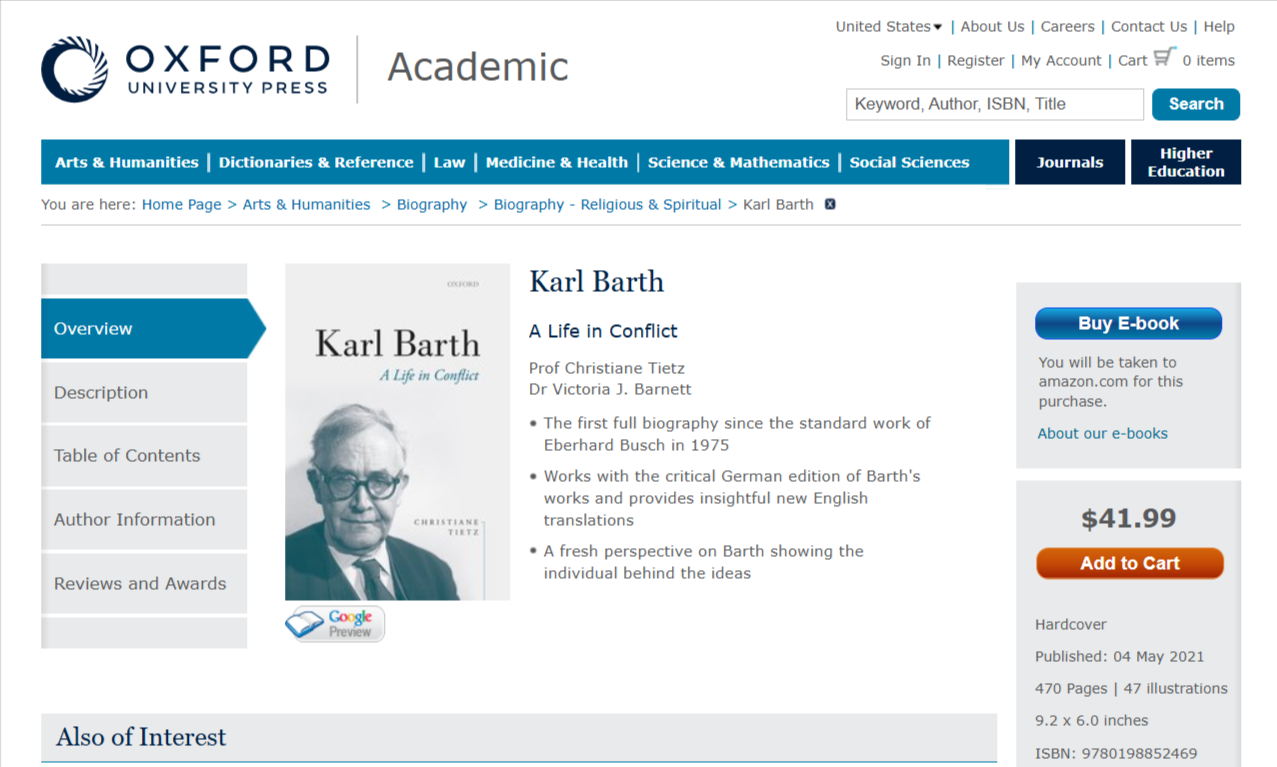
Katrina Forrester in The London Review of Books of 26 April 2012 on Karl Popper!

Philospical Apprentice.

stephenkmacksd.com/

Jun 26, 2025

https://www.lrb.co.uk/the-paper/v34/n08/katrina-forrester/tocqueville-anticipated-me

Editor: The opening paragraph of this essay via George Soros, offers the reader insight into both political/philosopical actors!

In October 2011, the European Court of Human Rights ruled that George Soros had violated insider trading laws more than two decades ago in dealings with the French bank Société Générale. Soros has given billions of his personal wealth to fund liberal political organisations, notably his own Open Society Foundations, which operate on a global scale and have supported anti-totalitarian movements from Poland’s Solidarity to Zimbabwe’s Movement for Democratic Change, as well as countless other organisations that promote human rights. He has promised to give $100 million to Human Rights Watch over the next ten years. The decision of the European Court, however, brings Soros to book for the nastier things he does when he’s not being a philanthropist. His teacher and mentor, Karl Popper, might have seen this as an example of the paradox of unintended consequences. Soros’s actions also illustrate one of the central puzzles of Popper’s liberalism. Like Soros, Popper wanted to have it both ways: he wanted to unify the humanitarian left while celebrating the openness of the free market, with all its imbalances. Did he succeed?


Editor: The final paragraphs of this essay, while recognising the value of this whole essay, and its explorations of Popper, and his evolving philosopical imperatives and his self-infatuation, a clear and present danger to all who put pen to paper!

One of the most interesting exchanges from this period is a series of letters between Popper and the philosopher Rudolf Carnap. (It’s clear that Popper, too, thought they were interesting, since he sent Hayek a copy of his responses to Carnap’s questions.) In 1946, after reading an attack by Popper on Marx and historicism, Carnap wrote to ask ‘whether or to what extent you still regard yourself as a socialist’. Popper replied that he rejected the term ‘socialism’, but claimed that he shared much with the socialists: a belief in the ‘greater equalisation of incomes’, in ‘experimentation in the political and economical sphere’, and even in the partial ‘socialisation of means of production’. The public ownership of industries and services could work well, he suggested, and it was certainly important that the state have the power to break up monopolies. But he attached two provisos, which, he thought, brought out the differences between the socialist position and his own. He argued that socialisation would be possible only if ‘the considerable and serious dangers raised by such experiments are frankly faced, and means are adopted to meet these dangers’, and if ‘the mystical and naive belief is given up that socialisation is a kind of cure-all’. Freedom could not be ‘saved’ without ‘improving distributive justice, i.e. without increasing economic equality’. More important, it could be achieved only if its defenders were willing to use trial and error, to accept that socialisation sometimes would promote freedom, and sometimes would not. Popper believed that income disparities might be even greater in a socialised, centralised economy. It was also more likely, he believed, that in such an economy powerful people would have too much control over individuals’ thoughts and actions. As Carnap pointed out in response, Popper differed from socialists in other ways, too – notably in his lack of concern for issues of economic power and exploitation, and in his emphasis on distribution rather than production.

When did Popper leave all this behind? In a 1956 letter to the American journalist Henry Hazlitt, a neoliberal and one of the founding members of the Mont Pélerin Society, Popper retracted the ideas he’d outlined in The Open Society that now seemed to him too statist and too Keynesian, in particular the concern with full employment. He still thought it important to reduce poverty and support public education, but no longer had the goal of increasing equality. From this point on, he starts to look more like a Cold Warrior. His attacks on totalitarianism in general became attacks on communism in particular, and what he perceived as the choice between the open and the closed society became ever starker. Where once he had tried to unify the individualist left, he now became a critic of it. By the early 1970s he had declared himself in ‘diametrical opposition’ not only to Marxists, but also to the New Left. Radical students saw him as a representative of the conservative establishment; he saw them as representing the decline of Western civilisation. He objected to what he called the ‘conspiracy theory of society’ – namely, the idea that the capitalist system is evil or morally base. Yes, the open society was in ‘urgent need of reform’, but it was still the case that people had never had it so good. During the postwar decades, he withdrew from public life, spent less time at the LSE and became more and more intellectually isolated. Though he never described it in quite these terms, he came to see the biggest problem in the capitalist West as that of moral decline. Indeed, it sometimes seems that, for Popper, all that was morally objectionable in society could be blamed on individual failures of moral and intellectual responsibility. When he listed what was wrong with the world, alcohol, drugs and crime were high on the list. These were not just symptoms, he believed, but were themselves the problems. In democracies, it was not the structures of society that were at fault, but the citizens: when things go wrong, they have only themselves to blame. By 1981, Popper was so angry at outright opponents of capitalism that he claimed he didn’t care about social inequality any more. What did it matter if the rich got richer?

Despite Popper’s continual assertions that he remained a critic of modern politics, the West appeared to get off scot-free. All he cared about was whether or not a government could be removed without bloodshed. If it could, it was a democracy. Many political theorists of Popper’s generation had been sceptical about idealistic visions according to which democracy expresses the ‘general will’. They argued that such visions obscured the reality that democracies are competitive systems in which voters elect leaders – so-called ‘elite democracies’. Popper certainly shared this view. But whereas his fellow Austrian Joseph Schumpeter had argued that real-life competitive democracies tended to be less competitive – and less open – than free markets, Popper didn’t spill much ink on the flaws in his model of the open society. He may have wanted it to be open to critical discussion, but he was surprisingly uninterested in the question of how to ensure that such discussion would be open to everyone and conducted on equal terms. Though he advocated a continual ‘fight against bureaucracy’, he didn’t see the need for an equivalent fight against private corporate interests.

While it isn’t so surprising that Popper gave up on equality (it was always an instrumental good for him, a necessary step on the path to liberty), it is striking that he gave up on – or at least toyed with giving up on – aspects of individual freedom. In his later writings, population growth is a constant concern. In 1972, after the publication of The Limits to Growth thesis, with its Malthusian predictions of economic and social collapse, he wrote that in order to preserve life on earth, we must find ways to address the problem, and to do so without coercion. How? Education, he argued, was the only way out, the only way to slow population growth without constraining freedom. How to avoid giving up on freedom in the face of this danger is a recurrent theme in After ‘The Open Society’. He is less obviously troubled by threats to freedom of speech. In 1989, he declined an invitation to sign the Society of Authors’ letter declaring support for Salman Rushdie after the fatwa was declared. By this time he seems to have become open to arguments for censorship. The last essay in this volume argued that the power of television must be controlled and violent images restricted. Only then could a democratic society remain ‘civilised’. Popper’s suggestion here was that the primary function of ‘civilisation’ was to reduce violence – censorship was the cost of keeping a society open.

This picture of Popper in old age is not a flattering one, but a picture of the younger Popper might not be very flattering either. Though he listed modesty and a readiness for critical debate as the highest intellectual virtues, he was famously dogmatic – and the dogmatism shines through in these writings. For a man who declared (in a technical context, it’s true) that there is ‘no such thing as justification’, he seems to have spent a lot of time justifying himself. Many of the early essays are directed at the (many) critics of The Open Society who saw it as polemical, emotional, even hysterical. His defence – that although it aimed at peace, it was also his ‘war effort’ – was reasonable, but his tone was sometimes less so. He wrote letters to friends that included third-person defences of his work so they could pass them off as their own. And he could appear remarkably self-important: in a lecture on Tocqueville, he noted how impressive it was that in some of his views on the paradoxes of freedom and equality, ‘Tocqueville anticipated me.’

These quirky and revealing writings show that Popper was not as consistent as he would have liked to think. But the editors sometimes seem too close to him to notice. Jeremy Shearmur was Popper’s assistant for many years, and gives the impression that he wants the reader to feel as he did on first reading some of these essays – when one unpublished fragment tails off, he tells us that ‘alas no more material follows.’ Popper’s own inconsistencies – particularly his celebration of individual freedom and unwillingness to face up to its consequences – are reflected in the editors’ decisions. And terminology that reminds us of Popper’s historical context has been removed, thanks to a somewhat squeamish political correctness: as the editors make clear in the introduction, they have ‘changed the use of Mohammedans for the followers of Islam, as it is now recognised as offensive’. But the updating – or whitewashing, take your pick – of Popper’s terminology doesn’t extend to eliminating the term ‘Negro’, which he apparently continued to use as late as 1988. By then, he was out of touch. The idea of The Open Society may have had a long and illustrious afterlife, but as the title of this volume inadvertently suggests, the political writings that followed are perhaps best understood as a long and not so illustrious footnote to the ‘war effort’ of Popper’s middle years.


Editor: Also read the reply of Jeremy Shearmur.

Letters

Vol. 34 No. 11 · 7 June 2012

Katrina Forrester reads Popper as if he was a proponent of market liberalism, or ‘neoliberalism’ (LRB, 26 April). But this isn’t the case. Popper certainly valued liberty and markets; but within the broad commitments of the ‘open society’ he was willing to accept considerably more government involvement than neoliberals – or any conservative, for that matter – would. Any account of Popper’s views is complicated by the fact that he found admirers on the left as well as on the right. But today there is no reason to think that support for liberty and (well-regulated) markets alone entails any particular position on the liberal spectrum. Part of the interest of After ‘The Open Society’, the collection of Popper’s writings that Forrester reviews, which I co-edited, is that it shows the extent to which Popper never fully joined with Hayek and other neoliberals. For example, late in his career he proposed that the state take a 51 per cent share in all public companies (but not an active role in management). His attention to the problem of overpopulation and his (curmudgeonly) worry about the effects of mass market television, also tell against a neoliberal interpretation of his views, especially when a more consistent social democratic interpretation is available. Popper was explicitly critical of ‘free market ideology’. But the main contribution of his political philosophy was towards the defence of the widely shared liberal commitments of the ‘open society’, within which more specific policy prescriptions may be worked out through trial and error.

Jeremy Shearmur
Australian National University


Editor: See Chapter 9 Plato, Socrates, Classical Athens , and the West in Haim Hacohen’s Karl Popper: The Formative Years 1902-1945 for insights into Popper’s view of Plato!

Cambridge University Press

Publication date ‏ : ‎ October 23, 2000

Philospical Apprentice.

Posted in Uncategorized | Leave a comment

Mamdani’s Success Spotlights a Deepening Rupture Among U.S. Jews While Zohran Mamdani won over some Jewish supporters, other Jewish Democrats suggested that concerns about their community’s safety are

Political Observer.

stephenkmacksd.com/

Jun 25, 2025


June 26, 2025:

In the face of the continuing Gaza Genocide, The Toxic Myth of Jewish Victimhood repeated ad nauseam, now rules as if a truism beyond doubt, or even evidence! Read @NYT Zionist Trio: Friedman, Brooks, Stephens!

Posted in Uncategorized | Leave a comment

Janan Ganesh’s latest *feuilleton in The Financial Times!

Literary Observer re-aquaints himself with Ganesh as *flâneur?

stephenkmacksd.com/

Jun 25, 2025

Headline: How Los Angeles made the modern world

Sub-headline: The troubled city has done more than most to shape how people now live

https://www.ft.com/content/7f416e2b-a89b-4083-b3c2-77461d3986c4

It’s been sometime since I’ve read Mr Ganesh:

*flâneur

someone who walks around not doing anything in particular but watching people and society:

She wanders around with her camera, a flâneur with a keen eye.

Lisbon is a city built for the ultra-relaxed, aimless flaneur.

https://dictionary.cambridge.org/dictionary/english/flaneur


StephenKMackSD’s Newsletter

janan.ganesh@ft.com Denounces the American Hegemon & The Atlanticist Tories!

Political Observer comments.

stephenkmacksd.com/'s avatar

stephenkmacksd.com/

May 29, 2024


The Reader confronts the latest of Mr. Ganesh’s essays, with his ability to view the 14 years of Tory rule, that has been shortsighted, across a range of issues. To express it in the blandest terms: which just might be the raison d’etre of this Ganesh intervention? The trivialization serves as the backdrop, for an apologetic that simply muddies the waters, of what an actual critical evaluation of those 14 years might be argued!

Boris Johnson, 2017: “We hear that we’re first in line to do a great trade deal with the US.” Liz Truss, 2019: “My main priority now will be agreeing a free trade deal with the US.” Dominic Raab, a cabinet eminence at around the same time: “President Trump has made clear again that he wants an ambitious trade agreement with the UK.”

Then Rishi Sunak on the same subject last summer. “For a while now, that has not been a priority for either the US or UK.” Oh.

This government’s single greatest disservice to the UK has been to misunderstand the US.

Mr. Ganesh’s political myopia eventuates, realizes itself , into an expression of a self-serving political refraction, that might capture the The Reader’s attention, in the moment. But on reflection is judged as disingenuous? And or leads The Reader to treat this as propaganda?

Editor: Brexit in the next paragraph becomes the ‘Paradise Lost’ in this narrative. A a huge bet on the economic openness of America is then argued as Derrida might have argued it, as an aporia ?

Brexit was, from the start, a huge bet on the economic openness of America. A bilateral trade deal with Washington was meant to offset the loss of unfettered access to the EU market. That no such deal emerged was bad enough (though as predictable as sunrise). But then Donald Trump and later Joe Biden embraced a wider protectionism. World trade is fragmenting as a result. So for Britain, double jeopardy: no agreement with America, but also less and less prospect of agreements with third countries.

Editor: I’ll select some quotes from the remainder of the essay.


In essence, the nation staked its future on trade at the exact historical moment that it fell out of favour as an idea. It is the geostrategic equivalent of investing one’s life savings in a DVD manufacturer circa 2009.

Anyone with a passing knowledge of Washington could have warned them not to confuse the place for a free-market bastion.

In 1992, the trade sceptic Ross Perot won 19 per cent of the national vote as an independent presidential candidate.

Editor: Potted American History:

Look at the dates here. This was the high summer of “neoliberalism”. Imagine how much stronger the protectionist impulse was in normal times. Or rather than imagine, check the record. It shows the tariff walls of the 1800s. It shows the statism of Alexander Hamilton and Abraham Lincoln. Smoot-Hawley wasn’t an interwar aberration.

But protectionist sentiment is a force in American life to an extent that it can’t be in a mid-sized, resource-poor archipelago. It is then transformed into policy via sectoral lobby groups of a scale and sophistication that must be seen up close to be believed.

If I lived in a continental-scale market with superabundant resources, I’d need a lot of persuading from David Ricardo and The Economist that I am still better off trading. But that is the point. The Tories think the crucial fact about America is that it is made up of Britain’s “cousins”. (It isn’t, unless we are consulting the census of 1810.)

After that, the next most important fact is its status. America is defending a position as the world’s number one power.


Editor: Mr. Ganesh must realize that the Hegemon does as it pleases. The very history of Britain is defined by that practice, that claim!

One needn’t admire this about the US. One can suspect it of hysteria, in fact. But the job of a British government is to fathom these things before betting the nation’s entire future on a hunch that America will forever uphold world trade.


Editor: the final paragraphs of this churlish meandering philippic come to an end!


This mistake came from “Atlanticist” Tories, remember — the ones who read Andrew Roberts and track the exact co-ordinates of the Churchill bust in the White House. (Barack Obama was hated for moving it.) Well, after giving it all that, these people failed on their own terms. They failed to understand US politics. Britain will foot the bill of their error for decades.

“Trade”: even the moral connotation of the word is distinct in each nation. It has had a high-minded ring to it in Britain ever since the abolition of the Corn Laws helped to feed the working poor. In America, where the cotton-exporting Confederates were free-traders, history isn’t quite so clear-cut. It is almost as if these are different countries.

https://www.ft.com/content/8f229e15-9842-46ce-a828-19647a48f6d6


Political Observer


Editor:

Paragraph 1.

Editor: Mr. Ganesh in this latest feuilleton is heavely embroidered with Players in the first unweildy paragraph:

Mr. Ganesh in this latest feuilleton that is heavely embroidered with The Players in the first unweildy paragraph:-a bilingual city with a Spanish name- English as the ruling language on Earth-the British empire-French when the Versailles treaty was drafted in Woodrow Wilson’s native tongue, not just Georges Clemenceau’s-Thank Hollywood for ending the contest. Thank Disney for not having to master le subjonctif.


Editor: Ganesh resorts to free imaginative variation as his argumentative toll of ghoice !

Paragraph 2.

My favourite American city is in trouble- Donald Trump-the National Guard there this month-No one ever confused LA’s public spaces with those of Zurich- High-profile deserters include Joe Rogan, now of Texas. Brian Wilson made the ultimate departure last week: his death all the more poignant because he fixed LA in the world’s mind as the cloudless Shangri-La it isn’t.

Paragraph 3.

Editor : Ganesh resortes to the jejune:

The city can turn things around. San Francisco to the north is getting better under a mayor who has brought such whimsical innovations as enforcing the criminal law.

Paragraph 4.

Editor: The unhappy marriage of Porn and Hollywood!

Count the ways. The “other” film sector, porn, whose base of operations is the San Fernando Valley — because which of us wouldn’t look better in that light? — has had even more effect on this century than Hollywood.

Paragraph 5.

Editor: Ganesh explores Architecture and West Hollywood: He is no Ada Louise Huxtable or Aline Bernstein Saarinen!

Paragraph 6.

Editor: Ganesh explores the Politics of LA with wide latitude:

Even in politics, LA has had bizarre influence for what is not even a state capital. The radicalisation of the American right in the past century, whose spillover effects are global, has origins in Orange County, among other sunbelt suburbs. Nixon and Reagan were southern Californians by upbringing or choice. It is unthinkable but true that LA was once seen as a Wasp haven from the “ethnic” east. Cold war hardliners weren’t out of place in a region whose wealth has always rested as much on Northrop Grumman as on Paramount Pictures. I wonder how much of Trump’s animus comes in part from a sense that LA is lost conservative ground.

Paragraph 7.

Editor: The Appearance of Francis Fukuyama, the Hegalian Pretender who became a ‘Liberal’, appears as the uttery dubious counterpoint to Ganesh L.A. Crush!

And for all the intellectual condescension towards LA, the most cited, if not understood, idea of recent decades came from a former analyst at Santa Monica’s RAND Corporation called Francis Fukuyama. (Though he was also a Washington hand. Perhaps no argument, let alone “The End of History?”, can take full shape when a beach is two blocks away.)

Editor: The final paragraphs molded by Ganesh seven paragraphs, when the place name fails to beguile The Reader, he tosses in Werner Herzog. The repeating of those romantic place names fail to evoke in this Reader, what Ganesh finds of such moment. I long to drive up Alameda Street to Los Angeles, following the Railroad Tracks and seeing and smelling the air, and not seeing CityHall, now lost from view!


You will object that a lot of these impacts on the world aren’t for the better. But negative influence is still influence. If our present civilisation falls, and is dug up in some future renaissance, the proper excavation site will be LA. New York, London and Paris are “better” cities but how much has each done to change the human experience in the past half-century? Their role has become to contain things — almost literally all things — rather than originate them. This is what Werner Herzog was getting at when he cited LA’s “substance” as his reason for living there.

That substance might be running out. Hollywood seems creatively spent. The serious end of tech has never made the dash from northern to southern California that is forever in the offing. But the half-life of the influence that LA has exerted until now will run on for decades. The fundamental change that we are living through, from a culture in which the written word is central to one where the image is central, traces back to Hollywood. Perhaps another city is limbering up to take over as the moulder of the world. Until then, we all live in LA.

(*https://www.oed.com/dictionary/feuilleton_n?tl=true)

Posted in Uncategorized | 1 Comment

By threatening the ICC, David Cameron disgraced Britain | Peter Oborne | MEE Opinion!

Old Socialist opines: The Political Class of America and the EU are mired in their own self-serving mendacity!

stephenkmacksd.com/

Jun 16, 2025

Peter Oborne, associate editor of Middle East Eye, argues that by threatening the International Criminal Court’s chief prosecutor, David Cameron has disgraced himself and Britain. In trying to protect Israeli leaders from war crimes charges, Obrone says, Cameron resorted to menace and intimidation. He told ICC prosecutor Karim Khan that issuing a warrant for Benjamin Netanyahu would be “like dropping a hydrogen bomb”. Oborne says this places Britain among gangster nations and rogue states for whom might is right. He compares Cameron’s actions to those of Vladimir Putin and Donald Trump, and calls it an attempt to pervert the course of justice. He notes that the Rome Statute that established the ICC does not just prosecute those who commit war crimes, it also criminalises those who seek to prevent war crimes from being prosecuted. Cameron’s threat to “defund the court and withdraw from the Rome Statute” falls squarely within ICC jurisdiction, Oborne argues. Oborne concludes that although Karim Khan stood up to Cameron’s threats, the inescapable fact remains that a British foreign secretary tried to subvert the course of justice. Cameron needs to break his silence and to explain himself. Meanwhile, Starmer would be well-advised to order an urgent enquiry into the shocking revelation that Cameron sought to intimidate the chief prosecutor of the ICC.


Old Socialist!

Posted in Uncategorized | Leave a comment

Le Monde and The EU suffer from the same Political Delusion!

Political Observer : Chaos is the crulest of masters: The Iliad offers what?

stephenkmacksd.com/

Jun 16, 2025

On Sunday, June 15, night fell on Tehran. The city of 14 million people had become a ghost town, deserted except for long lines of cars stretching out in front of gas stations. Throughout the day, streets and highways leading out of the capital were overrun by residents determined to seek safety away from the capital, far from Israeli bombardments.

That morning, the Israeli military urged the Iranian population, in a brief statement posted on its Persian-language accounts, to “immediately and very soon leave the surroundings of weapons factories and the institutions that support them,” warning this was necessary to avoid risking their lives. “Where can we go?” “How do we know if we’re close to these places?” “Which areas, which city?” worried Iranian users commented under the Israeli military’s post.

Editor: a sample of the Le Monde propaganda, posing as first hand reportage: yes or no! What of the fog of war and political posturing!

The night of June 12 to 13, heralding the start of a summer weekend, had seemed calm and peaceful.

From the balcony on the sixth floor, now ablaze, residents called for help. “Our eyes and throats burned from the white smoke,” Samira recalled.

Signs of nervousness among the authorities, who feared large gatherings of people where the situation could get out of control, were clear: Tehran’s metro stations, which were supposed to serve as shelters, ultimately remained closed on the night of June 15 to 16, as there was no neighborhood left untouched by the bombings

The bombardment has intensified, plunging the country into uncertainty and the beginnings of chaos. The attacks targeted sites of major strategic value, including the Ministry of Defense in Tehran, military bases and missile production facilities, especially those in Parchin and Khojir, located near the capital.

The burning tanks at the Shahr-e Ray refinery, south of Tehran, were releasing thick black smoke on Sunday. Iranian crude oil contains high concentrations of sulfur and heavy metals, making it particularly dangerous to inhale.

Social media is flooded with reports of civilian deaths, accompanied by photos and videos recounting fragments of their lives. Among them is Saleh Bayrami, a well-known graphic designer who worked for many Iranian newspapers and magazines; he was killed on June 15 while crossing Tajrish Square in Tehran.

From Israel, in a message posted on X on the morning of Monday, June 16, Defense Minister Israel Katz threatened to target the Iranian population indiscriminately: “The arrogant dictator from Tehran has become a cowardly murderer, targeting civilian areas in Israel in order to deter the IDF from continuing its attack, which is crippling his capabilities. The residents of Tehran will pay the price, and soon.”


Editor: what of today 6/16/2025 11:51 AM California Time? Judge Napolitano. and Prof. Seyed Mohammad Marandi offer an alternative to the Le Monde and EU propaganda!

[SPECIAL] Prof. Seyed Mohammad Marandi :The View From Tehran!

Judge Napolitano – Judging Freedom

576K subscribers

Political Observer .

Posted in Uncategorized | Leave a comment

There is nothing like the ‘In House Political Commentater’ to promote War!

Political Observer on ‘Mathias Döpfner is chair and CEO of Axel Springer, POLITICO’s parent company’: Think of Mathias Döpfner as the In House Anne Applebaum, or Jeffrey Goldberg of Politico !

stephenkmacksd.com/

Jun 16, 2025

Editor: Britannica provides a vauable history of the paid apologists for hire, in an American context, and the pioneering work of Walter Lippman, and the evolution of his Experts/Technocrats as the a check on Too Much Democratcy!

The number of American newspaper titles more than doubled between 1880 and 1900, from 850 to nearly 2,000. In addition to the weekly newspaper serving the smaller community, every major city had its own daily newspaper, and the metropolis had become the site of circulation battles between several titles. In New York City the newspaper business was shaken up by the arrival of Joseph Pulitzer, who is often credited with changing the course of American journalism. An immigrant from Hungary, Pulitzer had proved his ability in St. LouisMissouri, where he had bought and merged two local papers, the Post and the Dispatch. In New York City Pulitzer bought the failing New York World and in three years raised its circulation from 15,000 to 250,000, at that time the highest figure achieved by any newspaper in the world. With a series of stunts and campaigns, Pulitzer revitalized the established formulas of sensationalism and idealism, taking one step further the qualities of editorial independence and exciting journalism that had been introduced to an earlier generation of New Yorkers by Bennett’s Herald and Greeley’s Tribune (see above).

Whereas Pulitzer was never afraid to unearth public wrongdoing and to crusade against it, the next press baron to influence New York City newspapers, William Randolph Hearst, was prepared to go to much further extremes in creating a headline story. Like Pulitzer, Hearst had learned about newspaper proprietorship in the brash, tough frontier West. His San Francisco Examiner (from 1880) had gained a reputation for exposing and cleaning up political corruption. By the time he came to New York City in 1895, however, Hearst was interested in circulation-building sensation at any price, even if it meant dressing up complete fabrications as news. This approach was revealed all too clearly in 1898, when Hearst’s Morning Journal was challenging Pulitzer’s World in the New York circulation battle. The Journal published exaggerated stories and editorials about the political tensions between the United States and Spain that stirred the country to a pitch of hysteria. Eventually, war—over Cuba—was triggered by the sinking of the U.S. battleship Maine in Havana harbour, but Hearst nevertheless claimed credit for the war in a banner headline: “How Do You Like the Journal’s War?” Hearst is reported to have cabled his illustrator in Cuba, demanding pictures of atrocities for the Journal. The illustrator found no atrocities to illustrate and informed Hearst, who replied, “You furnish the pictures and I’ll furnish the war.” Alarmist headlines and attention-grabbing campaigns were only one of the tactics introduced by Hearst. Equally important in the sensationalist yellow journalism of the era were vivid pictorial designs—photographs, cartoons, graphic illustrations—and the new Sunday supplements, which focused on human-interest stories and comic strips.

It was inevitable that some newspapers, and especially those that refrained from irresponsible tactics, would suffer circulation losses. One of these was The New York Times, which only recovered after it was acquired in 1896 by newspaper investor Adolph S. Ochs, who promoted responsible journalism and reestablished The New York Times as the city’s leading serious journal. The paper’s slogans, “All the news that’s fit to print” and “It will not soil the breakfast cloth,” indicated Ochs’s commitment to fair-minded news reporting.

By 1900 there were half a dozen well-known newspaper barons in the United States. Hearst, whose collections at one time ran to 42 papers, was the most acquisitive of the early owners. Another early chain-builder was Edward Scripps, who began purchasing newspapers in 1878. Scripps bought small, financially insecure newspapers and set them on their feet by installing capable young editors, who were given a share of the profits as an incentive to improve circulation. The editors were always urged “to serve that class of people and only that class of people from whom you cannot even hope to derive any other income than the one cent a day that they pay for your newspaper.” Scripps wanted his papers to be of genuine service to the public, and though he succeeded in making money from them his motive was never exclusively profit. But the commercial advantage of owning newspaper chains soon became obvious, as it allowed newsprint to be bought on favourable terms and syndicated articles to be used to the fullest. Scripps’s methods were adopted by his rivals and by newspaper proprietors in other countries as the idea of chain ownership spread. Inevitably, the profitable newspapers attracted outside investors whose motives were commercial, not journalistic. This new type of proprietor was exemplified by Frank A. Munsey, who bought and merged many newspapers between 1916 and 1924, including the Sun and the Herald in New York City. In describing Munsey and others like him, the American author and editor William Allen White wrote that he possessed “the talent of a meat packer, the morals of a money changer, and the manners of an undertaker.”

Commercial consolidation into larger publishing groups continued immediately after World War I, when the struggle for circulation intensified. First published in 1919, the New York Daily News was written to a ruthless recipe of sex and sensationalism by Joseph Medill Patterson, and it sparked off a war with Hearst’s Daily Mirror and Bernarr Macfadden’s Daily Graphic, both launched in 1924. The Graphic closed in 1932, and the Mirror ceased publication in 1963, selling many of its feature columns and comics to the Daily News, which underwent several ownership changes before being bought by Mortimer B. Zuckerman in 1993. Takeovers often led to title mergers or the complete disappearance of titles. In 1931 the New York MorningEvening, and Sunday World titles were bought by the Scripps-Howard chain; the morning and Sunday editions were dropped, and the Evening World was merged with the New York Evening Telegram, an action that suited Americans’ preference for afternoon papers at that time. Newspapers with extensive circulations could command the attention of the larger advertisers, and this reinforced the disappearance of smaller titles in favour of a few high-circulation papers.

One outcome of the new ownership pattern was the gradual disappearance of the old press baron, who, as editor-proprietor, had tended to combine the roles of professional editor and management executive. Even the editor was to suffer a loss of personal impact as fame was increasingly won by columnists—men and women who were given regular columns to express forceful points of view or divulge society secrets. Among the most important political columnists of the 1920s were David Lawrence of the United States News, Frank Kent of the Baltimore Sun, Mark Sullivan of the New York Herald-Tribune, and Walter Lippmann of the New York World. Such writers could gain considerable national followings when their columns or articles were syndicated by major chains.


Political Observer


Chapter 15 – British and American Newspaper Journalism in the Nineteenth Century

from Part III – The ‘Globalisation’ of the Nineteenth-Century Press

Published online by Cambridge University Press: 24 March 2017

Posted in Uncategorized | Leave a comment

The @NYT discovers ‘A New Amy Coney Barrett’? Can it be that this one time Religious Hysteric has ‘evolved’ ? (Revised 6/22/2025)

Political Observer

stephenkmacksd.com/

Jun 15, 2025

Editor: The headline and sub-headline give’s the Game away, see above! Though Jodi Kantor can’t quite control her gush, at the marvel that is Barrett. To say the least Kantor lacks a certain literary panasch: an expresstion of New York Times studied dullness?


Soon after Justice Barrett arrived at the court she began surprising her colleagues. Chief Justice John G. Roberts Jr. assigned her to write a majority opinion — among her first — allowing the seizure of state property in a pipeline case, according to several people aware of the process. But she then changed her mind and took the opposite stance, a bold move that risked irritating the chief justice.

In another early case, as Justice Samuel A. Alito Jr. tried to further his decades-long quest to expand the role of religion in public life, she preferred a more restrained route, setting off a clash in their approaches that continues. And in a key internal vote, she opposed even taking up the case that overturned Roe v. Wade and the federal right to abortion, though she ultimately joined the ruling.

Now Mr. Trump is attacking the judiciary and testing the Constitution, and Justice Barrett, appointed to clinch a 50-year conservative legal revolution, is showing signs of leftward drift.

She has become the Republican-appointed justice most likely to be in the majority in decisions that reach a liberal outcome, according to a new analysis of her record prepared for The New York Times. Her influence — measured by how often she is on the winning side — is rising. Along with the chief justice, a frequent voting partner, Justice Barrett could be one of the few people in the country to check the actions of the president.

Editor: Note that there are still 3765 words left in this essay. Note that this reader thinks of ‘the long carpeted hallways of C. P. Snow’ Though the subtitles offers The Reader a weak descripive frame:

The Professor and the Beltway

An Independent Streak

The Glare of the Spotlight

Editor : the final paragraphs of Jodi Kantor essay and ‘About The Data’ establishes in the mind of The Reader, that this was an effort of many contibuters, not in any way an individual effort !

There will be even more focus on her in coming months as she and her colleagues deal with a conveyor belt of cases involving much of the president’s agenda.

So far, Justice Barrett’s record on Trump-related votes is short but suggestive. Usually, justices show what scholars call “appointment bias,” leaning slightly in favor of the presidents who appointed them.

She has gone in the other direction. Because emergency orders are tentative, and not every vote is disclosed, the evidence is limited. But she is the Republican appointee who appears to have voted least often for Mr. Trump’s position, based on three cases decided last year stemming from his attempts to subvert the 2020 election, as well as 14 emergency applications since then arising from his sentencing in New York and recent blitz of executive orders.

Now, one group of cases will determine whether and how Mr. Trump’s deportations can proceed. Another concerns whether lower-court judges can issue nationwide injunctions, which some have used to block or delay Mr. Trump’s actions. Questions about the legality of Mr. Trump’s tariff hikes, his strike at Harvard University, the firing of federal workers, along with other actions by the Department of Government Efficiency, and his attempt to ban transgender people from the military have been or soon will be subject to the justices’ scrutiny.

In explaining how she reaches her decisions, Justice Barrett has said that she is open to persuasion, particularly in response to a strong oral argument. “I have changed my mind,” she said last year, “even at the Supreme Court.”

About the Data

The data in this article come from an analysis prepared for The Times by Lee Epstein and Andrew D. Martin, both of Washington University in St. Louis, and Michael J. Nelson, of Penn State. The researchers used the Supreme Court Database, which contains information about every Supreme Court case since 1791. More information on how decisions are coded “liberal” or “conservative” can be found on the database website.

Maggie Haberman and Abbie VanSickle contributed reporting. Lauren McCarthy and Julie Tate contributed research. Produced by Meghan Morris, Alicia Parlapiano and Rumsey Taylor.

Photographs by Chip Somodevilla/Getty Images; Jim Watson/Agence France-Presse, via Getty Images; Mint Images; Olivier Douliery/Agence France-Presse, via Getty Images; Damian Dovarganes/Associated Press; Patrick Semansky/Associated Press.

Political Observer.


Editor: On the question of C. P. Snow and ‘his long carpeted hallways’ here is Malcolm Muggeridge of November 27, 1964 in The New Republic on Snow!

Oh No, Lord Snow

I first met C. P. Snow (later, Sir Charles Snow, and now Lord Snow of Leicester) some thirty-five years ago in Manchester when I was working on the Guardian. As I recall him in those days, he was a large, red-haired, rather wistful looking but still resolute man of about my own age. I was then 27. It emerged in the course of our conversation over tea that he was poised between being a writer and a scientist; had already written a thriller or so, but, I had the impression, leaned then in the direction of science. How good a scientist he was, I had, of course, no means of knowing. Nor, for that matter, have I now.

An impression that stayed with me was a worldly man. Worldliness is, by its nature, a highly romantic attitude; only mystics know how to be skeptical. Snow, I felt, was romantically worldly. Though, politically, he belonged to the Left (at that time, I should suppose, the fairly extreme Left), things like money and social eminence and success held great allure for him. My own romanticism (a late-Victorian throwback) was the converse of his. Success, I had convinced myself, was the hallmark of failure; the rich could only be contemptible, and, what was worse, bores. Thus, the idea of an ostensible intellectual like Snow wanting to be rich and successful struck me as bizarre, if not reprehensible.

Actually, as I see now, romantic worldliness like his is a great promoter of success in the field of action, through completely inimical to any other than the most mediocre achievement in the field of the imagination. The mists of desire obscure life’s landscape, whether to portray, describe or understand it; they facilitate its conquest. Thus, Napoleon had so romantic a notion of the glories and delights of power that he was able to grab it, in the same way that a greedy child gets the best cakes. He took so glamorized a view of the thrones of Europe that he was able to overturn them, and then stand them up again to accommodate his repulsive Corsican relatives.

Similarly with a certain type of literature. For instance, Stendhal’s novels derive much of their driving-force from his abject and ridiculous romanticism about being distinguished and important. One can trace the same thing in Evelyn Waugh, and, in a rather different way, in Proust. Snow is no Stendhal, certainly. Nor is he a Proust, or even a Waugh. One has, in fact, to agree with Dr. Leavis’s preposterous and portentous tirade against him to the extent of agreeing that Snow is a negligible writer. All the same, his great popularity in England and America, and still more in Western Europe and the USSR derives from his already mentioned romantic worldliness. He is the man rubbing his nose against the plate glass window of Vanity Fair, and telling the others who can’t even get near the window what it is like inside. Pascal, a non-worldly man, said that judges and sovereigns had to be attired in elaborate regalia because otherwise the threadbare nature of their authority would be exposed. Snow, contrariwise, finds the regalia marvelous in itself, and deduces from it the reality of the authority beneath. His only authentic grouse was that he had no regalia to wear himself. Well, now, as a peer and member of Harold Wilson’s Labour Government, he has.

Whatever may have been his inclination all those years ago when we met in Manchester, as things have turned out he has pursued neither science nor literature, but grazed in the limbo of no-man’s-land between them. It is as an academic functionaire that he has made his mark, his novels being a byproduct. They are narrated by Lewis Eliot, who is obviously himself; a fellow of Christ’s College, Cambridge; an occasional civil servant and knighted; a scholar of sorts, and a lawyer—but he might just as well be a novelist.

The latest offering, Corridors of Power, is about a Tory politician, Roger Quaife, who undertakes a rather indeterminate political operation directed towards extricating the government from its nuclear commitments. Considered as an exercise in political strategy the whole thing is quite exceptionally silly and difficult to follow. There is no particular need to try. After a series of ups and downs, Quaife is worsted, and has to resign. His downfall is assisted by an affair he has with the wife of a fellow-Conservative MP; described by Snow with all the sensitivity and subtlety of an elephant pounding through a cornfield.

The dynamic of the novel, as of the series of which it is a part (there are, I gather, four more to come), lies in the lush descriptions of the alleged workings of power in England through the House of Commons and the Government, through high-born families and the civil service, with money, patronage and influence as lubricants. There are the country house week-end gatherings at Basset, Diana Skidmore’s house in Hampshire; the dinner parties at the Quaifes’ house in Lord North Street, Westminster, presided over by Quaife’s energetic wife. Lady Caroline, or Caro as she is known to her friends, and, of course, to Lewis Eliot; encounters with Lord Lufkin, an industrialist, and Lord Houghton, or Sammikins, who “had published a short book on Anglo-Indian relations . . . it seemed anti-Churchill, pro-Nehru and passionately pro-Gandhi.” Poor old Sammikins! He never should have come out in the open as an admirer of the Mahatma. It got him into trouble with his family and political associates.

Words cannot convey the imbecility of this vision of power as conceived in Snow’s ponderous, totally humorless and endearingly innocent, or at any rate naive, mind. To transubstantiate, as the dear old fellow has done, those moustached Westminster hostesses into divinities; to take Basset back to Trollope and Lord North Street back to Disraeli; to fabricate out of universal suffrage democracy in its, and England’s, decrepitude a high drama of derring-do, a Church Lads Brigade Agincourt—this is something that only Snow could, or would, have attempted. Let me take, by way of illustration, a single sentence which caught my fancy. Snow mentions that “during the winter the gossip began to swirl out: from the clubs and the Whitehall corridors.” One imagines that so substantial figure; that huge moon face, unsmiling, portentous, looking across St James’s Park. Then, wetting a finger, holding it up to the wind, with an expression of great gravity: Yes (head on one side), yes, sure enough he can detect a decided current of gossip swirling past him from the clubs and Whitehall corridors.

But wait a minute—what clubs? What corridors? The Athenaeum, perhaps, where seedy clerics and atrocious dons desperately wash down bad food with bad wine. Or the Carlton, home of outmoded Conservative politicians in black coats hoping against hope for a telephone call that never comes to summon them to be under-under parliamentary secretary at the Ministry of Nothing. Or Whites whose red-faced members suck down their tenth Bloody Mary, still keeping a weather-eye open for Lord Boothby, or even Randolph Churchill. Or the Garrick. Dear God, the Garrick, frequented by noisy lawyers, moronic actors, and American newspaper and television correspondents who manage to persuade themselves that they are consorting with the mighty in their seats. Oh, Joe, oh Drew, come out from behind that decanter of port! I know you. As for Pratts—dear, gallant old Snow is on record as having reflected, while taking; a drink in its dismal premises, how remarkable it was that he, a poor boy from a poor home, should ever have found himself in this haunt of the smart and the great. Perhaps it is Pratts whence the rumors swirled. As it happens, it’s the only club mentioned by name in Corridors of Power, and (the point has no particular relevance) the only London club I still belong to.

As for the corridors, we journalists who have paced them often and long enough in search of a story; who have visited those sad, sad knights in their ministries, looked at them across their desks; grey, listless men with black briefcases stamped with the Royal Arms (ministerial equivalent of the airline bag) which they take with them, to and fro, between Whitehall and their homes in Putney or Wimbledon—we just can’t accept the swirling rumors. What wouldn’t we have given for just one tiny swirl to take back to the office and knock out on a typewriter. The truth is that journalism unfits one for reading Snow. One’s state of mind is all wrong. I give up. Sir Lewis Eliot, Lord Eliot, away! I want no more of you. Those last four volumes of yours, as far as I’m concerned, shall remain unread.

The rather amusing situation now is that Snow has been teamed up with Frank Cousins (about the nicest man, quite seriously, there is in England today; and hitherto head of the Transport and General Workers Union) to look after our technological development. Snow steps out of his novels into politics, and we shall all be watching closely to see how he fares. I have long held the view that power is to the collectivity what sex is to the individual. On this basis, writers like Snow obsessed with power may be compared, within their own terms of reference, with writers like D. H. Lawrence obsessed with sex; they display the same sort of seriousness; no more laughs in the corridors than in the woods when Lady Chatterley and Mellors were on the job there. They are, asit were, power-pornographers. For Snow to join a government is rather as though Lawrence had taken a job as a game-keeper. I am personally extremely grateful to Mr. Harold Wilson for having created this diverting situation, and only wish that he would cap it by taking Dr. Leavis into his government. What could Leavis be? The promised Ombudsman, perhaps. Or our first Minister of Culture.

https://newrepublic.com/article/82080/oh-no-lord-snow

Editor: There is nothing more beguiling than the cynicism of this iteration of Malcolm Muggeridge!

Posted in Uncategorized | Leave a comment

As I reach my 8oth year I no longer have patience with the utterly corrupt, mendacious American Political Parties, their equally corrupt Corporate Media Cadre!

Stephen K. Mack.

stephenkmacksd.com/

Jun 15, 2025

We’ve temporarily limited some of your account features

StephenKMackSD

stephenkmacksd.com/'s avatar

stephenkmacksd.com/

Jun 14, 2025

1

Share

I advocated purging the New Democrats , The Republicals & The Neo-Cons from American National Life!!!!!

StephenKMackSD


As I reach my 8oth year I no longer have patience with the utterly corrupt, mendacious American Political Parties, their equally corrupt Corporate Media Cadre, and an Iternet in the hands of greedy, self-seeking Oligarchs: Bezos, Zuckerberg, Musk.

Reader face the fact that America has yet to face the fact that JFK was murdered by the CIA and its minions, and that Corporate Media were the Salesman of Natonal Security State murderious fictions. Call me a leftover ‘Consipacy Theorist’! except that America has yet to confront its own history of violence across time. New Democrats , The Republicans & The Neo-Cons all were/are the servents of usable fictions. Note the political trojetory of the War in Vietnam, The War on Terror, the War in Ukraine!

Editor: The almost intellectual component of Ameican Hegemononic delusions

Huntinton’s Racism in two iterations:

Reader not to forget Francis Fukuyama’s Hegalian Pastisch of 1992! American rubes lapped this up!

New Democrats , The Republicas & The Neo-Cons produced The Tea Party by their collective internecine battles, that eventuiated in Trump. Do not present to me Obama of ‘lets put this benind us’ and the abismal Simpson–Bowles!

StephenKMackSD

Posted in Uncategorized | Leave a comment

We’ve temporarily limited some of your account features

StephenKMackSD

stephenkmacksd.com/

Jun 14, 2025

I advocated purging the New Democrats , The Republicals & The Neo-Cons from American National Life!!!!!

StephenKMackSD

Posted in Uncategorized | Leave a comment

Katharine Viner, editor-in-chief of The Guardian ‘follows’ the evolving Party Line on Zionists Faschist State & Iran’s evolving attacks, seem not to matter to Western Zionists Apologist?

Political Observer.

stephenkmacksd.com/

Jun 14, 2025

Editor: In my in box this morning :

In the early hours of Friday morning local time there was a sudden, dramatic acceleration in the Middle East crisis, as Israel launched a wave of strikes against Iranian nuclear facilities, military commanders and scientists.

Iran called the strikes, which destroyed the leadership of its Revolutionary Guard, an “act of war” and the world is watching closely to see the extent of the “severe retaliation” promised by the country’s supreme leader, Ali Khamenei.

Julian Borger, our senior international correspondent, was in Jerusalem as the strikes began, covering, alongside Peter Beaumont and Deepa Parent, the details of how they unfolded. Julian was also a guest on Today in Focus Extra. Our journalists have also been tracing the scale of the attacks throughout the last 24 hours, including profiles of some of the generals and scientists killed. Our reporting team, including chief Middle East correspondent Emma Graham-Harrison, will be covering the story over the weekend, and you can keep up to date with all developments as they unfold via our unrivalled live blog.

Global affairs correspondent Andrew Roth was quick to analyse Israel’s moves, writing that the “unilateral strikes indicated a collapse of Donald Trump’s efforts to restrain the Israeli prime minister and almost certainly scuttled Trump’s efforts to negotiate a deal with Iran that would prevent the country from seeking a nuclear weapon … It also will probably lead to an Iranian retaliation that could develop into a larger war between Israel and Iran, a new conflict that Trump has publicly sought to avoid.”

Trump’s immediate response was to use Iran’s fragile position to further pressure it into conceding to US demands over its nuclear ambitions, while events on Friday will probably cast a pall over the president’s big 79th birthday celebrations – a huge military parade through Washington DC, no less. The parade, ostensibly a celebration of the US army’s 250th anniversary, was already likely to be overshadowed by protests – both against Trump, and against Immigration and Customs Enforcement (Ice) raids. Washington bureau chief David Smith laid out what to expect from the parade and spoke to those who drew a direct link between the Ice raids, the use of the national guard in LA and this show of military might.

Editor: Note that the ICE raids note a mention, and Trumps Birthday!

Political Observer.

Posted in Uncategorized | Leave a comment