At The Financial Times: on being Ganeshed, a comment by Almost Marx

To be Ganeshed is to be subject to the attacks of a polemicist, of a professional Neo-Liberal Apologist, he ‘reads’ the ‘history’ of the past tailored to ideological need, in the political present. He is Dr. Pangloss berefed of his sunny disposition but animated by a pressing need for political vindication, achieved rhetorically.

Headline: The time to rail against the elites was the 1970s

Sub-headline:  Populists credit our rulers with an omnipotence that makes them culpable for all failures

The first paragraph is framed in the triumph of Thatcherism before Thatcher, enabled by the IMF. And the announcement of the death of the ‘Keynesian consensus’: does the name Piketty ring a bell?

Later, from the safety of retirement, Denis Healey would call it a “Pyrrhic defeat”. The International Monetary Fund loan to Britain in 1976 came with fiscal conditions that a Labour chancellor of the exchequer could accept only with a grimace. Behind the hammy remonstrations, he relished the political cover for cuts he had tried to press on colleagues. The retrenchment, and his commitment to monetary targets, put an ailing Keynesian consensus out of its misery. Three years would pass before Margaret Thatcher became prime minister but Thatcherism, in some of its essentials, had begun.

Then appears the villains: ‘co-governing with trade unions’ :  a question occurs, do all citizens and their organizations, being part of a  vital civic democratic polity, act as co-governors? One  finds the usual Thatcherite scapegoating in the name of Neo-Liberal Rationalism. The slandered ‘Third Way’ is New Labour i.e. Thatcherism in New Labour drag.

And so had a period of sound government that may still be with us. In the 1980s, the state unclogged the economy and stopped co-governing with trade unions. In the 1990s, inflation was lastingly tamed and the euro elegantly dodged. In the noughties, investment closed the gap between private affluence and public squalor. With its blend of looseness and generous in-work benefits, Britain’s labour system, so dysfunctional in the 1970s as to raise questions of national governability, is now the surviving glory of a slandered Third Way.

Following this and other enumerations of the blessings that the codified  Neo-Liberalism has produced, he equivocates just enough to qualify as not utterly myopic to the plight of the lower orders.

And so had a period of sound government that may still be with us. In the 1980s, the state unclogged the economy and stopped co-governing with trade unions. In the 1990s, inflation was lastingly tamed and the euro elegantly dodged. In the noughties, investment closed the gap between private affluence and public squalor. With its blend of looseness and generous in-work benefits, Britain’s labour system, so dysfunctional in the 1970s as to raise questions of national governability, is now the surviving glory of a slandered Third Way.

Like all good conservatives ‘National Decline’ becomes a featured player in the Ganesh Melodrama

Failure in the particular does not, however, establish failure overall. We know what that looks like: 20 per cent inflation, industrial pandemonium, and a per capita income substantially lower than the average of France, Germany and Italy. The time to tar and feather our rulers was the 1970s, when many in the troika of government, big business and organised labour really were insouciant about national decline as long as it preserved them as the corporatist powers in the land. Since then, Britain has seen a recovery in wealth and prestige that looks inevitable only in retrospect. David Smith’s book Something Will Turn Up, published last year, charts the change and shows how much it owed to provocative decisions and the hinge decade of the 1970s.

Yet one wonders where Mr. Ganesh has been in terms of this sobering report on poverty in Britain:

More than one million people in the UK, including 312,000 children, are living in destitution, according to research by a leading British charity.The report published by the Joseph Rowntree Foundation on Wednesday said that migrant groups were the most at risk from extreme poverty, but most of those living in the worst circumstances were born in the UK.The organisation, which is politically neutral and conducts research into the social problems facing the country, defines a person as destitute when “they cannot afford to buy the essentials to eat, stay warm and dry, and keep clean”, for a prolonged period of time.The key factors pushing people already in poverty into destitution included debt repayments, benefit delays or sanctions, and high living costsMigrants in particular faced difficulties due to the low level of benefits they received, as well as difficulty getting jobs.The charity put the number of households living in destitution at 668,000 containing 1,252,000 people.Single men aged between 25 and 34 were the demographic group most likely to be affected by extreme poverty.

Coping strategies

Researchers said those living in destitution adopted a number of approaches to reduce the impact of their conditions on their children.Of those spoken to, 76 percent said they had gone without food, 71 percent said they did not have suitable clothes, and 56 percent said they had not been able to heat their homes.Some said they regularly skipped meals so that their children would not go without food.The foundation said addressing the causes of destitution required action on the root drivers of poverty, including unemployment, low pay and high living costs.

http://www.aljazeera.com/news/2016/04/million-live-extreme-poverty-uk-160427143528526.html

His apologetics are put into the high gear of his polemical gift, in the next three paragraphs, in which he scolds and shames the critics of the dismal collapse of the Neo-Liberal dispensation as nostalgics for the political shipwreck of the 70’s. The last two sentences of his essay turn to the most tepid of apologetics:

Politicians, bureaucrats, central bankers and their institutions have done a reasonable job during the lifetime of the median citizen, who was born in 1976. Britons must face the truth about their elites, however pleasant it is.

Almost Marx

http://www.ft.com/cms/s/0/7a67d4d2-57c3-11e6-9f70-badea1b336d4.html#axzz4GPLCTLYx


Posted in Uncategorized | Leave a comment

Michael Eric Dyson: windbag, rhetorical bully & political prophet, a comment by Almost Marx

Mr. Dyson is eloquent, in the most self-congratulatory way, while agreeing with Mr. Glaude’s argument about the pernicious character of Neo-Liberalism, but then equivocates at warp speed, as a rationalization for what is most politically pragmatic i.e. Mrs. Clinton, as an argumentative strategy! Should the watcher be surprised by the rhetorical gambit from an author who attacked, ad nauseam, Cornell West in The New Republic! Please check President Obama’s appointment schedule to see how many appointments Mr. Dyson has had with the president. Mr. Dyson, despite his vehement agreement with Mr. Glaude’s analysis, is in fact a New Democrat swathed in a fusillade of rhetorical apologetics for that very Neo-Liberalism. Mr. Glaude shows too much patience for Mr. Dyson, as windbag and rhetorical bully! In sum Mr. Dyson is a Neo-Liberal hack, who never tires of the sound of his own voice, nor his role as seer/thinker.I lost my tolerance for this ‘debate’ at the 16:49 mark!

Almost Marx


Posted in Uncategorized | Leave a comment

‘Free Trade’ hysterics from Project Syndicate & The Economist: or ‘Trade Liberalization’ as defense of the Corporatist TPP & TTIP, a comment by Almost Marx

Never fear that the advocates and apologists for Neo-Liberal Utopianism, in it’s 8th year of near free fall, have found a new utopianism to replace the old. Called ‘Free Trade’ or ‘Globalism’ by the zealous advocates, or just the usual political hirelings of Think Tanks and political opportunists of various ideological hues. Simon Tilford and the editors at Project Syndicate prefer the scare headline and an explanatory sub-headline:

Overcoming the Poisonous Politics of Protectionism

Hillary Clinton faces an election that has come to revolve around the legitimacy of a political establishment that she epitomizes. And no issue has fueled that challenge – in the US and Europe alike – more powerfully than international trade

Mr. Telford provides a suitable introduction i.e. a defense of TPP &TTIP, to his scorecard of advocates of the for and against positions:

LONDON – According to conventional economic wisdom, free trade is good – so the freer the better. After all, steady trade liberalization in recent decades has clearly boosted economic growth in developed and developing countries alike. But, as Barry Eichengreen of the University of California at Berkeley notes, “just because economists agree doesn’t mean they’re right.” And even when economists are right about trade, that doesn’t stop vote-chasing politicians from ignoring their advice.

That is certainly true today. “One thing is now certain about the upcoming presidential election in the United States: the next president will not be a committed free trader,” Eichengreen writes. Hillary Clinton, the Democratic nominee, “is at best a lukewarm supporter of freer trade, and of the Trans-Pacific Partnership [TPP] in particular. Her Republican counterpart, Donald Trump, is downright hostile to trade deals that would throw open US markets,” promising to impose high import tariffs, particularly on Chinese goods.

https://www.project-syndicate.org/onpoint/overcoming-the-poisonous-politics-of-protectionism-2016-07

Should the reader be surprised that the NATO general, now the ‘Wests’ appointed  Ukrainian Viceroy, Anders Fogh Rasmussen supports TTIP?

Anders Fogh Rasmussen, the former secretary general of NATO, is similarly upbeat about the TTIP, arguing that it would add $125 billion to US GDP and a similar amount (proportionally) to the EU economy.

ProjectSyndicateProtectionismAugust12016

While the utterly staid and or sclerotic editors of The Economist prefer a strategically depoliticized propaganda approach, yet awash in reflected xenophobia of Mr. Trump as exemplar of Anti-Globalization: ‘Farewell, left versus right.’  is utterly mooted by the argument presented in the body of the essay, and the obligatory appearance of ‘Leftist’ Sen. Sanders – so much for argumentative coherence:

Headline: The new political divide

Sub-headline: Farewell, left versus right. The contest that matters now is open against closed

AS POLITICAL theatre, America’s party conventions have no parallel. Activists from right and left converge to choose their nominees and celebrate conservatism (Republicans) and progressivism (Democrats). But this year was different, and not just because Hillary Clinton became the first woman to be nominated for president by a major party. The conventions highlighted a new political faultline: not between left and right, but between open and closed (see article). Donald Trump, the Republican nominee, summed up one side of this divide with his usual pithiness. “Americanism, not globalism, will be our credo,” he declared. His anti-trade tirades were echoed by the Bernie Sanders wing of the Democratic Party.

America is not alone. Across Europe, the politicians with momentum are those who argue that the world is a nasty, threatening place, and that wise nations should build walls to keep it out. Such arguments have helped elect an ultranationalist government in Hungary and a Polish one that offers a Trumpian mix of xenophobia and disregard for constitutional norms. Populist, authoritarian European parties of the right or left now enjoy nearly twice as much support as they did in 2000, and are in government or in a ruling coalition in nine countries. So far, Britain’s decision to leave the European Union has been the anti-globalists’ biggest prize: the vote in June to abandon the world’s most successful free-trade club was won by cynically pandering to voters’ insular instincts, splitting mainstream parties down the middle.

http://www.economist.com/news/leaders/21702750-farewell-left-versus-right-contest-matters-now-open-against-closed-new

To be sure the essay wanders off into what the writer feels is pertinent political territory:

News that strengthens the anti-globalisers’ appeal comes almost daily. On July 26th two men claiming allegiance to Islamic State slit the throat of an 85-year-old Catholic priest in a church near Rouen. It was the latest in a string of terrorist atrocities in France and Germany. The danger is that a rising sense of insecurity will lead to more electoral victories for closed-world types. This is the gravest risk to the free world since communism. Nothing matters more than countering it.

Higher walls, lower living standards

Start by remembering what is at stake. The multilateral system of institutions, rules and alliances, led by America, has underpinned global prosperity for seven decades. It enabled the rebuilding of post-war Europe, saw off the closed world of Soviet communism and, by connecting China to the global economy, brought about the greatest poverty reduction in history.

We have reached the hysteria, political and economic, that elides from this potted history the utter failure of Neo-Liberalism to deliver the goods i.e. prosperity. The Myth of the Self-Correcting Market is utterly dead

Distracting the reader with this sales pitch, that only highlights the weak thesis that somehow the political categories of ‘Left’ and ‘Right’ do not have political purchase. The vapid categories of ‘open’ and ‘closed’ are more politically manageable, manipulable categories in the production of propaganda and it’s imperatives. Propagandists are by nature paternalistic. The ‘Free Trade Club’ vs.the ‘Wall-Builders’ (More inept sloganeering)  i.e. the New Political Apostates who must  be defeated, and the paradigmatic duo for the job is led by the Clinton/Kaine New Democratic ticket, the argued cosmopolitans of that ‘Globalism’ as replacement for the now moribund Neo-Liberal Utopianism. There is so much more here to be explored, in both these essays! at another time?

GlobalizatiEconomistAugust12016

Almost Marx


Posted in Uncategorized | Leave a comment

Fake French Philosopher, B.H.L. on the menace of The Donald, a comment by Almost Marx

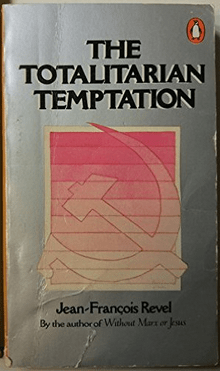
Bernard-Henri Lévy is one of the most ardent intellectual self-promoters of this and even last Century. I still have a paperback copy of ‘Barbarism with a Human Face’ the pages are a dark brown and brittle. Mr. Lévy is part of a intellectual trend, from my American perspective, dating from Jean-François Revel’s ‘Without Marx or Jesus’, ‘The Totalitarian Temptation’, and ‘How Democracies Perish’, all these works dating from the the early 70’s to the early 80’s, remain what they are Cold War polemics. My recollection of ‘Temptation’: it could have benefited from some ruthless editing-an essay turned into a bestseller, ‘How Democracies Perish’ was a screeching maladroit polemic . Yet ‘How Democracies Perish’ published in ’83, acts as stark object lesson of  Mr. Revel’s lack of prescience.
Mr.  Lévy, with the Cassandra like powers demonstrated by Mr. Revel, instructs his readers on the dangers of Mr. Trump. For Americans, it’s like reporting a horrific accident to it’s victims. The takeover of the Republican Party by the political nihilists, as immediate precursors to Trump, remains in the category of the politically inconvenient for the Lévy thesis
But Mr. Lévy being a stolid Neo-Liberal and staunch ally of the Neo-Cons, or even being one. Then Mrs. Clinton’s favoring of Victoria Nuland as Secretary of State, and Lévy as ardent supporter/apologist for the Ukrainian Coup, Nuland was one of the primary foreign political actors directly involved in it’s perpetration, makes for a predictable coalescence of forces :

Ukraine: Thinking together  Kyiv, 15-19 May 2014

‘Under the heading “Ukraine: Thinking together” an international group of intellectuals will gather in Kyiv to demonstrate solidarity, meet their Ukrainian counterparts, and carry out a broad public discussion about the meaning of Ukrainian pluralism for the future of Europe, Russia, and the world. The discussions, taking place from 15 to 19 May, will feature some of Europe’s, America’s, Russia’s and Ukraine’s most interesting opinion makers and intellectuals, including Bernard-Henri Lévy, Slavenka Drakulic, Timothy Snyder, Mustafa Nayem, Serhii Leshchenko, Agnieszka Holland, Adam Michnik, Serhii Zhadan, Ivan Krastev, Wolf Biermann, Karl Schlögel and Bernard Kouchner.’
http://www.eurozine.com/articles/2014-05-06-newsitem-en.html

What can one make of the Lévy political interventions? Another demonstration of  his moral/intellectual status as self-appointed successor to the Camus/Sartre tradition of  the Committed Public Intellectual? Aided by a penchant for heavy handed melodrama.  It seems that the ‘as if’ of Mr. Lévy as thinker/political actor is anchored in a bleak nostalgia for a France and a World perpetually moored in 1945.

Almost Marx

https://www.project-syndicate.org/commentary/trump-national-security-threat-by-bernard-henri-levy-2016-07?utm_source=Project+Syndicate+Newsletter&utm_campaign=0dbfdeec0a-Levy_Trump_the_Traitor_31_7_2016&utm_medium=email&utm_term=0_73bad5b7d8-0dbfdeec0a-93479093

Posted in Uncategorized | Leave a comment

Bloomberg & Trump: on authoritarian styles, a comment by Almost Marx (Updated)

1)

Mr. Bloomberg is a self-promoter par excellence, with a gift for self-congratulation. But upon the most cursory examination of his record as Mayor of New York City we are confronted with Stop and Frisk, as monument to that 12 years in office. Stop and Frisk was so egregious an attack on civil liberties, that a suit against it was in the Court system for five years . The mayor was embarrassed and angered by Judge Shira Scheindlin handling of the case, over its five year judicial gestation, so he managed to scare  up three judges who agreed with him, and she was removed from the case. She was not accused of any kind of professional/legal misconduct, in fact, her conduct was exemplary, she made the mistake of deciding against the City and wasn’t quiet about it:her crime! Accuse me of paranoia, if you will, but the why of Judge Scheindlin’s removal, who was an impediment to the Mayor’s political prestige, seems patently obvious, except to those who court political respectability, above all else.  So I will take Mr. Bloomberg’s attack on Trump as a belated self-apologetics, in the perverse mind set of the professional political huckster, who needs always to appear to be above reproach, like Caesar’s wife. Mr. Bloomberg is simply a more astute political operator, compared to Trump’s temper tantrums as nihilistic political theater.

Almost Marx

http://www.hollywoodreporter.com/news/michael-wolff-at-dnc-case-915245?utm_source=twitter

2) I am an opportunist, and have used the body of the text of my first comment, with some additions, at The Financial Times.

I read a transcript of Mr. Bloomberg’s speech here:

http://www.bustle.com/articles/175349-transcript-of-michael-bloombergs-dnc-speech-explains-the-non-democrats-support-for-hillary-clinton

There is nothing that The Financial Times hold as close to its pocket book, in lieu of a heart, as a genuine plutocrat, and Mr. Bloomberg is the genuine article, with a flair for self-promotion par excellence, and a penchant for self-congratulation. Is the similarity between Trump and Mr. Bloomberg readily apparent?

But upon the most cursory examination of Bloomberg’s record as Mayor of New York City we are confronted with Stop and Frisk, as monument to that 12 years in office. Stop and Frisk was so egregious an attack on civil liberties, that a suit against it was brought in the Court system for five years. The mayor was embarrassed and angered by Judge Shira Scheindlin handling of the case, over its five year judicial gestation, so he managed to scare up three judges who agreed with him, and she was removed from the case. She was not accused of any kind of professional/legal misconduct, in fact, her conduct was exemplary, she made the mistake of deciding against the City and wasn’t quiet about it: her crime! Accuse me of paranoia, if you will, but the why of Judge Scheindlin’s removal, who was an impediment to the Mayor’s political prestige, seems patently obvious, except to those who court political respectability, above all else.  So I will take Mr. Bloomberg’s attack on Trump as the expression of a belated self-apologetics, in the perverse mind set of the professional political huckster, who needs always to appear to be above reproach, like Caesar’s wife. Mr. Bloomberg is simply a more astute political operator, compared to Trump’s temper tantrums as nihilistic political theater.

Can Mrs. Clinton save us from the dastardly villain The Donald? Stay tuned for the next exciting chapter of The Perils of Hillary, brought to you by Goldman Sachs, AIPAC & Benjamin Netanyahu.

StephenKMackSD .

http://www.ft.com/cms/s/0/71f18200-5465-11e6-befd-2fc0c26b3c60.html#axzz4FfMqeZ94


Posted in Uncategorized | Leave a comment

At The Financial Times: Janan Ganesh on Jeremy Corbyn as Apostate Episode CI, a comment by Chrysostom & Almost Marx

Mr. Ganesh is the master of the feuilleton form, heavily inflected with his moral/political rage at Mr. Corbyn as Apostate. He makes a minor form of the past sing with invective. The quality of his bile, allied to a well of resentment, always makes for bracing reading. Call it London Spleen after Baudelaire.

But of more political import Mr. Ganesh plays the part of a Show Doctor, brought in during the out of town tryouts, to make changes to a production, that needs to be punched up for more audience appeal : it is after all Show Business! Mr. Abe Burrows was the most charming, agreeable, not to speak of reliable and proficient practitioner of this now seemingly vanished specialty. Where my comparison fall utterly apart, an unhappy consequence of showing off,  is that one never attacks the Star of the Show, one simply  turns the minor players into featured players, by skillfully rewriting and producing songs for those players, that make for a cunning garnish to a weak and now diminished central character. While still trading on the Star’s drawing power that sells tickets.

I know, this is labored, but is Mr. Jones that featured player, who can, with some new material, turn his role into something that transcends his status as a secondary player, who steals the show? Thank you for your patience.

Chrysostom & Almost Marx

http://www.ft.com/cms/s/0/84c96778-5242-11e6-befd-2fc0c26b3c60.html#axzz4FYulKpjB

My reply to Legal Tender:

See the comments of Mr. Jonathan Freedland, at the Guardian, who is the official Ring Master of the manufactured Antisemitism Crisis: the evidence is, in part, an editorial cartoon that depicts Israel as America’s 51’st State, a statement of fact. How inconvenient are facts! The cost to America has been raised from 3.5 billion to 5.5 billion per year, in order to placate Caudillo Netanyahu.

Regards,

StephenKMackSD


Posted in Uncategorized | Leave a comment

At The Financial Times: Edward Luce on Mrs. Clinton, or Political Myopia: a comment by Almost Marx

Is the Luce political myopia ever a surprise? There is so much here, but read this paragraph for confirmation of his myopia that rivals Mr. Magoo’s!

What should most concern the anti-Trump forces? Mrs Clinton’s biggest hurdle is the depth of hatred for her across large parts of America. Personally, I have always found Hillaryphobia hard to fathom. As first lady in the 1990s, she was hated for being a creature of the left — her supposed radical feminism and her push to enact leftwing healthcare reform. Nowadays she is reviled for the opposite reasons.

All one need do to fathom the ‘hatred’ of Mrs. Clinton, and her partner Bill, is to look to the Neo-Liberal policies they both enacted: Financial Reform, Welfare Reform and the utterly notorious ‘Violent Crime Control and Law Enforcement Act’: Mrs. Clinton’s race baiting was of the shameless variety, now erased from history under an impasto of ‘Public Relations’, delivered by her political surrogates, believable except for those of us who witnessed it! Mr. and Mrs. Clinton enacted into Law what Reagan dared not!  And Mrs. Clinton’s adaptation of the Heritage Foundation Health Care plan qualifies as a purely Market based solution i.e. a gift to the Insurance Companies, to characterize it as ‘Left’ is stunning in it’s mis-perception, or just utterly superficial. The rest of the essay I’ll leave to others to pick over. It is a mine of respectable bourgeois political chatter.

Almost Marx

http://www.ft.com/cms/s/0/44088ede-5027-11e6-8172-e39ecd3b86fc.html#axzz4FQc2Fsyd


Posted in Uncategorized | Leave a comment

At The Financial Times: Mr. Jon Cruddas on the danger of Jeremy Corbyn, Spartacist, a comment by Political Observer

Headline: The mortal threat to Labour

Sub-headline: The party’s future is uncertain as it loses touch with the working class, writes Jon Cruddas

The framing of the headline and the sub-headline are familiar, yet Jon Cruddas shows himself to be one of the most able Anti-Corbyn propagandists yet to appear in the pages of The Financial Times: he casts a long shadow over, even the coterie of  professional journalists, whose reportorial appetite for apostate hunting has reached a creative cul-de-sac. Three highlights of this essay provide a clue to the talent Mr. Cruddas brings to this endeavor. Don’t make the mistake of thinking that he is not New Labour to his core, his slight dig at Blair acts as mere rhetorical gesture. Like an experienced politician, he recognizes the power of both rhetoric and gesture to winning, if not the argument, then at the least the loyalty of his readers/auditors.

1) Demonstrates the power of historical analogy: The ‘realism’ of Lansbury as opposed to the the ‘lack of realism’ of Corbyn.

Supporters of Jeremy Corbyn, the leader of the Labour party, often compare him to the great radical interwar Labour leader George Lansbury. But this comparison does not help him today. When, on a collision course with his parliamentary party over intervention in Abyssinia, on a number of separate occasions Lansbury offered his resignation. Yet so loved was he by his parliamentary colleagues that they refused to let him go before eventually conceding to the inevitable. Unlike Mr Corbyn, Lansbury knew his pacifist beliefs would in the end prove irreconcilable with the task of leading the party and the need for support of Westminster representatives in a parliamentary democracy.

2) A quotation from a beloved political figure from a different national political context relevant to one of the political quandaries of the present:

The former leader of the UK Independence party, Nigel Farage, knew this better than most. His extraordinary political project caught alight in January 2014 when he started to talk about there being “some things that matter more than money”. This echoed Robert F Kennedy’s line about how emphasis on GDP measures everything apart from what is important in life.

3) An apt quotation from an American political philosopher, who advocates a civic patriotism as key to a renewal of the ‘mainstream left’, which is argumentatively equal to the election of Owen Jones, or someone like him, as antidote to the ‘radical’ Corbyn.

The US political philosopher Michael Sandel argued that for the mainstream left to survive it has to return to its foundations and offer a renewed civic patriotism rooted in a moral critique of the excesses of capitalism. Nowhere, he argues, is this happening. Both the Labour left and right tend toward the abstract, global and remote while the British people seek renewed national solutions. We have failed to build a philosophy of the common good expressed in an optimistic and generous national story. Maybe Mr Smith will rise to that challenge. Someone had better.

Earlier in the essay Mr. Cruddas makes another historical analogy, in which Corbyn is rhetorically cast in the role of a Spartacist Radical: a signal that the political crisis is of the greatest historical moment. Is the action contemplated by Mr. Cruddas anything like Carl Schmitt’s  political exceptionalism?

The closest historical parallel with this situation lies not in Westminster but in Berlin in 1918. Friedrich Ebert led the Social Democratic party (SPD) and the national government in the Reichstag, claiming legitimacy from the democratic vote of the people, whereas the Spartacists, including Rosa Luxemburg and Karl Kautsky, claimed theirs from the workers’ movement, the factory committees and works councils. Ebert ultimately unleashed the Freikorps against the leaders of the insurrection leading to the establishment of the German Communist party and a wider political polarisation across German society and the eventual victory of fascism.

Let me offer my reorganization of the material as just an alternative reading.

Political Observer

http://www.ft.com/cms/s/0/cbbd860c-4a98-11e6-8d68-72e9211e86ab.html#axzz4FLEooUPm


Posted in Uncategorized | Leave a comment

At The Financial Times: Martin Wolf on the Failure of The Elites x 3, a comment by Almost Marx

Let us look at Mr. Wolf on the Elites:

January 14,2014

Headline: Failing elites threaten our future

Sub-headline : Leaders richly rewarded for mediocrity cannot be relied upon when things go wrong

Mr. Wolf describes the three visible failures of the Elites:

Here are three visible failures.

First, the economic, financial, intellectual and political elites mostly misunderstood the consequences of headlong financial liberalisation. Lulled by fantasies of self-stabilising financial markets, they not only permitted but encouraged a huge and, for the financial sector, profitable bet on the expansion of debt. The policy making elite failed to appreciate the incentives at work and, above all, the risks of a systemic breakdown. When it came, the fruits of that breakdown were disastrous on several dimensions: economies collapsed; unemployment jumped; and public debt exploded. The policy making elite was discredited by its failure to prevent disaster. The financial elite was discredited by needing to be rescued. The political elite was discredited by willingness to finance the rescue. The intellectual elite – the economists – was discredited by its failure to anticipate a crisis or agree on what to do after it had struck. The rescue was necessary. But the belief that the powerful sacrificed taxpayers to the interests of the guilty is correct.

Second, in the past three decades we have seen the emergence of a globalised economic and financial elite. Its members have become ever more detached from the countries that produced them. In the process, the glue that binds any democracy – the notion of citizenship – has weakened. The narrow distribution of the gains of economic growth greatly enhances this development. This, then, is ever more a plutocracy. A degree of plutocracy is inevitable in democracies built, as they must be, on market economies. But it is always a matter of degree. If the mass of the people view their economic elite as richly rewarded for mediocre performance and interested only in themselves, yet expecting rescue when things go badly, the bonds snap. We may be just at the beginning of this long-term decay.

Third, in creating the euro, the Europeans took their project beyond the practical into something far more important to people: the fate of their money. Nothing was more likely than frictions among Europeans over how their money was being managed or mismanaged. The probably inevitable financial crisis has now spawned a host of still unresolved difficulties. The economic difficulties of crisis-hit economies are evident: huge recessions, extraordinarily high unemployment, mass emigration and heavy debt overhangs. This is all well known. Yet it is the constitutional disorder of the eurozone that is least emphasised. Within the eurozone, power is now concentrated in the hands of the governments of the creditor countries, principally Germany, and a trio of unelected bureaucracies – the European Commission, the European Central Bank and the International Monetary Fund. The peoples of adversely affected countries have no influence upon them. The politicians who are accountable to them are powerless. This divorce between accountability and power strikes at the heart of any notion of democratic governance. The eurozone crisis is not just economic. It is also constitutional.

http://www.ft.com/cms/s/0/cfc1eb1c-76d8-11e3-807e-00144feabdc0.html#axzz4EaXdjrIB

May 17,2016

Headline: Failing elites are to blame for unleashing Donald Trump

Sub-headline: A healthy republic requires a degree of mutual sympathy rather than equality

My interpolation: ‘mutual sympathy’ is not a substitute for equality. The ‘benign  paternalism’ of both Burke and Disraeli: an unsurprising conservative gambit.

Mr. Wolf quickly reaches full scale Trump hysterics:

Donald Trump will be the Republican candidate for president. He might even become president of the US. It is hard to exaggerate the significance and danger of this development. The US was the bastion of democracy and freedom in the 20th century. If it elected Mr Trump, a man with fascistic attitudes to people and power, the world would be transformed.

Mr Trump is a misogynist, a racist and a xenophobe. He glories in his own ignorance and inconsistency. Truth is whatever he finds convenient. His policy ideas are ludicrous, where they are not horrifying. Yet his attitudes and ideas are less disturbing than his character: he is a narcissist, bully and spreader of conspiracy theories. It is frightening to consider how such a man would use the powers at the disposal of the president.

http://www.ft.com/cms/s/0/f27340fc-1848-11e6-b197-a4af20d5575e.html#axzz4EaXdjrIB

Mr. Wolf goes badly off course when he quotes notorious political poser, if not charlatan, Andrew Sullivan, who then quotes Plato as some sort of expert on Democracy, rather than his actual status as a staunch defender of an Oligarchy: The Philosopher Kings. And unmentioned is Plato’s cowardice in the face of Socrates’ death sentence! A reading from Plato must always be selective. Mr. Wolf’s last paragraph is a marvel of Neo-Liberal self congratulation: ‘Some of what has happened was right and so should not have been avoided.’ and the public scolding of an Elite, in which Mr. Wolf enjoys emeritus status.

Mr Trump has called forth new political possibilities. But it is not mainly an excess of democracy that has brought the US to this pass. It is far more the failings of short-sighted elites. Some of what has happened was right and so should not have been avoided. But much of it could have been. Elites, particularly Republican elites, stoked this fire. It will be hard to put out the blaze.

July 19,2016

Headline: Global elites must heed the warning of populist rage

Sub-headline: Real income stagnation over a longer period than any since the war is a fundamental political fact

Is one of the measure of political desperation a quotation or paraphrase from that old American reactionary H.L. Mencken?

For every complex problem, there is an answer that is clear, simple and wrong.” H.L.a report by a  Mencken could have been thinking of today’s politics. The western world undoubtedly confronts complex problems, notably, the dissatisfaction of so many citizens. Equally, aspirants to power, such as Donald Trump in the US and Marine Le Pen in France, offer clear, simple and wrong solutions — notably, nationalism, nativism and protectionism.

The remedies they offer are bogus. But the illnesses are real. If governing elites continue to fail to offer convincing cures, they might soon be swept away and, with them, the effort to marry democratic self-government with an open and co-operative world order.

http://www.ft.com/cms/s/0/54f0f5c6-4d05-11e6-88c5-db83e98a590a.html#axzz4Eyha4ERL

Mr. Wolf uses as his starting point of this essay a report titled  Poorer than their Parents? by a subsidiary of McKinsey & Company called McKinsey Global Institute: On the parent company:

McKinsey & Company is a worldwide management consulting firm. It conducts qualitative and quantitative analysis in order to evaluate management decisions across the public and private sectors. Widely considered the most prestigious management consultancy,[4] McKinsey’s clientele includes 80% of the world’s largest corporations, and an extensive list of governments and non-profit organisations. More current and former Fortune 500 C.E.O.s are alumni of McKinsey than of any other company, a list including Google C.E.O. Sundar Pichai, Facebook C.O.O. Sheryl Sandberg, Morgan Stanley C.E.O. James P. Gorman, and many more. McKinsey publishes the McKinsey Quarterly, funds the McKinsey Global Institute research organization, publishes reports on management topics, and has authored many influential books on management. Its practices of confidentiality, influence on business practices, and corporate culture have experienced a polarizing reception.

https://en.wikipedia.org/wiki/McKinsey_%26_Company

Mr. Wolf is, as always, a good corporate citizen. Nothing too outside the mainstream.Mr. Wolf again touches on the sore subject of inequality:

Thus people preferred becoming better off, even if they were not catching up with contemporaries better off still. Stagnant incomes bother people more than rising inequality.

Piketty is again the absent protagonist in the Wolf Melodrama! All this followed by advocacy for  Global Governance for essential global public goods allied with Capitalist Reform, international co-operation, taxation reform, acceleration of economic growth, but of most importance ‘fight the quacks’!

The last paragraph is where Mr. Wolf hits his rhetorical stride :

Above all, recognise the challenge. Prolonged stagnation, cultural upheavals and policy failures are combining to shake the balance between democratic legitimacy and global order. The candidacy of Mr Trump is a result. Those who reject the chauvinist response must come forward with imaginative and ambitious ideas aimed at re-establishing that balance. It is not going to be easy. But failure must not be accepted. Our civilisation itself is at stake.

Given the above is Hillary cast, in this melodrama, as an American Savior?

Almost Marx

Posted in Uncategorized | Leave a comment

On the idea of ‘Fast Radicalization’, a comment by Almost Marx

The newest propaganda unleashed by National Security State political actors and their journalist allies, in the West, is the notion of ‘Fast Radicalization’ of perpetrators of mass murder, who fit into the loosest of all categories of criminals ‘The Lone Wolfe’: this is most times, but not always, confined to people of Muslim faith or those with a close proximity to it, even if not directly traceable by empirical evidence, in fact, this category is the last resort of tangential, or even absent evidence, of any contact with ‘radicalizing persons or institutions’.

‘Fast Radicalization’ has the stench of Madison Avenue Advertising sloganeering: a blight that has afflicted American/European life for almost one hundred years. One need only look to Edward Bernays, whose book Propaganda was published in 1928. Some valuable insights are offered in this extensive excerpt from his Wikipedia entry as to his influence, and his connection to very influential persons like the American sage Walter Lippmann, among others.

‘Bernays, working for the administration of Woodrow Wilson during World War I with the Committee on Public Information, was influential in promoting the idea that America’s war efforts were primarily aimed at “bringing democracy to all of Europe”.[citation needed] Following the war, he was invited by Woodrow Wilson to attend the Paris Peace Conference in 1919.[citation needed]

Stunned by the degree to which the democracy slogan had swayed the public both at home and abroad, he wondered whether this propaganda model could be employed during peacetime.[citation needed] Due to negative implications surrounding the word propaganda because of its use by the Germans in World War I, he promoted the term public relations.[citation needed] According to the BBC interview with Bernays’ daughter Anne, Bernays believed that the public’s democratic judgment was “not to be relied upon” and feared that the American public “could very easily vote for the wrong man or want the wrong thing, so that they had to be guided from above.” Anne interpreted “guidance” to mean that her father believed in a sort of “enlightened despotism“.[7]

This thinking was heavily shared and influenced by Walter Lippmann, one of the most prominent American political columnists at the time.[citation needed] Bernays and Lippmann served together on the U.S. Committee on Public Information, and Bernays quotes Lippmann extensively in his book, Propaganda.Bernays, Edward (1928). Propaganda. New York: Horace Liveright. Retrieved February 24, 2016.[pages needed]

Bernays also drew on the ideas of the French writer Gustave LeBon, the originator of crowd psychology, and of Wilfred Trotter, who promoted similar ideas in the anglophone world in his book Instincts of the Herd in Peace and War.[citation needed] Bernays refers to these two names in his writings.[citation needed] Trotter, who was a head and neck surgeon at University College Hospital, London, read Freud’s works, and it was he who introduced Wilfred Bion, whom he lived and worked with, to Freud’s ideas.[citation needed] When Freud fled Vienna for London after the Anschluss, Trotter became his personal physician.[citation needed] Trotter, Wilfred Bion, and Ernest Jones became key members of the Freudian psychoanalysis movement in England.[citation needed] They would develop the field of group dynamics, largely associated with the Tavistock Institute, where many of Freud’s followers worked.[citation needed] Thus ideas of group psychology and psychoanalysis came together in London around World War II.[citation needed]

Bernays’ public relations efforts helped to popularize Freud’s theories in the United States.[citation needed] Bernays also pioneered the public relations industry’s use of psychology and other social sciences to design its public persuasion campaigns: “If we understand the mechanism and motives of the group mind, is it not possible to control and regiment the masses according to our will without their knowing about it? The recent practice of propaganda has proved that it is possible, at least up to a certain point and within certain limits.”[8] He called this scientific technique of opinion-molding the engineering of consent.[9]

https://en.wikipedia.org/wiki/Edward_Bernays

The idea of ‘Fast Radicalization’ is part of a campaign in public persuasion, of manufacturing consent, to effect an end to democratic institutional protections: the crisis will make way for the political exception, Nazi Jurist Carl Schmitt provides the intellectual cover for the end of republican ideas and practices in the name of ‘Security’.

Almost Marx


Posted in Uncategorized | Leave a comment