This is a 2,389 word essay, that attempts to tell/narrate the Ukraine Crisis Story, that begins with the Macron, Putin’s meeting:
Vladimir Putin’s giant oval table in the Kremlin is as extreme as it is kitsch. Sitting far from foreign visitors may be his way of social distancing. But it also betokens the gulf that separated Russia’s leader from his guest, Emmanuel Macron of France. It may also illustrate what diplomats say is Mr Putin’s worrying isolation from the world. None can claim to read his mind as he masses some 130,000 troops on the borders around Ukraine. Is he about to launch the biggest war in Europe since the fall of the Berlin Wall? Or is it all a big bluff?
This first paragraph devolves in to Anti-Putin Hysteria, that is unsurprising. And The Reader need only look to the use of ‘nato’ in small caps, instead of NATO in capital letters, as a maladroit attempt at diminishment, in this History Made To Measure. The Major Actors, ideas, descriptors, and other useful ballast, in this War Mongering Melodrama:
Putin, Macron, NATO, Olaf Scholz, Angela Merkel,2014,, Viktor Yanukovych, Crimea, eastern Donbas, Petro Poroshenko, the Minsk accords, Rada, Volodymyr Zelensky, the separatist territories, Zerkalo Nedeli , Arsen Avakov, “Finlandisation”, Finland, Sweden, Austria, Wolfgang Ischinge, Balkans, Afghanistan, European Defence Community, Jens Stoltenberg, Britain, Iceland, Norway, eu, Canada, nato’s Article 5, Nord Stream 2, ‘non-military “grey zone” actions’, “European sovereignty”, ‘refounding moment’, ‘eu’s growing sovereignty’, Intermediate-Range Nuclear Force Treaty, force de frappe, Jacques Chirac, Estonians, Britain, Russian brutishness, America’s commitment, Mr Trump, Middle East, China, Taiwan, Mr Ischinge, American hegemon, the Mediterranean, migration.
This panoramic vision of the Political Actors, places, ideas etc. that defies The Reader attempt at constructing a possible reply – like all War Propaganda, this is designed to evoke negative emotion, rather than to place thought, analysis and Historical Inquiry, as the central imperative/obligation of that Inquiry.
But the final sentence, of this call to arms, is instructive of the use of anonymous sources, with an attachment to State Power, that must be taken on ‘faith’!
“It is the European dilemma,” says a German diplomat. “European sovereignty is impossible. But it has never been more necessary.”
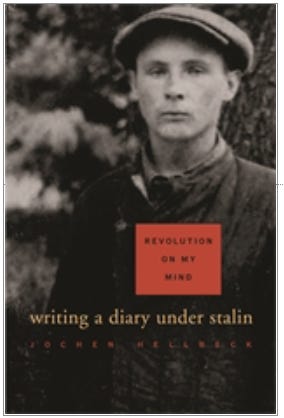
Reading ‘Revolution on My Mind:Writing a Diary under Stalin’ by Jochen Hellbeck and am on page 155, of this compelling book.
‘Revolution on My Mind is a stunning revelation of the inner world of Stalin’s Russia. We see into the minds and hearts of Soviet citizens who recorded their lives during an extraordinary period of revolutionary fervor and state terror. Writing a diary, like other creative expression, seems nearly impossible amid the fear and distrust of totalitarian rule; but as Jochen Hellbeck shows, diary-keeping was widespread, as individuals struggled to adjust to Stalin’s regime.
Rather than protect themselves against totalitarianism, many men and women bent their will to its demands, by striving to merge their individual identities with the collective and by battling vestiges of the old self within. We see how Stalin’s subjects, from artists to intellectuals and from students to housewives, absorbed directives while endeavoring to fulfill the mandate of the Soviet revolution—re-creation of the self as a builder of the socialist society. Thanks to a newly discovered trove of diaries, we are brought face to face with individual life stories—gripping and unforgettably poignant.
The diarists’ efforts defy our liberal imaginations and our ideals of autonomy and private fulfillment. These Soviet citizens dreamed differently. They coveted a morally and aesthetically superior form of life, and were eager to inscribe themselves into the unfolding revolution. Revolution on My Mind is a brilliant exploration of the forging of the revolutionary self, a study without precedent that speaks to the evolution of the individual in mass movements of our own time.
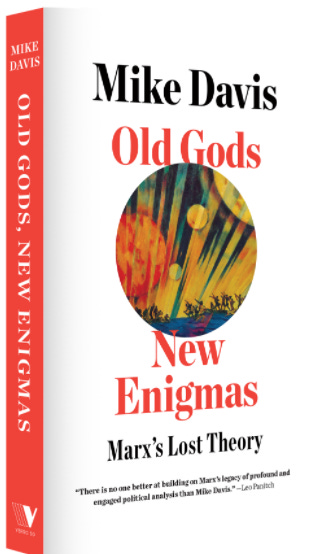
A book I am also reading, as its would be ‘counter point’, to stretch that notion to the point of fracture? or just intellectual perversity? Mike Davis’ ‘Old Gods, New Enigmas:Marx’s Lost Theory’:
Is revolution possible in the age of the Anthropocene?
Marx has returned, but which Marx? Recent biographies have proclaimed him to be an emphatically nineteenth-century figure, but in this book, Mike Davis’s first directly about Marx and Marxism, a thinker comes to light who speaks to the present as much as the past. In a series of searching, propulsive essays, Davis, the bestselling author of City of Quartz and recipient of a MacArthur Fellowship, explores Marx’s inquiries into two key questions of our time: Who can lead a revolutionary transformation of society? And what is the cause—and solution—of the planetary environmental crisis?
Davis consults a vast archive of labor history to illuminate new aspects of Marx’s theoretical texts and political journalism. He offers a “lost Marx,” whose analyses of historical agency, nationalism, and the “middle landscape” of class struggle are crucial to the renewal of revolutionary thought in our darkening age. Davis presents a critique of the current fetishism of the “anthropocene,” which suppresses the links between the global employment crisis and capitalism’s failure to ensure human survival in a more extreme climate. In a finale, Old Gods, New Enigmas looks backward to the great forgotten debates on alternative socialist urbanism (1880–1934) to find the conceptual keys to a universal high quality of life in a sustainable environment.
I purchased ‘The Poetry of Friedrich Nietzsche’ what seemed like decades ago, from a Oxford University Press book sale.
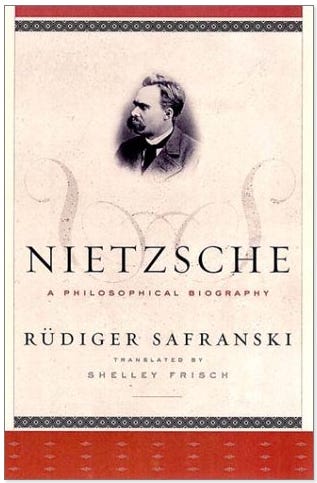
I had read Rudiger Safranski’s Philosophical Biography of Nietzsche, well before reading about Nietzsche’s poetry. Some of his thought’s, positions seemed unhinged.
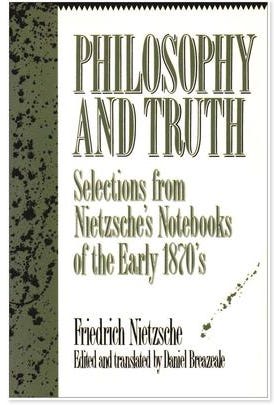
And some of ‘Philosophy and Truth’ :
As a ‘misfit’ I might have felt a sense of sympathy, or felt a kind of resonance- he inspired both Adorno and Heidegger…
Perhaps my next book should be Alexander Nehamas’ book ? Though it will have to wait.
If Capitalism is represented by an ‘investor’, Peter Thiel, what might that say about the state of Capitalism? The Peddler of the 21st Century, Jeff Bezos, employees thousands in his chain of warehouses, and its fleets of delivery vans. Bezos built it from the ground up, Thiel made some very lucky investments, but has only financed people like Bezos. Mr. Thiel is like Sherman McCoy (lead character in ‘Bonfire of the Vanities’, now utterly forgotten) but ‘he’ is reborn in the political present, although with a taste for political thugs, like Henry Ford. That is why Zuckerberg and his familiar Sandberg have ended their political relationship with Thiel.
The job of reinforcing the imperatives of The American National Security State, in their ‘Metaverse’, is a small price to pay- even though Facebook’s popularity/profitability are sinking! Rumble, Substack, TikTok ,and Joe Rogin are the New Places to Be, the New Internet Toys! Facebook is Old News!
The Reader might just compare Thiel with Henry Luce of the Time/Life Empire, now long forgotten. Although ‘Time’ still has 23 million readers.
‘Putin the Rational’ vs. ‘Vlad The Mad’ are the latest ‘catch phrases’ or propaganda devices from Mr. Rachman. As one of The Financial Times’ cadre of War Mongers, so enamored is Mr. Rachman of his borrowed, and embroidered upon creations, that he repeats each, as the place holders of actual thought: this is War Propaganda, the point of which is not to produce rational argument, but to evoke strong negative emotion.
‘Vlad The Mad’ is repeated five times, ‘’Putin the Rational’ is repeated seven times. The source of Mr. Rachman’s riff :
It was Richard Nixon who outlined the “madman theory”, when the US president told aides that it could be helpful if America’s enemies thought he was crazy enough to use nuclear weapons.
This Reader wonders if Biden, and his Amazon Cadre of Policy advisors , Wendy Sherman, Victoria Nuland, Samantha Power and Susan Rice will make of the ‘manufactured Ukrainian Crisis’? After the ignominious Afghan withdrawal, that has led to famine, or its equivalent, and the kidnapping of leading Afghan woman?
At a approximately 2000 words, with what is meant to be evocative, illustrative photographs, that act as a filler to this essay- Professor Plokhy provides the usual History Made To Measure, of a more sophisticated kind. How can The Reader question an expert in the field of Ukrainian history? That Reader might just opine, that Professor Plokhy has written a more sophisticated version of War Propaganda. And that he has Copyrighted his essay, to discourage unwanted critics from direct quotation of his polemic?
As informative as Professor Plokhy might be, in its truncated explanatory frame -a revelatory part of what he ignores is explained in this essay :
Headline: NATO Expansion: What Gorbachev Heard
Sub-headline: Declassified documents show security assurances against NATO expansion to Soviet leaders from Baker, Bush, Genscher, Kohl, Gates, Mitterrand, Thatcher, Hurd, Major, and Woerner :Slavic Studies Panel Addresses “Who Promised What to Whom on NATO Expansion?”
Washington D.C., December 12, 2017 – U.S. Secretary of State James Baker’s famous “not one inch eastward” assurance about NATO expansion in his meeting with Soviet leader Mikhail Gorbachev on February 9, 1990, was part of a cascade of assurances about Soviet security given by Western leaders to Gorbachev and other Soviet officials throughout the process of German unification in 1990 and on into 1991, according to declassified U.S., Soviet, German, British and French documents posted today by the National Security Archive at George Washington University (
The documents show that multiple national leaders were considering and rejecting Central and Eastern European membership in NATO as of early 1990 and through 1991, that discussions of NATO in the context of German unification negotiations in 1990 were not at all narrowly limited to the status of East German territory, and that subsequent Soviet and Russian complaints about being misled about NATO expansion were founded in written contemporaneous memcons and telcons at the highest levels.
The documents reinforce former CIA Director Robert Gates’s criticism of “pressing ahead with expansion of NATO eastward [in the 1990s], when Gorbachev and others were led to believe that wouldn’t happen.”[1] The key phrase, buttressed by the documents, is “led to believe.”
President George H.W. Bush had assured Gorbachev during the Malta summit in December 1989 that the U.S. would not take advantage (“I have not jumped up and down on the Berlin Wall”) of the revolutions in Eastern Europe to harm Soviet interests; but neither Bush nor Gorbachev at that point (or for that matter, West German Chancellor Helmut Kohl) expected so soon the collapse of East Germany or the speed of German unification.[2]
The first concrete assurances by Western leaders on NATO began on January 31, 1990, when West German Foreign Minister Hans-Dietrich Genscher opened the bidding with a major public speech at Tutzing, in Bavaria, on German unification. The U.S. Embassy in Bonn (see Document 1) informed Washington that Genscher made clear “that the changes in Eastern Europe and the German unification process must not lead to an ‘impairment of Soviet security interests.’ Therefore, NATO should rule out an ‘expansion of its territory towards the east, i.e. moving it closer to the Soviet borders.’” The Bonn cable also noted Genscher’s proposal to leave the East German territory out of NATO military structures even in a unified Germany in NATO.[3]
At a approximately 2000 words, with what is meant to be evocative, illustrative photographs, that act as a filler to this essay- Professor Plokhy provides the usual History Made To Measure, of a more sophisticated kind. How can The Reader question an expert in the field of Ukrainian history? That Reader might just opine, that Professor Plokhy has written a more sophisticated version of War Propaganda. And that he has Copyrighted his essay, to discourage unwanted critics from direct quotation of his polemic?
As informative as Professor Plokhy might be, in its truncated explanatory frame -a revelatory part of what he ignores is explained in this essay :
Headline: NATO Expansion: What Gorbachev Heard
Sub-headline: Declassified documents show security assurances against NATO expansion to Soviet leaders from Baker, Bush, Genscher, Kohl, Gates, Mitterrand, Thatcher, Hurd, Major, and Woerner :Slavic Studies Panel Addresses “Who Promised What to Whom on NATO Expansion?”
Washington D.C., December 12, 2017 – U.S. Secretary of State James Baker’s famous “not one inch eastward” assurance about NATO expansion in his meeting with Soviet leader Mikhail Gorbachev on February 9, 1990, was part of a cascade of assurances about Soviet security given by Western leaders to Gorbachev and other Soviet officials throughout the process of German unification in 1990 and on into 1991, according to declassified U.S., Soviet, German, British and French documents posted today by the National Security Archive at George Washington University (
The documents show that multiple national leaders were considering and rejecting Central and Eastern European membership in NATO as of early 1990 and through 1991, that discussions of NATO in the context of German unification negotiations in 1990 were not at all narrowly limited to the status of East German territory, and that subsequent Soviet and Russian complaints about being misled about NATO expansion were founded in written contemporaneous memcons and telcons at the highest levels.
The documents reinforce former CIA Director Robert Gates’s criticism of “pressing ahead with expansion of NATO eastward [in the 1990s], when Gorbachev and others were led to believe that wouldn’t happen.”[1] The key phrase, buttressed by the documents, is “led to believe.”
President George H.W. Bush had assured Gorbachev during the Malta summit in December 1989 that the U.S. would not take advantage (“I have not jumped up and down on the Berlin Wall”) of the revolutions in Eastern Europe to harm Soviet interests; but neither Bush nor Gorbachev at that point (or for that matter, West German Chancellor Helmut Kohl) expected so soon the collapse of East Germany or the speed of German unification.[2]
The first concrete assurances by Western leaders on NATO began on January 31, 1990, when West German Foreign Minister Hans-Dietrich Genscher opened the bidding with a major public speech at Tutzing, in Bavaria, on German unification. The U.S. Embassy in Bonn (see Document 1) informed Washington that Genscher made clear “that the changes in Eastern Europe and the German unification process must not lead to an ‘impairment of Soviet security interests.’ Therefore, NATO should rule out an ‘expansion of its territory towards the east, i.e. moving it closer to the Soviet borders.’” The Bonn cable also noted Genscher’s proposal to leave the East German territory out of NATO military structures even in a unified Germany in NATO.[3]
The Neo-Liberalizer of France is too cozy with Putin ?
Before I begin with the essay of Kaufmann, let me quote from Wolfgang Streeck’s essay on Europe of January 7, 2022:
…
In fact, the French political class seems increasingly disillusioned with the preferred German route to ‘Europe’, which it sees less and less as leading toward a ‘European sovereignty’ modelled on the French that can be projected worldwide. Instead the impression is growing that integration by law would end in nothing better than government by bureaucracy supervised by a supranational legal expertocracy – suited perhaps to building an international neoliberal market but unable to found an imperial state capable of acting on a global scale. Indications are that recent political pronunciamientos in the run-up to the French presidential elections on the value of national as distinguished from European sovereignty are related to growing doubts over German-style integration by law.
And there are further signs of fracture. Shortly before the holidays, two weeks after discontinuing the infringement procedure against Germany, the European Commission started several additional such procedures against Poland. At issue were various judgments of the Polish constitutional court that insist on the primacy of Polish constitutional law over European law where in the Treaties member states had not conferred specific competences to the EU and by implication the CJEU. Preparing the decision, von der Leyen was quoted by the EU’s PR office as saying that ‘EU law has priority over national law, including constitutional law’, a principle which according to her ‘had been accepted by all EU member states as members of the European Union’. Rhetoric like this has the potential of waking up hordes of sleeping dogs in national capitals, as it offers a taste of what a prominent, politically unsuspicious German European law specialist – a profession with a deeply rooted déformation professionnelle making it condone even the most daring deployment of law in furtherance of ‘ever closer union’ – has found himself prompted to call a ‘coup d’état from above’, by means of integration by law in its new, extended version.
How long could Neo-Liberalism, in its Common Market infancy last? A question that will never be asked by this newspaper, nor Kauffmann! That ‘evolved’ into the E.U., that looks to be held together by Public Relations, expressed not by Law, but by political improvisation, into a ‘Super State’. The vexed question, that this Financial Times guest writer can produce, is about Macron’s loyalty, to that teetering monument of post war resistance to Soviet revanchism- Kauffman provides , in part a predictable answer about Macron:
Can Macron be trusted on Russia at a time when European unity is so crucial? This is a legitimate question, given traditional suspicions of French complacency towards Russia and a no less traditional irritation caused by the Gallic taste for an independent foreign policy.
Macron political assent was was marked by ‘spoiled ballots’ , ‘blank ballots’, etc. in the low 30’s. His Jupertarian Politics was quickly discarded with the rise of the gilets jaunes, that are still active, although reduced in scope:
Headline: Who are the gilets jaunes today?
Sub-headline: A core group of gilets jaunes protesters are refusing to let diminished turnout deter them as they continue to demonstrate, mainly in Paris
The gilet jaunes protests once attracted hundreds of thousands, but the third anniversary of the movement’s launch in late November saw some 1,800 take to the streets of the capital.
Some former participants have been put off by clashes between police and protesters, while others have a sense of resignation, with fuel prices, the original grievance, higher than ever today. Covid has also taken over as the main focus of concern.
However, those remaining have no plans to hang up their yellow vests any time soon.
“I’ve been here since the beginning, and I’ll be here until the end,” said Paris-based protester Perrine, who declined to give her last name due to safety concerns. “My passion hasn’t changed – I’m loyal. I fully support the gilets jaunes,” she said.
The group formed after a fuel tax rise was proposed to combat climate change in late 2018.
Citizens united behind a petition created by a businesswoman to demand the measure be abandoned. It soon became a focus for all kinds of grievances against the status quo for those who felt they were not listened to by politicians.
Macron is a political opportunist, who longs for the World Stage, hardly a surprise! But the The Reader of this newspaper must be a bit surprised, that the enthusiasm that greeted Macron’s election, has turned sour. But the editors have chosen to let Kaufmann, of the ultra respectable Le Monde, deliver the ‘bad news’ about this, now, tarnished political star. As a possible callabo of Putin? Although Kauffman, in her last paragraph shifts the political focus onto Putin The Terrible.
So can Macron be trusted on Russia? The better question might be whether Putin can be trusted on Ukraine. But by now, we all know the answer.
Mr. Ganesh provides a breathtakingly reductivist History Made to Measure of Wm. F. Buckley Jr. Without even a mention of his classic ‘God and Man at Yale’ ? Do read the tart review by McGeorge Bundy, in the November 1951 issue of The Atlantic. At a mere 3, 428 words.
Buckley’s triumphalism enunciated by Mr. Ganesh in two short paragraphs!
When William Buckley launched National Review, and with it the modern US right, the aim was to stop the “radical social experimentation” of the hour. It was 1955. The age of Eisenhower and the draft, of the Hollywood Code and low immigration: if this scandalized him, his air of dejection as he neared the end of his gilded life half a century later becomes easier to fathom.
Among the experiments he had been unable to thwart were the sexual revolution, creeping atheism, normalised if not quite legalised cannabis and the doubling of the foreign-born population as a share of the US total. His conservative movement had been an electoral success and a howling cultural failure.
It is unfortunate that Buckley’s evolution on cannabis legalization, has escaped Mr Ganesh’s attention. He favors a misplaced free floating triumphalism of electoral success, buttressed by a collection of evocative walk-ons: The Permissive Society, The Supreme Court, The Federalist Society, the Gramscian march, Bill Clinton, Barack Obama, Joe Biden, “Jim Crow 2.0”, Conservative jurisprudence, progressive hubris, Tying Democrats to the “socialism” of the countries some of them fled, affirmative action, Cultural conservatives, same-sex marriage, Church membership is down.
As a propagandist Mr. Ganesh knows how to reach his readers . The deployment of catch phrases, marshalled as the in order too of securing assent from The Reader.
The way the Republicans have surrendered to the political irrationalism of the Tea Party, that devolved into Trump and Trumpism. This catastrophe, and the rise of The New Democrats, leads to the grim reality that America’s Political Class is collapsed, or can that state be more properly named the continual phenomenon of fissuring ?
David Caute offers a more sobering portrait of Berlin, as cowardly Academic Politicker, in his 2015 book:
Two high-voltage scholars engage in a bitter conflict in this irresistible tale of principle and politics in the Cold War years
Rancorous and highly public disagreements between Isaiah Berlin and Isaac Deutscher escalated to the point of cruel betrayal in the mid-1960s, yet surprisingly the details of the episode have escaped historians’ scrutiny. In this gripping account of the ideological clash between two of the most influential scholars of Cold War politics, David Caute uncovers a hidden story of passionate beliefs, unresolved antagonism, and the high cost of reprisal to both victim and perpetrator.
Though Deutscher (1907–1967) and Berlin (1909–1997) had much in common—each arrived in England in flight from totalitarian violence, quickly mastered English, and found entry into the Anglo-American intellectual world of the 1950s—Berlin became one of the presiding voices of Anglo-American liberalism, while Deutscher remained faithful to his Leninist heritage, resolutely defending Soviet conduct despite his rejection of Stalin’s tyranny. Caute combines vivid biographical detail with an acute analysis of the issues that divided these two icons of Cold War politics, and brings to light for the first time the full severity of Berlin’s action against Deutscher.
Here is a short video of Ignatieff on the ‘Responsibility to Protect’ doctrine of May 26, 2008:
Here is Ignatieff in a video dated May 16, 2013 :
Let this act as the historical frame of Hermione Lee’s review of ‘On Consolation: Finding Solace in Dark Times’. The French mathematician, intellectual, and moderate revolutionary the Marquis de Condorcet at a mere 373 words. Ms. Lee then begins her comments on the ‘consolation business’, in another 230 words:
The consolation business is a crowded market. There are many books out there, presumably of help to many readers, on how to come to terms with suffering and bereavement and how to bear grief, with titles like It’s OK That You’re Not OK and I Wasn’t Ready to Say Goodbye and I’m Grieving as Fast as I Can. Out of the pandemic have come timely aids like This Too Shall Pass and Alone Together: Love, Grief, and Comfort in the Time of COVID-19. There are books on how to understand your emotions, such as David Whyte’s Consolations: The Solace, Nourishment and Underlying Meaning of Everyday Words (2015). There are books of intellectual advice, like Alain de Botton’s personal take on “how to become wise through philosophy,” with encouraging thoughts on Epicurus, Montaigne, et al., in The Consolations of Philosophy (2000).
And there are some notable books by writers who have brought the powers of their imagination and language to bear on the experience of bereavement, among them C.S. Lewis’s A Grief Observed (1961),Joan Didion’s The Year of Magical Thinking (2005), Julian Barnes’s Levels of Life (2013), and Max Porter’s Grief Is the Thing with Feathers (2016). Readers respond intensely to such books because they often find their own lives reflected in them, but told in ways that they couldn’t have imagined and that provide their own form of consolation.
.
Lee has missed some important Actors in this ‘game’ :
C.S. Lewis’s A Grief Observed (1961),Joan Didion’s The Year of Magical Thinking (2005), Julian Barnes’s Levels of Life (2013), and Max Porter’s Grief Is the Thing with Feathers (2016)
Then Lee points to Mr. Ignatieff, as different than the list of writers who have attempted to grapple with catastrophic loss. All but one, C.S. Lewis, reeks of the Best Seller list! Nor can this Reader think of any of these writers as being a victimizer on the scale of Mr. Ignatieff, and his ‘R2P’ zealots! ‘R2P’ was a gift to the Neo-Cons, in their war mongering, as muted as the ‘Human Rights’ issue may have been, the resonance of ‘R2P’, added some moral patina to the ‘Liberals’ falling into line with the Neo-Cons.
Lee describes Mr. Ignatieff ‘s ‘Gethsemane’ :
The book starts on a personal note with Ignatieff’s attendance at a choral festival in Utrecht in 2017, where he was giving a talk on “justice and politics” in the Psalms, which were being sung in different musical settings. He was overcome by the emotional effect they had on him, a nonbeliever, and on others like him. How do religious texts and religious music still provide consolation and “tears of recognition” in what he thinks of (though others might disagree) as a largely secular era? The book took shape out of that question, which begged to be asked all the more intensely during the pandemic.
But once the melodrama has been realized, Lee perseveres:
But on the whole he is not autobiographical, though the dismal hospital deaths of his own parents, decades ago, lie behind the book’s affecting final chapter on Cicely Saunders, founder of the palliative care movement. Nor does he tell us where and how we should find solace. His own working life—as a historian of ideas; as the biographer of Isaiah Berlin; as a broadcaster, memoirist, essayist, and novelist; as an unsuccessful Liberal politician in Canada; and as rector, in turbulent times, of Central European University in Hungary—has fed his interest in the intellectual context of ideas of consolation, whether these be Stoic, Hebrew, Catholic, or Protestant, Enlightenment or rationalist, Marxist, liberal, or secular. So the book is historical, proceeding in great jumps from the book of Job to European writers of the twentieth century (and giving sharp and succinct accounts of the collapse of the Roman Empire, or the French Revolution, or the American Civil War).
The Reader has yet to even reach the end of this 3,306 word apologetic for Mr. Ignatieff ! Lee takes her rhetorical cue from the Neo-Cons: who attempt to drown the critical faculties of The Reader, in an avalanche of rhetoric!



 StephenKMackSD's Blog