Here is the version of Mr. Douthat’s commentary on Biden’s ‘State of The Union’ address featured on the NYT front page:
The actual column framing:
Headline: Biden’s Message: What Trump Promised, I’m Delivering
In 2016 Donald Trump ran for president against his fellow Republicans and then against Hillary Clinton by promising economic nationalism: a break with the bipartisan enthusiasm for globalization, an end to outsourcing, a manufacturing revival, new infrastructure spending, frank competition with China instead of friendly integration.
Seven years later, President Biden just gave a State of the Union speech whose key themes and most enthusiastic riffs could have been lifted — albeit with more Bidenisms and fewer insults — from Trump’s populist campaign.
There was an implicit condemnation of both parties for their neglect of the heartland and industrial policy and infrastructure. There was a lament for the forgotten man, the Americans “left behind or treated like they’re invisible” and “the jobs that went away.” And there was a none-too-subtle subtext in the policy boasts: What Trump once promised, I’m delivering. A bipartisan infrastructure bill. Tougher buy-American rules. Reindustrialization. Taking on Big Pharma. Big investments in technological competition with Beijing.
…
Like Joe Biden, Mr. Douthat is a political hack/opportunist, whose latest political iteration is steeped, in an uncredited attempt to rehabilitate de Maistre’s Decadence… Douthat tired of lecturing American Women, on their sexual promiscuities, assertion of their right to Abortions on demand, the low birth rate of the white middle class women, and the epidemic of out-of-wedlock births of young black girls: all of this hand-wringing held together by concerned, but ersatz Public Moralizing.
Note the recitation of the ‘the most familiar of Democratic themes’
All of this was wrapped together with the most familiar of Democratic themes: Tax only the rich, don’t ever touch Social Security and Medicare, spend infinitely on education. Meanwhile, Roe v. Wade and the supposed crisis of democracy, so central to the Democrats’ midterm campaigns, were invoked as partisan rallying cries but mostly pushed deep into the speech, long after the president was finished with his main pitch — an argument for a new economic nationalism, brought to you by Blue Collar Joe Biden.
Mr. Douthat has missed the continuing crisis in American Life, that is the still collapsing Neo-Liberal Swindle. The Homeless Crisis, in the bastion of The Silicone Valley, the breaking into railroad cars of desperate people in Los Angeles. There are more telling examples of the Economic desperation in America! All this, while Billions are being spent on America’s Proxy war in Ukraine, that supports Neo-Nazis, and its front man/apologist Zelensky!
Interjection:
It must be a deep wound to Douthat, and his ‘Right to Life’ cadre that ‘Abortions’ can now be accomplished, not by surgeons, but a pill? And that the Post Office is mandated to carry this medication to all States?
‘We’ do not need Joe Biden, in his last act, nor @DouthatNYT exhumation of de Maistre. We need an FDR and a Ferdinand Pecora!
A writer for Politico, Clair Berlinsky of ‘The Cosmopolitan Globalist’, that resembles a ill-conceived blog, rather than a ‘Newspaper’ opines on:
Headline: ‘The Surprising Reason Europe Came Together Against Putin’
Sub-headline: A major advance in translation technology means that Ukrainians can inform and debunk in real time. The world hasn’t seen a weapon quite like it before.
Ms. Belinsky writes as if she were a Eurocrat on a Public Relations assignment, this published at Politico
Since Feb. 24, when Russia launched its all-out invasion of Ukraine, we’ve heard from many quarters that Europe is united as never before. “Fifteen years ago, during the financial crisis, it took us years to find lasting solutions,” said European Commission President Ursula von der Leyen in her State of the European Union address to the European Parliament on Sept. 14. “But this year, as soon as Russian troops crossed the border into Ukraine, our response was united, determined and immediate.”
Apart from Hungary (which continues to pay Russian President Vladimir Putin obsequious court), Europe has indeed displayed an uncommon unity since the invasion began. Converging on Brussels within hours of the invasion, European leaders surprised the world by swiftly passing package aince Feb. 24, when Russia launched its all-out invasion of Ukraine, we’ve heard from many quarters that Europe is united as never before. “Fifteen years ago, during the financial crisis, it took us years to find lasting solutions,” said European Commission Prfter package of sanctions designed to crush Russian finance, deprive it of revenue from energy exports, hamstring its defense sector, punish its elites and shut down its propaganda organs.
Von der Leyen attributes this uncommon unity and efficiency to Europe’s “courage and solidarity.” The Biden administration attributes it to the president’s diplomatic prowess: Administration officials told the Washington Post that Biden had engaged “in discreet diplomacy with European allies, and in recent weeks he ha[d] encouraged them to take action.” One European diplomat attributed it to Putin: “Putin has done much more than any other to unite the Europeans and to go for a stronger European Union.” All of this is true. The prospect of invasion by Russia concentrates the mind wonderfully.
This is unapologetic War Propaganda! ‘The prospect of invasion by Russia concentrates the mind wonderfully.’ Or is it just Toxic Kitsch? Who can forget that BestSeller of 1967, “The Doom Pussy,” Elaine Shepard’s novel about Air Force pilots in the Vietnam War?
Berlinsky makes this declaration, singing the praises of ‘Google Translate’ in its latest iteration.
But there is another, less widely acknowledged source of Europe’s newfound unity: The latest version of Google Translate, which has turned the ancient dream of a world without language barriers into reality.
I’ve been using Google Translate, since the rise of the Gilets Jaunes in 2018 to translate its tweets, from French to English. Is it that the Russian language is now a part of the Google Translate capability?
It’s not often that a government publication breaks your heart. But when you’re reading about neglected children, heartbreak is the only human response. Take the official review sparked by the murders, by their parents’ partners, of Arthur Labinjo-Hughes, aged six, and Star Hobson, aged 16 months. There are pages and pages of carefully footnoted policy recommendations. But there are also sections like this.
Last paragraph:
But fundamentally this is not about economics. It is about the most vulnerable people in our society, and the most broken families, and a system that is not doing nearly enough to help them — that is in many ways set up to fail them, again and again. It is about children like Star and Arthur, and Victoria Climbié and Baby P. It is about damaged adults handing on misery to damaged children, who go on to lead damaged lives. It is about whether we say we are a compassionate society, or actually mean it.
@RColvile demonstrated that a Thatcherite with a heart, with compassion for ‘the lest of us’ exists… Note the headline that places the concern in monetary terms!
This week it was:
Headline: If Labour wins, it’ll have a proper fight on its hands: with its Whitehall chums
Keir Starmer must be wondering what to do with his third wish. Suddenly, unexpectedly, the hapless group of also-rans he’s been stupid enough to devote his life to are united, disciplined and in with a shout of historic victory over the team in blue. Also, Labour is doing pretty well in the polls.
Then, just to remind The Reader that he is ‘one of the fellas’ this interjection:
Just like fans of Leicester and Liverpool before them, Arsenal’s supporters are in that precarious phase where delight and disbelief at an unexpected lead gradually morph into a conviction that your side can win the damn thing.
Of course, it’s entirely possible that Mikel Arteta’s team will be overhauled by Pep Guardiola’s Manchester City, who are just five points behind, especially with a few more results like yesterday’s.
Then back to business, in the same paragraph as his interjection, and further political elucidations:
But when it comes to the day job, Starmer can have a bit more confidence. The latest Times/YouGov poll puts Labour on 48 per cent, fully twice the Conservative total. There is still, as Tory strategists insist, a narrow path to re-election. But there is a broader one towards a wipeout of genuinely crushing proportions.
But then what? Labour is extremely keen to stress that it won’t be able to do everything at once. The shadow chancellor, Rachel Reeves, is keeping a tight grip on the purse strings — leading to a slightly ludicrous scenario, as I pointed out a few weeks ago, in which her colleagues keep promising visionary public service transformation on a tuppenny-ha’penny budget. As if to prove my point, that very edition of the paper featured an interview in which Bridget Phillipson, the shadow education secretary, promised to “make a change in education . . . like the change that we saw post-1945 with the creation of the NHS”, but also admitted that it wasn’t actually costed yet, though she was sure you could find a few pennies behind the cushions.
Following this, the appearance of The Resentful Corbynites appear, yet the purges of those political actors continues in New Labour, Colvile wears the blinders of Thatcherite Privilege… along with other enumerated impediments to a possible ‘Age of Starmer’: Colevile nourishes a hope! adding ballast to this polemic, of a sort?
Even if Labour remains united — and despite his firm grip on candidate selection, Starmer still has a decent chunk of resentful Corbynites on his benches — many of the country’s problems are truly intractable. The NHS is struggling to cope not just with a pandemic-driven surge in waiting lists but also with the inexorable burden of an ageing population. Cost of living pressures are acute. And growth prospects are truly dismal. Indeed, the most alarming aspect of the Bank of England’s latest forecast was not the immediate prospect of recession but that it now thinks the economy can grow at only 1 per cent a year without overheating. That is a recipe for a grim and stagnant future.
@RColvile rambles on for another 705 words, without ever touching on the fact that Keir Starmer is Tony Blair’s Political Catamite : Colvile is the ever respectable Thatcherite, whose commentaries are aimed the Times Readership. A list of the Cast of Characters is instructive…
Brexit, Downing Street, Treasury, Boris Johnson, Department for Education, NHS, England, Department of Health,
A cogent Statistical Interruption?
But let’s look at the macro data. Since the start of the pandemic, public sector productivity has fallen by 7.4 per cent, versus a 1.6 per cent increase across the whole economy. Doug McWilliams of the CEBR consultancy estimates that this productivity collapse has cost the equivalent of £73 billion in annual spending — and blames the problem in large part on weak management of those working from home.
This isn’t just a pandemic problem. Productivity can be tricky to calculate, but the best guess of the Office for National Statistics is that in 2019 public sector outputs — ie, the amount of stuff the state delivered — stood at 169 per cent of the 1997 level. But that was only because the inputs were 163 per cent higher. To put it another way, productivity over those 22 years increased by 3.7 per cent in the public sector, against 20 per cent in the private — and then the pandemic wiped out even those slim gains.
The Cast of Characters returns :
Whitehall, Tony Blair, Gordon Brown,
This interrupted by this wan attempt at ‘word play’:
Tony v Tories, or Tony v Gordon, or even Tony v Labour, but Tony v government.
The concluding paragraphs of Colvile’s ‘essay’ demonstrates that Keir Starmer, acting as Tony Blairs’ political catamite might be an acceptable… perhaps Tony Blair, echoing Mrs. Thatcher, might declare Starmer his greatest accomplishment? The Purge of The Resentful Corbynites is accomplished fact?
As one of the few Labour MPs to have run a large public sector bureaucracy, Starmer will be perfectly aware of this. That is why he has been spending so much time talking to his predecessors and is hunting for a new chief of staff with high-level experience of government. He also has high hopes for Labour’s programme of devolution.
But for much of the Labour Party the experience of power — if and when it comes — may be a rude surprise. As for the Tories, whether in government or opposition they need to do some deep thinking about why they have failed to tame the state.
The first two paragraphs on Mr. Garton-Ash’s essay are …
Writers have interpreted the failings of liberalism in different ways; the point, however, is to change it. Self-criticism is a liberal strength. The very fact that there are already so many books diagnosing the death of liberalism proves that liberalism is still alive. But now we must move from analysis to prescription.
This is urgent. The victory of Joe Biden in the US presidential election gives a fragile opening for liberal renewal, but more than 70m Americans voted for Donald Trump. In Britain, a populist Conservative government faces a Labour Party with a new, left-liberal leader, Keir Starmer. In France, Marine Le Pen remains a serious threat to Europe’s leading liberal renewer, Emmanuel Macron. In Hungary, the EU has an increasingly illiberal and undemocratic member state. The likely economic consequences of the pandemic—unemployment, insecurity, soaring public debt and perhaps inflation—will probably feed a second wave of populism. China, already a superpower, is emerging strengthened from the crisis. Its model of developmental authoritarianism is challenging liberal democratic capitalism. For the first time this century, among countries with more than one million people, there are now fewer democracies than there are non-democratic regimes.
Mr. Garton-Ash presents what ‘writers’ have offered about the failings of Liberalism, and that Liberalism’s strength is its ability to engage in self-criticism, that precedes ‘renewal’. And that the diagnosis of ‘books ,on Liberalism’s demise proves that Liberalism is still alive. This diagnosis offered by ‘writers’ and ‘books’ are unidentified except in the broadest, most amorphous terms. Liberalism is able to engage in ‘self-criticism’: in Mr. Garton Ash’s telling ‘Liberalism’ is transformed into a volitional being. The other actors in this part of his essay:
Joe Biden as the instrument of ‘renewal’.
Keir Starmer as ‘a new, left-liberal leader‘
Marine Le Pen as ‘a serious threat to Europe’s leading liberal renewer, Emmanuel Macron.‘
Hungary as ‘the EU has an increasingly illiberal and undemocratic member state‘
China ‘already a superpower, is emerging strengthened from the crisis.
This cast of political actors is followed by this statements: ‘there are now fewer democracies than there are non-democratic regimes.‘
Some clarification:
Joe Biden is a Neo-Liberal, in sum, a New Democrat of the Clinton Era.
Kier Starmer is a New Labour and a ‘reformer’ against Jeremy Corbyn’s return to Left-Wing Social Democracy
Le Pen & Macron, who confronts the ongoing Rebellion in France, unreported in the corrupt bourgeoise press.
Hungary- After a long and utterly failed trans-generational experiment with Neo-Liberalism, Populists took over the remains of a Free Market Economy.
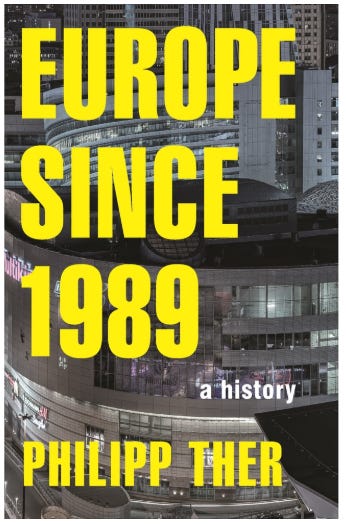
See Philipp Ther’s Europe Since 1989: a history‘ Chapters 4 & 5 for the devastating effects of Neo-Liberalism in Eastern Europe:
China- This state became the manufacturing hub of American Multinationals, seeking an exploitable work-force: its called off-shoring to increase obscene profits for the latest electronic trinkets.
Mr. Garton-Ash then adopts a poetic metaphor :
Like Neptune’s trident, a renewed liberalism will have three prongs. The first is the defence of traditional liberal values and institutions, such as free speech and an independent judiciary, against threats from both populists and outright authoritarians.
The second prong almost embraces Piketty’s Capitalist Critique?
The second is to address the major failings of what passed for liberalism over the last 30 years—a one-dimensional economic liberalism, at worst a dogmatic market fundamentalism that had as little purchase on human reality as the dogmas of dialectical materialism or papal infallibility. These failings have driven millions of voters to the populists. We must, then, be tough on populism and tough on the causes of populism.
The third prong of the renewed Liberalism:
The third prong requires us to meet, by liberal means, the daunting global challenges of our era, including climate change, pandemics and the rise of China. So our new liberalism has to look both backward and forward, inward and outward.
Pay particular attention to ‘the rise of China‘ as part of ‘the daunting global challenges of our era‘! The Yellow Peril , in its various iterations and permutations is a standard Western trope!
Carefully camouflaged in his further explanation of his ‘three prongs’ is this example of barbarism in France.
The barbaric beheading of a French teacher outside Paris reminds us that, even in the oldest liberal societies, free speech has to contend with not only the heckler’s but now also the assassin’s veto.
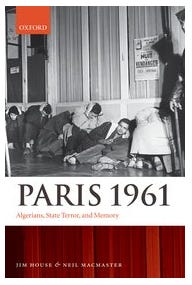
The reader need only look at the inherent barbarism, that existed in France in 1961?
Mr. Garton-Ash divides his essay into eight parts. I will offer quotations from his essay and comments on each section:
No liberalism without liberty:
The featured players:
‘Liberalism is, in Judith Shklar’s illuminating formulation, a “tradition of traditions.” There is an extended family of historical practices, ideological clusters and philosophical writings that may legitimately be called liberal. All share a core commitment to individual liberty. (Only in the weird semantic universe of contemporary American politics could it appear possible to separate liberalism from liberty.) Beyond this, as John Gray has argued, liberalism includes elements of individualism, meliorism, egalitarianism and universalism. These ingredients, however, appear in widely varying definitions, proportions and combinations.
In his opening paragraph he presents Shklar’s ‘tradition of traditions’ and John Grey’s collection of the ‘elements’ of Liberalism: in Shklar’s vision it is an agglomeration of capacious constituents. And in Grey’s case more of the ‘elements’ favored by Shklar. The five paragraphs of this section, of his essay, are a potted self-serving history of the ‘evolution of Liberalism’. With the addition of current ‘bad political actors’ added to enliven his polemic.
Equality and solidarity
A crucial staircase up from the floor is education. The expansion of university education was intended by mid-20th century liberals to augment life chances and social mobility, yet now the great American universities increasingly look like another means for existing elites to perpetuate their ascendancy. Leading US colleges regularly admit more students from the top 1 per cent of households by income than they do from the bottom 60 per cent. The Economist has coined the term “hereditary meritocracy” to describe this self-perpetuating new class. Universities like the two in which I am privileged to work therefore bear a major responsibility to widen access, but they cannot achieve social mobility on their own. We also need high-quality state schooling for all, from the crucial early years up, better vocational education and, amid a digital revolution, lifelong learning.
The featured players:
Philosopher Pierre Hassner, Leszek Kołakowski, ‘dramatic growth in inequality’, Ralf Dahrendorf , Milton Friedman, Oxford University, ‘expansion of university education’, The Economist , “hereditary meritocracy” . More riffing on Piketty? Or is it more argumentative Velveeta?
Redistributing respect
The players:
‘disparity of esteem’, ‘liberal elites’, East Germany, Ronald Dworkin, ‘liberal political community’, ‘equal respect and concern’, ‘metropolitan liberals’, ‘US rustbelt’, ‘neglected communities of northern England’, ‘taxi-loads of metropolitan journalists’, ‘Yorkshire coalfields’, ‘Appalachian mountains’, Martha Nussbaum , “curious and sympathetic” imagination , “recognise humanity in strange costumes” , Charles Dickens’s Bleak House, ‘imaginative sympathy underpins is solidarity’.
Call this collection just a brief and selective resume of the sins, and the victims of The Neo-Liberal Swindle!
Checking the “liberalocracy”
The players:
“levelling up.” , super-rich, globalisation, “comfortably off”, middle-class, Extreme inequality, “hereditary meritocracy.”, concentration of power, Anglo-American liberalism, “revolving door”, “golden rule” , grotesquely distorting power of money, Rupert Murdoch, Amazon, Apple, Facebook, Google, Clintons, Tony Blair, Friedmanites and Hayekians,, Stephen Schwarzman, Financial Times, Mike Corbat, Citigroup, Jamie Dimon, JP Morgan Chase, John Stuart Mill, “stakeholder capitalism”, left-wing radical, Thomas Mann, Little Dorrit, Merdle.
In this collection of political actors, the reader needs to make note of Mr. Garton-Ash’s praise for Soros : ‘Yes, some rich and powerful individuals, such as George Soros, have truly earned our respect.’ Ass-kissing sycophants for the Plutocracy is another name for The Hoover Institution.
Identity and community
The players:
‘community and identity’, cosmopolitan liberals, “the international community,”, diverse minorities, multiculturalists, “white identity politics” , Trump and his ilk, Hillary Clinton, “the basket of deplorables.”, post-1989 globalisation and liberalisation, Karl Marx, Communist Manifesto, Joachim Gauck, zielwahrende Entschleunigung (goal-preserving deceleration,
Note the final framing, of this section of his essay, a painting by Eugène Delacroix – La liberté guidant le peuple . With the respectable bourgeoise notion of Gauck’s ‘goal preserving declaration’ -Note that the 37 million Refugees the product of America’s Wars of Empire is avoided at all costs by Garton-Ash! So much for the mythology of ‘Liberal Renewal’ that he advocates as a somehow!
The state-nation
The players:
uncomfortable territory for contemporary liberals, the stubborn persistence of nations, “internationalism versus the nation,”, Scruton , European liberals in 1848, Covid pandemic, “liberalism for the liberals, cannibalism for the cannibals”, Martin Hollis, “identity politics,”, Feminism, Mill, George Eliot, “either/or”, “as-well-as-and”
These players followed his vision of a ‘Declaration of Liberal Faith’ offered as an alternative to the utterly toxic ‘identity politics’ of the multiculturalists?
Ours will therefore be an inclusive, liberal patriotism, capacious and sympathetically imaginative enough to embrace citizens with multiple identities. Membership of the nation is defined in civic, not ethnic or völkisch terms; this is not a nation-state, in a narrow sense, but an état-nation, a state-nation. Such an open, positive, warm-hearted version of the nation is capable of appealing not just to dry reason but also to the deep human need for belonging and the moral imperative of solidarity. While the coronavirus pandemic initially triggered a bout of national self-isolation, it has also showed us the best in community spirit and patriotic solidarity. Liberal patriotism is an essential ingredient of a renewed liberalism.
The challenge of the global
The players:
globalised financialised capitalism, territorially bounded, liberal democratic state-nation, What do liberals have to offer most of humankind, a moral question and a very practical one, John Gray, John Stuart Mill, East India Company, Western universalism, violent conquest, torture, genocide, slavery, highest ideals of liberty, civilisation and enlightenment, colonial oppression, Afghanistan, Libya and Iraq, Kosovo or Sierra Leone, abandon the universalist aspiration, a postcolonial openness, the west’s declining relative power, for a new liberalism, since 1945,predominance of western power, China, which is already a superpower, China’s unprecedented Leninist-capitalist version of developmental authoritarianism, an alternative path to modernity, the defining threat of the Anthropocene era: climate change, the Global North, to show them they are wrong, Global South, Paul Collier argues that limiting immigration can actually benefit the societies from which immigrants come, that large majority of humankind, these global challenges, Hong Kong and Taiwan.
Again no mention of America’s Wars of Empire, and its 37 million refugees! Conquest and subjugation of the lesser beings of the planet is central to the rehabilitation of the Liberal Mythology. Mr. Garton-Ash political/moral blindness …
Towards a new liberalism
The players:
Arnold Ruge, entitled “Self-Criticism of Liberalism.” It was published in 1843, FDR’s New Deal, Now we need a new “new liberalism.”, I do not pretend to elaborate a normative theory.’, It strayed too far from Karl Popper’s “piecemeal engineering.”, This new liberalism will be stalwart in the defence of liberal essentials, It will be experimental, proceeding by trial and error, This new liberalism will remain universalist, This new liberalism will remain egalitarian, historically informed meliorism, hope for a human civilisation,
For the patient reader of Mr. Garton -Ash, in both his Descriptive and Prescriptive rhetorical modes, at some points intertwined, and at others nearly free-floating: he has the particular talent of collecting clichés and catch phrases. Admittedly I have written a polemic, that features a not completely arbitrary collection of these self-serving rhetorical beings. Yet Mr. Garton-Ash’s concluding paragraphs, in a way, or even a perhaps, vindicates my exercise in polemics?
Speaking only for myself, I hope I will then go down with the good ship Liberty, working the pumps in the engine room as we try to keep her afloat. But as I breathe my last mouthful of salty water—glug, glug—I shall find consolation in reflecting on one last, peculiar quality of Liberty. Some time after the ship seems to have sunk to the bottom, it comes back up again. Odder still: it acquires the buoyancy to refloat precisely through sinking. It is no accident that the most passionate voices for freedom come to us, like the prisoners’ chorus in Beethoven’s Fidelio, from among the unfree.
For liberty is like health—you value it most when you have lost it. The better way forward, however, for free societies as for individuals, is to stay healthy.
The Reader isn’t quite prepared, for Adam Tooze, in his Financial Times streamlined iteration. Those New Statesman essays, have been miniaturized for those busy Capitalist Technos? Those majestic paragraphs are … Call it a collection of ideas, foreshortened for those readers, at the breakfast table, or riding that commuter train into the office? Let me begin here:
Headline: Welcome to the world of the polycrisis
Sub-headline: Today disparate shocks interact so that the whole is worse than the sum of the parts.
With economic and non-economic shocks entangled all the way down, it is little wonder that an unfamiliar term is gaining currency — the polycrisis.
A problem becomes a crisis when it challenges our ability to cope and thus threatens our identity. In the polycrisis the shocks are disparate, but they interact so that the whole is even more overwhelming than the sum of the parts. At times one feels as if one is losing one’s sense of reality. Is the mighty Mississippi really running dry and threatening to cut off the farms of the Midwest from the world economy? Did the January 6 riots really threaten the US Capitol? Are we really on the point of uncoupling the economies of the west from China? Things that would once have seemed fanciful are now facts.
In my own reductive way I have outlined Mr. Tooze’s interpretation of what ‘Polycrisis’ is? It is a noun, as it describes a thing, no matter its abstractness!
This comes as a shock. But how new is it really?… This comes as a shock. But how new is it really?… So have we been living in a polycrisis all along?…Meanwhile, the diversity of problems is compounded by the growing anxiety that economic and social development are hurtling us towards catastrophic ecological tipping points. … The pace of change is staggering…. So, what is the outlook?… Perhaps. But it is an unrelenting foot race, because what crisis-fighting and technological fixes all too rarely do is address the underlying trends. …
I will put this to use in attempting to interpret? Mr. Tooze’s latest essay:
Headline: Three ways to read the ‘deglobalisation’ debate
Sub-headline: Proponents of business as usual and the new cold warriors are too confident of their ability to predict the future.
As 2023 unfolds, the world of economic analysis and commentary is marked by a disjuncture between discourse and data. On the one hand, you have feverish talk of deglobalisation and decoupling. While on the other, the statistics show an inertial continuity in trade and investment patterns.
…
There are at least three ways to reconcile this tension.
Option one: you can cleave to the old religion that economics always wins.
Option two: rather than business as usual, we are on the cusp of a new historical epoch, a new cold war.
Option three: We are witnessing not a reversal of globalisation or full-scale decoupling, but a continuation of some aspects of familiar pattern, just on fundamentally different premises.
The end point of Mr. Tooze’s flaccid polemic :
Whereas the advocates of business as usual declare that it is still “the economy, stupid” and the new cold warriors rally around the banner of “democracy versus autocracy”, the third position faces the reality of confusion, the kind of confusion registered by a term like “polycrisis”.
Polycrisis has its critics, and at Davos 2023 it risked becoming something of a cliché. But as a catchword it serves three purposes. It registers the unfamiliar diversity of the shocks that are assailing what had previously seemed a settled trajectory of global development. It insists that this coincidence of shocks is not accidental but cumulative and endogenous. And, by its currency, it marks the moment at which bullish self-confidence about our ability to decipher either the future or recent history has begun to seem at the same time facile and passé.
Polycrisis is Techno-Speak ‘a catchword it serves three purposes’ … to place the economic/political future, in the hands of toxic political actors, that are the natural inheritors of Hayek/Mises/Friedman: as we have yet to self-emancipate from the thrall of the Neo-Liberal Swindle!
Mr. Stephens is like his fellow Neo-Cons: David Frum, Bill Kristol and David Brooks. They have an appetite for War, yet have no actual experience, of what being a soldier is like, not to speak of a cultivated ignorance of what battle might be-
These men are not Ernst Jünger and his notorious celebration of combat in ‘Storm of Steel’. But men whose ignorance of the realities of war, leaves The Reader wondering: about the whole of their World View, based on what other instantiation of their ignorance of the human world?
Mr. Stephens’ thought experiment that wonders about the question of : How Will Joe Biden Be Remembered in 50 Years?Is realized in these four paragraphs:
…
What will matter in 2073 is whether he reversed the global tide of democratic retreat that began long before his presidency but reached new lows with the Taliban’s victory in Afghanistan and Russia’s invasion of Ukraine. If Biden can turn it, it will be a historic achievement. If not, much darker days will lie ahead.
He has a real chance.
On the positive side, there is last week’s announcement of 31 M-1 Abrams tanks for Ukraine, unlocking German Leopard 2 tanks to be sent as well. The decision brings Ukraine a significant step closer to eventual NATO membership, to which it has more than earned the right.
Then there’s the apparent end of attempts to revive the Iran nuclear deal and a visibly tougher posture by the administration toward Tehran’s misogynistic tyrants, including, last week, the largest-ever joint military exercise with Israel.
And there is the president’s repeated public statements that the U.S. will defend Taiwan in the event of a Chinese attack. Had Biden failed to say so, the island would be in even graver danger than it is now. Closer defense ties to Japan and Australia reinforce the point.
…
A favorite Neo-Con trope is decline and decadence, here carefully tinctured in ‘the global tide of democratic retreat’ and ‘31 M-1 Abrams tanks for Ukraine, unlocking German Leopard 2 tanks’ are the point of focus of a possible view of Biden in 50 years?
Look at, and marvel, at the remaining cast of characters, that are the brought on stage to buoy this blatant War Mongering. The jaundiced reader might think of the political/historical monstrosities of @anneapplebaum, featured in Neo-Liberal/Neo-Con publications, in a circumspect and reductivist way? Yet Stephens offers this collection:
Franklin Roosevelt, Lend-Lease, trans-Atlantic unity in the face of Russian aggression, Finland and Sweden and NATO membership, But Biden, like F.D.R., Ukraine, Vladimir Putin, Iran, Taiwan, Chinese invasion,
For just a rhetorical moment Stephens offers this ;
It’s time to arm Ukraine with the arms it needs to win quickly — including F-16s — not just to survive indefinitely.
North Korea, Middle East, …
Another segue into political hysteria!
…Air Force Gen. Mike Minihan, head of the Air Mobility Command, sent a memo to his officers with a blunt warning: “I hope I am wrong,” he wrote about the prospect of the United States getting into a war with China. “My gut tells me we will fight in 2025.”
The final paragraph:
In 50 years, they’ll know. Biden’s sentence could be, “He defeated Trump, and then he defeated Putin, Khamenei and Xi.” Or it will be, “He defeated Trump, but then he came up slightly but fatally short.” Time will tell.
Can Goldman Sachs recover its swagger? It is hard to reinvent a firm trapped by its own mythology
The Reader needn’t wonder at this ‘essay’ about Goldman Sachs. This corporation benefited from the intervention of some very powerful political/economic actors. Perhaps that has led this corporation, to the exercise of ‘a hubris’ as The Economist presents it?
A valuable place to begin an inquiry is a history of Lehman Brothers collapse offered by The New York Times of September 29, 2014 :
Headline: Revisiting the Lehman Brothers Bailout That Never Was
Inside the Federal Reserve Bank of New York, time was running out to answer a question that would change Wall Street forever.
At issue that September, six years ago, was whether the Fed could save a major investment bank whose failure might threaten the entire economy.
The firm was Lehman Brothers. And the answer for some inside the Fed was yes, the government could bail out Lehman, according to new accounts by Fed officials who were there at the time.
But as the world now knows, no one rescued Lehman. Instead, the firm was allowed to collapse overnight, a decision that, in cool hindsight, let problems at one bank snowball into a full-blown panic. By the time it was over, nearly every other major bank had to be saved.
Why, given all that happened, was Lehman the only bank that was not too big to fail? For the first time, Fed officials have offered an account that differs significantly from the versions that, for many, have hardened into history.
Ben S. Bernanke, the Fed chairman at the time, Henry M. Paulson Jr., the former Treasury Secretary, and Timothy F. Geithner, who was then president of the New York Fed, have all argued that Lehman Brothers was in such a deep hole from its risky real estate investments that Fed did not have the legal authority to rescue it.
But now, interviews with current and former Fed officials show that a group inside New York Fed was leaning toward the opposite conclusion — that Lehman was narrowly solvent and therefore might qualify for a bailout. In the frenetic events of what has become known as the Lehman weekend, that preliminary analysis never reached senior officials before they decided to let Lehman fail.
Understanding why Lehman was allowed to die goes beyond apportioning responsibility for the financial crisis and the recession that cost millions of ordinary Americans jobs and savings. Today, long after the bailouts, the debate rages over the Fed’s authority to bail out failing firms. Some Fed officials worry that when the next financial crisis comes, the Fed will have less power to shield the financial system from the failure of a single large bank. After the Lehman debacle, Congress curbed the Fed’s ability to rescue a bank in trouble.
…
Mr. Bernanke and Mr. Paulson said in recent interviews with The Times that they did not know about the Fed analysis or its conclusions.
Interviews with half a dozen Fed officials, who spoke on the condition they not be named, so as not to breach the Fed’s unofficial vow of silence, suggest some Fed insiders believed that the government had the authority to throw Lehman Brothers a lifeline, even if the bank was nearly broke. The Fed earlier came to the rescue of Bear Stearns, after doing little analysis, and only days later saved the American International Group. The government subsequently saved the likes of Bank of America, Citigroup, Goldman Sachs and Morgan Stanley. Ultimately, whether Lehman should have gotten Fed support was a judgment call, not a matter of strict statute, these people said.
“We had lawyers joined at our hips,” said one participant. “And they were very helpful at framing the issues. But they never said we couldn’t do it.”
As another participant put it, “It was a policy and political decision, not a legal decision.”
…
Mr. Bernanke and Mr. Paulson said in recent interviews with The Times that they did not know about the Fed analysis or its conclusions.
Interviews with half a dozen Fed officials, who spoke on the condition they not be named, so as not to breach the Fed’s unofficial vow of silence, suggest some Fed insiders believed that the government had the authority to throw Lehman Brothers a lifeline, even if the bank was nearly broke. The Fed earlier came to the rescue of Bear Stearns, after doing little analysis, and only days later saved the American International Group. The government subsequently saved the likes of Bank of America, Citigroup, Goldman Sachs and Morgan Stanley. Ultimately, whether Lehman should have gotten Fed support was a judgment call, not a matter of strict statute, these people said.
“We had lawyers joined at our hips,” said one participant. “And they were very helpful at framing the issues. But they never said we couldn’t do it.”
As another participant put it, “It was a policy and political decision, not a legal decision.”
…
Whether and how much the Fed could lend Lehman depended on those teams’ findings, although the final decision rested with Mr. Geithner, Mr. Bernanke and the Federal Reserve Board.
What happened that September was the culmination of circumstances reaching back years — of ordinary people too eager to borrow, of banks too eager to lend and of Wall Street financial engineers reaping multimillion-dollar bonuses. Even so, saving Lehman from complete collapse might have shielded the economy from what turned out to be a crippling blow. And as the subsequent rescue of A.I.G., the insurance giant, demonstrated, a rescue could have included substantial protections for taxpayers.
…
In recent interviews, members of the teams said that Lehman had considerable assets that were liquid and easy to value, like United States Treasury securities. The question was Lehman’s illiquid assets — primarily a real estate portfolio that Lehman had recently valued at $50 billion. By Lehman’s account, the firm had a surplus of assets over liabilities of $28.4 billion.
…
A group of bankers summoned to the Fed by Mr. Paulson, who was hoping they would mount a private rescue, did not accept Lehman’s $50 billion valuation for its real estate and could not decide whether Lehman was solvent. But potential private rescuers had a motive to lowball Lehman’s value. Fed officials involved in the valuation stressed that the Fed could hold distressed assets for much longer than private parties, allowing time for those assets to recover in value. Also, because the Fed sets monetary policy, it exerts enormous influence over the assets’ ultimate value.
…
Argument continues today over the value of Lehman’s assets. A report compiled by Anton R. Valukas, a Chicago lawyer, at the behest of the bankruptcy court overseeing Lehman concluded in 2010 that nearly all of the firm’s real estate valuations were reasonable. It also suggested that Lehman’s chaotic bankruptcy caused many of the losses later borne by the firm’s creditors. Other analysts have argued that Lehman was deeply insolvent.
…
So why, then, was Lehman allowed to die?
Mr. Paulson has said that politics did not enter into the decision. But he had endured months of criticism for bailing out Bear Stearns in March 2008, and the outcry only intensified after the Treasury provided support to the mortgage finance giants, Fannie Mae and Freddie Mac, in the first week of September. During a conference call on the Thursday before Lehman’s collapse, Mr. Paulson declared to Mr. Bernanke, Mr. Geithner and other regulators that he would not use public money to rescue Lehman, saying he did not want to be known as “Mr. Bailout.”
The New York Times November 21, 2009, offers an earlier examination of Goldman, as the beneficiaries of those very powerful political/economic actors.
Headline: Wall Street’s Spin Game
By Graham Bowley
…
Just last week, Goldman announced that it would spend $500 million to help thousands of small businesses recover from the recession. At the same time, Mr. Blankfein acknowledged that Goldman had made mistakes. “We participated in things that were clearly wrong and we have reasons to regret and apologize for,” he said.
…
As the Chicago demonstration made clear, the image problems aren’t confined to Goldman and could have a cost. Wall Street banks are under regulatory pressure, and come election time, if unemployment is still above 10 percent and Wall Street is still paying itself big bonuses, lawmakers’ wrath might force broader pay curbs, tougher restrictions on what banks can do, or even a break up of the biggest banks.
…
It is a tough brief, even for Manhattan’s skilled public relations industry. Last week, New York State’s comptroller reported that Wall Street profits this year are on track to exceed the record set at the height of the credit bubble. So what to do? Here are some suggestions about making the unloved Masters of the Universe loveable again.
…
The quickest way for the banks to redeem themselves could be to admit they played a role in the crisis and that their survival depended on taxpayer money.
Several public relations executives pointed to John J. Mack, Morgan Stanley’s chief executive, as an example of a banker wisely getting in front of the problem early. It was Mr. Mack who offered a full-throated mea culpa at a Congressional hearing last February for his bank’s role in fueling the crisis. “We are sorry for it,” he told lawmakers.
One public relations executive, who does not work for Mr. Mack and who asked not to be identified for fear it could hurt his relationships with other bankers, said: “They have done the best job of anybody of navigating the crisis.” Not every bank has been willing to apologize even though “maintaining otherwise manifestly contradicts the reality that most people see,” according to Stephen Davis, executive director at the Millstein Center for Corporate Governance and Performance at Yale University.
Goldman’s apology, for instance, was a grudging start but it may not be enough. “They should be taking advertisements, they should hold seminars, news conferences,” said Howard J. Rubenstein, president of Rubenstein Associates, who argues for a more effusive mea culpa. “This is a time for gratitude and attitude. One letter to the editor, one news conference, one speech does not make an image.”
…
Franz Paasche, a reputations specialist at Communications Consulting Worldwide in New York, argues that a bad reputation can also harm a company’s ability to fight for what it wants in Washington.
“Reputation has value and strong reputations create permissions to grow and prosper,” he said. As Wall Street banks’ reputations sink, “they are losing the more active seat at the table in discussions about policy.”
If the government did take wider measures against the banks, it would leave a very different Wall Street. There would be less swagger to those Masters of the Universe. But perhaps only then would the rest of us finally be able to love them.
…
I’ll offer a more easily comprehended ‘reduction’ of The Economist’s shaming polemic against Goldman. That seeks, in its way, to echo the schoolmasterish tone of Adrian Wooldridge, writing as Bagehot!
To understand Goldman today, take a walk down Wall Street. After he financial crisis of 2007-09, two big American banks reinvented themselves. JPMorgan Chase successfully pursued vast scale across a wide range of business lines. Morgan Stanley built a thriving arm managing the assets of the wealthy, which mints reliable profits. Goldman, however, stuck to its game of trading, advising on deals and bespoke investing. Penal new capital rules made this less lucrative, but the firm staked a Darwinian bet that the resulting shakeout would kill off many competitors. Instead, it badly underperformed the stockmarket for years and got ensnared in the 1mdb scandal, in which officials in Malaysia and Abu Dhabi received $1.6bn of bribes in 2009-14. A Goldman subsidiary pleaded guilty to a criminal charge and the firm admitted “institutional failure”.
…
Yet look more closely and the project to remake the bank is vexingly incomplete. Diversification has been patchy: transaction-banking revenues are tiny and the asset-management arm is often dragged down by opaque proprietary bets. The dream of creating a consumer bank has soured. Goldman has 15m customers, but has also faced large losses and bad-debt charges, which is why it is now winding down part of the operation.
As the prospects for a big new earnings machine have receded, everything still rests on the traditional business. The profitability of the trading arm has improved but remains volatile and, on average, pedestrian.
…
Goldman’s struggles point to several lessons. One is that it still excels, but in a bad industry. Investment banking combines the drawbacks of a regulated activity (capital requirements and red tape) with the vices of a speculative one (volatility and capture by employees). The firm says it has become more disciplined on pay but last year forked out $15bn, its second-highest salary and bonus bill since the financial crisis, even as profits halved to $11bn and the firm barely beat its cost of capital.
…
Another lesson is that it is hard to compete in winner-takes-all digital markets. Goldman thought that brains and brand were enough.
…
A final lesson is that the stagnation of globalisation has shrunk Wall Street’s horizons. In the decade after Goldman listed, international revenues provided half of its growth, as its bankers conquered Europe and then broke into Asia.
…
Can Goldman recover its swagger? Mr Solomon is wisely laying off staff and shrinking the bank’s proprietary investments.
…
Yet there is something uniquely hard about reforming elite firms whose unwritten code is that they are smarter than everyone else. Just ask McKinsey, a scandal-magnet once known as the world’s most-admired consultancy. Goldman’s culture of self-regard remains at odds with the facts. Instead it now needs to be self-critical. For yesterday’s masters of the universe, that may be the hardest leap of all.
…
The pressing question of whether Goldman can ‘recover its swagger’, offers a touch of Flashman, as resurrected by George MacDonald Fraser? Not Adrian Wooldridge writing as Bagehot, in his tattered schoolmasterish drag!
It is unusual for this news magazine to grant credit to one of its ‘writers’. The Reader might begin her exploration of the career of the Economist’s writer Arkady Ostrovsky:
The New York Times of July 13, 2016 offers a New York Times respectable bourgeoise opinion, about Mr. Ostrovsky, by Serge Schmemann:
Headline: Review: ‘The Invention of Russia’ Examines the Post-Soviet Path’
by Serge Schmemann
Anyone who has spent time in Russia over the past 30 years should be deeply grateful for Arkady Ostrovsky’s fast-paced and excellently written book, “The Invention of Russia: From Gorbachev’s Freedom to Putin’s War.”
Too often, the story of post-Soviet Russia is presented through a Western prism as a clash of good Westernizers and evil reactionaries, or as a lamentation about what the West could, and should, have done once it “won” the Cold War. Mr. Ostrovsky doesn’t waste time on that. A first-class journalist who has spent many years covering Russia for the London publications The Financial Times and The Economist, he is also a native of the Soviet Union, with an instinctive understanding of how politics, ideas and daily life really work there.
In Mr. Ostrovsky’s book, the West plays a minor role — as a utopia for liberal intellectuals, a scapegoat for Vladimir V. Putin or a place of exile for fallen oligarchs. His is an insider’s story about how the uniquely Russian contest of ideas, myths and invented histories shaped the chaotic search for a new Russia, once Communist rule crumbled — from Mikhail S. Gorbachev’s illusion that Soviet rule could be reformed and democratized, to what Mr. Ostrovsky calls the “hatred and aggression” of Mr. Putin’s kleptocratic state.
In “The Invention of Russia,” those primarily responsible for Russia’s “emergence from authoritarianism and for its descent back into it” and the great dramas that accompanied it — Boris N. Yeltsin’s firing on his Parliament, the Chechen wars, the hostage-taking in a Beslan school — are the Russians who invented (as the book’s title proclaims) a progression of narratives, either in print or, more powerfully, on television. It was there, on the media front, Mr. Ostrovsky argues, that the real struggles over Russia’s future were fought.
…
Serge Schmemann offers this, on Arkady Ostrovsky:
…
I spent many years as a reporter in Moscow, and yet Mr. Ostrovsky’s original and trenchant observations repeatedly had me exclaiming, “Of course, that’s how it was!” His riff on the failures of the intelligentsia, for example, ends with this pithy indictment: “Used to raising toasts to ‘the success of our hopeless cause,’ it did not know what to do when its cause succeeded.” Of course!
…
Arkady Ostrovsky repeats the ‘Party Line’ :
When russia’s president, Vladimir Putin, invaded Ukraine on February 24th 2022, he set out to grab territory, deprive it of sovereignty, wipe out the very idea of its national identity and turn what remained of it into a failed state. After months of Ukraine’s fierce resistance, its statehood and its identity are stronger than ever, and all the things that Mr Putin had intended to inflict on Ukraine are afflicting his own country.
Here are my selections from this ‘Putin Bill Of Attainder’:
…
Mr Putin’s war is turning Russia into a failed state, with uncontrolled borders, private military formations, a fleeing population, moral decay and the possibility of civil conflict.
…
Consider its borders. Russia’s absurd and illegal annexation of four regions of Ukraine—Kherson, Donetsk, Luhansk and Zaporizhia—before it could even establish full control over them, makes it a state with illegitimate territories and a fluid frontier.
…
Another feature of a failing state is a loss of monopoly on the use of physical force. Private armies and mercenaries, although officially banned in Russia, are flourishing. Evgeny Prigozhin, a former convict nicknamed “Putin’s chef” and a front man for the Wagner Group, a private mercenary operation, has been openly recruiting prisoners and offering them pardons in exchange for joining his forces. Wagner, he says, has no desire to be “legalised” or integrated into the armed forces.
…
The Russian state is failing in the most basic function of all. Far from protecting the lives of its people, it poses the biggest threat to them, by using them as cannon fodder.
…
The mobilisation caused a shock in Russia far greater than the beginning of the war itself. Some of its effects are already visible: recruitment centres were set ablaze, and at least 300,000 people fled abroad (on top of the 300,000 who left in the first weeks of the war).
…
While urbanites flee, tens of thousands of their poorer compatriots are being rounded up and sent into the trenches. By bringing his “special military operation” home Mr Putin has broken the fragile consensus under which people agreed not to protest against the war in exchange for being left alone.
…
Mr Putin cannot win, but he cannot afford to end the conflict either. He may hope that by making so many people collude in his war, and subjecting them to more of his poisonous, fascist propaganda, he will be able to drag things out.
…
As Alexei Navalny, Russia’s jailed opposition leader, said in one of his court hearings: “We have not been able to prevent the catastrophe and we are no longer sliding, but flying into it.
…
Its appropriate that Arkady Ostrovsky should end his Anti-Putin Bill of Attainder with Alexei Navalny. Here is Masha Gessen’s hand-wringing about Navalny, in his February 15, 2021 essay, in the The New Yorker:
…
Navalny’s reputation as an ultranationalist stems from statements and actions that are more than a decade old.In 2007, he left the socialist-democratic party Yabloko, where he had served as the deputy head of the Moscow chapter, to start a new political movement. He and his co-founders called their movement narod, the Russian word for “people” and, in their case, also an acronym for National Russian Liberation Movement. Navalny recorded two videos to introduce their new movement; they were his début on YouTube. One was a forty-second argument for gun rights. The other, a minute long, featured Navalny dressed as a dentist, presenting a slightly confusing parable that likened interethnic conflict in Russia to cavities and argued that fascism can be prevented only by deporting migrants from Russia. Navalny closed his monologue with “We have a right to be [ethnic] Russians in Russia. And we will defend this right.” It is decidedly disturbing to view. Around the time Navalny released the video, and for a couple of years after, Navalny took part in the Russian March, an annual demonstration in Moscow that draws ultranationalists, including some who adopt swastika-like symbols. In 2008, Navalny, like an apparent majority of Russians, supported Russian aggression in Georgia. In 2013, he made illegal immigration from Central Asia a central theme of his campaign for mayor of Moscow. In 2014, after Russia occupied Crimea, he said that, while he opposed the invasion, he did not think that Crimea could be just “handed back” by a post-Putin Russian government. In the past seven years, though, Navalny appears to have not made any comments that could be interpreted as hateful or ethno-nationalist. He has publicly apologized for his comments on Georgia.
…
Navalny’s political views have developed in an unusually public way over the past decade. He has never apologized for his earliest xenophobic videos or his decision to attend the Russian March. At the same time, he has adopted increasingly leftleaning economic positions and has come out in support of the right to same-sex marriage. This strategy of adopting new positions—without ever explicitly denouncing old ones—is probably the reason the suspicion of ethno-nationalism continues to shadow Navalny.
In his history of ‘Hegel’s Century’ Prof. Jon Stewart explores the role of Heine: Chapter 3 – Heine, Alienation, and Political Revolution: from Part II – The First Generation.
A summery provided by Cambridge:
Summary
Chapter 3 is dedicated to Hegel’s student, the poet Heinrich Heine. It provides an account of Heine’s life and his personal relations to figures such as Hegel and Marx. An analysis is given of Heine’s On the History of Religion and Philosophy in Germany, with specific attention paid to the role he ascribes to Hegel. Heine portrays Kant and Fichte as philosophers of the revolution and Schelling as the philosopher of the Restoration. If Schelling is the villain, then Hegel is the hero of the story of German philosophy that Heine wants to tell. Hegel is portrayed as the high point of the development of the revolution of German thought. Heine compares the revolution of the mind that took place in Germany with the French Revolution that took place in the real world. He predicts a great German revolution that will begin a new period in European history. An interpretation is given of Heine’s poem “Adam the First,” which takes up some of the motifs from Hegel’s analysis of the Fall. An account is also given of Heine’s “The Silesian Weavers,” a poem written on occasion of the rebellion of weavers in Silesia in Prussia in 1844.
The single comment that Prof. Stewart makes, about about Heine and his relation to his Jewishness seems inadequate, for a writer I hold in the highest esteem!
Heine had a complex self-identity as a German Jew.
Two examples Professor Stewart’s scholarship :
The Cultural Crisis of the Danish Golden Age: Heiberg, Martensen, and Kierkegaard
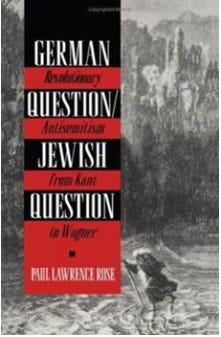
In Paul Lawrence Rose’s book, in his Chapter 9, explores the question of Revolutionary Judaism and The German Revolution: Börne and Heine, page 135.
Page 161, of ‘Ludwig Borne and Heinrich Heine’
The picture of Judaism that emerges from the writings of Heine’s aggressively revolutionary years is an ambivalent one and it parallels Borne’s own outlook in many respects. There is, of course, the usual Hegelian contempt for the Jews as a spent Ahasverian historical force:
A mummified people (Volksmumie) that wanders the earth, wrapped up in its swathing in prescriptive letters, an obstinate piece of world history, a specter that bargains for the maintenance of bills of exchange and old hose.
This philosophical prejudice was reinforced by an artistic distaste for Judaism as the matrix of the Nazarene spirit. Behind both attitudes it is possible to detect Heine’s resentment against a whole class of wealthy business Jews (including his own family), whose prime function he saw as being the patronage of of such artists as himself.
At times, Heine hated the merchant class, a Philistines merged into Borne-like denunciation of the wealthy as Mammonists. He despised their ‘counting-house morality’ and inveighed: ‘Money is the god of our time and the Rothchild is his prophet.’ Such feelings turned him into a revolutionary activist in 143-44, when he befriended Marx and the two collaborated on both literary and political projects. Significantly , this was the very time when Marx was writing his essay ‘On the Jewish Question’(1843 ),the which systematized the sort of incautious remarks on Jews and Mammon that Bourne and Heine were wont to utter.
I will quote the the first sentences of each paragraph, as examples of the ‘Shavit Methodology’ The Reader can read these paragraphs in full:
The Prologue:
Benjamin Netanyahu is a unique international phenomenon. When he first strode on to the world stage, in 1984, as Israel’s ambassador to the United Nations, Ronald Reagan was the president of the United States, Margaret Thatcher was the prime minister of the United Kingdom and Freddie Mercury had yet to sing “Bohemian Rhapsody” at Live Aid.
…
Netanyahu is also a unique Israeli phenomenon. The time he has spent in the prime minister’s office in Jerusalem – more than fifteen years – far outstrips that enjoyed by Yitzhak Rabin (six years), Menachem Begin (six) or Golda Meir (five), let alone Shimon Peres (three) or Ehud Barak (two).
…
On the human level Netanyahu is similarly unusual. One of his close associates once told me that he has never met a more impressive – and flawed – individual.
…
Now this singular actor in a Shakespearean tragedy of his own making has published an autobiography: Bibi: My story. He wrote it, as I understand, because he feared his imminent political demise, devoting nine of his recent eighteen months in parliamentary opposition to writing this 654-page account of his life’s war, his life as war.
…
Act One, Scene One:
I first met Netanyahu twenty-six years ago. On a damp, grey autumn afternoon, I parked my red VW Beetle outside the office of the prime minister in Jerusalem.
…
Bibi was the enigmatic, recently elected prime minister, viewed with suspicion by the Israeli elites and the international community. I was a young journalist, eager to decipher the enigma.
Act One: Scene Two
…
Netanyahu inherited this extraordinary perception of reality – and his all-consuming sense of purpose – from his father, Professor Benzion Netanyahu (1910–2012), a scholar of Judaic history.
…
Of course, when it comes to telling his story, Netanyahu does not actually describe this radical world-view – which I have heard from him, from his father and from several of his close friends over the years.
…
With surprising candour Netanyahu reveals that only after he was first voted out of office (in 1999) did he devise his vision for Israel: the formula that peace would not bring security, but security would bring peace.
…
In line with this vision Netanyahu developed a nonconformist discourse: the corollary that peace with the Palestinians was not the path to peace with the Arab world, but that peace with the Arab world was the path to peace with the Palestinians. As he sees it, Clinton, Obama, the entire Israeli left and most of the international community are wholly misguided.
…
What is most notable about Netanyahu’s vision is what it lacks.
Act Two: Scene One:
After I met the son, I came to know the father. More than twenty years ago I visited him a dozen times in the small limestone-clad home in Jerusalem in which Bibi was raised and forged.
…
Preventing catastrophes is the life mission of Benzion Netanyahu’s son. And, in his own eyes, he has succeeded.
,,,
Yes and no. True, for more than a decade Bibi has endowed Israel with strategic, economic and political stability.
…
Like his hero Ronald Reagan, Netanyahu scorns the state. That is why he failed to notice, or care, that during his previous time in office national leadership shrivelled, the political system withered and the civil service atrophied.
…
Ultimately, what Netanyahu did was to replace Ben-Gurion’s republic with a quasi-royalist regime. The comparison to Trump is instructive.
…
Act Three : Scene One
On page 190 of Bibi, Netanyahu recounts with pride how, in the early 1980s, he anticipated the fall of the Soviet Union. This sudden premonition came to him, he writes, as he recalled an engineering experiment he once conducted with his classmates at MIT, where he studied architecture.
…
Israel’s Black November encompasses three unprecedented developments: for the first time a far-right party (the Religious Zionist Party) garnered 11 per cent of the vote; Haredi and ultra- nationalist candidates won more than a quarter of parliamentary seats overall, and make up half of the seats in the governing coalition; and the ruling Likud party plans to hollow out the rule of law by weakening the supreme court and giving politicians powers to undermine the independence of the judicial system.
…
In the narrow political sense, the elections of 2022 gave Netanyahu a resounding victory: while still standing trial on charges of corruption, he nevertheless managed to destroy the left, defeat the centre and receive a full mandate to govern.
…
Netanyahu, of course, believes he will prevail – and he will try to ward off this nightmare in two ways: via war and peace. For him the ultimate objective remains Iran.
Epilogue:
Netanyahu, of course, believes he will prevail – and he will try to ward off this nightmare in two ways: via war and peace. For him the ultimate objective remains Iran.
…
What is missing from Bibi: My life story is empathy and introspection. The man who has experienced and accomplished so much is apparently ill equipped to share any genuinely sincere feelings with his readers. His memoir is light on self- criticism – and heavy on self-adulation.
…
A profound sense of mission helped Benjamin Netanyahu to overcome the tragedy underpinning the leader he has become – amplified by his belief that he is Israel’s Winston Churchill. The sure-to-be turbulent years of his latest tenure as prime minister will determine if his talents will indeed secure the future of his nation, or whether his flaws will endanger the very existence of the Jewish state.






 StephenKMackSD's Blog