The self-serving mendacity of @politico is reliable! A Dianne Feinstein obituary: a political re-write, as hagiography.

Political Observer comments.

Headline: A look at the legacy of Dianne Feinstein

Sub-headline: Before her long stint in the Senate, she led San Francisco through a healing period after horrific political violence.

https://www.politico.com/news/2023/09/29/dianne-feinstein-senator-mayor-00006007

Some excerpts from The Politico obituary:

She actually had come close to giving up politics in 1978, convinced she was never going to be elected mayor of San Francisco. Instead, she was thrust into the position that November when Mayor George Moscone and fellow City Supervisor Harvey Milk, the city’s first openly gay elected official, were shot to death in City Hall by a fellow politician. After that horrifying event, she would lend a healing calm to her city — and then guide it through the AIDS crisis that followed.

“She turned out to be the right leader for the time,” David Talbot wrote years later in “Season of the Witch,” a chronicle of those harrowing days.

“The hatred was so big,” Feinstein said years later, “we really had to bring the bricks of the city together again, and it was difficult.”

Editor: 1978 Political Melodrama doesn’t age well, but in the care and maintenance of Politico, it blossoms in to an ersatz hagiography.

The trail-blazing Feinstein

“Toughness doesn’t have to come in a pinstripe suit,”

Feinstein “got shit done by working with people on both sides of the aisle and refusing to get caught up in unnecessary nonsense,” John Burton, a former California Democratic Party chair, said when Feinstein had announced her intention to retire from the Senate on Feb. 14, 2023.

“As a woman who stormed into the male world of city and national politics when it was an actual boys’ club, she’s had to put up with more rudeness and bullying than many of us can imagine,” The Atlantic’s Caitlin Flanagan wrote in 2019.

Progressives in California didn’t always find her sufficiently liberal, but her work ethic was widely praised. Feinstein strove to be seen as a consequential senator who passed legislation.

Editor: More Feinstein Political Melodrama:

It was Feinstein who found Milk after White had shot him five times, and it was Feinstein who desperately tried to save him.

And then it was Feinstein who went out to meet the assembled press and then announced: “Mayor Moscone and Supervisor Harvey Milk have been shot and killed.” Some gasped, some cried out. And Feinstein then added: “The suspect is Supervisor Dan White.”

“In the course of that terrible day, Feinstein had become the leader the city needed,” Talbot wrote. “As she began to speak, she found the right words to express San Francisco’s howling pain and to make people believe that the broken city could be put back together.”

Bill Carrick, her longtime campaign consultant, said in 2023: “She basically did a really good job of keeping the city stabilized.”

“Feinstein is sometimes described as a centrist, but it is because her views are varied, not because they are mild; she thinks of herself, more accurately, as a pragmatist,” The New Yorker’s Connie Bruck wrote of her in 2015.

Feinstein also became an influential figure through her role on the Senate Intelligence Committee. Generally, she was supportive of the needs of American intelligence and the institutions themselves. She was, for instance, critical of Edward Snowden when he leaked NSA secrets and fled the country. “He has taken an oath,” Feinstein said in 2013. “These oaths mean something. If you can’t keep the oath, get out. And then do something about it in a legal way.”

For six years, she found herself at odds with the Obama administration and the CIA over her efforts to compile and release a massive report on interrogation tactics that the Bush administration adopted after 9/11. In particular, Feinstein was disturbed by the existence of “black sites,” where torture could be practiced on terror suspects far from official eyes.

“It was six years of work, it was staff that worked, you know, night and day, weekends on this,” she told CNN’s Dana Bash. “The report itself is over 7,000 pages, over 32,000 footnotes.”

Editor : On and on the careful, and selective reportage, on the political virtues of Feinstein… yet one very important aspect of her Senate tenure is missing. What of Feinstein’s vote on the Iraq War, she delayed the vote , what might her reasons have been?

Headline: War brings business to Feinstein spouse / Blum’s firms win multimillion-dollar defense contracts in Iraq, Afghanistan

By Phillip Matier, Andrew Ross April 27, 2003

https://www.sfgate.com/bayarea/matier-ross/article/war-brings-business-to-feinstein-spouse-blum-s-2652085.php

When it comes to scoring mega-military-related contracts, Sen. Dianne Feinstein‘s multimillionaire husband, Richard Blum, is right in the thick of things.

First up: a contract announced last week between the Army and URS Corp., the San Francisco planning and engineering company that specializes in defense work — and that happens to be partly owned by Blum’s investment firm.

The contract — which could grow to $600 million — is to help with troop mobilization, weapons systems training and anti-terrorism methods.

That’s on top of a $3.1 billion Army contract that URS snared back in February for weapons systems and homeland defense.

Next up: Perini Corp., which qualified earlier this month for as much as $100 million of defense work in Iraq and elsewhere. The Massachusetts-based company is already busy building barracks and other facilities for the new Afghan army — a separate contract worth $28 million.

Blum’s investment firm controls about 20 percent of Perini’s shares, with the majority held by a group of investors led by company chairman Ron Tutor.

Some of Perini’s stock is also held by Tutor’s West Coast construction company, Tutor-Saliba — the firm that built the Los Angeles subway system, rebuilt the Oakland Coliseum and put BART into San Francisco International Airport.

https://www.sfgate.com/bayarea/matier-ross/article/war-brings-business-to-feinstein-spouse-blum-s-2652085.php

Political Observer

Posted in Uncategorized | Leave a comment

Thatcherite, Robert Colvile…The Hunger Crisis in Britain takes a back seat to Net Zero and Rishi Sunak: Can Disraeli’s novel Sybil offer substance?

Political Observer comments.

Headline: Whether it’s 2030 or 2035, if we don’t have enough electricity we’ll never get to net zero

As recent events have made abundantly clear, our modern economy runs on energy. The net zero agenda involves three simultaneous, enormous transformations in how that works. First, a massive increase in the amount of electricity we use, both in absolute terms and as a proportion of our energy mix. Second, a massive increase in the amount of it generated by nuclear and/or renewables. Third, a massive decentralisation of the National Grid, to accommodate numerous tiny power sources and storage media (solar panels, car batteries, etc) rather than a few big power stations.

But that’s only the start of the obstacles. We need to create the right investment incentives, at a time when everyone in the world is competing for green projects — which is putting a corresponding crimp on supply chains.

https://www.thetimes.co.uk/article/whether-its-2030-or-2035-if-we-dont-have-enough-electricity-well-never-get-to-net-zero-kw8zvpn0r

Note that Colvile stays close to the Globalist Agenda, of ‘Western De-Industrialization’ as the future: rather than a Re-Industrialization, as the antidote to the utterly botched ‘Supply-Chain’ once the cornerstone, of the Neo-Liberal Mythology during the Covid Epidemic? Consider also the political consequences of Cameron, May, Johnson, Truss, Sunak: this New York Times report of by Emma Bubola reporting from London of Jan. 25, 2023 provides an answer.

Headline: In U.K. Cost-of-Living Crisis, Some Workers Struggle to Feed Children

Sub-headline: As inflation hits the pockets of families who already had little to spare, food banks say they are getting much busier and seeing more people with jobs.

As the cost of grocery shopping and heating homes have hit records in recent months, the signs of distress are everywhere. The BBC has published dozens of online recipes costing less than a pound, or about $1.23, per portion. Some schools have turned down their heaters. And many communities have opened “warm spaces” — heated public rooms for people with cold homes.

But in Britain, one of the world’s richest countries, among the most shocking signs of the cost-of-living crisis is that a growing number of workers are struggling to feed their children.

Employment growth has left Britain with fewer out-of-work households, but many of those who found work still did not reach a decent standard of living, which left them vulnerable when inflation hit a 41-year high a few months ago, and wages failed to keep up.

Austerity measures under a decade of Conservative-led governments have also eaten away at the benefits paid to many low-income families, including working households. Since 2016, Britain has had one of the highest minimum wages in the world for most workers, benefiting some of the lowest earners. But many of them still cannot find enough hours of work, and the income of low earners has grown more slowly in Britain than in some other Western countries including Germany and France.

To Colevile The Hungry Masses lacks the journalistic appeal of Policy?

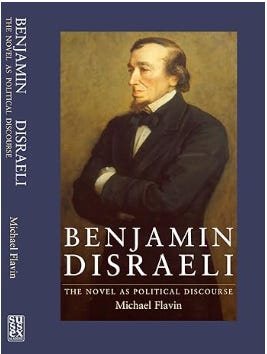
Michael Flavin offers in his ‘Benjamin Disraeli : The Novels as Political Discourse’ :

some insights into an alterative view of Colevile’s addiction to high-flown Neo-Liberal Policy Chatter. Can Disraeli’s novel Sybil offer substance, as opposed to Colevile’s self-serving commentary?

Sybil

Page 97

Morley’s contributions contributions to this first conversations could have come from Disraeli himself, or from the heroes of his many novels: ‘it is a community of purpose that constitutes society…. In the great cities men are brought together by the desire for gain. They are not in a state of cooperation, but of isolation , as to making fortunes; and for all the rest they are careful of neighbors’ (pp. 75-6). Morley argues for the alienating effects of industrialization and the morally corrosive nature of the blind pursuit of profit. When Morley replies to Egremont’s observation that ‘we live in strange times’, stating , ‘when the infant begins to walk, it also thinks that it lives in strange times, (p. 76) the reader could be forgiven for thinking of Sidonia. Morley’s address concludes with the most well- known passage in the whole of Disraeli’s fiction.

‘Well, society may be in its infancy, ‘ said Egremont, slightly smiling; ‘but say what you like , our Queen reigns over the greatest nation that ever existed.’

‘Which nation?’ asked an young stranger, ‘for she reigns over two,’

The stranger paused; Egremont was silent for but looked inquiringly.

‘Yes’ resumed the young stranger after a moment’s interval. ‘Two nations : between whom there is no intercourse and no sympathy; who are dwellers in different zones , or inhabitants of different planets; who are formed by a different breeding , are fed by a different food, are ordered by different manners, and are not governed by the same laws’

‘You speak of ______’ said Egremont, hesitatingly.

‘The RICH AND The POOR’ , (pp 76-7)

The formula , attributed generally to Disraeli (but has been shown , originally constructed in essence by Carlyle), caught on: ‘the “two nations” became a household word, perhaps the most famous of all Disraeli’s inventions’ according to Blake. Furthermore, Disraeli utilized the image again in a speech in Lady Londonderry’s grounds in 1848, using an architectural metonym to convey the same principal; ‘the palace is not safe when a cottage is not happy’,

Moreover, Disraeli’s dualistic formulation had (according to to Kathleen Tillotson) a considerable influence throughout the novel genre : ‘ this then came more and more to occupy novelists in the forties.

Most novel-readers belonged to the other nation; the novelists were scouts who had crossed the frontier or penetrated the iron curtain and brought back their reports. In this sense , prior to the exotic geographical journey described in Tancred, Disraeli had undertaken a similarly thrilling journey in Sybil , bringing to his middle and upper-class readers an insight into the strange and dangerous world which threatened to destroy their sense of stability, ‘Two Nations ‘ implied antagonism , suggesting that society was in a perilous condition.

Political Observer

Posted in Uncategorized | Leave a comment

Janan Ganesh on Mitt Romney and Rory Stewart.

Philosophical Apprentice & Political Cynic collaborate!

Headline: Mitt Romney, Rory Stewart and the tragedy of politics

Sub-headline: In public life, unlike in business, there is no reward for being right

https://www.ft.com/content/511ea709-a921-4ec2-9a36-34fa1b0216e9

Did Janan Ganesh read David Brooks’ essay in praise for Mitt Romney of September 14, 2023? Its a pressing question? Or just a question of ‘Great Minds Think Alike’ ? probably a question that will remain unanswered ? Brooks essay is a narrative about his own personal redemption, from his own prejudice against Romney, framed by:

I crossed paths with two of Mitt Romney’s sons, and they looked at me with hurt in their eyes, which pierced me. I’d ridiculed people for the sin of being admirable.

This model of Political Kitsch, is a denatured version of Johnathan Edwards!

Editor: a sampler of Ganeshisms

At least he doesn’t have to podcast. The king’s ransom he made at Bain Capital will ensure that. Whatever disappointments, indignities and mortal threats US politics has visited on Mitt Romney, his retirement needn’t be spent asking people to leave a review on iTunes.


There are no prizes for being right. As governor of Massachusetts, Romney made healthcare reforms that inspired Obamacare, which now commands about 60 per cent public support. And this isn’t the biggest vindication on his record. A decade before the full-scale invasion of Ukraine, he identified Russia as a geopolitical threat. The response of the sitting president was to crack a joke.


Then there was his (eventual) opposition to Donald Trump. It won’t do to overpraise him here. In 2012, he crawled to the then host of The Apprentice for a presidential endorsement, and got it. He was still shilly-shallying as late as 2018. But, when moral clarity came, it was acted upon with physical courage. Romney voted to convict Trump in both impeachment trials.

Editor: I stated that I would restrict my comments to the American context, but Ganesh’s lack of credibility on Stewart’s suggestion about Corbyn, I can’t resist pointing to Stewart, as presented by Ganesh, as the worst of all possible political creatures, a supporter of Jeremy Corbyn . ‘This month, he suggested to what is left of the Jeremy Corbyn movement that their man was hard done by’. Mr. Ganesh is incurious? He might read another Newspaper, as a check against his employers publication… ? But The Reader is witness to the whole of the British Press’s dishonesty, that amounts to a conspiracy against Corbyn!

Headline: Anti-Corbyn Labour officials worked to lose general election to oust leader, leaked dossier finds

Sub-headline Call for investigation into ‘possible misuse of funds’ by senior officials on party’s right wing

Labour party officials opposed to Jeremy Corbyn worked to lose the 2017 general election in the hope that a bad result would trigger a leadership contest to oust him, a dossier drawn up by the party suggests.

A huge cache of leaked WhatsApp messages and emails show senior officials from the party’s right wing, who worked at its HQ, became despondent as Labour climbed in the polls during the election campaign despite their efforts.

The unreleased report, which The Independent has seen in full, was drawn up in the last days of Mr Corbyn’s leadership and concerns the conduct of certain officials, including some who were investigating cases of antisemitism in the party. Labour has confirmed the document is a genuine draft, though it is not clear who it was commissioned or written by.

The 860-page document claims that “an abnormal intensity of factional opposition to the party leader” had “inhibited the proper functioning of the Labour Party bureaucracy” and contributed to “a litany of mistakes” in dealing with antisemitism, which it admits was a serious problem in the party.

But the Campaign Against Antisemitism said the document was a “desperate last-ditch attempt to deflect and discredit allegations” and amounted to “an attempt to imagine a vast anti-Corbyn conspiracy”.

https://www.independent.co.uk/news/uk/politics/labour-leak-report-corbyn-election-whatsapp-antisemitism-tories-yougov-poll-a9462456.html


Stewart is not, ultimately, of nation-leading fibre. Like lots of lone wolves who become popular later in life (the podcast he co-hosts, The Rest Is Politics, is a monstrous success), he is too anxious to remain so. This month, he suggested to what is left of the Jeremy Corbyn movement that their man was hard done by. Pandering like this doesn’t exude, to use his favourite word, “seriousness”.

But if these aren’t tragic men, exactly, their stories do reveal politics as a tragic craft: one that offers no incentive to be right.

Editor: I’ll resort to a bit of rhetorical pruning, in the face of Ganesh’s political fabulism:

This newspaper, being at the hinge of politics and business, is a good place from which to observe what each world misunderstands about the other.

But the larger error is to believe that politics is as meritocratic as business: that one’s record of decisions must determine one’s career prospects. Why this is nonsense shouldn’t need spelling out.

If there were Russian tanks on Constitution Avenue, Romney would still be accused of not seeing the Kremlin’s point of view.

Like a Frank Capra film, it suggests that natural justice governs the universe.

Editor: Reader consider ‘Frank Capra: The Catastrophe of Success’ Mr. Ganesh qualifies as novice, but an avid fan of Hollywood Kitsch. Compare this to his celebration of American Silver -Fork Novelist Tom Wolfe.

“But history will be kind,” he and Romney must hear all the time. So what? In which celestial bank are they meant to cash that particular cheque? And of what solace is it to we who live in such ill-led countries?

Editor: The Philosopher/Banker pose ill suits Ganesh. Long gone are the beguiling apercus.

Philosophical Apprentice & Political Cynic collaborate!

Posted in Uncategorized | 1 Comment

Niall Fergusons’ latest 1,884 word essay in The Dailymail: ‘Napo-Elon’ is Ferguson dull-witted attempt at wordplay.

The Reader doesn’t have to wonder at the title of Niall Fergusons’ latest 1,884 word essay in The Dailymail:

Secret obsessions that drive the new Napoleon, by his friend and confidant: NIALL FERGUSON’s VERY revealing insight into the dark forces that forged Elon Musk – and fears for the maverick’s own Waterloo downfall

https://www.dailymail.co.uk/news/article-12524043/Secret-obsessions-Elon-Musk-friend-confidant-NIALL-FERGUSON-Napoleon-downfall.html

Mr. Ferguson has a habit of writing about powerful men: Siegmund Warburg and Henry Kissinger, he now adds Walter Isaacson biography of Elon Musk, while assuring his reader that : ‘I have known Elon Musk for more than a decade’. Proximity of one kind or another, to The Great Man is an essential to the gain the ‘trust’ of his readership?

I have known Elon Musk for more than a decade. We have exchanged ideas, drunk whisky together, met one another’s children, and debated everything from the war in Ukraine to the future of American education. 

I have long said he is the Napoleon Bonaparte of our times. Walter Isaacson’s new biography, based on two years of shadowing Musk, reaches a similar conclusion. 

And at a time when the richest man in the world is being transformed in some quarters from hero to villain, this historical analogy should not be ignored. 

In 2017, Musk and I went for a drink in California’s Menlo Park with one of my sons, then 18 and about to embark on a gap year in Africa. 

Ferguson quotes and riffs on Isaacson

Musk more than once makes Isaacson aware that he identifies with France’s most famous ruler.

‘If they see their general out on the battlefield, they will be more motivated,’ Musk tells his biographer, explaining why he likes to appear without warning on the Tesla and SpaceX factory floors. 

‘Wherever Napoleon was, that’s where his armies would do best,’ Isaacson explains. 

The resemblance doesn’t end there. 

Hegel – the 19th Century German philosopher – famously said Napoleon was the world spirit on horseback. Elon is the world spirit in a cyber-truck.

Editor: I’ll engage in some self-serving reductionism, of Ferguson’s derivations of Isaacson:

Musk is also a micromanager, another Napoleonic trait.

He is pitiless when he senses that someone is not ‘hardcore’ and reserves respect only for those who are ‘ultra hardcore’. 

‘Revolutionizing industries is not for the faint of heart,’ he once told Tesla employees in an email.

Editor: Ferguson as moralizing sexual conformist, who not only underlines, but places in bold font his observation on Musk’s ‘unorthodox family life’. Ferguson’s notorious 1995 Spectator essay on Keynes, demonstrates that sexual conformity is Ferguson territory.

Like Napoleon – who cheated on his first wife (who also cheated on him), then divorced, remarried and had more children by his mistresses than his wives – Musk has an unorthodox family life.

Musk now has 10 children by three different women, most recently twins with Shivon Zilis, the 37-year-old director of operations at Neuralink (his company developing computer chips that can be implanted in the human brain).  

Like Napoleon, Musk also has a weakness for imperial overextension.

Like Napoleon, too, Musk has moved politically from Left to Right

Like Napoleon, Elon has accumulated enemies over the years

Musk’s critics now claim he is, perhaps unwittingly, helping the Kremlin

Like his French role model, Napo-Elon does not seek universal love. Nor does he pretend to be infallible.

Political Observer


For the very patient Reader, here is a link to my:

Niall Ferguson in 4 iterations, Sept. 16 2023, by

https://open.substack.com/pub/stephenkmacksd/p/niall-ferguson-in-4-iterations-sept?r=bgs1&utm_campaign=post&utm_medium=web…

Posted in Uncategorized | Leave a comment

@FT: The America’s Proxy War meets Gideon Rachman’s perplex on “whataboutism”…

Political Observer surveys the dust pile.

Headline: Volodymyr Zelenskyy to meet Joe Biden in Washington in quest for more aid

Sub-headline: Ukraine leader also set for talks at Pentagon and Capitol Hill as Congress considers $24bn support package for Kyiv

https://www.ft.com/content/5e3867be-4dcd-4028-a9c2-e029f57743ee

Riffing on the nearly anguished themes of Mr. Rachman’s September 11, 2023 essay, that seeks, yet doesn’t quite find the possible/probable value of ‘whataboutism’ ?

Opinion Geopolitics

Trump’s trials will inspire a global epidemic of whataboutism

The world’s despots will use the prosecutions of the former US president for propaganda purposes

https://www.ft.com/content/8738529d-b891-4793-bf6a-5f580b754ac3

The Financial Times is the defender of America’s Proxy War, that seems to be failing, except for the propaganda offensive, of this newspaper and other news outlets. The Reader needs to look for alternative sources. Might that Reader look to the current situation on Maui, as an utter failure of Biden Administrations to address a pressing internal crisis? How might ‘whataboutism’ apply in this instance?

Gideon Rachman ends his essay here:

It is unrealistic to expect that reasoned argument can defeat all forms of whataboutism. But the surest way to lose the debate is to refuse to engage in it in the first place.

Colonel Douglas Macgregor offers a telling analysis of the continuing Ukraine debacle, and its flaccid leadership’s opportunism.

https://www.ft.com/content/5e3867be-4dcd-4028-a9c2-e029f57743ee

Political Observer

Posted in Uncategorized | Leave a comment

@FT: Tony Blair’s self-presentation as victim rings hollow, but a perfect fit for this newspaper!

Political Observer comments.

I won’t waste The Readers time, here are the final two paragraphs of this Financial Times ‘interview/apologetic’ for Blair. Not to forget that Mrs. Thatcher called Blair her greatest accomplishment. A question arises as too whether Blair, was the political nexus of the Corbyn Defamation? from within The New Labour cadre, that was an unrelenting series of lies, repeated in respectable ‘bourgeois journalism’: that monument to mendacity has been exposed, as what its was and is, Lies from beginning to end. Mr. Blair can’t resist donning the mantle of Victimhood!

Now aged 70, does Blair feel aggrieved that his reputation was trashed for so many years by people in his own party? “It didn’t hurt me personally,” he said. “But it irritated the hell out of me because it meant the Tories could just govern the country.”

Referring to Corbyn, he added: “We didn’t have a credible Labour leader. That’s what gave us Brexit.” Asked if he will help Starmer in the forthcoming election campaign, Blair smiles: “I’ll help in any way I can, but he will want to be his own person.”

https://www.ft.com/content/c39a9576-a8fb-416c-ad94-ba90b1e16a0e

Political Observer

Posted in Uncategorized | Leave a comment

Janan Ganesh’s Map of Intentional Mis-readings of Joe Biden, or Political Cynicism resembles Enlightenment?

Political Observer comments.

The first three paragraphs of Mr. Ganesh’s political analysis offers?

There is no such thing as a popular US president. Each one enters office with the suspicion or ill will of almost half the electorate now. Once the routine wear and tear of governing sets in, a low approval rating is so natural as to almost be proof that one is doing the job.

The plight of Joe Biden has to be seen in this context. His dire ratings have to be weighed against the near impossibility of being widely liked in so riven a country. Not since George HW Bush in 1988 has someone won more than 400 out of the available 538 electoral college votes (a once banal feat).

Biden’s situation isn’t unique, then, much less unsalvageable. But if he is to recover, Democrats must understand his central problem. It isn’t, or isn’t just, old age. It isn’t — that eternal conceit of doomed governments the world over — a failure to “communicate” his achievements.

Considering that the first three paragraphs fails to take account of Eisenhower, Reagan, or even Obama: self-serving political reductivism is the Ganesh preferred strategy. What follows is a collection of unsubtle clichés, predicated upon his first three paragraphs:

Editor: a sampling of Ganesh clichés:

Biden’s situation isn’t unique, then, much less unsalvageable.

Biden over-interpreted his mandate. 

His brief was to end the dark carnival of Donald Trump and lead the US out of the pandemic. 

There is nothing like inflation to expose the generation gap between those who lead the US and most of those who live in it.

Since his cavalier early months, the president has grown more sensitive to concerns about inflation.

Editor: Ganesh’s political brew is thickened, that might add a kind of credence to his political speculations?

Policies that are popular on their own terms can be unpopular in combination. It is the impression of zeal, of pounding away at an ideological programme, that unnerves voters, unless they have sanctioned it in advance.

Editor: The Reader just has to laugh at this dull-witted assertion. Biden and The New Democrats are Neo-Liberals.

 What followed — profuse spending, subsidies on a scale that might scandalise a Gaullist — was not just startling.

There is nothing like inflation to expose the generation gap between those who lead the US and most of those who live in it. 

He might not fathom what a psychic trauma it is for the middle-aged and the young to see basic goods jump in price, and savings deplete in value. This is their first rodeo.

But members of his government still talk with messianic bombast about a “new economic order” for the world, as though price rises are so much collateral damage in a grand experiment on behalf of the People.

It is the impression of zeal, of pounding away at an ideological programme, that unnerves voters, unless they have sanctioned it in advance.

Editor: the sentence below is on its face  ludicrous, Biden is a Neo-Liberal .

In cast of mind, the Democrats are less Marxist than most parties of the left.

Editor: Mr. Ganesh is so desperate he is not above dragooning Hegel, and spells Neo Liberal correctly! The pressing question is what is ‘Hegelian flowchart’? Chatter, instead of actual argument, the fall back position of Ganesh?

Even mild US progressives now say, as though reading from some Hegelian flowchart, that we have come to the end of a stage called Neoliberalism, and are now proceeding neatly to the dialectical counterblast.

Editor: Let me abbreviate the final paragraph

Democrats seem convinced the recent past was a Steinbeckian hellscape of downtrodden workers and cackling bosses. .

Editor: Political Critique of a kind, featuring again ‘neoliberal’ in its faint praise iteration :

The neoliberal age included low inflation. The neoliberal age included low inflation. It needed reform, not rupture.

Editor: two kinds of ‘ presidencies’:

There are water-treading presidencies and wave-making presidencies.

Reader confront the last sentence for yourself ! 

Political Observer

Posted in Uncategorized | Leave a comment

There is nothing like the complete dishonesty @TheEconomist: ‘Macron The Sainted’ and the fate of Neo-Liberalism, À la française.

Old Leftist comments.

The Economist

@TheEconomist

The most painful legacy for a leader who has done much to modernise France would be for his two-term presidency to be followed by the election of the hard-right Marine Le Pen https://econ.st/3qXNqIc

Replying @TheEconomist

Macron’s ‘Jupertarian Politics’ capstone was the Anti-Democratic passage of the raising of the Retirement Age, codified by :

French court approves the Macron retirement-age hike despite protests

https://www.washingtonpost.com/world/2023/04/14/france-retirement-age-pension-reform-constitutional/

A top French court on Friday approved controversial legislation to raise the retirement age, clearing the way for the change to become law and securing a victory for French President Emmanuel Macron, even as opponents vowed to continue protests that have rocked the country for months.

In its much-anticipated decision, the Constitutional Council, France’s highest constitutional authority, validated a measure to raise the minimum retirement age from 62 to 64 — a shift that has sparked the most significant unrest France has seen in years.

Government officials were eager to signal that the ruling should mark not just the resolution of the legal debate, but the public one, too.

“The text has arrived at the end of its democratic process,” Prime Minister Élisabeth Borne wrote on Twitter in response to the decision. “This evening, there is no winner or loser.”

https://www.washingtonpost.com/world/2023/04/14/france-retirement-age-pension-reform-constitutional/

The Economist frets about Macron’s legacy! Reader do you have the patience to read the remaining text? Even though I will make some self-serving edits to this capacious Macron apologetic ? The Neo-Liberal Swindle is the guiding ‘principal’ of …

Editor: Pay close attention to the opening paragraph and its ‘political actors’ Sarkozy, Chirac, Macron:

In a memorable phrase that captured his precocious ambition four years before he ran for the French presidency, Nicolas Sarkozy confessed in 2003 that his mind was focused on the top job and “not only when he shaved” every morning. The comment marked the start of his long and fractious struggle to succeed his boss, Jacques Chirac, which he did in 2007. Today, four years before the French elect a successor to their current president, an undeclared race to take over from Emmanuel Macron is also breaking out among his present and former lieutenants.

Editor: The Economist resorts to Palace Gossip, Economist Reporter’s cultivated friendships with French pols, and the always self-serving imaginative speculation?

Today, four years before the French elect a successor to their current president, an undeclared race to take over from Emmanuel Macron is also breaking out among his present and former lieutenants.

The French constitution allows a president to serve only two consecutive terms (though after stepping down in 2027, when he will be only 49, Mr Macron could stage another bid five years later). But he still has plenty of time to try to reshape France, and he gives no sign of tiring of the job, nor of shrinking ambition. He vowed recently to keep governing “until the last quarter of an hour” of his term.

Editor : This lie is so prevalent as to be a commonplace: ‘Yet would-be successors from within Mr Macron’s broad centrist camp…’ ‘Macron’s broad centrist camp’ in not ‘centrist’ but rabidly Neo-Liberal!

Yet would-be successors from within Mr Macron’s broad centrist camp are keenly aware not only that there is no single natural successor among them, but that they cannot leave it too late if they are to stand out. On everyone’s mind is the need to find a credible candidate to take on the hard-right Marine Le Pen. Three front-runners seem to think they have what it takes.

Editor’ The Players in this Political Melodrama are heavily garnished, I’ll just highlight some of the praise, apologetics and the ordinary bull-shit!

The showiest is Gérald Darmanin, the tough-talking interior minister, appointed by Mr Macron to secure his right-leaning flank. On August 27th he staged a big political event, over saucisse and chips, in the industrial northern city of Tourcoing, where he was formerly mayor. Ostensibly to discuss political strategy, the happening carried more than a scent of personal ambition. Elisabeth Borne, the prime minister, was hastily dispatched to the event to keep him in order. The son of a bar-owner and a housekeeper, Mr Darmanin (pictured, with Mr Macron) is styling himself as a politician who—unlike the dry technicians who sit beside him in cabinet—understands everyday worries. If mainstream politicians cannot find a way to speak to the working-class and middle-class vote, he declared, outlining a job description tailored to himself, Ms Le Pen’s victory in 2027 will be “quite probable”.


A more discreet but no less resolute aspirant is Edouard Philippe, formerly Mr Macron’s prime minister. Like Mr Darmanin he hails originally from the conservative Republicans party, and tops polls as the most popular French politician with 55% approval, 13 points ahead of Ms Le Pen in ninth place, and 18 points ahead of Mr Darmanin in 18th, according to Ifop, a polling group. Mr Macron trails in 23rd place, on 32%. As French politicians do, Mr Philippe will mark la rentrée, or the return to work, by publishing a new book, outlining his vision and ties to France, on September 13th. After leaving government in 2020 he founded his own political movement, Horizons, which sits in parliament as part of Mr Macron’s minority coalition. Mr Philippe is also mayor of Le Havre, a port city in Normandy. This gives him a convenient perch from which to appear semi-removed from daily politics in Paris. Those who have seen Mr Philippe recently say that he is indeed firmly focused on preparing for 2027.


A third potential runner is Bruno Le Maire, the finance minister, yet another ex-Republican and currently the second-most popular politician, with a 46% rating. More discreet in public about his personal aspirations, and more usually spotted in airless summit meeting rooms, he was to be seen this summer in shirt sleeves enthusiastically greeting holidaymakers atop an Alpine mountain pass. Earlier this year the besuited technocrat raised eyebrows when he published a racy novel. Mr Le Maire has now been finance minister for the longest unbroken period of any under the Fifth Republic, created in 1958. But he may at some point feel that he needs to move on if he is to broaden his appeal and work on his own chances.


Others too are said to be mulling over theirs, including Jean Castexanother ex-prime ministerYaël Braun-Pivet, head of the National Assembly, or even Gabriel Attal, the 34-year-old education minister. Each will have to tread a delicate line between the desire to remain loyal to Mr Macron, to whom they owe their jobs, and the political need to distance themselves from the unpopular president, who has faced strikes and rioting this year. Even if it were in his gift to anoint an heir, this might not do the anointee any favours.


Four years is a long time, and Mr Macron himself was a little-known back-room adviser that long before his first presidential bid. Nor is there any organised process within his party, Renaissance (formerly En Marche), to pick a candidate. The party anyway lacks roots, and may not in its current form even outlive the president.


Editor’: the final paragraph is brimming with Actors bad and good, I’ve put them in bold font.

Yet the threat of a Le Pen presidency lends the matter great urgency. The hard-right leader has been quietly biding her time, sitting politely on the opposition parliamentary benches and trying to look like a president-in-waiting. Mr Macron may not like to think about succession planning. But the most painful legacy for a leader who has done much to modernise France would be for his two-term presidency to be followed by her election, just as Barack Obama’s was by Donald Trump’s.

Will the four years before the next election, give ample time for Macron to wage war on Niger? As France’s dependence on uranium, the price of which has reached record highs? Will French solders die under Macron ? The Economist essay writers are not clairvoyant, so the whole of this essay is awash in speculative political metaphysics, to guild this propaganda.

Old Leftist

Posted in Uncategorized | Leave a comment

On The Critical Scrutiny of the notorious boulevardier, Janan Ganesh as he re-defines ‘pragmatism’?

Old Socialist attempts to to untie the knot?

Headline: The UK is becoming a pragmatic country again.

Sub-heading: Britain has turned against radical politics faster than other rich nations because it has lost more from it.

https://www.ft.com/content/f8293796-aea7-4157-878e-fc535a6f4a22

Note Mr. Ganesh’s highfalutin, almost beguiling framing, of his latest apologetic for ‘a pragmatism reborn’? Confront his first 155 words with the caution of a sceptic. Architecture and its practitioners, are the natural allies of a portion British Politics of as valid measure of the Zeitgeist? Not just about the power of The Rich to build monuments to their egoism. As an antidote to this chatter, read the Architectural Criticism of Ada Louise Huxtable.

You can tell a Zaha Hadid building from the absence of right angles. You can tell a Frank Gehry one because it seems to have been frozen midway through an explosion. Herzog & de Meuron, the great architectural pragmatists, leave no such calling card.  

No big idea links the Bordeaux stadium (the airiest and most human venue in which I have watched elite sport) to 1111 Lincoln Road in Miami (the only multistorey car park in which I have passed an afternoon) to the Dominus winery in California. Sure enough, when the firm rose to world acclaim, it was in the era of undogmatic politics either side of the millennium. Its winning proposal for Tate Modern in London was architectural Blairism, tweaking an existing structure instead of attempting a revolution. 

The Herzog & de Meuron show at the Royal Academy is one of those exhibitions that, without trying to, captures the spirit of the times

This exercise in hyperbole is -what else to name it? ‘His Saint Paul’

Britain is a nation re-embracing pragmatism. Boris Johnson is out of parliament. So is Nadine Dorries, his Saint Paul. The Labour party leader Sir Keir Starmer is elevating politicians of the centre-ground in his cabinet-in-waiting.

For the moment political speculation is the focus of Mr. Ganesh. Let me engage in a bit of rhetorical pruning: The Reader might accuse me of being self-servingly selective in my choices, yet Mr. Ganesh writes completely obvious propaganda, for a British Politics, and its allies in the defamation of Corbyn, as not just toxic, but representative of Political Catastrophe. Yet the Object lesson of Johnson, May and now Sunak, has not dimmed Mr. Ganesh’s enthusiasm for the Age of Sunak/Starmer pragmatism, in sum Neo-Liberalism with a pallid impasto, to hide the immiseration of millions!

In 2019, Britain had to choose between Johnson and Jeremy Corbyn as prime minister. Next time, voters will have their pick of adenoidal but meticulous technocrats in Rishi Sunak and Sir Keir. When the principal complaint about its leaders is a lack of charisma and grand vision, a country is normalizing.

With this sentence, in bold font, Ganesh demonstrates political cynicism, it lacks the beguiling luster, that used to be a Ganesh trade-mark, at least to those who used to read him, not too many years ago.

What can the world learn from the UK’s political cleansing? First, parliamentary systems fail fast.

Second, don’t be choosy about your saviors.

Editor: Mr. Ganesh then dons the robes of a Stogey Pedagogue: He is not Ronald Coleman in The Halls of Ivy !

The most important lesson, however, is almost too distressing to state baldly. In order to turn against radical politics, a nation has to suffer quite tangibly from it. Britain is unique in that it didn’t just vote for an unconventional individual but for an unconventional project. In the form of Brexit, it has put post-liberal politics into direct effect to a degree that is rare among mature democracies.

Editor : Some instructive sentences and sentence fragments:

The far-right forever stalks the French Fifth Republic…

Trump, too, though he became president, was stymied by a Democratic House of Representatives…

Even the populists who govern Italy have to reckon with that polity’s fragmented nature.

Editor: Brexit

Brexit is different: a specific, discrete venture, enacted in full. One in three voters now think it was a good idea. I don’t suggest the disillusioned majority will reverse the decision any time soon. (That wouldn’t be pragmatic.) But they are inoculated against anything — leftist, rightist or hard-to-place — that smells of grand visions, easy answers, personality-led demagoguery. Even on the airwaves, the faux men-of-the-people and undergraduate communists who grifted so well in the Johnson-Corbyn years are less and less heard from. No, a nation is adamant: we’re not doing this anymore.

Editor: The end of Ganesh’s essay quotes Herzog & de Meuron, in a weak attempt to provide a convincing frame to this essay that meanders into …?

“You cannot always start from scratch,” said Herzog & de Meuron at the opening of Tate Modern in 2000. For a pragmatic nation at maybe its most pragmatic ever point, that was a statement of the obvious. A generation on, it stands out as a warning, and one being absorbed too late.

Old Socialists

Posted in Uncategorized | Leave a comment

Historian John Rapley’s ‘Pop History’ in The New York Times.

Political Observer offers a review of J. G. A. Pocock’s Barbarism and Religion, Volume 1 and 2.

The Historians, as the pretenders to the status of Oracles, never disappoint in their quotations from each other. John Rapley ends his New York Times essay, framed by American National Security State hireling/historian Graham T. Allison’s much quoted “Thucydides’ Trap”. It’s like reading, that sychophatic praise for the American charlatan Fukuyama’s Hegelian pastiche, that signaled the arrival and permanence of The American Political Hick, that has bridged an ocean!

For America, it’s a cautionary tale. In responding to the inevitability of China’s rise, the United States needs to ask itself which threats are existential and which are merely uncomfortable. There are pressing dangers facing both the West and China, such as disease and climate change, that will devastate all humanity unless nations tackle them together. As for China’s growing militarization and belligerence, the United States must consider whether it’s really facing “Thucydides’ Trap” of a rising power or simply a country defending its widening interests.

If the United States must confront China, whether militarily or — one hopes — just diplomatically, it will inherit big advantages from its imperial legacy. The country still has sources of power that nobody can seriously rival: a currency that faces no serious threat as the world’s medium of exchange, the deep pools of capital managed on Wall Street, the world’s most powerful military, the soft power wielded by its universities and the vast appeal of its culture. And America can still call upon its friends across the globe. All told, it should be able to marshal its abundant resources to remain the world’s leading power.

To do so, though, America will need to give up trying to restore its past glory through a go-it-alone, America First approach. It was the same impulse that pushed the Roman Empire into the military adventurism that brought about its eventual destruction. The world economy has changed, and the United States will never again be able to dominate the planet as it once did. But the possibility of building a new world out of a coalition of the like-minded is a luxury Rome never had. America, whatever it calls itself, should seize the opportunity

Where might The Reader begin her search for an alternative to John Rapley?

J. G. A. POCOCK. Barbarism and Religion. Volume 1, The Enlightenments of Edward Gibbon, 1737-1764. New York: Cambridge University Press. 1999. Pp. xv, 339. $49.95. J. G. A. POCOCK. Barbarism and Religion. Volume 2, Narratives of Civil Government. New York: Cambridge University Press. 1999. Pp. xiv, 422. $49.95.

Woolf, D. R.

The American Historical Review , Volume 107 (2) – Apr 1, 2002

Edward Gibbon’s The History of the Decline and Fall of the Roman Empire (1776-1788) is probably the most famous and perhaps the most misunderstood history written in the past three centuries. It is often cited, and is even well known in popular culture (Bugs Bunny glances at a parody of it on a vampire’s shelf in an old Warner Bros. cartoon), yet more than two-thirds of it, concerning the Greek Eastern Empire, has been largely ignored. Its memorable title has also become falsely associated with popular accounts of the moral decay of the early, Julio-Claudian empire described by Tacitus and Suetonius-a period that Gibbon, who began with the “Five Good Emperors” of the secondcentury Antonine dynasty, did not even address. These misconceptions aside, the multivolume work has the stature of a monument to Enlightenment culture (though not to philosophe agendas). Study of it has enjoyed a resurgence in recent years, including David Womersley’s recent critical edition of the entire text and Patricia B. Craddock’s authoritative two-volume biography of Gibbon. How much there is left to say on Gibbon himself, or his masterpiece, is a question one might be excused for asking. The answer, however, would be “a great deal,” and if one has any doubts about that, they are dispelled after reading the first two massive volumes of J. G. A. Pocock’s ongoing study. These get us only to the eve of Gibbon’s writing the first volume, which appeared in 1776 (a year otherwise notable in intellectual history for the death of David Hume and the publication of the Wealth of Nations by Adam Smith-two North Britons who feature prominently in the second of these volumes). Pocock’s study is not, as one might expect, another biography-though biographical details both enter into his account and prove significant-but an attempt, largely persuasive, to situate Gibbon in as many different intellectual and political contexts as can be imagined or reasonably described from the evidence, and through that exercise (which is far from complete at the end of volume two) to arrive at a much richer understanding of the Decline and Fall.

There is an impressively symphonic quality to Pocock’s major works, at least in their design. In The Machiavellian Moment (1975), his study of the transmission and transformation of ancient ideas of republican virtue through medieval, Renaissance, seventeenth-century English, and North Atlantic filters, he began with a dazzling analysis of a millennium of intellectual history up to Niccolo Machiavelli, slowed the pace notably for a middle section on Machiavelli’s contemporaries, and picked it up again for a concluding sprint through the seventeenth and eighteenth centuries. There is something of the same here, and what we have is the first two movements-each with several melodic lines simultaneously developed. Volume one of Barbarism and Religion does not cover a vast chronological sweep, but it does follow Gibbon’s life (and, importantly, the lives of his father and grandfather) and travels against the backdrop of a very complex and distinctively English political and religious climate. The goal of this is more obvious than the road toward it: to demonstrate how and under what circumstances the former apostate, turned militiaman, turned gentleman of letters arrived at his understanding of late antiquity, and of the proper method and suitable style for recounting that understanding to the reading public. There was clearly a much longer and more complex ferment than one can glean from a surface reading of his Memoirs alone; the inspirational moment in 1764 when he mused “amidst the ruins” of the Capitol may explain the occasion of his writing the Decline and Fall, but not the process that permitted that occasion to occur, much less its results. Along the way, we get a wonderful account of the often conflicting streams of English history from the Elizabethan settlement through the Civil War, the Restoration, the revolutionary settlement, Jacobitism, and the advent of a culture of party, commerce, and civility.

Volume two provides the more relaxed andante to this opening allegro: here, Gibbon himself almost slips from view till the very last, as Pocock presents sequential free-standing studies of the major civil histories that provided the narrative exemplars from which Gibbon could depart (he could not really imitate them since they principally dwelt on more modern times). These include two major continental historians (Pietro Giannone and Voltaire), and his major older British contemporaries (principally the Scots Hume, William Robertson, John Millar, Adam Ferguson, and Smith); there is not much hen: about English neoclassical history writing, which was in a state of decline, although there is a brief but interesting account of the reception of Hume’s major rival, Catharine Sawbridge Macaulay. As with volume one, these studies are valuable in their own right, but they also provide a further context to the writing of the first volume of the Decline and Fall. (So relentless is Pocock’s attention to strict chronology that Robertson’s History ofAmerica [1777] does not feature in his account of that historian, because it appeared too late to have any effect on Gibbon’s first volume, and because it belongs to a different intellectual context: that of the American Revolution.) They are, however, only half the story. One of the unresolved questions here is exactly how Gibbon solved the problem of models for his later volumes, on the Byzantine east, after his history had taken him in directions, or painted him into corners, that he had probably not anticipated when he first conceived it. One answer would seem to be that Gibbon needed to rely to a much greater extent than has been acknowledged on ecclesiastical historians, and we can expect that there will be a parallel to volume two, later in this series, examining that genre.

Each of these volumes also stands on its own as an exploration of two other intellectual questions not directly related to (or at least not circumscribed by) the study of Gibbon. In The Enlightenments ofEdward Gibbon, which is dedicated to the memory of Franco Venturi, the question is to what degree England experienced an Enlightenment at all, and how its “rhythm” differed from the continental and Scottish versions. The plural in the title is not an affectation. The case here is very much for multiple enlightenments, that of the philosophes not being the same as that of the erudits, and the European being no more singular (or normative) than the English. A secondary theme in this volume is provided by the argument of Arnaldo Momigliano that there were distinctive historiographic streams from Renaissance to Enlightenment-narrative, philosophe, and antiquarian or “erudite”-and that Gibbon was the man who managed to integrate them in the Decline and Fall. Narratives of Civil Government, dedicated to the memory of Momigliano, takes up this latter theme more directly, though the emphasis is squarely on the narrative (Hume) and the philosophical (Voltaire) streams, with rather less stress on erudition in the mode of Lodovico Antonio Muratori and Sebastien Tillemont. For any historiographer for whom Momigliano’s famous essays have become central-which is to say most of us working on the seventeenth and eighteenth centuries-this is a welcome addition to the corpus: the least satisfactory part of Momigliano’s overall argument was his explanation of exactly how Gibbon achieved this synthesis, and by what stages.

These are not easy volumes to read, their pages filled with gallicisms, lengthy extracts, and highly complex sentences weighted with qualifying clauses. The nuances will be lost on anyone unfamiliar with some of the ongoing debates in the history of ideas (and particularly the history of historiography), or with the architecture of the Decline and Fall itself. The turns in the argument are conducted with such precision, and at such a pace, that a napping reader may soon be left behind. But in combination, they represent a very significant advance in our understanding of Gibbon, and of the intellectual and political worlds in which he lived. We are not there yet: there is no climactic third movement imminent, and at the current rate one might expect several more volumes before we hear it.

One of Pocock’s first principles of intellectual history has been that authors end up saying both more and less than they intend, and that what they intended and what we take them to mean depends not only on their own, but also on our, context. “Barbarism and religion,” Gibbon’s most quotable phrase, had one meaning in his time and another in ours. Indeed, it resonates differently between the appearance of these 1999 volumes and the post-September 11, 2001 world in which we must now read them.

D. R. WOOLF McMaster University

I have probably broken some cardinal rule by posting the whole of D. R. Woolf’s review. The reference to September 11, 2001 is out of place, to say the least! Having read both volumes reviewed , and The Machiavellian Moment, which places J. G. A. Pocock in a class by himself. Pocock writes History within a political/historical/moral/intellectual frame that is unrivaled, most assuredly not by John Rapley.

Political Observer

Posted in Uncategorized | Leave a comment