Editor: Steven Spielberg is a phenominon of Pop Culture Entertainment! Not an arbiter of ‘History’ in any dimention except in its Movie House Iteration:
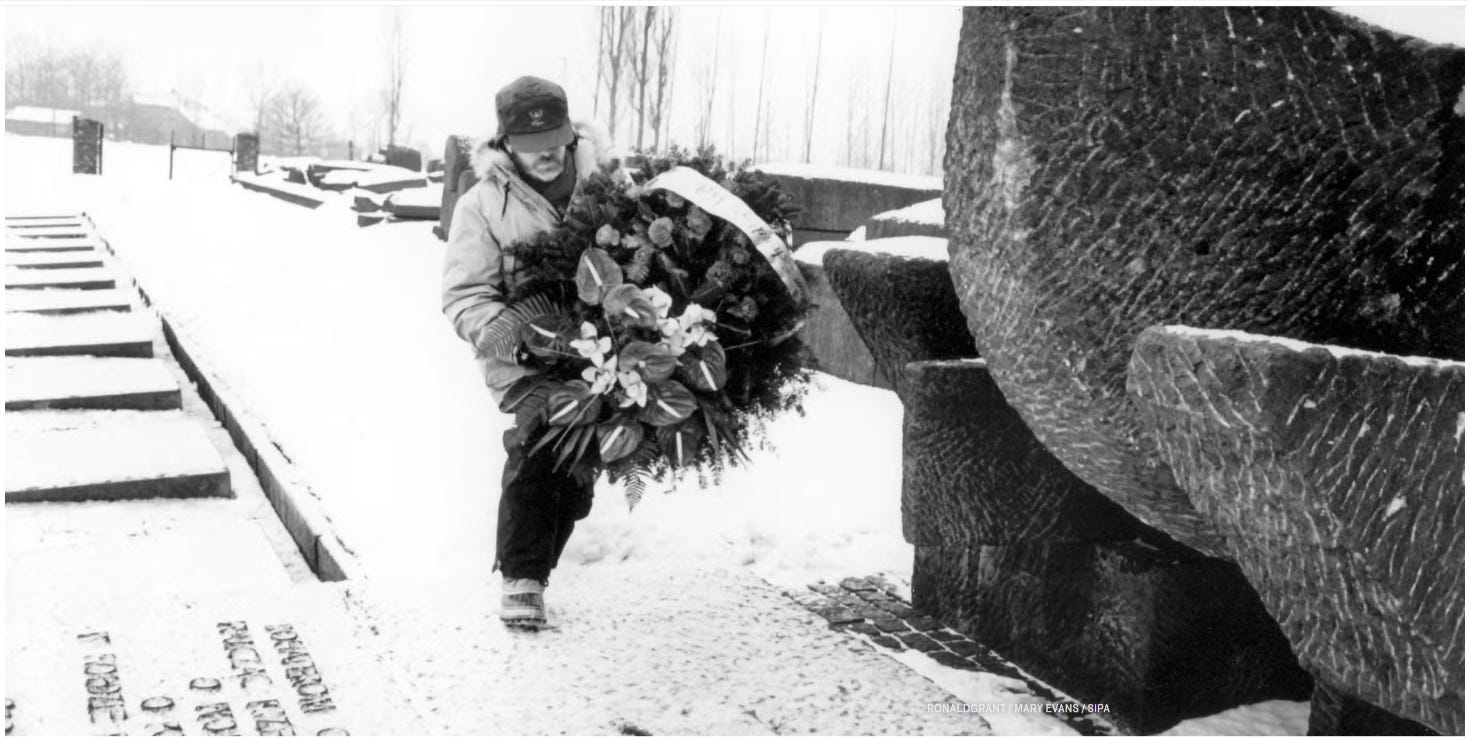
Steven Spielberg, guardian of Holocaust memory
By Annick Cojean(Los Angeles, special correspondent)
You can share an article by clicking on the share icons at the top right of it. The total or partial reproduction of an article, without the prior written authorization of Le Monde, is strictly forbidden. For more information, see our Terms and Conditions. For all authorization requests, contact syndication@lemonde.fr.
It was on the plane back to Los Angeles after filming Schindler’s List in Poland, between March and May 1993, that filmmaker Steven Spielberg had the most audacious and ambitious idea of his life. He had just spent three months in Krakow telling the story of Oskar Schindler, the German industrialist and Nazi Party member who managed to save nearly 1,300 Jews by employing them in his enamel and munitions factory during World War II. The filming had been intense, complicated and exhausting. Spielberg, who had waited a decade to make the movie – daunted by the enormity of the subject and its connection to his personal history and Jewish identity – was acutely aware of an immense responsibility. For the first time in his career, he was moved to tears while shooting certain scenes, leading his teams and thousands of extras into a highly realistic vision of the Holocaust’s hell.
Yet, the most overwhelming aspect was his encounters with survivors, especially the “Schindler Jews,” as those saved at the last minute by working for the industrialist were called. One by one, they arrived on set, intrigued and astonished that a filmmaker dared to tackle a story many of them had never spoken about. And very quickly, they expressed their desire to confide in Spielberg. “Listen to me,” they said. “I have a story too, me too!”
The director, focused on his film but touched by this trust, listened, took notes and captured ideas here and there, which he later incorporated into the movie. Of course, all these stories were interesting and immensely valuable, he replied. Of course, they deserved to be heard, preserved and passed on. No survivor should disappear without having shared their personal experience of the Holocaust. It was, in itself, a warning and a message to future generations. In essence, each survivor should become a “teacher.”
…
Editor: What is it about about the danger that proximity to power, that leads reporters of various levels of intelligence, to abandon their reportorial skepticism, about their subjects? @AnnickCojean meets and exceedes the promise of that ensorcellment!
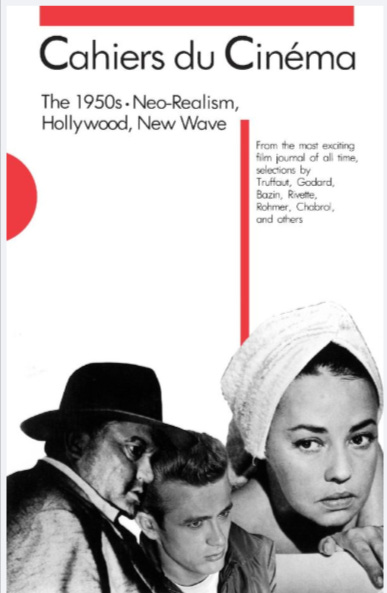
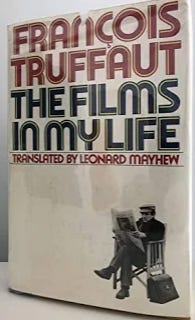
Editor: Begin your your acqaitenship with the ‘autuer theory’ via two books:
Newspaper Reader offers – Reader never forget that Brooks became the protege of William F. Buckley Jr.: In sum Brooks whole career was the product of that singular advantage!
Editor: It can’t really be a surprise that Mr. Brooks focus in on ‘elite intitutions’ ?
Two examples of Mr. Brooks’ sources: According to a 2023 article by Rachel Shin in The Atlantic, The Atlantic, Rogé Karma and Derek Thompson
Editor: Brook’s attempts to diagnose this vexing problem:
…
Maybe the core problem is the overproduction of elites — that we’re churning out more knowledge worker graduates than there are knowledge worker jobs. Or maybe it’s just a feature of online life. It’s easier to apply to stuff, and with more applicants, the competition grows ferocious. According to an article in Business Insider, the average knowledge worker job opening now receives 244 applications, compared with just 93 as recently as 2019. One young woman lamented to me that she wished she’d been young in the 1990s; it would have been easier. I told her I was relatively young in the ’90s, and it was.
…
Editor: Look to the storied careed of Walter Lippmann, the student of William James and George Santayana who deified the Technocrat, as a check against Too Much Democracy!
Editor: Mr.Brooks closes his essay/intervention on those ‘golden children’ : Mr. Brooks is a benefactor of the largess of William F. Buckley Jr. …
I should close by reiterating the fact that the people I’m writing about here are the meritocracy’s alleged winners. The valedictorian class. The golden children. Are they just whining through their privilege? Maybe a little. Young Americans who came of age in 1860 or 1916 or 1932 or 1941 weren’t exactly living on Easy Street.
Nonetheless, these conversations — and all the research I’ve read on everything from smartphones to the psychic effects of the meritocracy to the rising mental health crisis among the young — point to one conclusion: It’s just phenomenally hard to be young right now. There must be an easier way to grow up.
Editor: Mr. Colvile’s intervetion, with the help of his staff of underlings is filled with doubt and apprehension!
Ed Miliband might not look like a revolutionary. But he has embarked upon the most radical, ambitious and — to its critics — foolhardy project that this government is pursuing. Namely, to transform the entire basis of the UK energy network, at historic speed.
For decades, the UK powered itself by coal, and then by gas. Miliband wants to move us, as rapidly as possible, to a system dominated by wind — and, in particular, offshore wind, which will become by far our largest source of power.
This is far more ambitious than the coal-to-gas transition, for three reasons. First, we can’t use as much of the existing infrastructure. So we need a huge amount of new cabling, not least off the coasts.
Second, we also need to hugely increase the amount of power, because we are simultaneously trying to electrify both transport and home heating. Third, we need back-up provision for when the wind doesn’t blow.
In short, for Miliband’s plan to work, an awful lot of things need to go right. But last week something went badly wrong. The Danish energy company Orsted announced that it would not be building a 2.4GW wind farm off the coast of Hornsea in Yorkshire, despite having planning permission in place and a price agreed.
To understand why this is such a problem, it helps to understand how the renewables revolution has been funded.
…
Editor: Yet what caught my eye: ( Colevial pales with time, and the reader’s patience longs for a change of pace, from his usual ‘Techo-Chatter’: note too that those ‘Ubiquitous Gamers’ have now commedeared the notion of ‘Palate Cleanser’ from the world of Connoisseurship!
Headline: Should we blame the US for the Cold War?
Sub-headline: The Russian-born historian Vladislav Zubok makes the provocative case that western leaders exaggerated the threat from cautious and conservative Soviet leaders
Editor: I should have read this whole review. Yet Mr. Sandbrook’ quotes extensively from General John Hackett’s book of 1978: ‘The Third World War’. Mr. Sandbrook knows his Times readership!
The Third World War broke like a storm over the fields of central Europe. Moving with ruthless speed, the communist forces smashed through West Germany’s defences and advanced on the Rhine, while Soviet commandos landed in Norway and Turkey. Then the pendulum swung as Nato troops mounted a heroic stand near the German town of Krefeld, while American sailors and pilots began to wrest back control of the seas and the skies.
As the Warsaw Pact’s armies stalled and began to retreat, the hard men in the Kremlin faced an awful decision. With a conventional victory out of reach, perhaps only the ultimate weapon would stave off the spectre of defeat and force their opponents to come to terms. So it was that on August 20, 1985, the masters of the Soviet Union realised the dream of a generation of British town planners. They dropped a nuclear bomb on Birmingham.
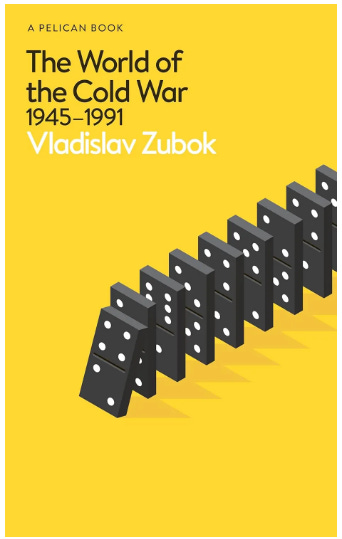
An illutration of book ‘The World of the Cold War, 1945-1991’ by Vladislav Zubok iterupts the narrative flow. Excerpts of General John Hackett’s ‘The Third World War’ provides the two opening paragraphs of Sandbrook’s maladriot essay.
Editor: Mr. Sandbrook on Vladislav Zubok:
Yes, the Russian historian Vladislav Zubok says in his readable short account of the Cold War. In crises like the Cuban missile standoff of 1962, he writes, “humanity was extraordinarily lucky”. With different leadership the world might have faced nuclear Armageddon. Thank goodness, then, that we have such impressive leaders today.
Why are there are so few gripping histories of the Cold War? One explanation is the subject is just so vast, but the fact remains that many standard accounts, such as the one by the American historian John Lewis Gaddis, are sensationally boring. This book is much better: brisk, spiky and unafraid to make provocative judgments.
Born and educated in Moscow with a close knowledge of Soviet sources, Zubok doesn’t blame Stalin for the Cold War. Although he is clear-eyed about the dictator’s atrocities, he thinks he was more cautious and pragmatic than we appreciate and he places the lion’s share of responsibility for the ideological conflict with the US.
Editor: Sandbrook begins his anaysis of Vladislav Zubok’s History: selectice quotaton is the only viable defence against Mr. Sandbrook proferred self-asaurance.
With different leadership the world might have faced nuclear Armageddon. Thank goodness, then, that we have such impressive leaders today.
…that many standard accounts, such as the one by the American historian John Lewis Gaddis, are sensationally boring. This book is much better: brisk, spiky and unafraid to make provocative judgments.
Although he is clear-eyed about the dictator’s atrocities, he thinks he was more cautious and pragmatic than we appreciate and he places the lion’s share of responsibility for the ideological conflict with the US.
Editor: With just 804 words left in this essay, in self-defence, The Reader need only consult Sandbrook’s in his final tortured paragraph, that presents Putin as ‘smoulders with so much resentment’
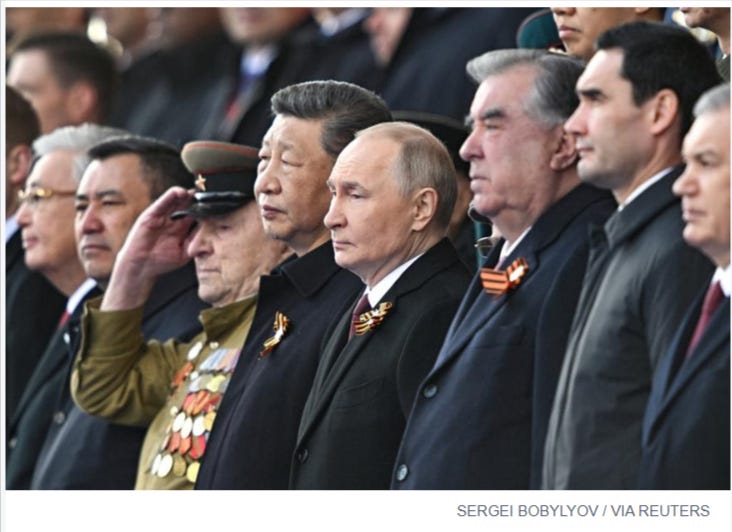
The Reader need only listen to Putin address, his Victory Day Speech see that Sandbrook is a ‘Cold Warrior’!
We know how that story played out, and for anybody trying to understand why Vladimir Putin smoulders with so much resentment — and why, sad to say, tens of millions of Russians support him — this book is an excellent place to start.
Headline: The art of dealing with Donald Trump? Don’t fight him alone.
Sub-headline: This week’s trade deal is a boost for Keir Starmer. But a lasting win will only come by joining forces with other nations to resist the US president’s entire destructive agenda
These, then, are the two strategies available when the Trump juggernaut comes for you. You can seek to cut a separate deal, to protect yourself, as Columbia tried to do. Or you can stand together with all those similarly under attack, seeking to repel the entire Trump offensive, which is what happened after Harvard made its move. So far it is collective action that has got the best results.
Applied to world trade, that would mean a shift away from the every-man-for-himself approach that led to Thursday’s handshakes in the Oval Office, and towards a combined endeavour in which the UK joins forces with, say, Canada and Australia and, obviously, its nearest and biggest trading partner, the EU, to oppose Trump and his prosperity-destroying, self-harming tariffs. More Harvard, less Columbia.
Now, clearly, Starmer’s duty is to protect Britain from a US currently wrecking the global trading system. He took a step in that direction this week. But the greater, more lasting protection will surely come only when the free nations of the world don’t merely try to save their own skins, but instead come together to resist an American president bent on destroying so much that we all value – and not only on trade. Who knows, there may even be another American leader anointed this very week who would give such an effort his blessing.
Headline: Flattery gets Starmer somewhere as The Donald stays awake to toot tariff deal
Sub-hedline: Flattery gets Starmer somewhere as The Donald stays awake to toot tariff deal
Editor: Mr Crace has both literary and political talent, and a gift for story telling that evades Mr. Friedland! In the most telling way both Starmer and Freedland are locked in a toxic symbiosis, that resembles black & white television of a long-gone era!
Three days ago, Donald Trump promised an announcement that would be very possibly the greatest announcement in the whole history of announcements. Come Thursday morning, he said the US and the UK had reached a full and comprehensive trade deal.
I guess a lot depends on what you mean by the words “greatest announcement” and “full and comprehensive”. As details of the deal began to emerge, it rather looked as if the UK had managed to negotiate a worse deal with the US than we had even two months ago. One that was hardly transformative. Just reversing some of the damage that had been done to the UK by the US starting a global trade war. Tariffs as a protection racket.
Still, a deal is a deal. These days, Keir Starmer has learned you get what you can get. And it’s more than any other country has got so far. It remains to be seen if others come out of the White House with anything better. But Keir wasn’t the only one who needed a quick result. Trump did, too. He had a reputation to maintain as a deal-maker and Americans were beginning to get twitchy that none had been reached. It wasn’t clear if this was a victory for crack negotiating teams, or a sign that both the US and the UK had been a bit desperate. So both sides were keen to chalk the deal up as a win for themselves.
Editor: Mr Crace literary/political talent continues to bloom, as Mr. Freedland’s looks like and reads like, the precarious chatter of an Economist essay’s of the Micklethwait & Wooldridge era!
Trump’s powers of concentration aren’t all they might be and he finds it difficult when he’s not the centre of attention. Keir did his best to stop the president from flatlining by showering him with flattery. The Donald had been the best. Everyone and everything would be nothing without him.
At this, Trump began to perk up. The US and the UK had been working for years on a trade deal. People had said it couldn’t be done, he boasted. And yet he had done it in a matter of weeks. Truly, he was incredible. He didn’t seem to realise that he hadn’t negotiated a full trade agreement. Just a small side hustle encompassing a few sectors. There was a ripple of applause from the sycophants in the Oval Office when Trump managed to press the right switch to disconnect the call.
The Donald then invited his commerce secretary, Howard Lutnik, to expand a little on the deal. Howie is reportedly a billionaire but he also delivers a pitch-perfect impersonation of a halfwit. It’s hard to imagine him in a room negotiating the sale of a secondhand car. “This was the president’s deal,” he cooed. “If it had been left to me, it would have taken at least three years. He did everything. He is the closer.” Imagine. Howie had just told the entire world he had been out of his depth in a puddle. Truly, the world is fucked if he is one of its masters.
Next up was the British ambassador, Peter Mandelson. Bowing deeply. Full of reverence. Mandy was born for days like these. When all that is required is oleaginous smooth-talking masquerading as sincerity. Truly, The Donald was nothing short of a genius. He wasn’t fit to wipe the president’s shoes. Trump had achieved more than anyone else in the history of the world. Thank you, thank you. We have reached the end of the beginning, he sobbed. Everyone was getting in on the Churchill act this VE Day. Trump nodded. Mandy was right about him.
Back in the UK, Starmer was just starting his own press conference at the Jaguar Land Rover factory. Britain was open for business, he said. No less than the whole future of the UK had been saved. Keir, alone, had altered the course of history. Some men are born great, some achieve greatness and some have greatness thrust upon them. Keir had managed all three. This was bigger than VE Day. Bring out the bunting. Drink the pubs dry. We were entering a new era of prosperity.
This wasn’t just a victory for the UK. It was a victory for Starmer personally. Some people had said he should stand up to Agent Orange. Put the phone down. Don’t give in to bullies. But Keir had emerged triumphant. His brown-nosing had achieved the impossible. Which was, er … not quite as good as the deal we had not so long ago. It was time for the king to get out his silk pyjamas, line up the Diet Cokes and the Haribos and prepare for his sleepover with the president. If Keir had to suck it up, then so could Charles.
Editor: Its always important when reading the troka of Friedman/Brooks/Stephens that each of these writers is a committed Zionist. So Mr. Friedman’s latest 1465 word ‘essay’ follows in that self-alpogelic tradition! In the body of Friedman’s imagined letter to Trump, there are these paragraphs!
I have zero sympathy for Hamas. I think it is a sick organization that has done enormous damage to the Palestinian cause. It is hugely responsible for the human tragedy that is Gaza today. Hamas’s leadership should have released its hostages and left Gaza a long time ago, removing any excuse for Israel to resume the fighting. But Netanyahu’s plan to reinvade Gaza is not to stand up a moderate alternative to Hamas, led by the Palestinian Authority. It is for a permanent Israeli military occupation, whose unstated goal will be to pressure all Palestinians to leave. That is a prescription for a permanent insurgency — Vietnam on the Mediterranean.
Addressing a conference on May 5 sponsored by the religious Zionist newspaper B’Sheva, Bezalel Smotrich, Israel’s far right finance minister, spoke like a man who couldn’t care less what you think: “We’re occupying Gaza to stay,” he said. “There will be no more entering and leaving.” The local population will be squeezed into a less than a quarter of the Gaza Strip.
As the Haaretz military expert Amos Harel noted: “Since the army will try to minimize casualties, analysts expect it to use particularly aggressive force that will lead to extensive damage to Gaza’s remaining civilian infrastructure. The displacement of the population to the areas of the humanitarian camps, combined with the ongoing shortage of food and medicine, could lead to further mass deaths of civilians. … More Israeli leaders and officers could face personal legal proceedings against them.”
Indeed, this strategy, if executed, may not only trigger more war crime accusations against Israel, but will also inevitably threaten the stability of Jordan and the stability of Egypt. Those two pillars of America’s Middle East alliance structure both fear that Netanyahu aims to drive Palestinians from Gaza and the West Bank into their countries, which would surely foment instability that would spill over their borders even if Palestinians themselves did not.
…
Editor: In this context where does Friedman stand ?
…
On the Middle East, you have some good independent instincts, Mr. President. Follow them. Otherwise you need to prepare yourself for this looming reality: Your Jewish grandchildren will be the first generation of Jewish children who will grow up in a world where the Jewish state is a pariah state.
“On Tuesday, the Israel Air Force killed nine children, between the ages of 3 and 14. …The Israeli military said that the target was a ‘Hamas command and control center’ and that ‘steps were taken to mitigate the risk of harming uninvolved civilians.’… We can continue to ignore the number of Palestinians in the Strip who have been killed — more than 52,000, including around 18,000 children; to question the credibility of the figures, to use all of the mechanisms of repression, denial, apathy, distancing, normalization and justification. None of this will change the bitter fact: Israel killed them. Our hands did this. We must not avert our eyes. We must wake up and cry out loudly: Stop the war.”
Political Cynic.
Further thoughts/considerations:
May 10, 2025
Mr. Friedman’s final comment lacks honesty and veracity, yet the Haaretz editorial displayes what Mr. Friedman cannot muster! What does that demonstraight about @NYT and Mr. Friedman?
Published today at 10:29 am (Paris), updated at 11:45 am
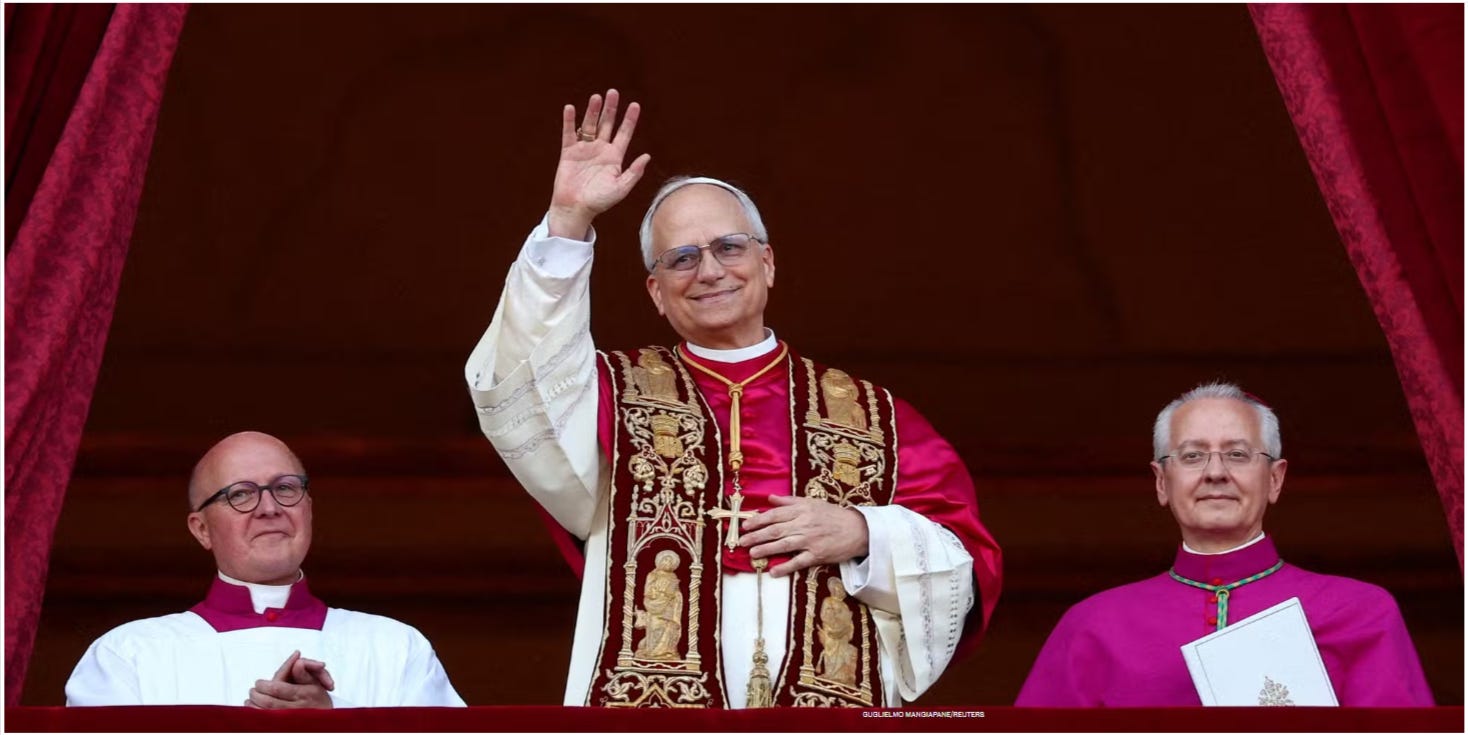
ProfileThe American Robert Francis Prevost’s affiliation with the mendicant order of the Augustinians, known for their commitment to tradition and charity, and his understanding of the Curia contribute to a reassuring image. Grounded in modernity and mindful of the marginalized, his pontificate promises ‘unity’ and collegiality.
When his name was announced, there was a murmur of confusion among the crowd gathered in Saint Peter’s Square, Rome. “Prevost? Who is he?” In the election for the Throne of St. Peter, observers saw him as a serious candidate due to his ability to unite and bring peace to the Church. However, to the general public, Robert Francis Prevost, the 267th pope of the Catholic Church and the first to come from the United States, is unknown.
When white smoke appeared from the chimney of the Sistine Chapel on Thursday, May 8, shortly after 6 pm, onlookers were still betting on the victory of Pietro Parolin, former second in command to Francis and the anticipated favorite for the papacy. “It will be him, Parolin, with the papal name Paul VII,” predicted two French priests. The speed with which the election was concluded – four rounds of voting, totaling 24 hours of conclave – seemed to support this hypothesis.
But it was Robert Prevost, from the Order of Saint Augustine, who was elected. He took the papal name Leo XIV. This choice places the new pontiff in the continuity of Leo XIII, the pope who forged the Church’s social doctrine, notably through the encyclical Rerum Novarum (“Of New Things”), published in 1891. In short, the promise of a pontificate rooted in modernity and concerned for the poor, the marginalized, the excluded – the “peripheries,” as Francis would have said, to whom Leo XIV paid a heartfelt tribute in his first speech.
Interview: The Russian journalist, in an interview with Le Monde, analyzes the militaristic propaganda created by the Kremlin around the end of World War II, celebrated in Russia on May 9, which led to the invasion of Ukraine in 2022.
Sergey Parkhomenko, 61, founder of the Russian news magazine Itogi – created in 1996 in cooperation with the American weekly Newsweek – has not only had a rich career as a journalist He is also behind several civic initiatives, such as Dissernet, a platform that tracks plagiarism in Russian science, and Last Address, which places hundreds of commemorative plaques for victims of Stalinism on buildings in Moscow, Saint Petersburg and Yekaterinburg.
Close to the non-governmental organization Memorial, Parkhomenko has lived in exile since 2021, the year when the renowned human rights group, dedicated to the preservation of the memory of victims of Soviet power, was dissolved. Today, he leads the project Redkollegia (“editorial board”), funded by philanthropist businessman Boris Zimin, which rewards Russian journalists unaffiliated with the government for the quality of their work.
What do the 1945 victory commemorations represent in today’s Russia, currently involved in a war it initiated?
Since Vladimir Putin, the change has been dramatic. I remember that before, at my grandparents’ house, there was a set table and friends were invited, but it was above all a celebration of pain, of remembrance. And then, the celebrations of the Great Patriotic War [as World War II is called in Russia] became an instrument of militaristic propaganda, a celebration of aggression against everyone under the theme of “We can do it again.”
Political Cynic grows weary of Political/Ethical Mendacity. Think of political crime of David Brooks’ ‘The Collapse of the Dream Palaces’ as the possible/aguable political beach-head?
The war in Gaza has reached a predictable and deadly impasse.
In response to the Hamas terrorist attack on Oct. 7, 2023, the Israeli government has publicly pursued two primary war aims. First, Israel wanted to secure the return of every hostage Hamas seized. Second, Israel wanted to destroy Hamas.
At the same time, however, Israel also indicated that it did not want to reoccupy Gaza. There are good reasons for this. The international community is opposed to occupation, Israeli society is deeply divided by the idea, and the previous occupation ended poorly — with Hamas coming to power after Israel withdrew from the strip in 2005.
But the brutal military fact is that rejecting occupation not only rendered Israel’s vow to destroy Hamas incalculably more difficult, it made the war far more inhumane and deadly.
Editor : Mr. French in the following sentences seeks to cover his ass with his readership!
I want to emphasize that this newsletter primarily offers a military analysis. It is not focused on politics. That’s not because the politics of the situation are unimportant, but rather because we often pay too little attention to military realities, and the success or failure of military operations can completely transform the politics of an international crisis.
Editor: What follows is a 1701 word diatribe, framed as somehow a valid rationale of Israel’s Genocide? Mr. French provodes a provisional cast of chacacters, for the Reader to consider as actors in his Political Melodrama, aided by his inept phrase-making!
Hamas, lesson the United States learned, “commuting to war,”. Even if a military follows the law of war (and that is a matter of debate in Gaza), emphasizing destruction can lead to a mentality that treats body counts as an independent objective, Israel has inflicted significant losses on Hamas, the Iraq war surge, the Israeli security cabinet has approved a plan to enter Gaza and stay — at least temporarily — to end Hamas’s control, President Trump floated in February, This is the approach of the worst hard-liners in the Israeli government, and it’s not just illegal. It’s a recipe for endless war. , …Pete Hegseth, the secretary of defense, is fond of calling military lawyers “jagoffs” — see the obligations of the laws of war as inhibiting war fighters and diminishing their effectiveness….
Editor: Reader there are but 1064 words remaining to this ‘essay’: yet for all the politically maicured chatter, these paragraphs signal the point of arrival has been reached ?
Also, it’s important to remember that the long and deadly history of conflict between Israelis and Palestinians has rendered the Gazan population far more hostile to the I.D.F. than most Iraqis were to American forces. Israel has a more difficult challenge than we faced in Gaza — though the emergence of (unimaginably courageous) demonstrators against Hamas in Gaza indicates that there is an appetite for change.
Israel is facing a terrible choice. If it wants to remove Hamas from power, it almost certainly has to pursue an occupation that would divide the nation and further enrage the international community. If it wants to secure the release of the hostages, it will almost certainly have to agree to a cease-fire that leaves Hamas in place and sets the stage for future conflicts.
It remains to be seen whether Israel’s new approach is anything more than bluster. Perhaps Israel’s threats are little more than negotiation tactics. Perhaps Israel will ultimately prioritize releasing the remaining hostages over ending Hamas’s despotic rule. But one thing is crystal clear.
Traditionally, secretaries of state have played a role of great prominence in U.S. administrations. Although they are only fourth in the presidential order of succession, these officials often outshine vice presidents. One need only think of examples such as Henry Kissinger, James A. Baker, Hillary Clinton, or John Kerry to recall how influential and vocal public servants in this office can be.
Against this backdrop, current Secretary of State Marco Rubio cuts a particularly disappointing figure. As President Donald Trump’s second term takes on a clear authoritarian bent and disrupts long-standing U.S. relationships, one might have expected Rubio—who has a record of criticizing Trump and his foreign-policy stances—to be one of the rare “adults in the room,” as experienced officials such as John Kelly and James Mattis were called during Trump’s first term. Analysts sometimes credited these figures with slowing the president down through deliberate debate and reining in his impulsive extremes.
….
Editor: This was all I could manage to salvage, of this Howard French’s essay, without a payment. Reader consult this issue of Cold War Studies for what the posibilities of what actual thought might offer, instead of Lukewarm Theology!
Headline: The ‘Wall Street Journal’ calls on Trump to take the path of former French Socialist president François Mitterrand
Sub-headline: The financial daily, which closely reflects the views of the business community, hopes that the US president will abandon a misguided policy a few months after its implementation, like Mitterrand did in the 1980s.
Editor : Arnaud Leparmentier opening salvo ends in paraphrasing the Neo-Faschist rag The Wall Street Journal!
Has the worst passed? This is the faint hope that economic circles are clinging to after Donald Trump’s first 100 days in office, which have triggered distrust and indescribable chaos due to his trade war and caused a nearly 10% drop in the dollar against the euro. The Wall Street Journal is so stunned that it has invoked the spirit of a Frenchman, a Socialist no less – François Mitterrand.
Editor: I recall reading a biography of François Mitterrand by a women whose name escapes my memory, and I can’t find on the internet. Note that Arnaud Leparmentier of Le Monde quotes ‘The Wall Street Journal’ and its Kimberley Strassel, after a long involved, and at best of a comic notion, of selling the idea/notion of a ‘François Mitterrand Moment’ to the Trump Neo-Faschist cadre, and his Fellow Travelers at this ‘newspaper’ ?
Editor: Arnaud Leparmentier quotes Kimberley Strassel, she plays the role of Madame Defarge in the Trump World Toxic Melodrama. When will Sydney Carton make his appearnce?
The Wall Street Journal is an excellent indicator of the dismay among American economic circles, which thought that Trump’s second term would be a repeat of his first – chaotic, boasting about trade and migrants, yet fundamentally pro-business. Where business leaders made an opportunistic but futile allegiance, the daily maintained its editorial stance. Editorialist Kimberley Strassel expressed hope that “the president has lost control of the narrative, but he has a chance to retake it.” She urged the president to “use the 100-day mark to double-down on Trump 1.0 – and never look back.”
Editor: Kimberley Strassel is one of Rupert Murdoch trained and reliable cadre of underlings, with an appetite for retorical blood-letting!
Editor: The two political frauds, of the utterly bankrupt New Democrats : Senator Bernie Sanders (Vermont) and Representative Alexandria Ocasio-Cortez (New York) make their apperance as champions of what: Not the long abandoned New Deal Tradition of Franklin D. Roosevelt and Ferdinand Pecora of the Glass–Steagall Act?
The second is up to Congress and the daily saw red when some Republicans close to Vice President JD Vance or the populist MAGA (“Make America Great Again”) movement, including Steve Bannon, proposed raising taxes on the wealthiest (from 37% to 39.6% maximum marginal rate, as under Barack Obama) to counter left-wing Democrats: specifically, Senator Bernie Sanders (Vermont) and Representative Alexandria Ocasio-Cortez (New York) who are touring the country to denounce the takeover by Trump’s “oligarchy.”
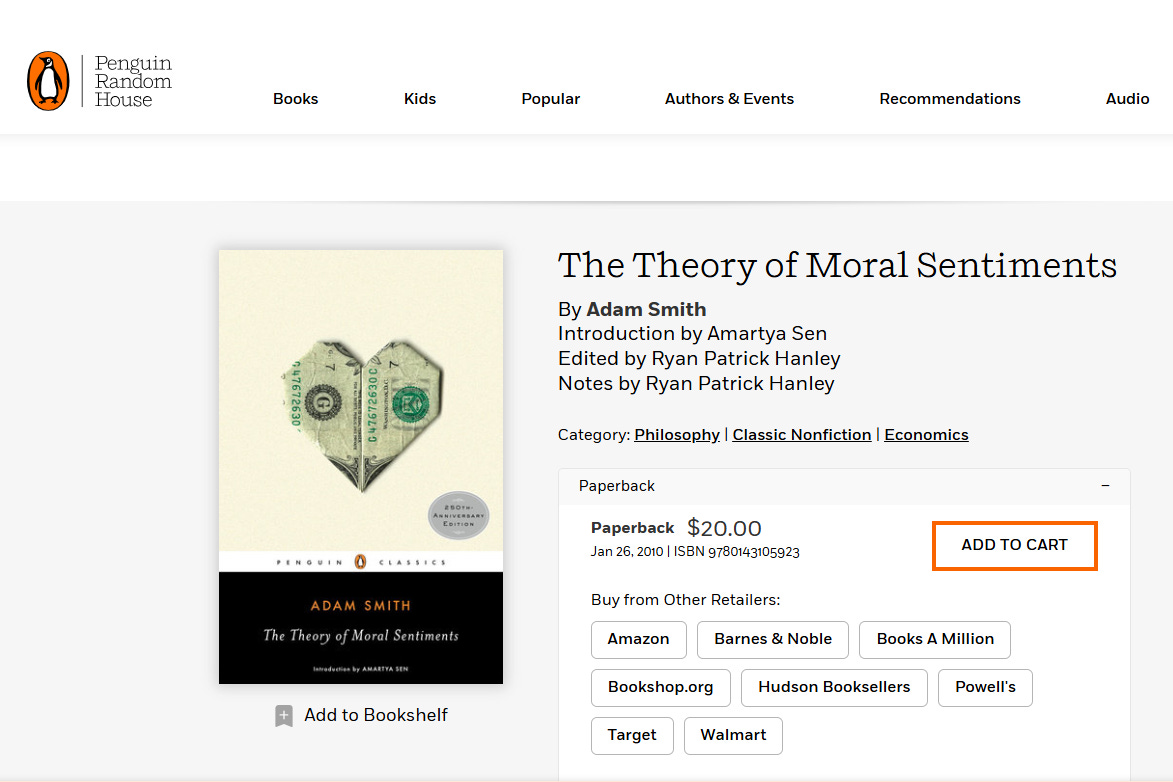
Editor: Arnaud Leparmentier last and unimpressive paragraph! On Adam Smith recall the economist Amartya Sen’s introduction to Smith’s ‘The Theory of Moral Sentiments’ ?
Editor: The final paragraph and the final sentence…
Investors are divided over the issue: according to a Wall Street Journal survey, hedge funds have sold $1 trillion in stocks since the beginning of 2025, while 97% of American Vanguard clients did not touch their retirement funds in early April, hoping for better days ahead. Who is right, the Wall Street elites or those who are saving up money? Evidently, Adam Smith’s invisible hand is trembling.




 StephenKMackSD's Blog