The @NYT discovers ‘A New Amy Coney Barrett’? Can it be that this one time Religious Hysteric has ‘evolved’ ? (Revised 6/22/2025)

Political Observer

stephenkmacksd.com/

Jun 15, 2025

Editor: The headline and sub-headline give’s the Game away, see above! Though Jodi Kantor can’t quite control her gush, at the marvel that is Barrett. To say the least Kantor lacks a certain literary panasch: an expresstion of New York Times studied dullness?


Soon after Justice Barrett arrived at the court she began surprising her colleagues. Chief Justice John G. Roberts Jr. assigned her to write a majority opinion — among her first — allowing the seizure of state property in a pipeline case, according to several people aware of the process. But she then changed her mind and took the opposite stance, a bold move that risked irritating the chief justice.

In another early case, as Justice Samuel A. Alito Jr. tried to further his decades-long quest to expand the role of religion in public life, she preferred a more restrained route, setting off a clash in their approaches that continues. And in a key internal vote, she opposed even taking up the case that overturned Roe v. Wade and the federal right to abortion, though she ultimately joined the ruling.

Now Mr. Trump is attacking the judiciary and testing the Constitution, and Justice Barrett, appointed to clinch a 50-year conservative legal revolution, is showing signs of leftward drift.

She has become the Republican-appointed justice most likely to be in the majority in decisions that reach a liberal outcome, according to a new analysis of her record prepared for The New York Times. Her influence — measured by how often she is on the winning side — is rising. Along with the chief justice, a frequent voting partner, Justice Barrett could be one of the few people in the country to check the actions of the president.

Editor: Note that there are still 3765 words left in this essay. Note that this reader thinks of ‘the long carpeted hallways of C. P. Snow’ Though the subtitles offers The Reader a weak descripive frame:

The Professor and the Beltway

An Independent Streak

The Glare of the Spotlight

Editor : the final paragraphs of Jodi Kantor essay and ‘About The Data’ establishes in the mind of The Reader, that this was an effort of many contibuters, not in any way an individual effort !

There will be even more focus on her in coming months as she and her colleagues deal with a conveyor belt of cases involving much of the president’s agenda.

So far, Justice Barrett’s record on Trump-related votes is short but suggestive. Usually, justices show what scholars call “appointment bias,” leaning slightly in favor of the presidents who appointed them.

She has gone in the other direction. Because emergency orders are tentative, and not every vote is disclosed, the evidence is limited. But she is the Republican appointee who appears to have voted least often for Mr. Trump’s position, based on three cases decided last year stemming from his attempts to subvert the 2020 election, as well as 14 emergency applications since then arising from his sentencing in New York and recent blitz of executive orders.

Now, one group of cases will determine whether and how Mr. Trump’s deportations can proceed. Another concerns whether lower-court judges can issue nationwide injunctions, which some have used to block or delay Mr. Trump’s actions. Questions about the legality of Mr. Trump’s tariff hikes, his strike at Harvard University, the firing of federal workers, along with other actions by the Department of Government Efficiency, and his attempt to ban transgender people from the military have been or soon will be subject to the justices’ scrutiny.

In explaining how she reaches her decisions, Justice Barrett has said that she is open to persuasion, particularly in response to a strong oral argument. “I have changed my mind,” she said last year, “even at the Supreme Court.”

About the Data

The data in this article come from an analysis prepared for The Times by Lee Epstein and Andrew D. Martin, both of Washington University in St. Louis, and Michael J. Nelson, of Penn State. The researchers used the Supreme Court Database, which contains information about every Supreme Court case since 1791. More information on how decisions are coded “liberal” or “conservative” can be found on the database website.

Maggie Haberman and Abbie VanSickle contributed reporting. Lauren McCarthy and Julie Tate contributed research. Produced by Meghan Morris, Alicia Parlapiano and Rumsey Taylor.

Photographs by Chip Somodevilla/Getty Images; Jim Watson/Agence France-Presse, via Getty Images; Mint Images; Olivier Douliery/Agence France-Presse, via Getty Images; Damian Dovarganes/Associated Press; Patrick Semansky/Associated Press.

Political Observer.


Editor: On the question of C. P. Snow and ‘his long carpeted hallways’ here is Malcolm Muggeridge of November 27, 1964 in The New Republic on Snow!

Oh No, Lord Snow

I first met C. P. Snow (later, Sir Charles Snow, and now Lord Snow of Leicester) some thirty-five years ago in Manchester when I was working on the Guardian. As I recall him in those days, he was a large, red-haired, rather wistful looking but still resolute man of about my own age. I was then 27. It emerged in the course of our conversation over tea that he was poised between being a writer and a scientist; had already written a thriller or so, but, I had the impression, leaned then in the direction of science. How good a scientist he was, I had, of course, no means of knowing. Nor, for that matter, have I now.

An impression that stayed with me was a worldly man. Worldliness is, by its nature, a highly romantic attitude; only mystics know how to be skeptical. Snow, I felt, was romantically worldly. Though, politically, he belonged to the Left (at that time, I should suppose, the fairly extreme Left), things like money and social eminence and success held great allure for him. My own romanticism (a late-Victorian throwback) was the converse of his. Success, I had convinced myself, was the hallmark of failure; the rich could only be contemptible, and, what was worse, bores. Thus, the idea of an ostensible intellectual like Snow wanting to be rich and successful struck me as bizarre, if not reprehensible.

Actually, as I see now, romantic worldliness like his is a great promoter of success in the field of action, through completely inimical to any other than the most mediocre achievement in the field of the imagination. The mists of desire obscure life’s landscape, whether to portray, describe or understand it; they facilitate its conquest. Thus, Napoleon had so romantic a notion of the glories and delights of power that he was able to grab it, in the same way that a greedy child gets the best cakes. He took so glamorized a view of the thrones of Europe that he was able to overturn them, and then stand them up again to accommodate his repulsive Corsican relatives.

Similarly with a certain type of literature. For instance, Stendhal’s novels derive much of their driving-force from his abject and ridiculous romanticism about being distinguished and important. One can trace the same thing in Evelyn Waugh, and, in a rather different way, in Proust. Snow is no Stendhal, certainly. Nor is he a Proust, or even a Waugh. One has, in fact, to agree with Dr. Leavis’s preposterous and portentous tirade against him to the extent of agreeing that Snow is a negligible writer. All the same, his great popularity in England and America, and still more in Western Europe and the USSR derives from his already mentioned romantic worldliness. He is the man rubbing his nose against the plate glass window of Vanity Fair, and telling the others who can’t even get near the window what it is like inside. Pascal, a non-worldly man, said that judges and sovereigns had to be attired in elaborate regalia because otherwise the threadbare nature of their authority would be exposed. Snow, contrariwise, finds the regalia marvelous in itself, and deduces from it the reality of the authority beneath. His only authentic grouse was that he had no regalia to wear himself. Well, now, as a peer and member of Harold Wilson’s Labour Government, he has.

Whatever may have been his inclination all those years ago when we met in Manchester, as things have turned out he has pursued neither science nor literature, but grazed in the limbo of no-man’s-land between them. It is as an academic functionaire that he has made his mark, his novels being a byproduct. They are narrated by Lewis Eliot, who is obviously himself; a fellow of Christ’s College, Cambridge; an occasional civil servant and knighted; a scholar of sorts, and a lawyer—but he might just as well be a novelist.

The latest offering, Corridors of Power, is about a Tory politician, Roger Quaife, who undertakes a rather indeterminate political operation directed towards extricating the government from its nuclear commitments. Considered as an exercise in political strategy the whole thing is quite exceptionally silly and difficult to follow. There is no particular need to try. After a series of ups and downs, Quaife is worsted, and has to resign. His downfall is assisted by an affair he has with the wife of a fellow-Conservative MP; described by Snow with all the sensitivity and subtlety of an elephant pounding through a cornfield.

The dynamic of the novel, as of the series of which it is a part (there are, I gather, four more to come), lies in the lush descriptions of the alleged workings of power in England through the House of Commons and the Government, through high-born families and the civil service, with money, patronage and influence as lubricants. There are the country house week-end gatherings at Basset, Diana Skidmore’s house in Hampshire; the dinner parties at the Quaifes’ house in Lord North Street, Westminster, presided over by Quaife’s energetic wife. Lady Caroline, or Caro as she is known to her friends, and, of course, to Lewis Eliot; encounters with Lord Lufkin, an industrialist, and Lord Houghton, or Sammikins, who “had published a short book on Anglo-Indian relations . . . it seemed anti-Churchill, pro-Nehru and passionately pro-Gandhi.” Poor old Sammikins! He never should have come out in the open as an admirer of the Mahatma. It got him into trouble with his family and political associates.

Words cannot convey the imbecility of this vision of power as conceived in Snow’s ponderous, totally humorless and endearingly innocent, or at any rate naive, mind. To transubstantiate, as the dear old fellow has done, those moustached Westminster hostesses into divinities; to take Basset back to Trollope and Lord North Street back to Disraeli; to fabricate out of universal suffrage democracy in its, and England’s, decrepitude a high drama of derring-do, a Church Lads Brigade Agincourt—this is something that only Snow could, or would, have attempted. Let me take, by way of illustration, a single sentence which caught my fancy. Snow mentions that “during the winter the gossip began to swirl out: from the clubs and the Whitehall corridors.” One imagines that so substantial figure; that huge moon face, unsmiling, portentous, looking across St James’s Park. Then, wetting a finger, holding it up to the wind, with an expression of great gravity: Yes (head on one side), yes, sure enough he can detect a decided current of gossip swirling past him from the clubs and Whitehall corridors.

But wait a minute—what clubs? What corridors? The Athenaeum, perhaps, where seedy clerics and atrocious dons desperately wash down bad food with bad wine. Or the Carlton, home of outmoded Conservative politicians in black coats hoping against hope for a telephone call that never comes to summon them to be under-under parliamentary secretary at the Ministry of Nothing. Or Whites whose red-faced members suck down their tenth Bloody Mary, still keeping a weather-eye open for Lord Boothby, or even Randolph Churchill. Or the Garrick. Dear God, the Garrick, frequented by noisy lawyers, moronic actors, and American newspaper and television correspondents who manage to persuade themselves that they are consorting with the mighty in their seats. Oh, Joe, oh Drew, come out from behind that decanter of port! I know you. As for Pratts—dear, gallant old Snow is on record as having reflected, while taking; a drink in its dismal premises, how remarkable it was that he, a poor boy from a poor home, should ever have found himself in this haunt of the smart and the great. Perhaps it is Pratts whence the rumors swirled. As it happens, it’s the only club mentioned by name in Corridors of Power, and (the point has no particular relevance) the only London club I still belong to.

As for the corridors, we journalists who have paced them often and long enough in search of a story; who have visited those sad, sad knights in their ministries, looked at them across their desks; grey, listless men with black briefcases stamped with the Royal Arms (ministerial equivalent of the airline bag) which they take with them, to and fro, between Whitehall and their homes in Putney or Wimbledon—we just can’t accept the swirling rumors. What wouldn’t we have given for just one tiny swirl to take back to the office and knock out on a typewriter. The truth is that journalism unfits one for reading Snow. One’s state of mind is all wrong. I give up. Sir Lewis Eliot, Lord Eliot, away! I want no more of you. Those last four volumes of yours, as far as I’m concerned, shall remain unread.

The rather amusing situation now is that Snow has been teamed up with Frank Cousins (about the nicest man, quite seriously, there is in England today; and hitherto head of the Transport and General Workers Union) to look after our technological development. Snow steps out of his novels into politics, and we shall all be watching closely to see how he fares. I have long held the view that power is to the collectivity what sex is to the individual. On this basis, writers like Snow obsessed with power may be compared, within their own terms of reference, with writers like D. H. Lawrence obsessed with sex; they display the same sort of seriousness; no more laughs in the corridors than in the woods when Lady Chatterley and Mellors were on the job there. They are, asit were, power-pornographers. For Snow to join a government is rather as though Lawrence had taken a job as a game-keeper. I am personally extremely grateful to Mr. Harold Wilson for having created this diverting situation, and only wish that he would cap it by taking Dr. Leavis into his government. What could Leavis be? The promised Ombudsman, perhaps. Or our first Minister of Culture.

https://newrepublic.com/article/82080/oh-no-lord-snow

Editor: There is nothing more beguiling than the cynicism of this iteration of Malcolm Muggeridge!


Posted in Uncategorized | Leave a comment

As I reach my 8oth year I no longer have patience with the utterly corrupt, mendacious American Political Parties, their equally corrupt Corporate Media Cadre!

Stephen K. Mack.

stephenkmacksd.com/

Jun 15, 2025

We’ve temporarily limited some of your account features

StephenKMackSD

stephenkmacksd.com/'s avatar

stephenkmacksd.com/

Jun 14, 2025

1

Share

I advocated purging the New Democrats , The Republicals & The Neo-Cons from American National Life!!!!!

StephenKMackSD


As I reach my 8oth year I no longer have patience with the utterly corrupt, mendacious American Political Parties, their equally corrupt Corporate Media Cadre, and an Iternet in the hands of greedy, self-seeking Oligarchs: Bezos, Zuckerberg, Musk.

Reader face the fact that America has yet to face the fact that JFK was murdered by the CIA and its minions, and that Corporate Media were the Salesman of Natonal Security State murderious fictions. Call me a leftover ‘Consipacy Theorist’! except that America has yet to confront its own history of violence across time. New Democrats , The Republicans & The Neo-Cons all were/are the servents of usable fictions. Note the political trojetory of the War in Vietnam, The War on Terror, the War in Ukraine!

Editor: The almost intellectual component of Ameican Hegemononic delusions

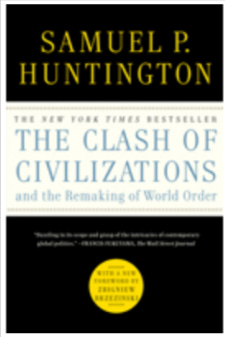
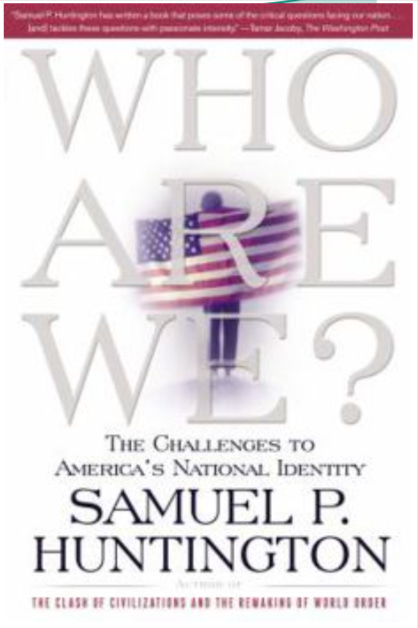
Huntinton’s Racism in two iterations:

Reader not to forget Francis Fukuyama’s Hegalian Pastisch of 1992! American rubes lapped this up!

New Democrats , The Republicas & The Neo-Cons produced The Tea Party by their collective internecine battles, that eventuiated in Trump. Do not present to me Obama of ‘lets put this benind us’ and the abismal Simpson–Bowles!

StephenKMackSD

Posted in Uncategorized | Leave a comment

We’ve temporarily limited some of your account features

StephenKMackSD

stephenkmacksd.com/

Jun 14, 2025

I advocated purging the New Democrats , The Republicals & The Neo-Cons from American National Life!!!!!

StephenKMackSD

Posted in Uncategorized | Leave a comment

Katharine Viner, editor-in-chief of The Guardian ‘follows’ the evolving Party Line on Zionists Faschist State & Iran’s evolving attacks, seem not to matter to Western Zionists Apologist?

Political Observer.

stephenkmacksd.com/

Jun 14, 2025

Editor: In my in box this morning :

In the early hours of Friday morning local time there was a sudden, dramatic acceleration in the Middle East crisis, as Israel launched a wave of strikes against Iranian nuclear facilities, military commanders and scientists.

Iran called the strikes, which destroyed the leadership of its Revolutionary Guard, an “act of war” and the world is watching closely to see the extent of the “severe retaliation” promised by the country’s supreme leader, Ali Khamenei.

Julian Borger, our senior international correspondent, was in Jerusalem as the strikes began, covering, alongside Peter Beaumont and Deepa Parent, the details of how they unfolded. Julian was also a guest on Today in Focus Extra. Our journalists have also been tracing the scale of the attacks throughout the last 24 hours, including profiles of some of the generals and scientists killed. Our reporting team, including chief Middle East correspondent Emma Graham-Harrison, will be covering the story over the weekend, and you can keep up to date with all developments as they unfold via our unrivalled live blog.

Global affairs correspondent Andrew Roth was quick to analyse Israel’s moves, writing that the “unilateral strikes indicated a collapse of Donald Trump’s efforts to restrain the Israeli prime minister and almost certainly scuttled Trump’s efforts to negotiate a deal with Iran that would prevent the country from seeking a nuclear weapon … It also will probably lead to an Iranian retaliation that could develop into a larger war between Israel and Iran, a new conflict that Trump has publicly sought to avoid.”

Trump’s immediate response was to use Iran’s fragile position to further pressure it into conceding to US demands over its nuclear ambitions, while events on Friday will probably cast a pall over the president’s big 79th birthday celebrations – a huge military parade through Washington DC, no less. The parade, ostensibly a celebration of the US army’s 250th anniversary, was already likely to be overshadowed by protests – both against Trump, and against Immigration and Customs Enforcement (Ice) raids. Washington bureau chief David Smith laid out what to expect from the parade and spoke to those who drew a direct link between the Ice raids, the use of the national guard in LA and this show of military might.

Editor: Note that the ICE raids note a mention, and Trumps Birthday!

Political Observer.

Posted in Uncategorized | Leave a comment

The Economist celebrates the Zionist Faschist States attack on Iran!

Old Socialist comments.

stephenkmacksd.com/'s avatar

stephenkmacksd.com/

Jun 13, 2025

Editor: There can be no doubt that Zanny Menton Beddoes and her cadre of Oxbridgers, and other various educational replicants, are Neo-Cons or entusiastic fellow traveler’s? Netnayahu and his government are guilty of Genocide yet Beddoes and her cadre ignore that contiuing crime! The Title, headline and sub-headline give the game away, the whole of it reeks of the celebratory:

Leaders | Strike it lucky

Israel has taken an audacious but terrifying gamble

The world would be safer if Iran abandoned its nuclear dreams, but that outcome may prove unattainable

Editor: The first three paragraphs are unsurprising propganda

FOR THREE decades, Israel’s prime minister, Binyamin Netanyahu, has warned that Israel’s gravest external threat is Iran. And no Iranian threat is graver than its programme to acquire a nuclear bomb. Israel is a small, densely populated country within missile range of the Islamic Republic. A nuclear-armed Iran would put its very existence at risk.

Early on Friday June 13th, Mr Netanyahu at last acted on this conviction, dispatching wave after wave of Israeli aircraft to strike Iran. They attacked nuclear installations in Natanz, 300km south of the capital Tehran, as well as officials associated with the weapons programme. And they also killed the top echelons of the Iranian armed forces, including Mohamad Bagheri, the chief of staff.

Mr Netanyahu once had a reputation as a risk-averse leader, but this strike was audacious, even reckless. Israel is entitled to take action to stop Iran from getting a bomb. The prime minister is justified in fearing that a nuclear-armed Iran would hold dire consequences for his country. He appears to have the support of President Donald Trump, an essential ally. Friday’s assault could turn out to be a devastating blow against the regime in Tehran. But it also threatens a bewildering range of outcomes, including some that are bad for Israel and America.


Editor: The Hero of this political apologetic is presented as the ‘Mr. Netanyahu once had a reputation as a risk-averse leader’ Yet The Economist failes to inform the reader.

https://www.pbs.org/newshour/world/netanyahu-tesfies-in-his-corruption-trial-latest-in-a-long-series-of-scandals


Editor: The Economist offers these conjectures, speculations and belicosity!

The Islamic Republic has been a malign presence in the region, sponsoring terrorists, violent militias and despotic regimes, including that of Bashar al-Assad in Syria

Iran backed Hamas, which launched a murderous attack on the country from Gaza on October 7th 2023.

An Iranian bomb would make all of this worse. (Editor: where in the proof of an Iranian Bomb?)

Even without any proliferation, a nuclear-armed Iran would be perceived in the region as a constraint on the Israel Defence Forces’ freedom of manoeuvre.

Israeli officials argue that they would eventually have no choice but to attack Iran’s nuclear programme and that they had a brief window to carry one out. Iran is weaker than it has been for decades.

In a recorded address, Mr Netanyahu claimed to have evidence that Iran is weaponising its technology, saying that it may be close to a device. His officials believe that, in talks with America about a deal that would halt the nuclear programme, Iran has been creating a smokescreen behind which its scientists were in reality pressing rapidly ahead.

Having killed many Iranian officials, it may have caused so much chaos in Tehran that the regime cannot mount a powerful response. After being on the receiving end of such a show of strength, the mullahs may be deterred from mounting another attempt to build a nuclear arsenal.

However, Friday’s offensive is also a huge gamble. For one thing, the urgency may not be as great as Israel suggests. In March America’s intelligence chief, Tulsi Gabbard, said that Mr Khamenei had not reauthorised the weapons programme he suspended in 2003.

The strike is also a gamble because of its potential regional and global consequences. Although Iran is less able to retaliate than it once was, it can still cause a lot of harm. Already, on June 13th Iran loosed over 100 drones against Israel.

Editor: The Voice of Reason of a kind ?

Odd as it may sound, a collapse of the rotten Iranian regime, much as it is hated within the country and in the region, could also be highly destabilising. Iran is a big and complex country without a history of democracy. Nobody can say what might emerge from the chaos.

Even in a world where the old rules are breaking down, an endless pattern of regular bombing raids on a sovereign nation would carry a heavy diplomatic and political cost. Eventually, repeated strikes could stretch America’s patience and inflame public opinion there, doing long-term harm to the alliance with America upon which Israel depends.

The hope is that Iran’s nuclear programme will be destroyed never to return. That would be vindication for Israel’s prime minister. But if not, Israel will have to live with the paradox that Mr Netanyahu engenders. At a time when the Gulf states are offering a new vision of the Arab world built on the coexistence with Israel that comes from economic development, his eagerness to resort to conflict risks making their plans impossible. In attempting to spare the Middle East from Iranian aggression, he risks trapping it in a cycle of violent destruction and instability. In its own way, that poses an existential threat to Israel, too.

Editor: The final paragraph of this what to name it? Oxbridger self-serving political morilizing, tinctured in self-congratulation?

Old Socialist.

Posted in Uncategorized | Leave a comment

Oxbridger Douglas Murray in five evocative paragraphs.

Political Cynic comments.

stephenkmacksd.com/'s avatar

stephenkmacksd.com/

Jun 12, 2025

The Spectator: How to ruin a city

Douglas Murray

https://www.spectator.co.uk/article/how-to-ruin-a-city/?status=Active&utm_medium=email&utm_source=CampaignMonitor_Editorial&utm_campaign=BLND%20%2020250612%20%20HOUSE%20ADS%20%20MG+CID_0ca11f651694f5d797da8a8678c4c7bb

So it is with the stand-off between Newsom and Donald Trump. Conservative estimates suggest that between ten and 12 million people entered the US illegally in the four years of Joe Biden’s presidency – almost doubling the number of illegals in the country. Trump has already fulfilled his campaign promise of sealing the southern border, so that the number still breaking into the country via that route is effectively zero. But he is also intent on fulfilling his campaign promise of removing the people already in the country who shouldn’t be. He and his border tsar, Tom Homan, have made it clear that they are prioritising the removal of the more than half a million illegal migrants who are thought to have criminal records.

On a good day the Trump administration has managed to deport around 800 illegals. But you can do the math yourself on how long it would take to complete the task. At the current speed, assuming there are no more legal or physical challenges, Trump and Homan might be able to deport all the illegal migrants with a criminal record by 2027 or 2028. If they want to deport the millions who came in between 2020 and 2024 alone, President Trump would have to remain in office for years, if not decades. Which is not actually a proposal.

The unrest that broke out in Los Angeles this week was not even the result of Homan’s team simply detaining illegal migrants. They were seeking people who were engaged in criminal activity. But the unwiser parts of the American left decided to assume their normal position. They blamed law enforcement for causing the problem and pretended that the resulting violence was peaceful. All this as the public could see footage of masked left-wing activists spitting in the faces of policemen and throwing stones at them.

Now Trump has sent in the National Guard and Marines and told ‘insurrectionists’ that ‘if they spit, we will hit’. Newsom, Hillary Clinton and other Democrat bigwigs are pretending that it is Homan, Trump and law enforcement who are the bad guys, while the people burning cars on the streets and looting the local Apple store are merely reacting to the provocation.

Which brings me back to that central imbalance of our time – in the US as here. Why is the person who caused the mess allowed to be presented in the kindliest light, while the people trying to clean up after them must be portrayed in the crappiest?

Editor: Mr. Murry loves to trade in a bad/mad collection of what was once the territory of Evelyn Waugh, without his talent. The American Setting of a California, that is ruled by New Democrats like Old Money Gavin Newsome, freighted with Ileagal Aliens who wash dishes in posh returaunts, and wipe the shitty bottoms of the children of the wealthy, and middle class! And sweep the streets and pickup the garbage! Of that world Mr. Murray is uninterested, but also addicted to his Self -Concept, as would-be Political/Moral Gadfly facing off those Mestizo Hordes, as presented by racist Samuel P. Huntington? The fact that the work of Huntington is perhaps in unknown to Mr. Murray, does not absolve him of the charge of fellow traveling!

Political Observer.

Posted in Uncategorized | Leave a comment

The Manhattan Institute is about the contiuing rehabilitation of Leo Strauss, and his mendacious Re-Write of ‘Philosophy’!

Political Observer on forgetting History, American Fashism of the political present & ‘Nostalgia for the Strong Man’ …

stephenkmacksd.com/'s avatar

stephenkmacksd.com/

Jun 12, 2025

Posted in Uncategorized | Leave a comment

Re-posting my November 20, 2020 essay on Zanny Minton Beddoes! She even surpasses the political mendacity of the long gone Wooldridge & Micklethwait!

Old Socialist.

stephenkmacksd.com/'s avatar

stephenkmacksd.com/

Jun 11, 2025

Old Socialist scoffs at Zanny Minton Beddoes’ collection of self-serving political cliches, in almost praise of a Joe Biden presidency.

Posted on November 20, 2020 by stephenkmacksd

Should any reader be surprised that Beddoes is an Oxbridger? It’s an Economist Tradition. Note this from the Economist:

Ms. Minton Beddoes joined The Economist in 1994 after spending two years as an economist at the International Monetary Fund (IMF), where she worked on macroeconomic adjustment programmes in Africa and the transition economies of Eastern Europe. Before joining the IMF, she worked as an adviser to the Minister of Finance in Poland, as part of a small group headed by Professor Jeffrey Sachs of Harvard University.

Wikipedia supplies more detailed information on Beddoes IMF responsibilities:

After graduation, she was recruited as an adviser to the Minister of Finance in Poland, in 1992,[3] as part of a small group headed by Professor Jeffrey Sachs of Harvard. She then spent two years as an economist at the International Monetary Fund (IMF), where she worked on macroeconomic adjustment programmes in Africa and the transition economies of Central and Eastern Europe.

https://en.wikipedia.org/wiki/Zanny_Minton_Beddoes

Beddoes is member, in very good standing, of the Economic Elite, that is only reinforced by her service with the IMF. She worked with the ‘Shock Therapy’ obsessed Prof. Sachs, who now denies his toxic prescriptions, for implementing those destructive policies across Eastern Europe. See ‘Europe Since 1989: A History’ by Philipp Ther for a telling history of Sach’s destructive ideological fixsation.

Chapter 4: Getting on the Neoliberal Bandwagon

Chapter 5: Second-Wave Neoliberalism

Beddoes being the first women to be the Editor of the Economist. She is a long time employee of the newspaper since 1994. Her ideological conformity is a proven political quantity. Reading the opening paragraph of her essay demonstrates that fact.

Some years loom large in history. Usually it is the end of a war or the onset of a revolution that punctuates the shift from one chapter to another. 2020 will be an exception. The defeat of Donald Trump marked the end of one of the most divisive and damaging presidencies in American history. A once-in-a-century pandemic has created the opportunity for an economic and social reset as dramatic as that of the Progressive era. The big question for 2021 is whether politicians are bold enough to grasp it.

Call this restrained political melodrama. She has been schooled, by that Economist team of Micklethwait & Wooldridge, that team of Economist Writers, who have proven to be the best re-write men in Journalism. Taking their shorter Economist articles and fleshing them out, into those best selling 400 page paperbacks.

Next:

Covid-19 has not just pummelled the global economy. It has changed the trajectory of the three big forces that are shaping the modern world. Globalisation has been truncated. The digital revolution has been radically accelerated. And the geopolitical rivalry between America and China has intensified.

Then comes this astounding sentence, ever uttered by any editor of this reactionary newspaper:

At the same time, the pandemic has worsened one of today’s great scourges: inequality.

One of the most enlightening aspects of reading ‘Liberalism at Large: The World According to the Economist’ by Alexander Zevin is that a self-serving political/moral hypocrisy is the very sine qua non of this newspaper. So Beddoes mention of inequality brings to mind:

From May 5th 2014

By R.A.

Headline: Thomas Piketty’s “Capital”, summarised in four paragraphs

Sub-headline: A very brief summary of “Capital in the Twenty-First Century”

It is the economics book that took the world by storm. Capital in the Twenty-First Century, written by the French economist Thomas Piketty, was published in French in 2013 and in English in March 2014. The English version quickly became an unlikely bestseller, and it prompted a broad and energetic debate on the book’s subject: the outlook for global inequality. Some reckon it heralds or may itself cause a pronounced shift in the focus of economic policy, toward distributional questions. The Economist hailed Professor Piketty as “the modern Marx” (Karl, that is). But what is his book all about?

https://www.economist.com/the-economist-explains/2014/05/04/thomas-pikettys-capital-summarised-in-four-paragraphs

And this:

May 3,2014

Headline: A modern Marx

Sub-headline: Thomas Piketty’s blockbuster book is a great piece of scholarship, but a poor guide to policy

WHEN the first volume of Karl Marx’s “Das Kapital” was published in 1867, it took five years to sell 1,000 copies in its original German. It was not translated into English for two decades, and this newspaper did not see fit to mention it until 1907. By comparison, Thomas Piketty’s “Capital in the Twenty-First Century” is an overnight sensation. Originally published in French (when we first reviewed it), Mr Piketty’s vast tome on income-and-wealth distribution has become a bestseller since the English translation appeared in March. In America it is the top-selling book on Amazon, fiction included.

The book’s success has a lot to do with being about the right subject at the right time. Inequality has suddenly become a fevered topic, especially in America. Having for years dismissed the gaps between the haves and have-nots as a European obsession, Americans, stung by the excesses of Wall Street, are suddenly talking about the rich and redistribution. Hence the attraction of a book which argues that growing wealth concentration is inherent to capitalism and recommends a global tax on wealth as the progressive solution.

https://www.economist.com/leaders/2014/05/03/a-modern-marx

To be fair R.A. published a revelatory set of essays on Piketty’s book. The first essay in this valuable set of commentaries on ‘Capital’.

LAST year Thomas Piketty, an economist at the Paris School of Economics and a renowned expert on global inequality, published a book titled “Capital in the Twenty-first Century”—in French. It will be released in English on March 10th. We reviewed the book earlier this year, but it is detailed and important enough, in our opinion, to deserve additional discussion. We will therefore be publishing a series of posts over the next few weeks—live-blogging the book, as it were—to draw out its arguments at slightly greater length. Starting today, with the book’s introduction.

Capital, as I will refer to Mr Piketty’s book from here on out, is an incredibly ambitious book. The author has self-consciously put the book forward as a companion to, and perhaps the intellectual equal of, Karl Marx’s Capital. Like Marx, Mr Piketty aims to provide a political economy theory of everything. More specifically, he attempts to re-establish distribution as the central issue in economics, and in doing so to reorient our perceptions of the trajectory of growth in the modern economic era. Mr Piketty’s great advantage in attempting all this, relative to past peers, is a wealth of data and analysis, compiled by himself and others over the last 15 or so years.

http://www.economist.com/blogs/freeexchange/2014/02/book-clubs

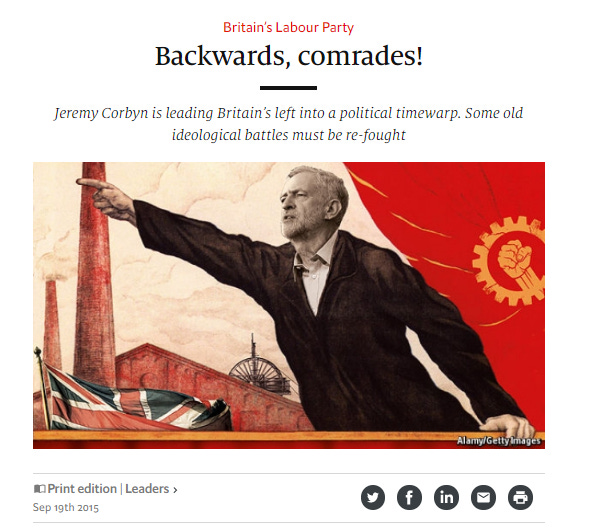
This newspaper has never had any interest in ‘inequality’. Look at this depiction of Jeremy Corbyn, the foremost political reformer in British politics. Who attacked the very ‘inequality’ of both New Labour and the Tories, that Beddoes finds so compelling. This is pure political pose!

https://www.economist.com/leaders/2015/09/19/backwards-comrades

A selection of quotations from the Beddoes essay is instructive, of the level of political posturing, wedded to an unslakable hypocrisy-the very life-blood of this newspaper! As Beddoes moves from imperative to imperative, as she describes it, I will try to be brief and make some choices that will incite criticism:

On Globalization:

Although globalisation will still be about goods and capital crossing borders, people will travel less. The Asian countries that controlled the virus most effectively were also those that shut their borders most strictly. Their experience will shape others’ policies. Border restrictions and quarantines will stay in place long after covid-19 caseloads fall. And even after tourism restarts, migration will remain much harder. That will dent the prospects of poor countries that rely on flows of remittances from their migrant workers abroad, reinforcing the damage done by the pandemic itself. Some 150m people are likely to fall into extreme poverty by the end of 2021.

Global commerce will be conducted against an inauspicious geopolitical backdrop. Mr Trump’s mercurial mercantilism will be gone, but America’s suspicion of China will not end with the departure of “Tariff Man”, as the president was proud to be known. Tariffs, now levied on two-thirds of imports from China, will remain, as will restrictions on its technology companies. The splintering of the digital world and its supply chain into two parts, one Chinese-dominated and the other American-led, will continue. Sino-American rivalry will not be the only fissiparous influence on globalisation. Chastened by their reliance on imported medical supplies and other critical goods (often from China), governments from Europe to India will redefine the scope of “strategic industries” that must be protected. State aid to support this new industrial policy has become and will remain ubiquitous.

https://www.economist.com/the-world-ahead/2020/11/17/after-the-crisis-opportunity

On China:

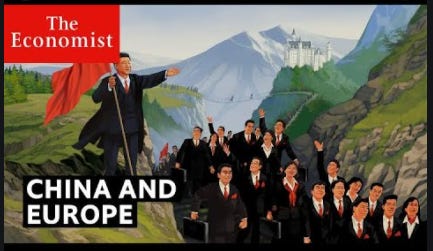
https://www.economist.com/briefing/2018/10/04/chinese-investment-and-influence-in-europe-is-growing

With the West battered and China crowing, plenty of pundits (including in this publication) will declare the pandemic to be the death knell for a Western-led world order. That will prove premature. For all its “vaccine diplomacy”, China inspires fear and suspicion more than admiration. And for all his determination to bring China centre-stage, its president, Xi Jinping, shows little appetite for genuine global leadership. Although Mr Trump’s contempt for allies and forays into transactional diplomacy have shaken trust in the American-led global order, they have not destroyed it.

On Biden, as the political antidote to a ‘dangerous Leftism’ = Left-Wing Social Democrats. Medicare for all is not an integral part of ‘Bidenomics’ (Call this neologism what it is a dull-witted placeholder for actual argument)

But he could be just the right person. Mr Biden’s policy platform is ambitious enough. Behind the slogan of “build back better” is a bold, but not radical, attempt to marry short-term stimulus with hefty investment in green infrastructure, research and technology to dramatically accelerate America’s energy transformation. From expanding health-care access to improving social insurance, the social contract proposed by Bidenomics is a 21st-century version of the Progressive era: bold reform without dangerous leftism.

This selective quotation, from the final paragraph of Beddoes’ essay is less that enthusiastic about Biden, that descends into demotic moralizing.

… Mr Biden himself is too focused on repairing yesterday’s world rather than building tomorrow’s, and too keen to protect existing jobs and prop up ossified multilateral institutions to push for the kind of change that is needed. The biggest danger is not the leftist lurch that many Republicans fear—it is of inaction, timidity and stasis. For America and the world, that would be a terrible shame.

https://www.economist.com/the-world-ahead/2020/11/17/after-the-crisis-opportunity

Beddoes is like so many self-appointed political technocrats ,obsessed with ‘policy’, rather than what effect those policies have on human lives. Its ‘as if’ these technos are in a laboratory, rather than the unpredictable, and utterly ungovernable human world. This was called ‘Social Engineering’, in the days of the Soviets, but not a subject that the once ascendet Neo-Liberals, and their fellow travelers, would dare to broach about their own Utopianism, now in a state of ungovernable collapse.

Old Socialist

Posted in Uncategorized | Leave a comment

Re-posting my November 20, 2020 essay on Zanny Minton Beddoes! She even surpasses the political mendacity of the long gone Wooldridge & Micklethwait!

Old Socialist.

stephenkmacksd.com/'s avatar

stephenkmacksd.com/

Jun 11, 2025

Old Socialist scoffs at Zanny Minton Beddoes’ collection of self-serving political cliches, in almost praise of a Joe Biden presidency.

Posted on November 20, 2020 by stephenkmacksd

Should any reader be surprised that Beddoes is an Oxbridger? It’s an Economist Tradition. Note this from the Economist:

Ms. Minton Beddoes joined The Economist in 1994 after spending two years as an economist at the International Monetary Fund (IMF), where she worked on macroeconomic adjustment programmes in Africa and the transition economies of Eastern Europe. Before joining the IMF, she worked as an adviser to the Minister of Finance in Poland, as part of a small group headed by Professor Jeffrey Sachs of Harvard University.

Wikipedia supplies more detailed information on Beddoes IMF responsibilities:

After graduation, she was recruited as an adviser to the Minister of Finance in Poland, in 1992,[3] as part of a small group headed by Professor Jeffrey Sachs of Harvard. She then spent two years as an economist at the International Monetary Fund (IMF), where she worked on macroeconomic adjustment programmes in Africa and the transition economies of Central and Eastern Europe.

https://en.wikipedia.org/wiki/Zanny_Minton_Beddoes

Beddoes is member, in very good standing, of the Economic Elite, that is only reinforced by her service with the IMF. She worked with the ‘Shock Therapy’ obsessed Prof. Sachs, who now denies his toxic prescriptions, for implementing those destructive policies across Eastern Europe. See ‘Europe Since 1989: A History’ by Philipp Ther for a telling history of Sach’s destructive ideological fixsation.

Chapter 4: Getting on the Neoliberal Bandwagon

Chapter 5: Second-Wave Neoliberalism

Beddoes being the first women to be the Editor of the Economist. She is a long time employee of the newspaper since 1994. Her ideological conformity is a proven political quantity. Reading the opening paragraph of her essay demonstrates that fact.

Some years loom large in history. Usually it is the end of a war or the onset of a revolution that punctuates the shift from one chapter to another. 2020 will be an exception. The defeat of Donald Trump marked the end of one of the most divisive and damaging presidencies in American history. A once-in-a-century pandemic has created the opportunity for an economic and social reset as dramatic as that of the Progressive era. The big question for 2021 is whether politicians are bold enough to grasp it.

Call this restrained political melodrama. She has been schooled, by that Economist team of Micklethwait & Wooldridge, that team of Economist Writers, who have proven to be the best re-write men in Journalism. Taking their shorter Economist articles and fleshing them out, into those best selling 400 page paperbacks.

Next:

Covid-19 has not just pummelled the global economy. It has changed the trajectory of the three big forces that are shaping the modern world. Globalisation has been truncated. The digital revolution has been radically accelerated. And the geopolitical rivalry between America and China has intensified.

Then comes this astounding sentence, ever uttered by any editor of this reactionary newspaper:

At the same time, the pandemic has worsened one of today’s great scourges: inequality.

One of the most enlightening aspects of reading ‘Liberalism at Large: The World According to the Economist’ by Alexander Zevin is that a self-serving political/moral hypocrisy is the very sine qua non of this newspaper. So Beddoes mention of inequality brings to mind:

From May 5th 2014

By R.A.

Headline: Thomas Piketty’s “Capital”, summarised in four paragraphs

Sub-headline: A very brief summary of “Capital in the Twenty-First Century”

It is the economics book that took the world by storm. Capital in the Twenty-First Century, written by the French economist Thomas Piketty, was published in French in 2013 and in English in March 2014. The English version quickly became an unlikely bestseller, and it prompted a broad and energetic debate on the book’s subject: the outlook for global inequality. Some reckon it heralds or may itself cause a pronounced shift in the focus of economic policy, toward distributional questions. The Economist hailed Professor Piketty as “the modern Marx” (Karl, that is). But what is his book all about?

https://www.economist.com/the-economist-explains/2014/05/04/thomas-pikettys-capital-summarised-in-four-paragraphs

And this:

May 3,2014

Headline: A modern Marx

Sub-headline: Thomas Piketty’s blockbuster book is a great piece of scholarship, but a poor guide to policy

WHEN the first volume of Karl Marx’s “Das Kapital” was published in 1867, it took five years to sell 1,000 copies in its original German. It was not translated into English for two decades, and this newspaper did not see fit to mention it until 1907. By comparison, Thomas Piketty’s “Capital in the Twenty-First Century” is an overnight sensation. Originally published in French (when we first reviewed it), Mr Piketty’s vast tome on income-and-wealth distribution has become a bestseller since the English translation appeared in March. In America it is the top-selling book on Amazon, fiction included.

The book’s success has a lot to do with being about the right subject at the right time. Inequality has suddenly become a fevered topic, especially in America. Having for years dismissed the gaps between the haves and have-nots as a European obsession, Americans, stung by the excesses of Wall Street, are suddenly talking about the rich and redistribution. Hence the attraction of a book which argues that growing wealth concentration is inherent to capitalism and recommends a global tax on wealth as the progressive solution.

https://www.economist.com/leaders/2014/05/03/a-modern-marx

To be fair R.A. published a revelatory set of essays on Piketty’s book. The first essay in this valuable set of commentaries on ‘Capital’.

LAST year Thomas Piketty, an economist at the Paris School of Economics and a renowned expert on global inequality, published a book titled “Capital in the Twenty-first Century”—in French. It will be released in English on March 10th. We reviewed the book earlier this year, but it is detailed and important enough, in our opinion, to deserve additional discussion. We will therefore be publishing a series of posts over the next few weeks—live-blogging the book, as it were—to draw out its arguments at slightly greater length. Starting today, with the book’s introduction.

Capital, as I will refer to Mr Piketty’s book from here on out, is an incredibly ambitious book. The author has self-consciously put the book forward as a companion to, and perhaps the intellectual equal of, Karl Marx’s Capital. Like Marx, Mr Piketty aims to provide a political economy theory of everything. More specifically, he attempts to re-establish distribution as the central issue in economics, and in doing so to reorient our perceptions of the trajectory of growth in the modern economic era. Mr Piketty’s great advantage in attempting all this, relative to past peers, is a wealth of data and analysis, compiled by himself and others over the last 15 or so years.

http://www.economist.com/blogs/freeexchange/2014/02/book-clubs

This newspaper has never had any interest in ‘inequality’. Look at this depiction of Jeremy Corbyn, the foremost political reformer in British politics. Who attacked the very ‘inequality’ of both New Labour and the Tories, that Beddoes finds so compelling. This is pure political pose!

https://www.economist.com/leaders/2015/09/19/backwards-comrades

A selection of quotations from the Beddoes essay is instructive, of the level of political posturing, wedded to an unslakable hypocrisy-the very life-blood of this newspaper! As Beddoes moves from imperative to imperative, as she describes it, I will try to be brief and make some choices that will incite criticism:

On Globalization:

Although globalisation will still be about goods and capital crossing borders, people will travel less. The Asian countries that controlled the virus most effectively were also those that shut their borders most strictly. Their experience will shape others’ policies. Border restrictions and quarantines will stay in place long after covid-19 caseloads fall. And even after tourism restarts, migration will remain much harder. That will dent the prospects of poor countries that rely on flows of remittances from their migrant workers abroad, reinforcing the damage done by the pandemic itself. Some 150m people are likely to fall into extreme poverty by the end of 2021.

Global commerce will be conducted against an inauspicious geopolitical backdrop. Mr Trump’s mercurial mercantilism will be gone, but America’s suspicion of China will not end with the departure of “Tariff Man”, as the president was proud to be known. Tariffs, now levied on two-thirds of imports from China, will remain, as will restrictions on its technology companies. The splintering of the digital world and its supply chain into two parts, one Chinese-dominated and the other American-led, will continue. Sino-American rivalry will not be the only fissiparous influence on globalisation. Chastened by their reliance on imported medical supplies and other critical goods (often from China), governments from Europe to India will redefine the scope of “strategic industries” that must be protected. State aid to support this new industrial policy has become and will remain ubiquitous.

https://www.economist.com/the-world-ahead/2020/11/17/after-the-crisis-opportunity

On China:

https://www.economist.com/briefing/2018/10/04/chinese-investment-and-influence-in-europe-is-growing

With the West battered and China crowing, plenty of pundits (including in this publication) will declare the pandemic to be the death knell for a Western-led world order. That will prove premature. For all its “vaccine diplomacy”, China inspires fear and suspicion more than admiration. And for all his determination to bring China centre-stage, its president, Xi Jinping, shows little appetite for genuine global leadership. Although Mr Trump’s contempt for allies and forays into transactional diplomacy have shaken trust in the American-led global order, they have not destroyed it.

On Biden, as the political antidote to a ‘dangerous Leftism’ = Left-Wing Social Democrats. Medicare for all is not an integral part of ‘Bidenomics’ (Call this neologism what it is a dull-witted placeholder for actual argument)

But he could be just the right person. Mr Biden’s policy platform is ambitious enough. Behind the slogan of “build back better” is a bold, but not radical, attempt to marry short-term stimulus with hefty investment in green infrastructure, research and technology to dramatically accelerate America’s energy transformation. From expanding health-care access to improving social insurance, the social contract proposed by Bidenomics is a 21st-century version of the Progressive era: bold reform without dangerous leftism.

This selective quotation, from the final paragraph of Beddoes’ essay is less that enthusiastic about Biden, that descends into demotic moralizing.

… Mr Biden himself is too focused on repairing yesterday’s world rather than building tomorrow’s, and too keen to protect existing jobs and prop up ossified multilateral institutions to push for the kind of change that is needed. The biggest danger is not the leftist lurch that many Republicans fear—it is of inaction, timidity and stasis. For America and the world, that would be a terrible shame.

https://www.economist.com/the-world-ahead/2020/11/17/after-the-crisis-opportunity

Beddoes is like so many self-appointed political technocrats ,obsessed with ‘policy’, rather than what effect those policies have on human lives. Its ‘as if’ these technos are in a laboratory, rather than the unpredictable, and utterly ungovernable human world. This was called ‘Social Engineering’, in the days of the Soviets, but not a subject that the once ascendet Neo-Liberals, and their fellow travelers, would dare to broach about their own Utopianism, now in a state of ungovernable collapse.

Old Socialist

Posted in Uncategorized | Leave a comment

Under the self-congratulatory rubric of Great Minds Think Alike? The Economist of 2024, in two iterations & Robert Colvile of Saturday June 07, 2025.

Political Observer

stephenkmacksd.com/'s avatar

stephenkmacksd.com/

Jun 08, 2025

Headline: The divide in tomorrow’s Britain: power women and powerless men

Sub-headline: Young women in the UK are now, for the first time, more likely to be in education, employment or training

If you’re losing the game, change the rules. It’s a strategy my six-year-old swears by. But it’s also Labour’s plan for the next election. Sir Keir Starmer recently confirmed that the party remains committed to lowering the voting age to 16 — a manifesto pledge that was expected to add hundreds of thousands of voters to the Labour tally (which is of course why it was in the manifesto in the first place).

At the last election, Labour won a stonking 42 per cent of the youth vote: next were the Lib Dems, all the way down on 18. But since then something weird has happened. The latest polling by More in Common has Labour on 30 per cent among 18 to 24-year-olds — still in the lead, but only just ahead of the Greens on 27 per cent. Reform, meanwhile, are on 22 per cent. In other words, a full half of the youth vote is now going to the populist parties of left and right. Which probably isn’t what those manifesto writers had in mind.

In many ways, this isn’t much of a surprise. As I’ve pointed out before, age is now the key fault line in British politics: the Tories, in particular, are so reliant on the grey vote that their supporters’ average age, as the US pollster Frank Luntz puts it, is “deceased”.

At the last election, twice as many young women as men voted Green, and twice as many young men as women voted Reform. The John Smith Centre has found that young women are far more likely to cite the NHS as a key political issue; young men are focused on crime and immigration.
Again, this is a pattern replicated internationally. The journalist John Burn-Murdoch recently pointed out the astonishing gender divide in the South Korean election. Among young men, the left-right split was 24-74. Among young women, it was 58-36. And as he says, you can see a similar (though less dramatic) tendency in countries across the West — including the UK.

The traditional explanation for this is that young men have been captured by the “manosphere” — a generation sitting alone in their basements, in thrall to steroidal podcasters like Joe Rogan and Andrew Tate. But again, there’s also an economic explanation.

https://www.thetimes.com/comment/columnists/article/the-divide-in-tomorrows-britain-power-women-and-powerless-men-358zd5lnd


Editor: Look at the approach of The Economist to the territory that Mr. Colevile attempts to diagnose? Consider that the political/sexual/career asperations of men and women are central to The Economist, and Mr. Colevile interventions. In sum ‘The Battle of The Sexes’ is reinvigerated as The West sinks deeper into its collapse, as Russia, China, Iran and BRICS define what the future might be …

In a trendy food market in Warsaw, Poland’s capital, two female engineers are discussing how hard it is to meet a nice, enlightened man. Paulina Nasilowska got a big pay rise a few years ago. Her boyfriend asked: “Did you have an affair with your boss?” He is now an ex-boyfriend.

Ms Nasilowska’s friend, Joanna Walczak, recalls a man she met on Tinder who revealed that he was a “red-pill” guy (a reference to “The Matrix”, a film, meaning someone who sees reality clearly. In the “manosphere”, a global online community of angry men, it means realising that men are oppressed.) He thought household chores and child care were women’s work, and that women could not be leaders. They didn’t have a second date.

Typically for young Polish women, Ms Nasilowska and Ms Walczak support parties of the liberal left, which take women’s issues seriously and promise to legalise abortion. Young Polish men, they complain, hew more to the right, or even to the far right. Consider last year’s election. Then the top choice for 18- to 29-year-old men was Confederation, a party that touts free-market economics and traditional social values. (“Against feminists. In defence of real women” is one of its slogans.) Some 26% of young men backed it; only 6% of their female peers did.

Young Polish men have their own set of complaints. Feminism has gone too far, say two firemen in their 20s in a small town. Lukasz says he used to be able to go to a village dance party and “the women there were wife material.” Nowadays “they’re all posting shameless pictures of themselves on social media,” he laments. The media are “all biased and pushing the culture to the left”, complains Mateusz (neither man would give a surname). People no longer admit that men and women often want to do different kinds of work.

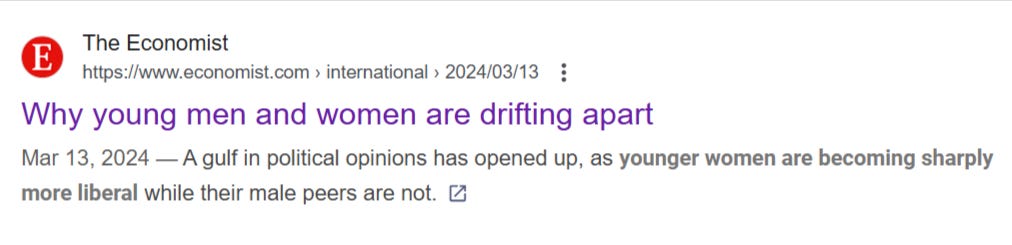
In much of the developed world, the attitudes of young men and women are polarising. The Economist analysed polling data from 20 rich countries, using the European Social Survey, America’s General Social Survey and the Korean Social Survey. Two decades ago there was little difference between men and women aged 18-29 on a self-reported scale of 1-10 from very liberal to very conservative. But our analysis found that by 2020 the gap was 0.75 (see chart 1 ). For context, this is roughly twice the size of the gap in opinion between people with and without a degree in the same year.

https://www.economist.com/international/2024/03/13/why-the-growing-gulf-between-young-men-and-women


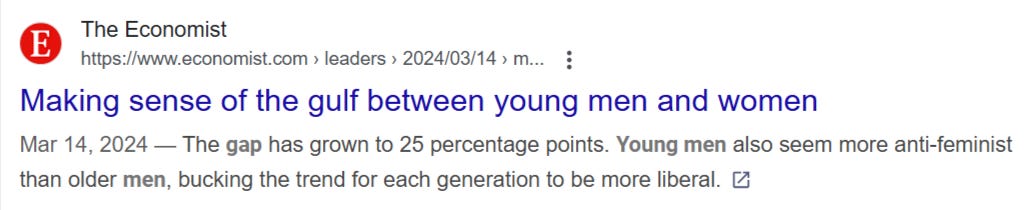
Men and women have different experiences, so you would expect them to have different worldviews. Nonetheless, the growing gulf between young men and women in developed countries is striking. Polling data from 20 such countries shows that, whereas two decades ago there was little difference between the share of men and women aged 18-29 who described themselves as liberal rather than conservative, the gap has grown to 25 percentage points. Young men also seem more anti-feminist than older men, bucking the trend for each generation to be more liberal than its predecessor. Polls from 27 European countries found that men under 30 were more likely than those over 65 to agree that “advancing women’s and girls’ rights has gone too far because it threatens men’s and boys’ opportunities”. Similar results can be found in Britain, South Korea and China. Young women were likely to believe the opposite.

Unpicking what is going on is not simple. A good place to start is to note that young women are soaring ahead of their male peers academically. In the European Union fully 46% of them earn degrees, versus 35% of young men, a gap that has doubled since 2002. One consequence is that young women are more likely than men to spend their early adulthood in a cocoon of campus liberalism. Meanwhile, boys outnumber girls at the bottom end of the scholastic scale. Across rich countries, 28% of them fail to learn to read to a basic level. That is true of only 18% of girls.

Another big change is that, to varying degrees across the developed world, immense progress has been made in reducing the barriers to women having successful careers. College-educated men are still thriving, too—often as one half of a double-high-income heterosexual couple. Many men welcome these advances and argue for more. However, those among their less-educated brothers who are struggling in the workplace and the dating market are more likely to be resentful, and to blame women for their loss of relative status. And young women, by and large, are glad of past progress but are keenly aware that real threats and unfairness remain, from male violence to the difficulty of juggling careers and children. In short, most young women and worryingly large numbers of young men complain that society is biased against their own sex.

Young women tend to vote for parties of the liberal left. Angry young men, sometimes dismissed as toxically masculine by those parties, are being shrewdly wooed by politicians from the right and the far right. In South Korea their support helped an overtly anti-feminist president win power. In America polls are muddy but some pollsters think young men are souring on the Democrats. In Europe, where many countries offer a kaleidoscope of political choices, young male votes have helped fuel the rise of reactionary outfits such as the AfD in Germany, Confederation in Poland and Chega, which surged at Portugal’s election on March 10th.

Editor: Alice Weidel is currently serving as the co-chairwoman of the Alternative for Germany (AfD) party.


Editor: The final paragraph of this Economist essay ‘Increasing the supply of educated and (one hopes) less angry men would be good for the women who must share the same world’

There is no easy solution to any of this. But clearly, more should be done to help boys lagging behind at school to do better. Some policies that might work without harming their female classmates include hiring more male teachers (who are exceptionally scarce at primary schools in rich countries), and allowing boys to start school a year later than girls, to reflect the fact that they mature later. Better vocational training could encourage young men to consider jobs they have traditionally shunned, from nursing to administration. Schooling boys better would not only help boys. Increasing the supply of educated and (one hopes) less angry men would be good for the women who must share the same world. ■

https://www.economist.com/leaders/2024/03/14/making-sense-of-the-gulf-between-young-men-and-women

PoliticaL Observer.

Posted in Uncategorized | Leave a comment