Books of Interest:Prague Palimpsest: Writing, Memory, and the City, Thomas

“Prague Palimpsest is one of the most intriguing and exciting books written about this ancient cosmopolitan city. Based on prodigious research, Thomas offers a complex close reading of the main figures and topics of Prague’s cultural and literary history. He begins with the foundational legends of the fascinating Libuše corpus before moving on to Kafka and his contemporaneous foreign visitors to Prague, like Apollinaire; he then considers the dramatic rupture of the Holocaust and the post-Shoah palimpsestic reelaborations in the works of Bachmann, Celan, and Sebald before concluding with an outlook on postmodern Czech authors. In doing so the book sets new and attractive standards of intertextual research and dialogical comparative cultural expeditions, inviting us to revisit Prague and at the same time to rediscover lost splinters of our own past or identity.”—Primus-Heinz Kucher, University of Klagenfurt, Austria
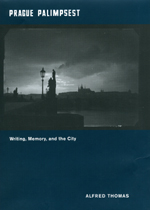
[shorter version]
Prague Palimpsest is one of the most intriguing and exciting books written about this ancient cosmopolitan city. Alfred Thomas invites us to revisit Prague and at the same time to rediscover lost splinters of our own past or identity.”—Primus-Heinz Kucher, University of Klagenfurt, Austria
Posted in Uncategorized | Leave a comment

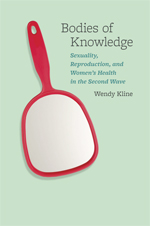
Books of Interest:Bodies of Knowledge: Sexuality, Reproduction, and Women’s Health in the Second Wave, Kline

Wendy Kline

200 pages | 10 halftones | 6 x 9 | © 2010

Throughout the 1970s and ’80s, women argued that unless they gained access to information about their own bodies, there would be no equality. In Bodies of Knowledge, Wendy Kline considers the ways in which ordinary women worked to position the female body at the center of women’s liberation. Continue reading

Posted in Uncategorized | Leave a comment

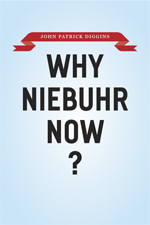
Books of Interest: Why Niebuhr Now?, Diggins

Barack Obama has called him “one of my favorite philosophers.” John McCain wrote that he is “a paragon of clarity about the costs of a good war.” Andrew Sullivan has said, “We need Niebuhr now more than ever.” For a theologian who died in 1971, Reinhold Niebuhr is maintaining a remarkably high profile in the twenty-first century. Continue reading

Posted in Uncategorized | Leave a comment

The Good Doctor and The Arab Spring: The Conservative Thinkers, Episode XX of The American Political Melodrama

http://www.washingtonpost.com/wp-dyn/content/article/2011/03/03/AR2011030304239.html


The rhetorical frame of The Good Doctor’s (TGD) latest essay is unsurprisingly self congratulatory: could this be just another example of the self-obsession, even the blatant narcissism, of the Neo-Conservative thinker, in situ? Or might we just settle for the adolescent braggadocio of the schoolyard bully? These two questions can be considered as open. The question of the comparison of the ‘Mideast Spring’ and the Bush Doctrine of pre-emptive invasion, conquest and eventual stalemate is the TGD’s argument. Are they similar in any way? Can an indigenous, self propelled, revolutionary groundswell be compared to an invading army of the world’s super-power? Is this not the stuff of the post-war American comic book hero, of a puerile, self- serving political/theological imagination? It is hard to be patient with TGD, he engages in an intellectually dishonest, bogus comparitivism of the evil of Hussein and Gaddafi: to what end but the moral justification of the Bush Doctrine, as necessary, as indispensable, as an historical inevitability, leading to a moral clarity: an antidote to the ‘moral inversion’, that resides in this country’s major political actors, Obama and Clinton: a  Thinking mired in a free-floating, unresolved, irresolute state, in this crisis, of this historical/political moment. We then could argue that the ‘inversion’ that is taking place is a moral/political ‘inversion’ as argued by TGD as a cover, even a moral justification, for he first posits this as a moral problem, for the Bush Doctrine ex post facto: ‘Everyone is a convert to Bush’s freedom agenda’. Picking through this set of arguments in its convoluted conjectures and self-justifications leaves one in awe of the power of the stories that one can invent, and the twists that one’s reason can make in the pantomimes of good faith. 


Posted in Uncategorized | Leave a comment

Pretty Boy Reactionary,The Arab Spring and the Promise of Neo-Colonialism: Episode 1491 of the American Political Melodrama

http://www.newsweek.com/2011/02/27/un-american-revolutions.html

Pretty Boy Reactionary (PBR) sounds a solemn warning to Americans to give up their self-destructive romantic attachment to Revolution and Revolutionaries as nihilistic, even puerile: for Revolutionary fervor can lead to disastrous consequences: internecine war and the mass murder of partisans. Are we immune to the suffering of others no matter the cause? Is Emmanuel Levinas correct in founding an ethics on our recognition of human suffering as a reason for our action toward melioration?

The ‘Arab hordes’ are seemingly leaderless, now, but waiting just outside our view of the proscenium of History are the next Robespierre, Stalin or Mao! As the world’s moral and political arbiter can we allow this drift into mass murder?  Is this historical/political stance credible and at the same moment deeply troubling? Yes! But can we see quite clearly that as a Conservative Thinker PBR uses this political opportunity to criticize President Obama for a lack of prescience, a maladroit response to events, as they unfolded.  Although it could be argued that the uncertainties that the concatenations of the workings of History might led to the creation of imponderables, unknowns. Political generosity is not one of the characteristics that PBR ever expresses and the mention of the surmised or stated strategies of John McCain makes the political nature of PBR’s column absolutely unmistakable, although it was never in doubt. The large rhetorical frame of the lessons of a blood soaked History is in this case merely a garnish to the real business of politicking. Where to look for some kind of answer? The sage Andrew J. Bacevich in the same February 27, 2011 issue of Newsweek (The U.S. Must Resist the Urge to Meddle in the Mideast) offers an alternative view of necessary policy toward the  ‘Arab Spring’  and the challenges to American Interests that that indigenous, self propelled , imponderable Historical event offers to the thinkers , strategists and even partisan thinkers like PBR. Here is the second paragraph of Mr. Bacevich’s essay as illustrative of his thinking; one should pay particular attention to the very pointed criticism of British Colonialism:

‘But history, too, argues for restraint. Consider what several decades of outside meddling in the Islamic world has accomplished. Out of the ruins of the Ottoman Empire after World War I came a new map of the vast region, designed not to promote the well-being of its inhabitants, but to satisfy European (chiefly British) interests. The Allies drew boundaries, created nation-states, and installed monarchs to ensure Western access to oil and control of the Suez Canal.’

Does PBR provide any real answers to the vital questions of this historical moment? He offers more Conservative Scholarship as indicative of what is misleading in his political/historical analysis that is fully linked to the notion of a beneficent neo-colonialism, as fulfilling the paternalism at the root of his radical political nostalgia.

Here is the link to Mr. Bacevich’s commentary:

http://www.newsweek.com/2011/02/27/strategy-sit-on-your-hands.html

Posted in Uncategorized | Leave a comment

Cockeyed Platonist and The Clash of Civilizations, Redux

http://www.nytimes.com/2011/03/04/opinion/04brooks.html

If one really makes an effort to discover first rate critiques of the neo-imperialism of Mr. Samuel P. Huntington’s ‘Clash of Civilizations’, the wise reader might opt for such thinkers as Edward Said and his devastating ‘Clash of Definitions’ in his essay collection ‘Reflections on Exile and Other Essays’. Or one might read Amaryta Sen whose ‘ Identity and Violence: The Illusion of Destiny’ is ­­­­­­­­­­­­ the most through going dissection of Mr. Huntington’s arguments, yet to date.  Even if one favors a more ‘mainstream approach,’ the useful volume   ‘The Clash of Civilizations? The Debate (  A Foreign Affairs Reader) would be a much preferred starting point.  It might be argued that Cockeyed Platonist (CP) is not the best thinker to evaluate Mr. Huntington’s neo-imperialism, masquerading as highbrow comparative cultural criticism: although both Huntington and CP love the great overarching  abstraction, as a key element  in their forms of argument.  While CP genuflects to the work and memory of the ‘great’ Huntington, his criticism lacks the depth, strength and political honesty displayed by both Said and Sen. The question might be asked as: How can a document that led the way for misguided policies and policy makers, be quoted as a document containing anything resembling wisdom and or as a guide to any reasonable political action, predicated on reliable data? This question and many others remain unanswered.     

Posted in Uncategorized | Leave a comment

The Oil and Gas Industry’s 800-Pound Gorilla: RADIATION

The Oil and Gas Industry’s 800-Pound Gorilla: RADIATION

  • March 1, 2011 8:08 am

An odd sort of perfect storm – involving a high-profile New York Times energy series, a quirky documentary that just missed the Oscar and federal BP-spill recovery plans – may finally address the 800-pound gorilla of our nation’s energy policy: RADIATION. Continue reading

Posted in Uncategorized | Leave a comment

Throttled by Compliance | Hoover Institution

Posted in Uncategorized | Leave a comment

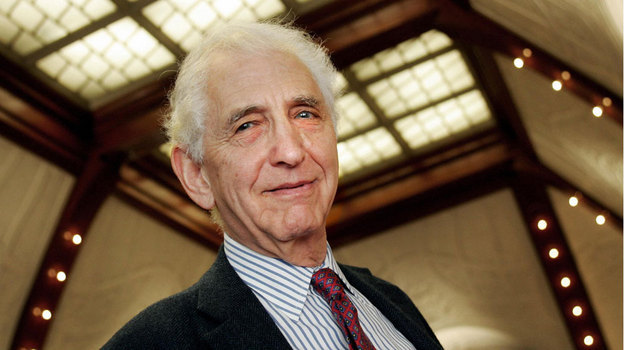
Movie Review – ‘The Most Dangerous Man in America: Daniel Ellsberg And The Pentagon Papers’ : NPR

Media_httpmedianprorg_ddvzi

Posted in Uncategorized | Leave a comment

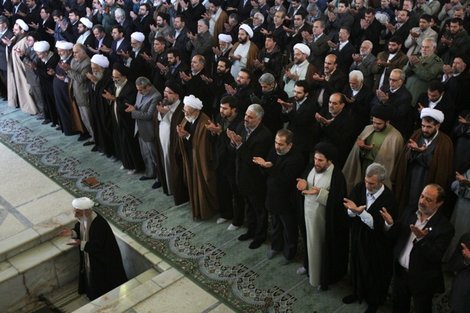
Iran’s State of Fear by Haleh Esfandiari | NYRBlog | The New York Review of Books

Posted in Uncategorized | Leave a comment