A Tribute to Rehnquist The Liar : Thank you @JohnWDean !

http://www.nytimes.com/2012/03/20/us/new-look-at-an-old-memo-casts-more-doubt…

‘For starters, of course, Justice Jackson joined the unanimous opinion in Brown in 1954. And Justice Jackson’s secretary, Elsie Douglas, told John P. MacKenzie of The Washington Post in 1971 that Mr. Rehnquist had “smeared the reputation of a great justice.” ‘

“The fact that a justice and a chief justice lied in order to advance himself,” Mr. Prettyman said, referring to Chief Justice Rehnquist in his confirmation hearings, “the fact that he thought the way he did about Brown — which was that it would be a national disgrace — those facts alone justify an exploration of what happened.”

http://bclawreview.org/review/53_2/05_snyder_barrett/

Political Observer

Posted in Uncategorized | Leave a comment

At Chez Brooks, again by Almost Marx

What do David Brooks, The American Enterprise Institute, and the world’s population demographics have in common? That and other questions are elucidated in Mr. Brooks essay of March 12, 2012 titled The Fertility Implosion , be forewarned, his mood is Delphic. The declining birthrates of Arabs is Mr. Brooks starting point, assisted by a study published by The American Enterprise Institute. This is just the beginning of an essay whose point seems somewhat ambiguous, but delivered in his usual breathless, overwrought style. Perhaps the point of this mysterious exercise is that what the new world is becoming is a competition between Chinese slave state Capitalism and enlightened American Capital? The thinning Arab horde being just a garnish, an addition to the usual Conservative décor : a companion idea to the ever evolving Western notion of The Yellow Peril and all it’s intellectual permutations and iterations. I could be mistaken! Both Mr. Brooks and The American Enterprise Institute fervently believe that the blessings of Capital must and should be brought to the whole world, in its Free Market expression. A higher birth rate is to be encouraged, even demanded, so as to produce the workers and consumers that Capital must have to do it’s evangelical work. The simplistic differentiation between growth and development and the notion that the economy is the servant of human aspiration, rather than it’s master, are ideas that escapes the intellectual attention of both Mr. Brooks and The American Enterprise Institute. For an alternative view of the the role of Economics in a more holistic context read this enlightening Wikipedia entry:

http://en.wikipedia.org/wiki/Ecological_economics

Almost Marx


Posted in Uncategorized | Leave a comment

Some Thoughts on Wittgenstein in Exile by American Litterateur

Wittgensteininexile

http://mitpress.mit.edu/catalog/item/default.asp?ttype=2&tid=12582


What is curious in Mr. James Klagge’s book Wittgenstein in Exile is that he explores very thoroughly the notion of exile as the master idea in the life of Ludwig Wittgenstein, but he leaves utterly and inexplicably unexplored the fact that Mr. Wittgenstein lived in the existential, internal exile of the closet. That Wittgenstein was ‘homosexual’ and I use that term in quotation marks as gay is a product of late 20th Century thinking, as an indicative not pejorative descriptor. Mr. Ray Monk’s revelatory biography makes completely clear Wittgenstein’s sexual orientation and documents his emotional perversity that could be traced back to the traps of the closet. As Philipp Blom makes clear in his book The Vertigo Years Europe, 1900-1914 pages 176 through 179 homophobia was rampant throughout Europe, at the turn of the century. Wittgenstein was born in Austro-Hungarian empire in 1889, the Oscar Wilde trial commenced in 1895 , Mr. Blom’s history tells the stories of Archduke Ludwig Victor, Fritz Krupp, Eulenburg, General Dietrich Hülsen-Haeseler, Alfred Redl and Roger Casement. The environment for ‘uranists’ i.e. homosexuals was punitive in the extreme, so the closet was an act of self-preservation, but a deforming act nonetheless. What I can say with a feeling of confidence is that Mr. Klagge may be an accomplished writer on philosophical subjects but he proves in Wittgenstein in Exile that he has an absolute ignorance of the existential position of a particular closeted homosexual , Ludwig Wittgenstein. Mr. Klagge’s book is indeed a well written, informative and rewarding reading experience and as far as it goes a highly credible, careful account of the life and thought of Wittgenstein , but it is limited, proscribed by Mr. Klagge’s ignorance, cultivated or actual.

American Litterateur


Posted in Uncategorized | 1 Comment

The well connected Mr. Gelb gives cynicism a bad name by Myra Breckenridge

I know that you, like me, never miss the opportunity to read,even on the sly,The Daily Beast. My friend Tina Brown has rescued more failures than Abe Burrows (look it up on Wikipedia), or at the least she valiantly tried. But the 'Beast' is her baby and she has made some shrewd choices in her stable of writers, Leslie Gelb is one such writer, a man with the credentials to make his opinionating stick, as they used to say several generations ago. And the White House connections that also make his opinionating pretty credible. His latest piece is titled 'Why Obama Won't Speed U.S. Troop Withdrawal in Afghanistan' and when it comes to exercising political cynicism Mr. Gelb doesn't have an equal, The Bundy brothers, Wolfowitz, Perle or Condoleezza Rice don't quite match the Gelb iteration of that old reliable political standby. The narrative according to Gelb is that President Obama is too politically savvy to end the war in Afghanistan in an election year and face a Republican attack on his 'National Security Policy' i.e. the toned downed 'War on Terror'. President Obama has been very good at positioning himself as tough in the area of Foreign Policy, the killing of bin Laden, of al-Awlaki and the seemingly endless number of drone attacks and the NDAA legislation, which establishes, in the public mind, his 'resolve' his 'toughness'. So he will wait till 2014 to really start to end this catastrophie in Afghanistan. Could one say, in a singular moment of candor, that great political leadership is informed by wise politics and the exercise of a shared public morality? Or would that strain the bounds of political realism, as argued by Mr. Gelb? I look forward to Mr. Gelb's subsequent attempts to answer such questions.

Sincerely yours,

Myra Breckenridge 

Posted in Uncategorized | Leave a comment

America: Moral/ Political arbiter on the uses and abuses of Atomic weapons?

http://www.nytimes.com/2012/03/18/world/middleeast/iran-intelligence-crisis-s…


The World Hegemon declares itself the moral arbiter of who can or cannot build a nuclear weapon, while the painfully obvious empirical evidence that America has been the only nation to use such weapons, escapes the notice of the current crop of apologists, for this singular act of barbarity, in the name of securing the peace. But then Americans have always been convinced of their ‘exceptional’ moral/political condition. The notion of exceptionalism, the destructive, pernicious delusion of both the powerful and the powerless, that they are somehow more than their lesser fellow creatures.

Political Cynic


Posted in Uncategorized | Leave a comment

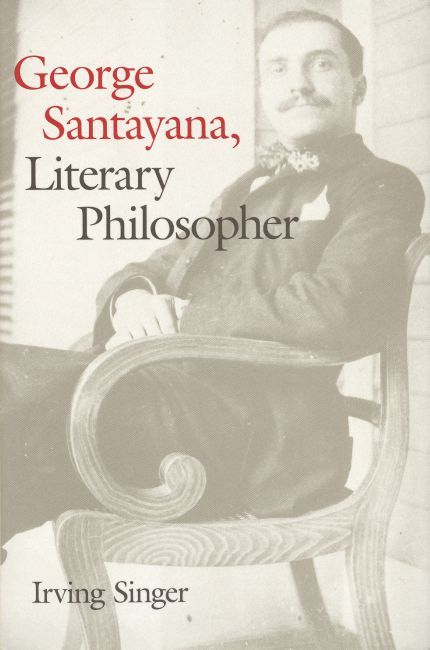
Books of Interest: George Santayana, Literary Philosopher by Irving Singer

Posted in Uncategorized | Leave a comment

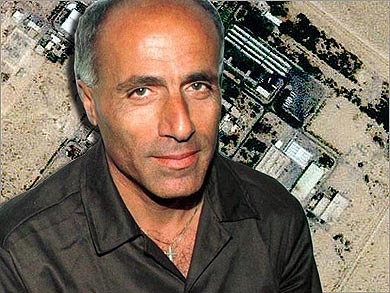
Silvia Cattori 2011 interview with Mordechai Vanunu

Posted in Uncategorized | Leave a comment

On BHL

Posted in Uncategorized | Leave a comment

David Brooks sees the future through the past by American Litterateur

I’m just reading Mr. Brooks column of March 1, 2012 titled The Machiavellian Temptation. For those who are not old enough to recall, this is a pastiche on the windy and now utterly forgotten book by Jean-François Revel titled The Totalitarian Temptation, first published in English in 1977. I still have my, now yellowed, Penguin paperback edition from 1978. I can say that I thought, at the time, that this could have been a more effective short essay, rather than a three hundred thirty page index-less polemic. In my youth I adjudged popular works of propaganda as worthy of my time, especially after Solzhenitsyn’s expulsion from the Soviet Union in 1974, Mr. Revel’s book had the character of a moral imperative. He had also produced his bestseller Without Marx or Jesus earlier in the decade.

Mr. Brooks’ title expresses a habit of using this kind of puffed up metaphor to lend his collection of capacious platonic abstractions some intellectual weight, although it rarely succeeds. His short historical sketch of American moral practice utterly cut off from it’s Christian roots simply serves to prop up the notion of ‘secularism’ as an American mainstay. This serves the purposes of propaganda, of the power of rhetoric to shape the apprehension of the zeitgeist, rather that a reflection of the American actuality. Mr. Brooks starting point is a book by his colleague at the Times Mr. Charles Duhigg, The Power of Habit. Mr. Duhigg’s book is the genesis of this episode of moralizing from Mr. Brooks. Let me selectively quote from the essay, in the interest of brevity and clarification:

“This research implies a different character model. If the 19th-century model implied a moralistic captain steering the ship of the soul, the new character model implies a crafty Machiavellian, deftly manipulating the neural networks inside.”

Here Mr. Brooks compares the rhetorically argued ‘captain’, the 19th-century un-moored but moral protagonist, with the ‘crafty Machiavellian’, the imbricated in evil villain of his essay, and in the history of ‘Western’ ethical/political thought , as what is actual rather than a complete caricature of our moral/ethical stance toward ourselves, as sometimes self-defeatingly perverse, as divided beings capable of destructive and self-destructive behavior. Do we ,now, in our stance towards ourselves, use the methodology of rewards and punishments to manipulate our desired behaviors? The question needs to be asked, without the weighty baggage of this self-serving moralist.

“To be an effective person, you are supposed to coolly appraise your own unconscious habits, and the habits of those under your care. You are supposed to devise oblique strategies to alter the triggers and routines. Every relationship becomes slightly manipulative, including your relationship with yourself. You’re marketing to yourself, trying to arouse certain responses by implanting certain cues.”

The next stage of the argument as presented is we must, in sum, take Capital as our model i.e. ‘marketing’ toward our self and its habits, although this is rejected as unacceptable in the next paragraph.

“This is sort of disturbing. I’d just emphasize something that peeps in and out of Duhigg’s book but that is often lost in the larger advice culture. The important habitual neural networks are not formed by mere routine, nor can they be reversed by clever triggers. They are burned in by emotion and fortified by strong yearnings, like the yearnings for admiration and righteousness.”

Are all of us ‘yearning’ for ‘admiration’ and ‘righteousness’ ? This is such highly charged language. Are some of our human aspirations less grandiose, and more attuned to our daily pragmatically oriented selves? Or are we eternally mired in this melodrama of sin and salvation as hastily constructed by the author. For a startling, yet vivid, comparison of this set of assertions by Mr. Brooks, that I have foreshortened but I don’t think essentially changed, see pages six and seven of the Introduction to the Reading of Hegel by Alexander Kojève, of the opening chapter titled In Place of an Introduction.

“As the Victorians understood (and the folks at Alcoholics Anonymous understand), if you want to change your life, don’t just look for a clever trigger. Commit to some larger global belief.”


Here Mr. Brooks tips his hand: What ‘Victorians understood’ is quite opaque, but evokes the hidebound moralizing of only a small portion of what a very particular set of Victorians might have understood, as foundational in ethical terms. Alcoholics Anonymous simply insist on a belief in a higher power not the male, jealous,murderous monster of the Abrahamic Tradition. Conservatism is defined by its apologetics and rationalizations of the abuses of male power: the exercise of male power is unequivocally right, a priori. And the intellectual gloss of science adds an indefinable frisson.

American Litterateur


Posted in Uncategorized | Leave a comment

Paul Grüninger was jailed for helping Jewish refugees enter Switzerland.

http://www.nytimes.com/2012/03/11/books/review/beautiful-souls-by-eyal-press….

Beautiful_souls_press

http://www.amazon.com/Beautiful-Souls-Breaking-Heeding-Conscience/dp/03741434…


Posted in Uncategorized | Leave a comment