Sarah Richmond in the ‘TLS’, & Jonathan Ree in ‘The New Left Review’ on: ‘A Social History of Analytic Philosophy: How Politics Has Shaped an Apolitical Philosophy’

Newspaper Reader.

stephenkmacksd.com/

Nov 30, 2025

Editor: The final paragraphs of Sarah Richmond’s review/essay:

This is rich historical material, but ill suited to Schuringa’s accusatory purposes. Whatever funding Quine and Davidson may have received as young men, the work with which they later made their names, in logic and the philosophy of language, had nothing to do with “Cold War rationality”. Arguably, it had no political dimension whatsoever. As for Davis, it was not her philosopher colleagues who evicted her; they defended her against the UCLA administration. Furthermore, although Davis’s work may not have received particular attention, much of the recent philosophical literature on academic freedom and, more widely, free speech problematizes it as a liberal ideal.

Schuringa’s account is presented as an exercise in ideological critique. It aims to be “in line with a Marxist tradition” while avoiding crude or reductive approaches. But this potentially valuable project imposes demands that Schuringa does not meet. We need to be shown how analytic philosophy is ideological; how, for example, it bolsters the status quo. I’m not sure if the information that Schuringa provides about the social background of the philosophers he discusses – Quine was “the son of a businessman who would go on to found a tyre mould company” – is meant to be relevant here, but it surely isn’t. Karl Marx and Friedrich Engels both came from bourgeois families.

As if to make his task even harder, Schuringa decides not to focus – as one might expect – on political and moral philosophy, but instead on logic, metaphysics and epistemology. Quine’s vehement dispute with Ruth Barcan Marcus about modal logic is a case in point. Their dispute turned on whether formal logic (which translates into symbolic language the structure of propositions and arguments) should or could incorporate modal concepts such as necessity and possibility. If this arcane disagreement has an ideological aspect, which is hard to believe, it needs to be exposed to the clear light of day. Schuringa appears to believe, as his subtitle hints, that apolitical philosophy is impossible. He views any apparent neutrality with suspicion, as if that necessarily amounts to reactionary political quietism. (Qui ne dit mot consent.) As for epistemology and metaphysics, which have historically steered clear of politics, recent work – much of it written by women – has introduced social and political elements into these areas. This forms part of a wider “social turn” in analytic philosophy which Schuringa notes, but nonetheless slights on the grounds that it is insufficiently radical.

In the same vein, Schuringa downplays the criticisms made by insiders. For instance, Bernard Williams, whose training was analytic, has ridiculed the approach on several occasions for its nit-picking, scientistic tendencies and neglect of history. Like Schuringa, he also roundly rejects utilitarian ethics. One might have expected all this to be music to Schuringa’s ears but he damns it with faint praise, presumably because Williams (a hero of mine) is not inspired by Marxism.

In general, Schuringa’s verdict on analytic philosophy is that it leads to a dead end. But where does he want it to lead? Many philosophical questions in the western tradition were first formulated in ancient Greece. If they remain unanswered, it may be because, since they do not seek matters of fact, they are not definitively answerable.

Analytic philosophy has attracted some fine minds, who have contributed to various areas of the discipline. Examples include John Rawls (political philosophy), Christine Korsgaard (moral philosophy), John McDowell (philosophy of mind), Dorothy Edgington (logic) and David Lewis (metaphysics). New topics, some of which were historically impossible in Plato’s time, have also emerged. This list would include the ethics of abortion and disability, posthumanism, feminist philosophy and the philosophy of AI. Writings such as these may not have solved the problems they address, but they have expanded our understanding and introduced new perspectives on them. Hardly a waste of time.


Editor: Jonathan Ree’s review of Schuringa book is more cosmopolitan in it’s outlook and approach, even when he is critical of Schuringa.

For Schuringa, analytic philosophy ‘comes into its own’ in the United States in the Cold War era, slowly developing into the ‘monolith that we now know’. The analytic philosophers were, it seems, willing to do as much as they could to make America a ‘bulwark against totalitarianism’, especially after several leftist colleagues lost their jobs following appearances before the House Un-American Activities Committee. Analytic philosophy as a whole began to show ‘close affinities’ with two better-established academic enterprises—‘marginalism in economics’ and ‘behaviourism in psychology’—emulating their project of replacing the amateurish value-driven inquiries of the past with dispassionate, specialized professional research. The government-funded rand Corporation sponsored several prominent analytic philosophers—W. V. Quine and Donald Davidson for instance—to conduct research into game theory and the mathematics of rational choice, with a view to buttressing the intellectual defences of American free-market capitalism.

This is a brave and original book, but Schuringa’s claim that it is an exercise in ‘social history’ is a little misleading. His narrative is constructed not from data about social classes, social trends or social movements, but from profiles of individual analytic philosophers—more than a hundred of them, by my count. He also speaks at one point of practising ‘psycho-social history’, but instead of exploring the inner compulsions of analytic philosophers he provides compressed summaries of their principal publications, accompanied by sketches of their public careers, focused on top jobs at elite universities. He tells us, for example, that Ruth Barcan Marcus ‘genuinely established a quantified modal logic’, for which, after suffering institutionalized misogyny for many years, she was eventually rewarded with a named chair at Yale; but that this displeased the imperious Quine of Harvard, who stuck to his dictum that ‘to be is to be the value of a variable’. Those who care about such things will protest that Quine was really referring to ‘bound variables’ or ‘variables of quantification’, rather than variables in general; but readers unfamiliar with logical quantifiers, predicate logic and modality are likely to end up feeling browbeaten and rather confused.

Schuringa builds on this foundation to argue that analytic philosophy as a whole—or at least ‘analytic philosophy proper’—is a suitable case for what he calls ‘ideology critique, in line with a Marxist tradition’. He is well versed in Marxism—he has just published Karl Marx and the Actualization of Philosophy (2025)—and this could have been the prelude to some high-wire Marxist hermeneutics; at the beginning of the book he suggests that ‘the mechanisms by which liberalism drives liberalism are less far to seek than, say, the mechanisms by which liberalism drives the development of modal logic’. In practice, however, he finds that ‘the underlying ideologies are not difficult to read off’. John Rawls, for instance, in his celebrated Theory of Justice (1971), set out to revive ‘social contract theory’—the basic template for individualistic bourgeois liberalism—and gave it such allure that even radical critics were, according to Schuringa, ‘led back into the ideology of liberalism’.

Schuringa recognizes, however, that most analytic philosophers take very little interest in political philosophy; on the other hand, nearly all of them profess admiration for the eighteenth-century Scots philosopher David Hume, from whom, according to Schuringa, they have imbibed the idea of the individual self as an ‘autonomous subject’ confronting ‘a world of inert “matters of fact”’. That interpretation is not incontestable: Hume famously described the self as a ‘fiction’ imposed on ‘a collection of different perceptions’. But Schuringa is convinced that the dichotomy between individual subjectivity and external facts is part of a ‘Humean tradition’ whose incorrigible individualism ensures that ‘the ideology of analytic philosophy is that of liberalism’. Analytic philosophy ‘wears its social function on its sleeve’, he says, and ‘its practitioners speak with one voice to feed their own ideology back to themselves’.

This system suffered severe shocks in the course of the nineteenth century, as university systems expanded to cater for the sons of the bourgeoisie, who sought exam-based qualifications in the hope of entering as quickly as possible into a modern professional career. The old curriculum was dismantled and levelled down, and philosophy ceased to be the keystone of the entire arts course, becoming simply one academic discipline alongside many others.

Several luminaries of the new dispensation—Edmund Husserl in Germany, for instance, and Bertrand Russell in Britain—believed they were inaugurating a new era in which philosophy could free itself from the drudgery of teaching and textual interpretation, and become a field of pure intellectual research, comparable to advanced physics or mathematics.

And even where philosophical education took an analytical turn, it continued to be bound up with the study of Plato and Aristotle, often in the original Greek. Oxford University, for example, now had a complement of almost fifty philosophical tutors, but Gilbert Ryle, leader of the analytic modernizers, noted that there was still no place for a ‘Greek-less philosophy don’. The young Iris Murdoch took delight in teaching philosophy at Oxford, and like many of her colleagues she attached special importance to Plato and Aristotle, seeing them as an antidote to the ‘dryness’, as she put it, of life in ‘a scientific and anti-metaphysical age’.

Schuringa passes over these moments in educational history in order to present ‘analytic ideology’ as a ‘hegemon’ in the field of ‘politics’. Analytic philosophy, for him, is not only ‘the hegemonic form of academic philosophy in the English-speaking world’, but also a ‘hegemonic form of philosophy in the service of liberal-colonial capital’.

We are also invited—on the authority of F. R. Leavis and D. H. Lawrence—to deride the ‘modernist’ aspirations of the Bloomsbury group. In the end analytic philosophy is deemed to have sunk into ‘methodological decrepitude’, which means that it now functions, as Schuringa alleges more than once, as ‘the antithesis of philosophy’.

He might perhaps have referred to the campaigns of mass philosophical education conducted by Communist parties and some of their socialist rivals in the 1920s and 1930s: they certainly involved a concerted philosophical onslaught on liberalism, even if, as I argued in Proletarian Philosophers (1984), the outcomes were rather disappointing. But all he comes up with is a suggestion that genuine philosophy ought to give expression to ‘the fundamental human impulse to expand the imagination’, which seems a little vague, not to say somewhat bourgeois.

Editor: Jonathan Ree’s final paragraphs offer to the reader what she is after !

A Social History of Analytic Philosophy is full of ingenious argument and unusual information, but it fails to deliver the political knock-out that it promises. Schuringa is surely right to think that ‘no one is exempt from having class interests speak through them’, but in that case it should not come as a surprise that analytic philosophers employed by bourgeois universities tend to be bearers of liberal ideology. (On the other hand the continued salience of Plato and Aristotle—two great fountains of anti-liberalism—might seem rather anomalous.) Moreover he offers no evidence that students of analytic philosophy are exposed to larger doses of bourgeois liberalism than students of other subjects, or that they are especially susceptible to it: my own experience would suggest, in fact, that lots of them end up thoroughly disgruntled, and wishing they had studied something else.

Schuringa seems to think that analytic philosophy deserves a special scolding, on account of ‘the powerful critical forces that its hegemony helps to keep suppressed’. But even if he is right about the ‘powerful critical forces’ challenging modern capitalist societies, he is surely mistaken in supposing that analytic philosophy plays a significant part in keeping them in check. Back in 1957, Perry Anderson described it as a ‘peripheral phenomenon’, and its proportional presence in educational institutions has dwindled drastically since that time. Analytic philosophy has always been a minority pursuit, rather like fly-fishing or musical serialism but considerably smaller. It barely exists outside colleges and universities in the English-speaking world, and even there it accounts for little more than three thousand instructors out of a total of more than one and a half million—in other words, around 0.2%.

Schuringa’s argument made me think of the famous butterfly effect, but in reverse: a massive global cause—‘liberal-colonial capital’—invoked to explain a minuscule effect. And while his vehemence is impressive, it is a little overdone. There is surely something to be said in favour of philosophical teachers with a knack for turning the tables on their students: for persuading them to talk and to explain, if they can, exactly what they mean. The technique is obviously individualistic—it aims, after all, to get individuals to think for themselves—and it may also be biased, for better or for worse, towards liberal ideology. But if analytic philosophy is a hegemon, it is a diminutive one: a superstructure of a superstructure of a superstructure, and unlikely to make much difference to the rest of the world.

https://newleftreview.org/issues/ii154/articles/jonathan-ree-the-analytic-ideology

Newspaper Reader.
Posted in Uncategorized | Leave a comment

On David Brook’s of ‘The Collapse of the Dream Palaces’ of his 2003’s War Mongering, offers a Profession Of Faith in the American Hegemon!

Political Observer offers the last three paragraphs of Brook’s self-congratulatory chatter, & his genuflection to Ronald Reagan, that I have highlighted, and his swipe against Gavin Newsom!

stephenkmacksd.com/

Nov 28, 2025

A survey this year sponsored by the Reagan Institute found that 83 percent of Americans believe America should stand up for human rights and democracy around the world. A large majority believe that America should take the lead in international events, including 69 percent of Republicans and 73 percent of self-identified MAGA Republicans.

A study done by Seamus A. Power, Richard A. Schweder and others and published this year in the journal Ethos, found that Americans still love diversity. Two-thirds of them want a more ethnically and racially diverse nation than exists even now. A majority of white Christians have a multicultural conception of America. Only a tiny percentage believe in the “great replacement: theory. Only 1.1 percent believe that America should be ethnically and racially homogenous.

Some Democrats like Gov. Gavin Newsom of California seem to think they can win the White House by behaving more like Trump, by thinking more like Trump, by adopting that dark American carnage vibe. This strikes me as political lunacy. Look at history. Americans lost faith in themselves in the 1970s, after the failures of the Great Society, the retreat from Vietnam, the corruption of Watergate, the impotent presidency of Jimmy Carter, the rising crime and divorce rates, the awful stagflation, the decay of our largest cities. But was this loss of faith permanent? No, Americans elected Ronald Reagan president in 1980. They elected optimism, patriotism and hope. There is still, deep inside the nation’s core, a little engine that knows no rest.

Political Observer.

Posted in Uncategorized | Leave a comment

At The Economist: a Scalia obituary, a comment by Political Reporter Posted on February 18, 2016 by stephenkmacksd

https://stephenkmacksd.com/2016/02/18/at-the-economist-a-scalia-obituary-a-comment-by-political-reporter/

stephenkmacksd.com/

Nov 27, 2025

11/27/2025

Who can forget the utterly bumptious Antonin Scalia ?

Stephen K. Mack


There is no doubt that the author of this obituary is schooled in the Scalia patois, in fact she/he is adept at sounding the notes of witless bulling insult that is the hallmark of that Scalia style!
But was Scalia an ‘Originalist’ Or as Scalia described himself as a ‘faint-hearted originalist’? Here is a partial answer provided by Bruce Allen Murphy,the Fred Morgan Kirby Professor of Civil Rights at Lafayette College in Easton, Pennsylvania.

‘When I teach about the First Amendment Free Exercise of Religion at Lafayette College, which used to occupy a routine pair of classes, I now wheel into the classroom a large white board that will occupy us for weeks, filled with all of the exceptions that the Court has created here restoring, in piecemeal fashion, the pre-Scalia, 1990 decision, world. I explain what has become the “Swiss Cheesing” of the First Amendment’s Free Exercise clause, allowing, among others, for claims to be considered for exceptions for federal prisoners and others being held in government institutions, for a religious group in Hialeah, Florida seeking to sacrifice animals in religious ceremonies, and for a small religious group seeking to drink ceremonial hallucinogenic tea from the Amazon. The string of exceptions to Scalia’s Smith rule has created so many holes that there is almost no cheese left. After the Hobby Lobby decision, I will have to make one more change to the top of my board, one which risks doubling the number of exceptions, adding next to the words “person’s Free Exercise of Religion rights,” the phrase “and closely-held corporations’ religious rights” Even though the majority in Hobby Lobby has further limited Scalia’s Smith case holding, since that result comports with his pro-religious accommodation, pro-corporation constitutional rights, viewpoint, he silently votes with them. While Scalia likes to say in his public speeches that his version of the Constitution is “Dead. Dead. Dead,” once more his reading of Founding era history to construct his originalist interpretation of the Constitution is very much an evolving work in progress.’- See more at: http://historynewsnetwork.org/article/156300#sthash.BWyZ4mgK.dpuf

The idea of ‘Originalism’ and or its renaissance is connected to Brown v. Board I &II as made plain in John Dean’s book The Rehnquest Choice:

http://www.amazon.com/The-Rehnquist-Choice-Appointment-Redefined/dp/0743233204

Confirmed by The Partisan by John A. Jenkins:

http://www.johnajenkins.com/BookpageThePartisan.html

Also read Joan Biskupic’s barley disguised hagiography American Original:

http://us.macmillan.com/americanoriginal/joanbiskupic

Here is a report from Vanity Fair’s Tina Nguyen on Justice Scalia’s final Supreme Court rant, which is nothing less that reprehensible:

‘Critics of affirmative action, (including the court’s only black justice, Clarence Thomas,) have long argued that the policy backfires on black students, claiming that placing unprepared students in elite academic settings is setting them up for failure. Still, Scalia drew “muted gasps in the courtroom” for his indelicate comments at the end of oral argument, according to The New York Times. From the transcript:

There are those who contend that it does not benefit African-Americans to get them into the University of Texas where they do not do well, as opposed to having them go to a less-advanced school, a less — a slower-track school where they do well. One of the briefs pointed out that most of the black scientists in this country don’t come from schools like the University of Texas. They come from lesser schools where they do not feel that they’re being pushed ahead in classes that are too fast for them.

I’m just not impressed by the fact that the University of Texas may have fewer. Maybe it ought to have fewer.

Bloggier outlets like the Hill reported that Scalia “surprised” the court, while Mother Jones tersely remarked that they would “really be looking forward to his opinion in the case.”

One could defend Scalia by pointing out that justices often float devil’s advocate–type statements during an oral argument in order to test the lawyer’s arguments, and that the only opinion that matters is the one they eventually write down. But even Lyle Denniston of SCOTUSBlog, an elite law reporter who knows a thing or two about not jumping the gun when analyzing the court, found Scalia’s statement “quite clumsy.”

http://www.vanityfair.com/news/2015/12/scalia-affirmative-action-blacks-admission

Is this encomium to the Originalist Eminence a surprise? Which doesn’t quite eschew substance, but relies on the argot of Scalia, which had its origin, or at least paid homage to the Hollywood Gangster films of the 1930’s.

Political Reporter

http://www.economist.com/news/obituary/21693161-originalist-chief-devout-and-colourful-end-was-79-obituary-antonin-scalia

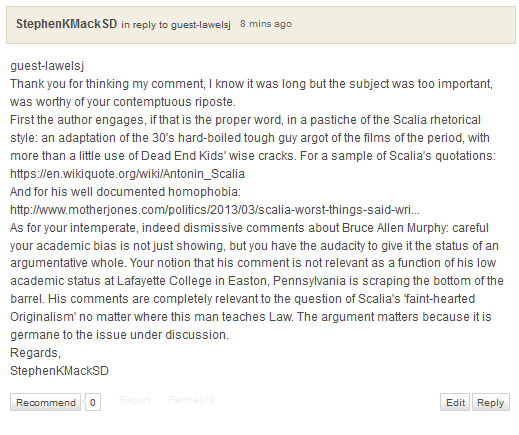
My reply to guest-lawelsj

ReplytoEconomistFeb202016ScaliaObit
Posted in Uncategorized | Leave a comment

Low Comedy at The Financial Times: ‘Megadeals hit record as Wall Street’s animal spirits roar back Global transactions of $10bn or more hit 63 as Trump deregulation and fading trade war risks spur’

Political Observer wonders: When will the shit hit the fan?

stephenkmacksd.com/

Nov 27, 2025

https://www.ft.com/

Posted in Uncategorized | Leave a comment

Abigail Green on ‘The longest hatred? The changing meaning of antisemitism’

Newspaper Reader

stephenkmacksd.com/

Nov 27, 2025

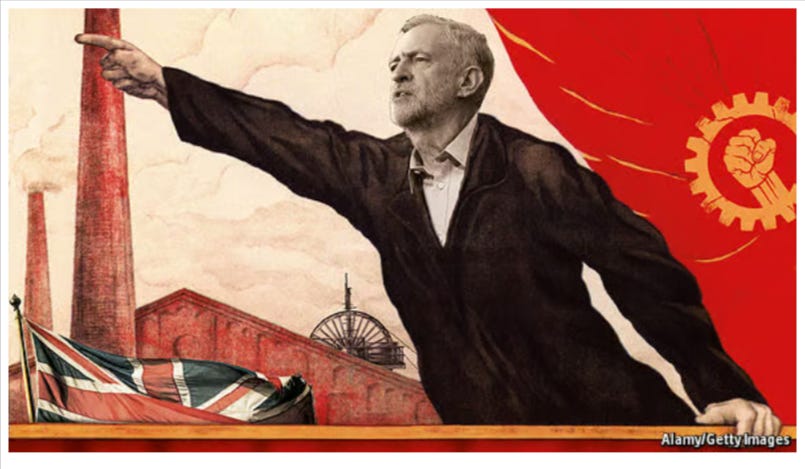
In Abigail Green’s review of Mark Mazower’s ‘On Antisemitism A word in history’ of November 28, 2025 not one mention of The Gaza Genocide, should not surprise the reagular reader of the ‘Times Newspaper’ in its various iterations: Reader recall the attacks on Jeremy Corbyn, and The Economists that engaged in in like-mimded pictorial defamation:

Leaders | Britain’s Labour Party

Backwards, comrades!

Jeremy Corbyn is leading Britain’s left into a political timewarp. Some old ideological battles must be re-fought

Sep 19th 2015|5 min read

Editor: Reader note the use of the IHRA as the cudgel of choice, while the Genocide In Gaza continues unabated!

Inevitably, Mazower’s account of this situation is not neutral. It was, he writes, increasingly clear to him “that the constant invocation of antisemitism [against those protesting for Palestinian rights] needed to be understood as a refusal to acknowledge other things … that is to say, the existence of a suffering Palestinian people and their desire for freedom”. I want to let that stand; it may well be true, just as it may be true that those concerned with the “weaponization” of antisemitism refuse to acknowledge the ways in which the Palestinian movement is acting as a conduit for antisemitism into “our” society, however just its core aspirations. After all, the IHRA and the Jerusalem Declaration both agree that anti-Zionism is sometimes a form of antisemitism.

To publish such a book at this particular juncture is inevitably to intervene in a highly charged political debate. On Antisemitism is, the back cover tells us, “a vitally important attempt to draw a line that must be drawn”. Unlike Mark Mazower, whose scholarship I admire, I have not chosen to intervene in that debate, preferring instead to review his book as a work of history, which is what it purports to be. Nevertheless, I want to conclude by querying the implicit “we” that runs through its entire enterprise. “What do we mean when we talk about antisemitism?”, it asks. To answer that question in today’s global world, “we” need to consider a broad range of agents and publics. The narrative provided here does centre Jewish voices, but it consistently privileges European, American and (in Israel) Ashkenazi players and perspectives over those of others.

Newspaper Reader.

Posted in Uncategorized | Leave a comment

On the many questions about Jeffrey Epstein, that just won’t go away!

Ricky Hale of Council Estate Media, answers your many pressing questions!

stephenkmacksd.com/

Nov 27, 2025

Israel seems strangely reluctant for the truth about Jeffrey Epstein to come out…

Ricky Hale and Council Estate Media

Nov 27

Council Estate Media

Obviously, we all know it’s a conspiracy theory that Jeffrey Epstein was a Mossad agent running a honeypot to blackmail our politicians, but weirdly, it turns out Epstein was behaving exactly like a Mossad agent. Personally, I can’t work out why that might be…

We now know that Epstein brokered deals for Israeli intelligence, such as “security agreements” with Côte d’Ivoire and Mongolia to turn them into mass surveillance states. The goal was to build a “cyber weapons empire” for Israel with the help of the Rothschild Group.

You would hope that similar could not possibly happen in the UK, but consider how the government is attacking civil liberties to protect Israel, how peaceful protesters are treated as terrorists, how we are losing the right to trial by jury, how we need ID to access websites, and how digital ID is coming, thanks to a push from Zionists such as Larry Ellison.

Obviously, Epstein is not behind any of this (unless he’s still alive somewhere), but that doesn’t mean the same dark forces are not at play. The intelligence agency behind a paedophile ring is still pulling the strings…

It seems not a day goes by when we are not learning more about Epstein’s connections to Israel. For example, the outstanding Drop Site News has revealed that Epstein worked with lawyer Alan Dershowitz back in the 2000s to attack academics John Mearsheimer and Stephen Walt. The pair had co-authored a paper that was published by Harvard Kennedy School that was titled: “The Israel Lobby and U.S. Foreign Policy.”

As you all know, we are supposed to pretend the Israel lobby doesn’t exist, even while AIPAC hosts events, bragging about how it shapes US policy. However, Mearsheimer and Walt somehow got an academic paper published that breaks down exactly how the Israel lobby influences US policy towards the Middle East. Honestly, I’m surprised they weren’t jailed or suicided for this.

Drop Site News describes the paper as follows:

The paper, which ran in the London Review of Books and became the basis for a book published the following year, was an unflinching analysis of the impact of pro-Israel advocacy and lobbying groups on the U.S. political system, and the role of organizations like the American Israel Public Affairs Committee (AIPAC) in shaping U.S. foreign policy towards the Middle East.

While the paper was entirely factual, the details were largely ignored by the media, and Mearsheimer and Walt were smeared as antisemites for writing it. The Atlantic commissioned the piece then paid Mearsheimer and Walt a $10,000 “kill fee” when the publication backed out due to “sensitivity concerns”. Note how it’s always insensitive to tell the truth about Israel…

The Anti-Defamation League called the paper an “anti-Jewish screed”, which is interesting because when evidence emerges of other countries, such as Russia or China, meddling in western politics, no one is accused of racism. It’s almost like we have a massive double-standard…

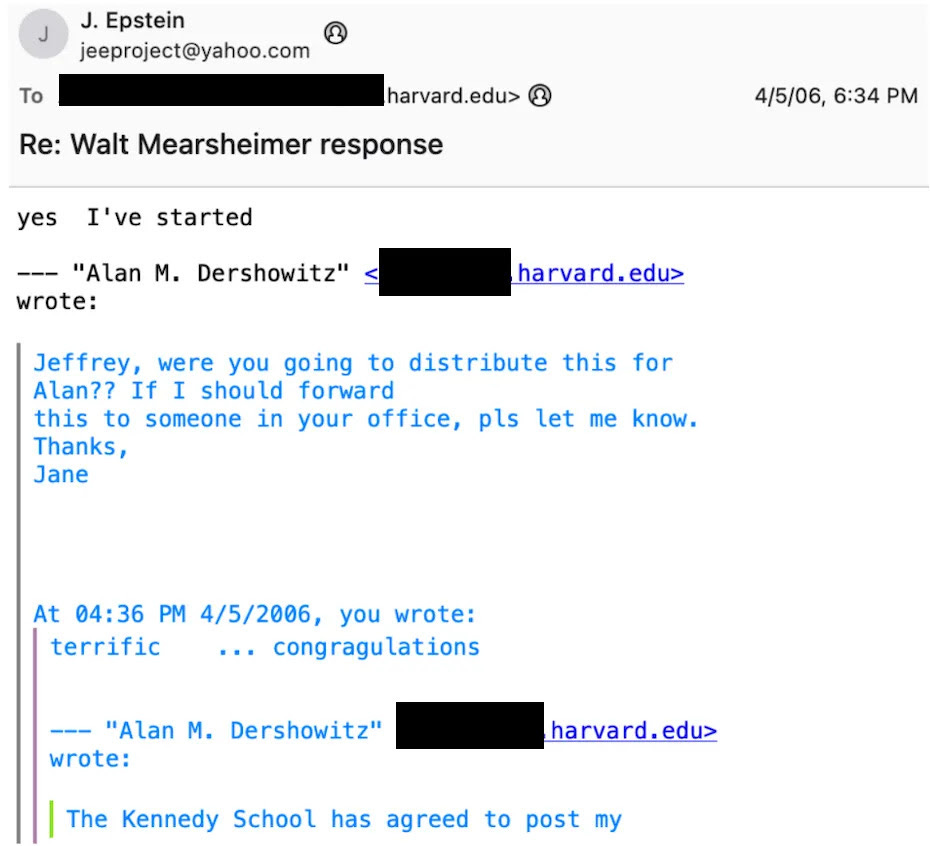
The evidence has revealed that Epstein used his extensive social networks to push talking points, smearing Mearsheimer and Walt. That evidence comes in the form of a trove of emails obtained by Distributed Denial of Secrets. The email cache has been authenticated by Bloomberg via cryptographic verification.

The emails show that Epstein was the recipient of drafts of an attack piece written by Harvard law professor Alan Dershowitz, titled: “Debunking the Newest – and Oldest – Jewish Conspiracy.” The email chain confirms that Epstein distributed the piece for Dershowitz. Yes, it looks like the Israel lobby conspired to… debunk the conspiracy theory of the Israel lobby. What do you even say?

Dershowitz’s ties to Epstein run much deeper than the attack piece, as he represented Epstein as a lawyer. In 2005, a 14-year-old girl reported to police that she had been sexually assaulted at Epstein’s mansion. Epstein hired a private investigator to look into the girl and sent information to Dershowitz to undermine her testimony.

In the correspondence, Epstein accused the girl of being sexually active and using drugs, and he attacked the character of her family members. Epstein later pleaded guilty to watered down charges and served 13 months in prison where he was bizarrely allowed out for 12 hours per day, six days per week.

Consider that a man, who later became a convicted sex offender, was conspiring to ruin the careers of two academics for being critical of Israel. In doing so, he inadvertently proved the claims of Mearsheimer and Walt to be correct.

Now consider how the powerful people, who line up to discredit figures like Mearsheimer and Walt, have been so determined to protect Epstein’s clients. Seems strange that they would choose that hill to die on, doesn’t it?

If you’ve ever wondered what Epstein was up to, I’m gonna use my psychic powers to suggest that his contacts in the media and political circles were so willing to push Zionist propaganda, precisely because most of them visited his rape mansions.

Of course, Epstein’s influence also came from his considerable wealth so let’s not discount the possibility of bribery. For example, Epstein was considered an influential figure at Harvard, despite holding no official role, because he donated $9 million over a ten-year period. Why should anyone have influence over a university, simply because they have deep pockets? Can you see how western governments and institutions can be so easily captured by foreign state actors?

Epstein had strong ties to Israeli politicians such as former prime minister Ehud Barak, which was proven through hacked emails released by Palestinian group Handela. Epstein met with CIA Director William Burns and Barack Obama’s top lawyer Kathryn Ruemmler dozens of times. An Israeli spy lived for weeks in one of his mansions in Manhattan.

Council Estate Media

Posted in Uncategorized | Leave a comment

On Bret Stephens act of Self-redemption?

Political Cynic on the final paragraphs of Stephens self-serving Thanksgiving Meditation.

stephenkmacksd.com/

Nov 26, 2025

Editor: Mr. Stephens is given to playing many roles, and all of them not just self-serving, but execises in a reliable moral/political mendacity, and in this case heavely garnished with historical/political kitsch!

That’s the genius of the holiday. Nobody — except your uncle — likes to talk about politics at the Thanksgiving table. Nobody should need to, either, because the occasion itself is inherently political. It’s an opportunity for families and friends and, by extension, communities, states and the country itself, to have a national reset. It’s when we remember that we can still be capable of setting everyday arguments aside, of recalling common bonds, of indulging a soft patriotism that’s also potent because it’s so unobjectionable. Thanksgiving, far more than the star-spangled Fourth of July, is what makes us Americans all over again.

That was also the spirit of the Gettysburg Address, another purported act of remembrance of the dead that is, in fact, an opportunity for rededication by the living — a “new birth of freedom.” The question for successive generations of Americans is: What kind of freedom should it be?

For Lincoln, the new birth meant saving government of, by, and for the people, and a nation where all are equal. For Hale, it meant extending the boundaries of opportunity for women. For Thomas Edison, it was about advancing the reach of science: In 1877, just 14 years after the first national Thanksgiving and while Hale was still alive, he read “Mary Had a Little Lamb” for the first-ever phonograph recording.

Down the generations, what we can most give thanks for isn’t just abundance. It’s the abundance of freedom, created by people for whom possibility and renewal, even in a world of bitterness, was theirs — and ours — to seize.

Political Cynic.

Posted in Uncategorized | Leave a comment

What Newspaper can compete with ‘The Financial Times’ cachet?

Newspaper Reader almost wonders!

stephenkmacksd.com/

Nov 26, 2025

Posted in Uncategorized | Leave a comment

Is Jonathan Haidt the toxic reincarnation of Philip Wylie’s “Generation of Vipers” ?

Newspaper Reader.

stephenkmacksd.com/

Nov 25, 2025

Editor: Do not miss Peter L. Winkler essay on Philip Wylie’s ‘Generation of Vipers’ it is truly worth your time and attention!

The Man Who Hated Moms: Looking Back on Philip Wylie’s “Generation of Vipers”

Wylie’s moms were middle-aged and menopausal Cinderellas, hirsute and devoid of sex appeal.

By Peter L. WinklerAugust 13, 2021

https://lareviewofbooks.org/article/the-man-who-hated-moms-looking-back-on-philip-wylies-generation-of-vipers/


Jonathan Haidt: The Devil’s Plan to Ruin the Next Generation

I asked ChatGPT how it would destroy America’s youth. Its answers were unsettling—and all too familiar.

The Free Press

Jonathan Haidt: The Devil’s Plan to Ruin the Next Generation

Earlier this year, someone started a viral trend of asking ChatGPT this question: If you were the devil, how would you destroy the next generation, without them even knowing it…

Read more

3 hours ago · 195 likes · 131 comments · Jonathan Haidt

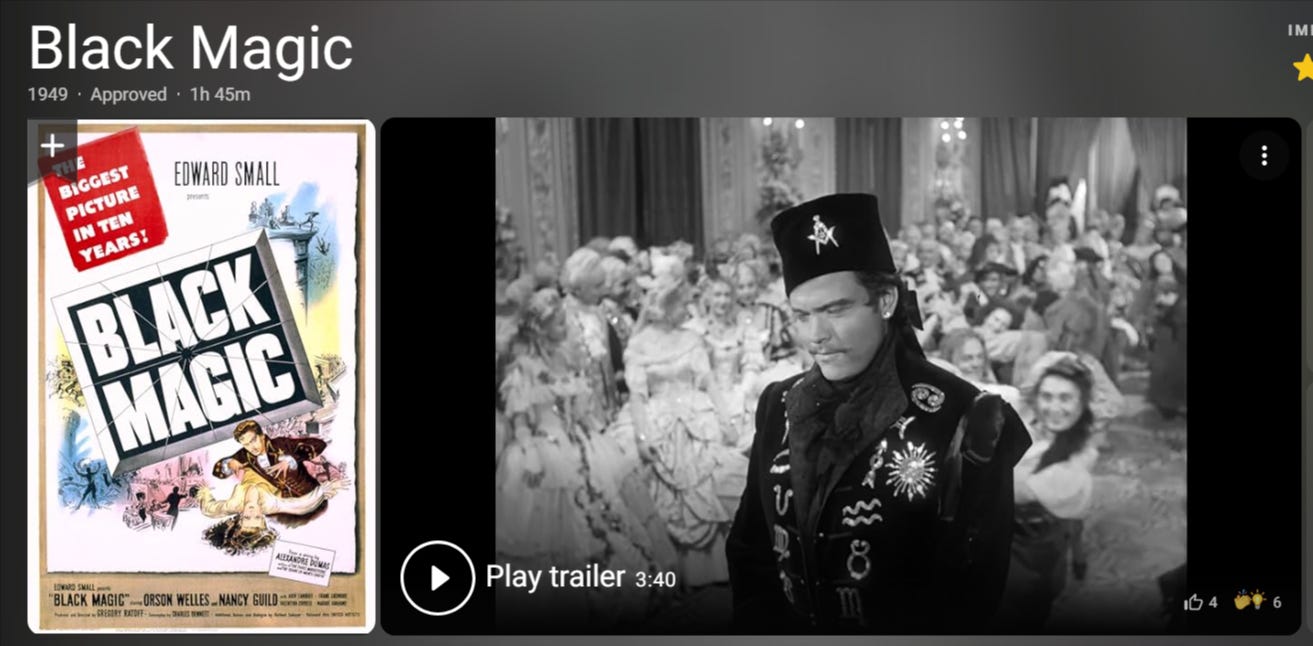
Editor: What actual writer/thinker would resort to the notion that the Devil is an active presence in the life of Americans or ‘Others’ ? The title of Haidt book is laced with respectable Academic Chatter and features The Devil and ChatGPT, as reliable source of viable information about the possible Future of American Youth? Some of us might conger up the Orson Wells movie classic of ‘Black Magic’as a kind of enterainment that hides what Haidt embraces?

Editor : Haidt’s confession featuring ‘Our Better Angels’ kitch!

I approach spirituality as a social scientist who believes that whether or not God exists, spirituality is a deep part of human nature, shaped by natural selection and cultural evolution, and central to human flourishing and self-transcendence. Our “better angels” call us upward and out of our daily concerns.

Editor: In the rest of this essay, I reprint Chat’s seven-step plan, in italics, followed by my own commentary.

1. Erode Attention and Presence

2. Confuse Identity and Purpose

3. Flood Them with Information, Starve Them of Wisdom

4. Replace Real Relationships with Simulacra

5. Normalize Hedonism, Pathologize Discipline

6. Undermine Trust Across Generations

7. Make Everything a Marketplace

Editor: Mr. Haidt missed the toxic assent of Neo-Liberalism inagurated by Mrs. Thatcher and Ronald Reagan and their epigones across The West!

Conclusion: Learning from the Red Team

Editor: The final paragraphs of Haights essay crowned with ‘We can save future generations from spiritual devastation’ reeks of a Billy Graham crusade!

When enacted together, these four norms roll back the phone-based childhood and give children time and opportunities to play, develop friendships, read books, grow a stable identity, and learn to pay sustained attention.

We can save future generations from spiritual devastation. We can bring down those high rates of agreement that “life often feels meaningless.” We can—and must—defeat the Devil and reclaim childhood in the real world.

Newspaper Reader.

Posted in Uncategorized | Leave a comment

Zanny Menton Beddoes and her “familiars” embrace John Bolton!

Newspaper Reader.

stephenkmacksd.com/

Nov 25, 2025

Is the world at “peak Trump”? John Bolton on American foreign policy

Tuesday Nov 25th, 10am PST · 45 min

Newspaper Reader.


Note: can the reader hope for a transcript ?

Posted in Uncategorized | Leave a comment