Jun 19, 2026
The End of the U.S.-Israel Alliance
By Joshua Leifer, a columnist for Haaretz.
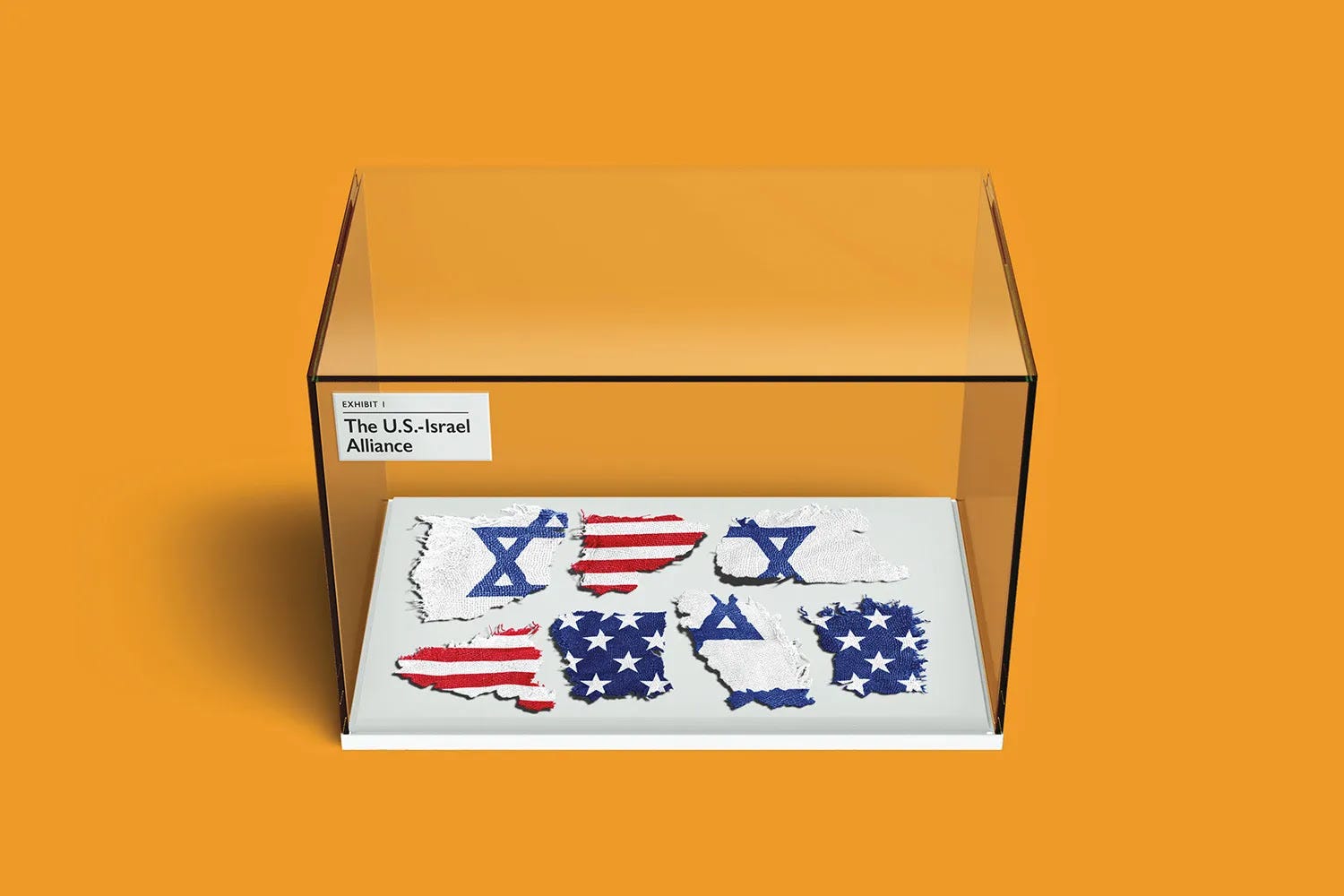
It would seem that Israeli Prime Minister Benjamin Netanyahu has accomplished what his predecessors could only have dreamed of: U.S. and Israeli fighter jets flying tandem over Tehran, Israeli officers ensconced in U.S. Central Command’s Florida headquarters. Since the days of David Ben-Gurion, Israel’s leaders have sought backing from the world’s preeminent superpower, which they hoped would guarantee their state’s survival into perpetuity. None could have imagined the level of cooperation currently on display. If one were to wake up the Old Man, as Ben-Gurion was known, from his otherworldly slumber in the sands of Sde Boker, he would surely delight in the news.
Appearances, however, can be deceiving. In one sense, the U.S.-Israel relationship is at its apogee. Viewed from another angle, it has already entered a period of terminal decline. The political, ideological, and sociological pillars on which the so-called special alliance rested for most of the last half-century have begun to collapse. The Israel-advocacy complex—the network of lobbying groups such as the American Israel Public Affairs Committee (AIPAC), Jewish communal organizations such as the Anti-Defamation League, and Christian Zionist groups such as Christians United for Israel—was once a juggernaut on Capitol Hill. In today’s climate of hyperpolarization, it has started to falter, challenged first by the progressive flank of the Democratic Party and now increasingly by the neoisolationist faction of the MAGA coalition.
Public opinion has shifted dramatically. Less than half of Americans now say U.S. support for Israel is in the national interest; for the first time, Americans also view Palestinians more sympathetically than they do Israelis. Nor is it any longer a given that Americans and Israelis hold a common set of cultural and religious values. As the United States has become less Christian and more diverse, Israeli society has become more traditionalist, its public culture more insular. On both the U.S. right and left, antisemitism has also begun to seep from the margins into the political mainstream, seen by growing numbers of people, especially among the young and disaffected, as a marker of anti-establishment bona fides in populist times.
These shifts were well underway before the Hamas attack of Oct. 7, 2023. But Israel’s subsequent destruction of Gaza, its blockade and starvation of the devastated territory, and spiraling settler violence in the occupied West Bank—all livestreamed over social media for more than two years—greatly accelerated them, generating an anti-Israel backlash that has become a ubiquitous feature of contemporary U.S. politics. If indeed the joint U.S.-Israeli war on Iran constitutes the apex of the special alliance, what follows will be the fall…
…


