Political Observer.
Sep 20, 2025
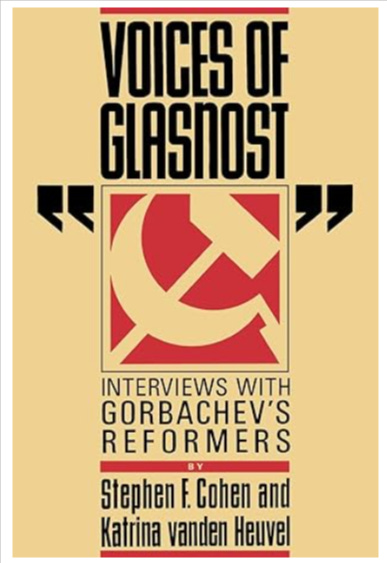
There can be no doubt that The Economist, under the direction of toxic Zanny Minton Beddoes, former partner in crime with Jeffrey Sachs, during the Post-Soviet period. See Stephen F. Cohen & Katrina Vanden Heuvel ‘Voices of Glasnost: Interviews with Gorbachev’s Reformers’, the details of what ‘Glasnost’ was about, in fact!
Editor: A selection of The Economist propaganda about various aspects of the political present, and its toxic actors, that constitutes the Economist Cadre of ‘experts’ : who are in fact about the evolution of the Neo-Liberal Toxin, in its many and various iterations: Name it Oxbridger Political Embroidery!
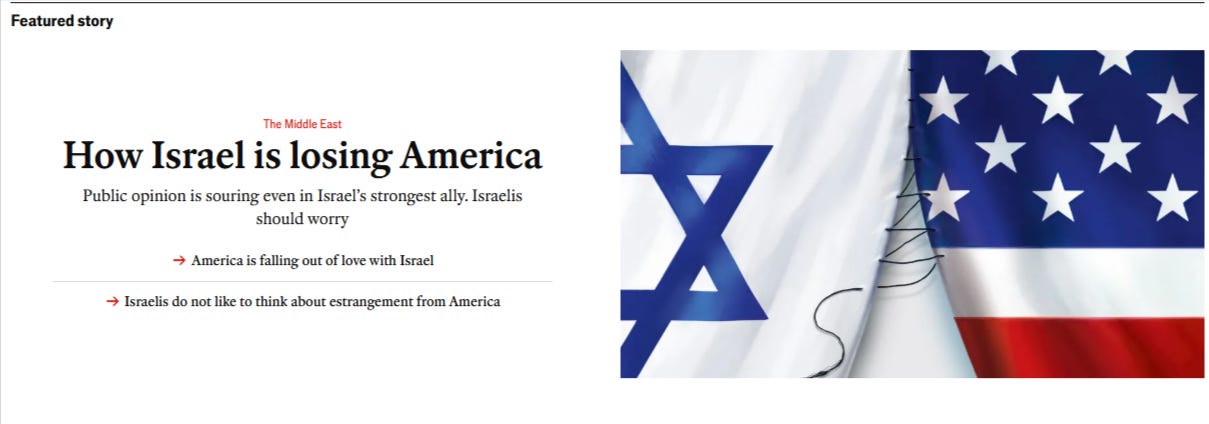
How Israel is losing America:
ON SEPTEMBER 14TH, after showing Marco Rubio, America’s secretary of state, the massive, 2,000-year-old blocks of the Western Wall at Jerusalem’s holiest site, Binyamin Netanyahu declared the alliance between their countries to be “as strong and as durable as the stones…we just touched”. Unfortunately, he is wrong.
As Israel becomes isolated over its war in Gaza, it depends increasingly on America. During the current UN General Assembly old friends, including Australia, Britain, Canada and France, will recognise a Palestinian state, even as Israel’s expansion of settlements in the West Bank makes real statehood less likely. America is all that stands between Israel and a pariah status that would have dire implications for its diplomatic, legal and military security.
ON SEPTEMBER 14TH, after showing Marco Rubio, America’s secretary of state, the massive, 2,000-year-old blocks of the Western Wall at Jerusalem’s holiest site, Binyamin Netanyahu declared the alliance between their countries to be “as strong and as durable as the stones…we just touched”. Unfortunately, he is wrong.
As Israel becomes isolated over its war in Gaza, it depends increasingly on America. During the current UN General Assembly old friends, including Australia, Britain, Canada and France, will recognise a Palestinian state, even as Israel’s expansion of settlements in the West Bank makes real statehood less likely. America is all that stands between Israel and a pariah status that would have dire implications for its diplomatic, legal and military security.
For all Mr Netanyahu’s blithe assurances that relations with America are perfectly solid, they are not. The prime minister has riled the Trump administration and is ignoring cracks deep within the foundations of the alliance. Democratic voters have long been drifting away from America’s most indulged ally. Republican voters are increasingly losing faith, too. A sudden loss of popular American support would be a catastrophe for Israel—a small country of 10m people in a dangerous and hostile neighbourhood.
The polling in America is startling. The share of Americans who back Israel over the Palestinians is at a 25-year low. In 2022, 42% of American adults held an unfavourable view of Israel; now 53% do. A recent YouGov/Economist poll finds that 43% of Americans believe Israel is committing genocide in Gaza. In the past three years unfavourable views of Israel among Democrats over 50 rose by 23 percentage points. Among Republicans under 50, support is evenly divided, compared with 63% for Israel in 2022. Between 2018 and 2021 the share of evangelicals under the age of 30 who backed Israelis over Palestinians plunged from 69% to 34%. Pollsters think that shift has endured.
To understand why this matters, go back to the years when America’s bond with Israel was a powerful amalgam of values and interests. Both are democracies founded by pioneers seeking refuge from persecution. Both believed that their country was exceptional: one a shining city on a hill, the other a light unto the nations. At the same time, their interests overlapped. During the cold war, Israel was a bulwark against Soviet expansion in the Arab world. After the Soviet collapse, they were still allied against Iran. After the attacks of September 11th 2001, they were united by a loathing of Islamist terrorism.
…
https://www.economist.com/leaders/2025/09/18/how-israel-is-losing-america
What Elon Musk gets wrong about Europe’s hard right
He imagines a continental revolt against Islam and elites
“You either fight back or you die,” Elon Musk told a big crowd in London on September 13th at a rally organised by Tommy Robinson, a convicted criminal who preaches anti-Muslim bigotry. Mr Musk has cultivated ties with insurgent hard-right parties across Europe. The continent is being overrun by Muslims, he claims, and faces demographic disaster and oppression by corrupt elites. It can be saved only by disruptive, MAGA-like parties that represent the true voice of citizens (take it as read: white, Christian ones).
In fact, to lump together Europe’s hard-right forces is a mistake. They all dislike immigration and wokery, and are fond of conspiracy theories and social-media pugnacity. But their paths are different. In France the hard right appears to be moderating as it gets closer to power. In Germany the Alternative for Germany (AfD) is radicalising further, but remains distant from power. Britain is in flux: as the rally showed, extreme views are becoming normalised, and the electoral system could yet propel the hard right into office.
Giorgia Meloni in Italy is actually in power. When she first soared in the polls, liberals panicked. Here, they feared, was a future prime minister rooted in post-fascist politics, who might unleash culture wars at home and an economic crisis in the European Union. Yet since winning office in 2022 Ms Meloni has proved pragmatic. She has been firm but not xenophobic on illegal migration. She has not waged a culture war, beyond trying to restrict surrogacy. She has cleaved to fiscal discipline, backed Ukraine against Russia and avoided open conflict with the EU. Her calculation is clear: Italy’s economy depends on European largesse, its companies on the single market, its bonds on the European Central Bank’s support.
In France Jordan Bardella shows early signs of following a similar script, positioning himself as the moderate face of Marine Le Pen’s National Rally ahead of a probable tilt at the presidency in 2027. (Ms Le Pen is currently barred from standing.) Mr Bardella is trying to reassure French business that a hard-right president need not mean fiscal ruin or a euro crisis. Whether he can honour that promise is doubtful. But even the act of wooing the establishment marks a shift.
Contrast those two cases with the AfD. It thrives in Germany’s east, where disaffection with the state runs deep. Its rhetoric is xenophobic and pro-Russian. Nonetheless a “firewall” put up by mainstream parties which refuse to work with it has so far blocked it from national or state-level office. It did well last year in state elections in the east, but without coalition partners failed to turn protest into power. And local elections in North Rhine-Westphalia, outside its eastern base, on September 14th showed its limited appeal west of the Elbe: it increased its share but failed to break out of the poorer areas.
…
Israel goes to the brink in Gaza city.
America’s monetary policy risks getting too loose.
N THE NIGHT of September 15th the Israel Defence Forces (IDF) launched its long-expected attack on Gaza city. “Israel is at a decisive moment,” said Binyamin Netanyahu, its prime minister, the next day. Under the cover of air strikes and artillery fire, two divisions moved towards the city’s central neighbourhoods. Two more are being held in reserve. For now, most of the IDF’s troops remain on the city’s outskirts. They have surrounded it on three sides, leaving open only the western exits, to the Mediterranean coastal road, for civilians fleeing south.
Most of the city’s residents are not leaving, though, risking yet another brutal chapter in a war that has dragged on for nearly two years. Israel has ordered them to move to “humanitarian zones” further south. Between 200,000 and 350,000 have done so; around 600,000 remain. Most have already seen their homes bombed and been displaced multiple times. Few can afford the cost of hiring a minivan to carry them and their belongings to Deir al-Balah, 15km away and still somewhat safer than Gaza city. Tents worth 150 shekels ($45) are going for 20 times that. “After all that, you don’t know if it will be declared a hostile environment and you’ll have to move again,” says Hisham over the sound of explosions. The former civil servant is staying in Gaza city.
In many ways this looks like a re-run of the first big offensive of the war. Then, as now, Israeli armoured columns wreaked havoc on Gaza city, while Israel’s leaders promised to wipe out Hamas. But since then at least 64,000 Gazans, most of them civilians, have been killed. So have nearly all of Hamas’s chiefs. Most of Gaza’s buildings have been damaged or destroyed. International aid organisations say people in much of the territory are starving.
The mood in Israel has changed, too. When the IDF attacked Gaza city 22 months ago, Israelis were nearly unanimous in their support. Hamas had burst out of Gaza, massacring hundreds and taking 250 hostages. (In all, nearly 1,200 people died.) The public agreed that Hamas needed to be destroyed.
…
https://www.economist.com/middle-east-and-africa/2025/09/16/israel-goes-to-the-brink-in-gaza-city
America’s monetary policy risks getting too loose
Jobs growth is probably weak because of low migration, not a cold economy
THE FEDERAL RESERVE is usually run by technocratic consensus. Today it has become a battleground. On September 17th the Fed cut interest rates for the first time since December, by a quarter of a percentage point, to 4-4.25%. One of its governors, Lisa Cook, could attend only because a court blocked President Donald Trump from sacking her. Another, Stephen Miran, was confirmed just before the meeting for a short stint, after which he says he will return to his job at the White House. It is an unseemly arrangement for a central bank that should be independent of politics. Mr Miran dissented in favour of a half-point rate cut. And he appears to have called for three such moves by the end of the year, twice what the next-most-doveish committee members suggested in their anonymous projections.
The Fed finds itself at a dangerous moment, and not just because of Mr Trump’s quest for lower rates. The economic argument for looser money is finely balanced. Mr Miran’s submission, though an outlier, was pivotal: by 10-9, the committee expects at least three rate cuts this year. That is what markets have been betting on, too. But following through on those expectations would be a mistake.
The case for easier money depends almost entirely on the labour market. Recent data and revisions show firms have created only 27,000 jobs per month on average since May, down from 123,000 in the first four months of the year. The hiring swoon has vindicated predictions made by Chris Waller, another Fed governor and the betting market’s favourite to replace Jerome Powell as chairman next year.
The trouble is judging how much poor jobs numbers—and an accompanying slowdown in economic growth—reflect softer demand for workers rather than their shrinking supply. Immigration has collapsed under Mr Trump. Agents reported just 8,000 “encounters” with illegal migrants on the southern border in July, compared with 100,000 in the same month last year. Some researchers think that net migration this year will be negative. The unemployment rate, which should reflect the balance between supply and demand, is only 4.3%—hardly evidence of a glut of workers.
…
Political Observer.


 StephenKMackSD's Blog