LOVE IN A TIME OF HATE: Art and passion in the shadow of war, 1929–39 Translated by Simon Pare
As a reader of ‘The Brothers Mann: The Lives of Heinrich and Thomas Mann, 1871-1950 by Nigel Hamilton of 1975.
And Thomas Mann’s ‘Diaries, 1918-1939’ of 1982:
I had some knowledge of the milieu, the persons/characters and their shared fates, that is the subject of the the two books under review. This final paragraph of Chamberlin’s review is evocative of the that whole milieu:
They were all enemies of Nazism, certainly. But what kind of politics, what kind of society, would have best suited this licentious, aesthetic-minded generation, with its gigantic artistic talents and potential for deep moral waywardness? Presumably, our ultra-liberal own. Perhaps that’s why Illies remains so reserved in his moral judgements, finding the antisemitic vamp Alma Mahler pretty nasty, but only the Hitler-loving film-maker Leni Riefenstahl (“there was a strong streak of elitism to her nymphomania”) “diabolical”. He’s rather lenient, to this reviewer’s mind, and rather hard on Thomas Mann’s “noun-heavy moralizing”. I would have liked to hear him call Brecht not only a great artist, but also a pernicious moral fraud. Illies engages with some relish in his tale, where Wittstock, two generations older, is outraged and sad. In making these observations, though, I may be the product of a staider generation. So let me conclude by saying that, for all the compelling studies on the Weimar Republic, no one will want to miss either of these well-translated books on Weimar writers and Weimar in love.
Let me recommend Chamberlain’s ‘Motherland: A Philosophical History of Russia’.
The First two paragraphs of Marcus Wheeler’s essay seem to contradict what Mark Lilla offers in The New York Times review , below this entry:
Headline: Motherland: a Philosophical History of Russia by Lesley Chamberlain
Sub-headline: Marcus Wheeler is provoked by Lesley Chamberlain’s history of Russian philosophy.
This book is a tour de force if only in that it encompasses an enormous subject – the ‘long tradition’ of Russian philosophical thought from 1815 to 1991 – in fewer than 350 pages. The author is not a professional or academic philosopher but a writer and journalist: she has however studied Russian and German language and literature and philosophy, and the present work is informed by a deep understanding of these three intellectual disciplines. When she writes on the last page that Russian philosophy “is a branch of German philosophy, perhaps even of German poetry”, she restates, albeit in a deliberately provocative way, what British philosophy students used to be told fifty years ago – that philosophy in Russia was wholly derivative from Hegel and German Idealism (and, by implication, not worth bothering with). Like many of us, Lesley Chamberlain was first drawn to 19th century Russian thought by the writings of Isaiah Berlin – his celebrated articles in Encounter on “A Marvellous Decade” and these and the other essays assembled in Russian Thinkers and elsewhere. Chamberlain surprisingly presents Berlin himself as a philosopher in the Russian tradition: in fact, his claim to fame rests far less on his original, recognisably Western-style contributions to philosophy than on his work as a historian of social and political ideas.
Chamberlain owes much not only to Berlin but to more systematic historians of Russian thought, such as Andrzej Walicki, Frederick Copleston and James Scanlan (though she does not mention Derek Offord, who has published extensively in this field in recent years). She sets herself however the ambitious and original aim of distinguishing in the Russians between social and political ‘thought’ and ‘philosophy’ proper and of relating their teachings to the general tradition of Western philosophy from Descartes to present-day post-modernism. To this end she has divided the book into four parts. Part I – entitled “The Making of the Intelligentsia” – is a lucid and straightforward sequential summary of the principal figures and movements from 1815 to 1917 – Chaadaev, Westernisers and Slavophiles, Populists, Marxists and fin-de-siècle ex-Marxists and religious thinkers. The title of Part II – ‘The Making of Russian Philosophy’ – leads the reader to expect a parallel treatment of the evolution of philosophical views, but its three component chapters are more or less discrete self-contained essays. In the first of these, as at intervals throughout the book, Hegel appears prominently. The author is thoroughly versed in his teachings (to her credit, since in British universities Hegel and Idealism have been virtually mothballed since World War II) and explains cogently why his view of society as constantly subject to change through conflict appealed to young Russians suffocated by their static autocracy; as also why his identification of reality and rationality came to offend Belinsky and others by seeming to ignore human suffering and injustice. She presents nearly all the Russian dissident liberals (whom, confusingly, she later calls “anarchists”) as “Counter-Rationalists” preaching a “Counter-Enlightenment”. This, since she describes herself as a “Cartesian rationalist”, may account for her harsh judgment that Russian philosophical history amounted to “two short centuries of intellectual and moral defeat for Russia.”
Now, understanding the soul is also well and good. But what happens when soulfulness stands in the way of rational philosophy and science? Isn’t there a price to be paid? That is the question Lesley Chamberlain poses in “Motherland: A Philosophical History of Russia.” The question is not new, nor are most of her answers. There are very fine studies of 19th-century Russian thought available in English — by Isaiah Berlin, Joseph Frank, E. H. Carr, Martin Malia — and the interested reader will want to turn to those first. But by focusing specifically on how Western philosophical ideas from Descartes through Marx were absorbed into Russian thinking, Chamberlain does complicate the received picture somewhat. As she sees it, the decisive struggle was not simply between Westernizers and anti-Westernizers, but between Russians who stood by the philosophical legacy of France and England, and those who drew sustenance from the far murkier thinkers of modern Germany.
…
What did the Russians learn from the Germans? This is hard to make out from the badly confused accounts of Kant, Fichte, Hegel and Schelling given by Chamberlain, an English journalist and novelist. The main story, though, she gets about right. What the 19th-century Russian intellectuals found in, and partly projected onto, Germany was a romantic alternative to the supposedly cold, heartless logic of Descartes and his progeny. They were especially drawn to F. W. J. Schelling, whose philosophy of nature, a hash of intuition and metaphysical speculation, was closer to theosophy than to modern science. (Lots about “life,” nothing about the pancreas.) Schelling’s doctrines proved to be infinitely adaptable and unfalsifiable, and thus served as useful defenses against French and English rationalism. Like Napoleon’s troops, the modern ideas of Bacon, Descartes, Locke and Hume were turned back at the gates of Moscow and beat a slow retreat through the snow.
…
Marcus Wheeler seems to contradict Mr. Lilla’s assertions that somehow Chamberlain is less of an Historian than ‘ Isaiah Berlin, Joseph Frank, E. H. Carr, Martin Malia’? Does the question regarding Chamberlain reading of that History, about Lilla’s preference for himself and his brother Historians were more reliable? In the long quotation by Marcus Wheeler, above, I’ve placed in a bold font, his comment on Chamberlain reliance on Berlin’s scholarship. As a subscriber of The New York Review Of Books, of the time, I too read Berlin’s ‘Russian Thinkers’ and others.
Here is Chamberlain’s review of ‘Doubt, Atheism, and the Nineteenth-Century Russian Intelligentsia’ by Victoria Frede in 2012.
Headline: Between Belief and Despair
Sub-headline: A group of thinkers tried to explain Russia to a West that could understand it only in terms of “communism” or “freedom.”
We are used to thinking of a great parting of the ways dividing the Russian 19th century unevenly in half, from around 1860, with a rather uncouth and propagandizing atheism of “New Men” taking over from the subtle rhetoric of their more spiritual predecessors. Something of the kind did happen under the influence of materialist philosophies spreading from the West. But partly too—as Ms. Frede shows in a highly original study of minor figures attending the revolutionary Petrashevsky Circle in 1849—it happened because nonbelief was a daring political move in a cruel, inert country. No great theory of personal conduct or philosophical insight was required. Nonbelief itself could be a simple act of defiance. Dostoevsky, another young participant in the Circle who was nearly executed for his apparent political intentions, would later evoke doubt as an essential feature of Russian spiritual life.
Ms. Frede ends her study with a portrait of the radical critic Dmitri Pisarev, a man of the 1860s who is remembered, if at all, for once declaring that a pair of boots was more valuable than the works of Shakespeare. Pisarev deserves his rediscovery by Ms. Frede as the psychologically complex figure he is. Desperate to extract himself from a controlling family, Pisarev latched onto doubt, and the materialism of the body, as the only way he could secure his personal freedom. He spent time in prison and had a mental breakdown and might be best re-imagined as a figure in some unwritten novel, representing one of the many possibilities of Russian dissent.
“Doubt, Atheism, and the Nineteenth-Century Russian Intelligentsia” is an encouraging example of what the end of the Cold War has meant for Russian scholarship. In both Russia and the West, vested interests have been removed from the business of “atheism.” We can see much more clearly now how Lenin, who needed the commitment of the old spiritual intelligentsia but not their inwardness, used atheism as a tool. We can also see how Western historians upholding Enlightenment values underplayed Russian doubt, confusing it with irrationality and missing an enduring clue to what was culturally at stake.
I purchased and read “Doubt, Atheism, and the Nineteenth-Century Russian Intelligentsia” onChamberlain’s recommendation. Victoria Frede’s book was revelatory, to say the least! Chamberlain is part of a long and indispensable tradition, of Writers, Book Reviewers, Critical Intellectuals, who before the Internet nourished my mind in the Age Of Print, and into the Political Present!
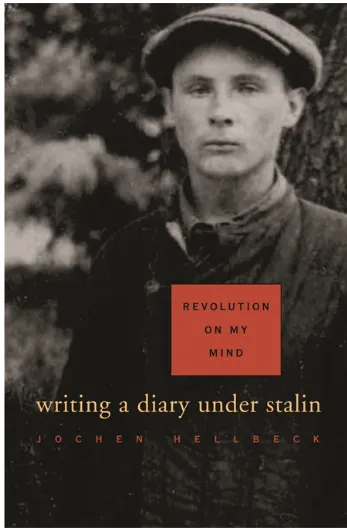
Below is a link to Jochen Hellbeck’s ‘Revolution on My Mind: Writing a Diary under Stalin’ an example of a revelatory History of the Soviet Union, with its focus on individual lives of its citizens.
Rootless cosmopolitan,down at heels intellectual;would be writer.
'Polemic is a discourse of conflict, whose effect depends on a delicate balance between the requirements of truth and the enticements of anger, the duty to argue and the zest to inflame. Its rhetoric allows, even enforces, a certain figurative licence. Like epitaphs in Johnson’s adage, it is not under oath.'
https://www.lrb.co.uk/v15/n20/perry-anderson/diary




 StephenKMackSD's Blog