Editor : Woke has become a derisive epithet, to state the obvious and Michael Shermer wallows in it.
…
Although some liberals embrace just such an unconstrained vision of human nature, most understand that human behavior is at least partially constrained—especially those educated in the biological and evolutionary sciences who are aware of the research in behavior genetics—so the problem lies chiefly with woke illiberals, who are full-on blank slaters, unconstrained visionaries, and utopian dreamers with no purchase on the reality of human nature, or what, in my book The Believing Brain, I called a Realistic Vision. If you believe that human nature is partly constrained in all respects—morally, physically, and intellectually—then you hold a Realistic Vision of our nature. In keeping with the research from behavioral genetics and evolutionary psychology, let’s put a number on that constraint at 40 to 50 percent. In the Realistic Vision, human nature is relatively constrained by our biology and evolutionary history, and therefore social and political systems must be structured around these realities, accentuating the positive and attenuating the negative aspects of our natures.
A Realistic Vision rejects the blank slate belief that people are so malleable and responsive to social programs that governments can engineer their lives into a Great Society of its design, and instead believes that family, custom, law, and traditional institutions are the best sources for social harmony. A Realistic Vision recognizes the need for strict moral education through parents, family, friends, and community because people have a dual nature of being selfish and selfless, competitive and cooperative, greedy and generous, and so we need rules and guidelines and encouragement to do the right thing. A Realistic Vision acknowledges that people vary widely both physically and intellectually—in large part because of natural inherited differences—and therefore will rise (or fall) to their natural levels. A Realistic Vision of human nature is what James Madison was thinking of when he penned his oft-quoted dictum in Federalist Paper Number 51:
If men were angels, no government would be necessary. If angels were to govern men, neither external nor internal controls on government would be necessary. In framing a government which is to be administered by men over men, the great difficulty lies in this: you must first enable the government to control the governed; and in the next place oblige it to control itself.
The resulting structure of the United States government and its nearly 250 years of successful governance is a tribute to Madison’s (and the other founders’) realistic vision of human nature. If you have a flawed theory of human nature, however, much follows that will also be flawed, including disastrous social policies and failed social movements that have taken hold in recent years and that mark the results of the woke movement.
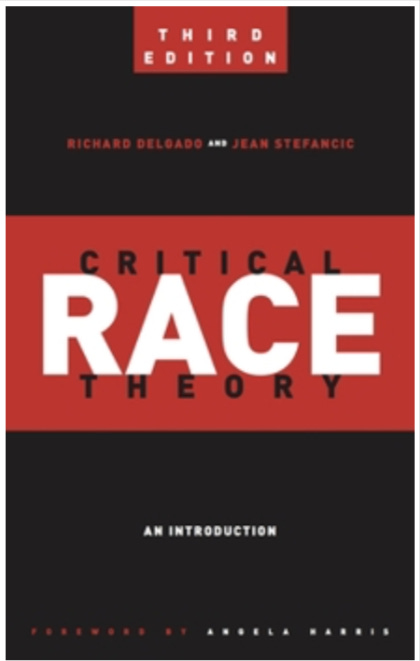
Editor: Not to forget Critical Race Theroy
New York University Press
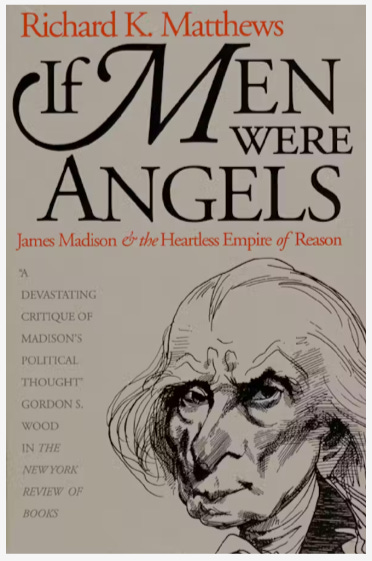
Or Mr. Richard K. Matthews who layes waste to the cult of Madison!
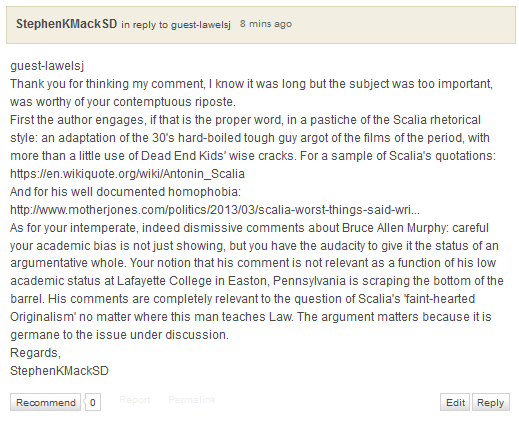
There is no doubt that the author of this obituary is schooled in the Scalia patois, in fact she/he is adept at sounding the notes of witless bulling insult that is the hallmark of that Scalia style! But was Scalia an ‘Originalist’ Or as Scalia described himself as a ‘faint-hearted originalist’? Here is a partial answer provided by Bruce Allen Murphy,the Fred Morgan Kirby Professor of Civil Rights at Lafayette College in Easton, Pennsylvania.
‘When I teach about the First Amendment Free Exercise of Religion at Lafayette College, which used to occupy a routine pair of classes, I now wheel into the classroom a large white board that will occupy us for weeks, filled with all of the exceptions that the Court has created here restoring, in piecemeal fashion, the pre-Scalia, 1990 decision, world. I explain what has become the “Swiss Cheesing” of the First Amendment’s Free Exercise clause, allowing, among others, for claims to be considered for exceptions for federal prisoners and others being held in government institutions, for a religious group in Hialeah, Florida seeking to sacrifice animals in religious ceremonies, and for a small religious group seeking to drink ceremonial hallucinogenic tea from the Amazon. The string of exceptions to Scalia’s Smith rule has created so many holes that there is almost no cheese left. After the Hobby Lobby decision, I will have to make one more change to the top of my board, one which risks doubling the number of exceptions, adding next to the words “person’s Free Exercise of Religion rights,” the phrase “and closely-held corporations’ religious rights” Even though the majority in Hobby Lobby has further limited Scalia’s Smith case holding, since that result comports with his pro-religious accommodation, pro-corporation constitutional rights, viewpoint, he silently votes with them. While Scalia likes to say in his public speeches that his version of the Constitution is “Dead. Dead. Dead,” once more his reading of Founding era history to construct his originalist interpretation of the Constitution is very much an evolving work in progress.’- See more at: http://historynewsnetwork.org/article/156300#sthash.BWyZ4mgK.dpuf
The idea of ‘Originalism’ and or its renaissance is connected to Brown v. Board I &II as made plain in John Dean’s book The Rehnquest Choice:
Here is a report from Vanity Fair’s Tina Nguyen on Justice Scalia’s final Supreme Court rant, which is nothing less that reprehensible:
‘Critics of affirmative action, (including the court’s only black justice, Clarence Thomas,) have long argued that the policy backfires on black students, claiming that placing unprepared students in elite academic settings is setting them up for failure. Still, Scalia drew “muted gasps in the courtroom” for his indelicate comments at the end of oral argument, according to The New York Times. From the transcript:
There are those who contend that it does not benefit African-Americans to get them into the University of Texas where they do not do well, as opposed to having them go to a less-advanced school, a less — a slower-track school where they do well. One of the briefs pointed out that most of the black scientists in this country don’t come from schools like the University of Texas. They come from lesser schools where they do not feel that they’re being pushed ahead in classes that are too fast for them.
I’m just not impressed by the fact that the University of Texas may have fewer. Maybe it ought to have fewer.
Bloggier outlets like the Hill reported that Scalia “surprised” the court, while Mother Jones tersely remarked that they would “really be looking forward to his opinion in the case.”
One could defend Scalia by pointing out that justices often float devil’s advocate–type statements during an oral argument in order to test the lawyer’s arguments, and that the only opinion that matters is the one they eventually write down. But even Lyle Denniston of SCOTUSBlog, an elite law reporter who knows a thing or two about not jumping the gun when analyzing the court, found Scalia’s statement “quite clumsy.”
Is this encomium to the Originalist Eminence a surprise? Which doesn’t quite eschew substance, but relies on the argot of Scalia, which had its origin, or at least paid homage to the Hollywood Gangster films of the 1930’s.
Headline: Javier Milei’s chainsaw economics in Argentina could lead the way
Sub-headline: If the model can be successfully applied across even just some of the underperforming countries in South America, the economic bounty could be enormous.
Editor: Read the first gushing paragraphs of her opininon column;
You’ll no doubt have noticed the growing buzz around Europe, thanks to a brighter economic outlook, Germany’s decision to scrap its debt brake, and some tactical shifts away from the US. But there’s another region that’s been quietly catching investors’ attention: Latin America.
I believe the region could emerge as the unexpected economic winner of the next few years, and perhaps beyond.
Regular readers will be familiar with Argentina’s eccentric, chainsaw-wielding president, Javier Milei, who was my economic hero of 2024. Since becoming president in 2023, Milei has slashed burdensome red tape and bureaucracy, and rolled back unsustainable and unproductive spending, while implementing supply side reforms.
The result has been an astonishing turnaround in Argentina’s economic fortunes. “Hyper-inflation” reduced to a mere 2.2 per cent as of February, with projected GDP growth of 5.5 per cent in the next year. It’s no surprise, then, that Argentina-focused exchange traded funds saw record inflows in 2024, and emerging market debt funds have been hoovering up corporate and government bonds.
But Milei is far from done. With inflation now under control, last week he scrapped reporting and tax rules aimed at unlocking a potential $200 billion injection in the domestic economy, consisting of the unofficial US dollar savings of ordinary Argentines. Previously, attempts to part with this cash were fraught with risk and would have seen individuals and businesses fall foul of strict protectionist currency controls. Now, individuals will be free to spend their dollars at will.
…
Editor: here is a Buenos Aires Herald report on Argetine Poverty from February 18, 2024:
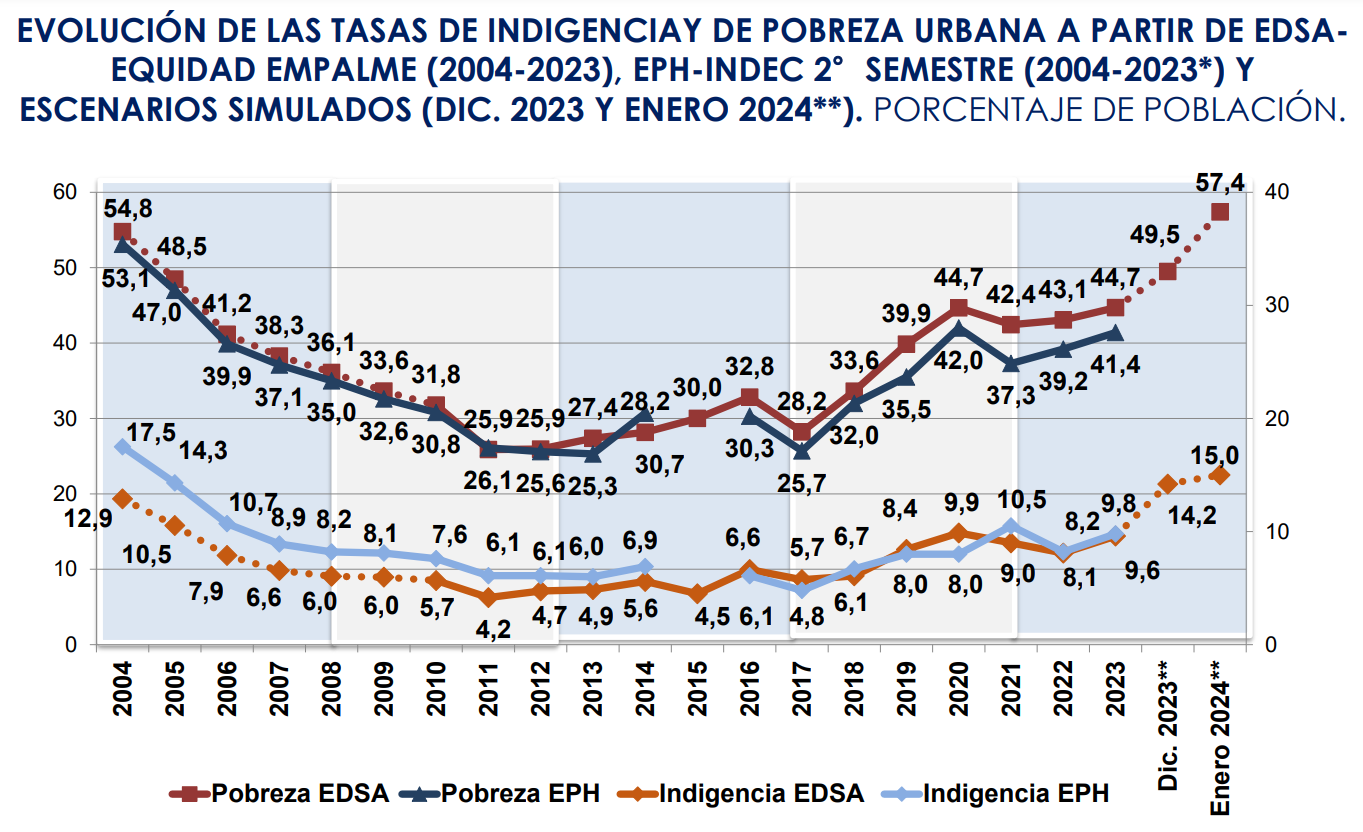
Argentina’s poverty rate reached 57.4% in January according to a new report by the Argentine Catholic University’s respected Social Debt Observatory. It’s the highest poverty number since 2004, when the observatory began publishing reports, amid widespread economic deregulation and price hikes.
“Our perspective is that this will keep getting worse in February,” the observatory’s Director Agustín Salvia told the Herald. “The crisis is about to explode in systemic terms.”
According to the report, which analyzed the inflationary effects of the 54% Argentine peso devaluation in December, poverty rose from 44.7% in the third quarter of 2023 to 49.5% in December, then 57.4% in January.
Salvia said there is “a generalized impoverishment of Argentine society” as a result of “a decrease in real salaries” as well as “a high risk of losing jobs” and the devaluation of the peso. “Households can’t compensate the effects of inflation on the food basket with working more hours, like they did in 2023.”
“The working class and middle class who don’t receive any welfare suffered the biggest increase [in poverty levels],” the report said.
The observatory also found that 15% of Argentines are destitute — the highest level since 2005. Destitution numbers had been 9.6% in the third quarter of 2023 and 14.2% in December, and went up even more in January “due to the increase in the cost of the basic food basket.”
The National Institute for Statistics and Census (INDEC by its Spanish acronym) considers a family “destitute” when their monthly income is less than the basic food basket. A family is considered to be in poverty if they earn less than the basic food basket plus services, known as the total basic basket.
Source: Argentine Catholic University’s Social Debt Observatory
“The December 2023 devaluation led to a strong price increase at a general level, and therefore, [an increase of] the basic food basket and the total basic basket,” the document stated.
The report added that while the government increased pensions and social plans in an attempt to absorb the effects of the record-high inflation “the poverty and destitution levels significantly rose.”
Argentina’s monthly inflation rate reached 25.5% in December 2023, the highest since February 1991, according to the National Institute for Statistics and Census (INDEC, for its Spanish acronym). In January, it went down to 20.6%, marking a 254.4% year-on-year inflation.
Within the past two months, gasoline prices more than doubled, private healthcare medicine applied 80% increases, and bus and train fares rose by 251% and 169% respectively. More tariff and price jumps are expected in the upcoming months.
Meanwhile, discussions to increase Argentina’s minimum wage and unemployment benefits fell through on Thursday while social movements protested outside the Labor Ministry. The minimum wage, which defines who receives certain social benefits, currently sits at AR$156,000 a month while the total basic basket for a single adult reached AR$193,000 in January, according to INDEC’s latest report.
Editor: Here is a report from May 19, 2025 in the Buenos Aires Herald, about Mileiand Money!
Headline: Cash savings, tax evasion, bank robbery: Milei confirms no-questions-asked dollar plan
Sub-Headline: The president said he doesn’t care ‘in the slightest’ how Argentines got their dollars
President Javier Milei said that he “does not care in the slightest” how Argentines got their dollars during a television interview on Monday, during which he appeared to encourage tax evasion and play down the risk of courting organized crime.
It comes as his administration prepares a measure to allow the population to spend dollars without justifying where the funds came from, which experts say would facilitate money laundering, tax evasion, and other crimes.
Asked about such risks, Milei responded that economic issues should be separated from legal and security issues.
The move was announced by Economy Minister Luis Caputo in early May, but has yet to be made official.
“Under the mattress, Argentines have… estimates range between US$200 billion and US$400 billion,” Milei said during an interview on América 24 TV channel. “That means between 33% and 66% of the GDP. That implies an injection of funds into the economy that could generate a huge acceleration of the growth rate.”
According to the INDEC statistical bureau, Argentines held US$256 billion in cash and deposits outside the nation’s financial system in the last quarter of 2024.
He said Argentines who save dollars outside the financial system have done so to “avoid the tax that is inflation,” which he described as “devastating.”
Tax evaders are ‘heroes’
Asked about dollars stemming from tax evasion, the president said that “taxes are robbery,” later adding: “people who tried to protect themselves from thieving politicians are heroes, not criminals.”
He went on to argue that organized crime such as drug trafficking should be combated by the Security Ministry and the Defense Ministry, without involving the economy. “You do not use the economy to fight crime,” he said.
For the measure to work, he said, “the key is that nobody asks where you got your dollars. What’s more, I don’t care where you got your dollars. I don’t care in the slightest. That’s to say, economic issues are fixed in the economy. Issues of other kinds are fixed in the legal and judicial sphere. You have to understand that: they shouldn’t be mixed.”
After the plans were announced, María Eugenia Marano, a lawyer focusing on economic crimes, told the Herald that allowing the population to use dollars with no questions asked facilitated bringing laundered money back into the financial system.
Bank robbery
When journalist Antonio Laje asked whether that would mean bank robbers attempting to pay in US$500,000 would be asked no questions, Milei compared the situation to giving a sick person the wrong medicine, before stating: “Again, with the robbery, you shouldn’t mix the problem of crime with the issue of the economy.”
Under current law, such transactions can be reported to the financial authorities as suspicious. That legislation, Milei said, “is horrific.”
“You have to be able to use dollars with ease. Nobody should be asking for explanations for anything.”
Milei said the measure, which he has described as a form of “endogenous dollarization,” would be similar to a tax amnesty, but without paying taxes.
Milei said that the government had not yet passed the measure because it was addressing legal issues. He refused to give a launch date, stating instead that it would be passed once it was “technically impeccable.”
Editor: The final paragraphs of Anderson’s revelatory text.
…
When writing in this vein, Tooze has certainly earned his place on the left of liberalism. But the compound is labile. Elsewhere in Crashed, he can write without demur of Obama’s failure to deliver ‘a concerted drive to unify American society around a sustained programme of investment-driven growth and comprehensive modernization’.footnote89 Unify American society—or, power against power—cleave it?
If there is no clear-cut resolution of these tensions in Crashed, it is in part because so much rhetorical emphasis falls on the technical complexity of the ‘giant “systems” and “machines” of financial engineering’, and the vital role of a pragmatic managerialism in keeping them running. Central banks, Tooze has insisted, far from being stoppers of democracy, have often been flywheels of progress. After all, without the good sense of the Bank of England and the Federal Reserve, could the Entente have won the First World War, or the Allies the Second? Without helpful counteractions by Carney and Draghi, could the fall-out of unfortunate developments like the victory of Brexit in one referendum, or the defeat of Renzi in another, have been contained? ‘It would be a grave theoretical error and missed practical opportunity if technocratic structures were held to be a diminution of politics’. They can enhance them. Think of the ‘astounding flair for the situation’—magic term!—of someone like Mario Draghi.footnote90
When he writes in this mode, rather than looking to possible avenues of democratic control over them, Tooze explains that ‘there are good reasons to defend technocratic government against the unreasoning passions of mass democracy. It is all too obvious today how important it is to be able to identify matters of potential technical agreement beyond politics.’ Sanity and lunacy so distributed, how can irrational masses be brought to accept rational decisions taken by the Bernankes and the Draghis? There, essential is that ‘coalitions be assembled for unpopular but essential actions’—not just as a conjunctural, but as a permanent necessity: ‘building such ad hoc and lopsided political coalitions is what the governance of capitalism under democratic conditions entails’.footnote91
Unpopular but essential actions: Tooze’s indictment of the eu brutalization of Greece is searing enough. But does he have anything to say about Tsipras’s shredding of a referendum to comply with it? Nothing. A silent sigh of relief can be deduced. For wasn’t such surrender the responsible course of action, as Stresemann showed? It is enough to recall Durand’s verdict in Fictitious Capital on the overall tale Tooze’s book tells to see the difference between the two writers: ‘Finance is a master blackmailer. Financial hegemony dresses up in the liberal trappings of the market, yet captures the old sovereignty of the state all the better to squeeze the body of society to feed its own profits.’ That note is missing in Crashed. There, blackmail—not called as such—is regrettable, but acceptable.
Ad hoc and lopsided coalitions: to date, the most specific illustration Tooze has offered comes in a recent piece on Germany, his European land of reference, in the lrb. In it, he argues for the creation of a Red–Red–Green alliance of the spd, Die Linke and the Greens, in place of the current Black–Red coalition of the cdu–csu–spd that has ruled the country since 2013, as previously from 2005 to 2009. Within the alternative bloc of his hopes, his preference plainly goes to the spd, hailed as ‘no ordinary political party’, but one that for 150 years, from the time of Bismarck to that of Merkel, has ‘stood for a vision of a better, more democratic and socially just Germany’—as if these were adjectives that could encompass the vote for war credits in 1914, the use of the Freikorps to dispatch Luxemburg and Liebknecht, the McCarthyism of the Radikalenerlass in the seventies, and the practice of renditions in this century: not the whole record, but an indelible part of it. Today, obstructing the prospect of a Red–Red–Green alliance is ‘Die Linke’s ingrained hostility to nato’.footnote92 The good sense of the spd’s Kaisertreu fealty to it goes without saying.
Such questions aside, what should be the programme of a future Red–Red–Green government? Formally speaking, Tooze’s article is a review of four recent books on Germany, to which he adds three others as he proceeds, though as often in the lrb reference to them is cursory, none accorded the dignity of an actual review. Much of the substance of the piece is devoted to the social consequences of Hartz iv, Schröder’s ‘tough new system of welfare and labour-market regulation’, imposed in 2005. Though he prefers a more to a less lenient view of its neoliberal agenda, and complains that the spd gets no credit for ‘earnest efforts to rebalance’ its consequences—a minimum-wage law has since belatedly ended a situation in which Germany was one of the last countries in Europe without onefootnote93—Tooze leaves no doubt that the condition of the country is far from ideal: inequality has soared, precarity has spread, and with it social and political unrest. To remedy such ills, what agenda of social repair does he outline for a Red–Red–Green coalition? Answer: Germany needs ‘a more pro-European government’, one capable of responding to the ‘bold vision of Europe’s future’ offered by a ‘charismatic’ Emmanuel Macronfootnote94—a leader famously capable of constructing a transverse, if lopsided coalition and taking unpopular, but essential decisions. Nothing else. ‘Europe can ill afford further delay’. That empty signifier is all.
It would be wrong to make too much of this. Tooze spreads himself widely, and his accents and formulations vary from place to place. That’s often the price of a growing reputation—la primadonna é mobile—and shouldn’t be taken too seriously. To criticisms of inconsistency, he can in any case reply quite reasonably that nothing he has written falls outside the parameters of a basic commitment to liberalism as it has developed in the West from the time of Wilson and Lloyd George to that of Geithner and Macron, and no one can accuse Crashed of lacking a social sensibility in keeping with this tradition. Yet in today’s world, the question can be asked: how far does that differ from running with the hare and hunting with the hounds—indignant sympathy for the hare, awed admiration for the hounds? ‘Power must be met with power’. Truly?
Editor: if in search of an historical/political analogy to describe the ‘Liberalism’ of Tooze, look to Americans for Democratic Action, and two of its founders Arthur Schlesinger and Reinhold Niebuhr:
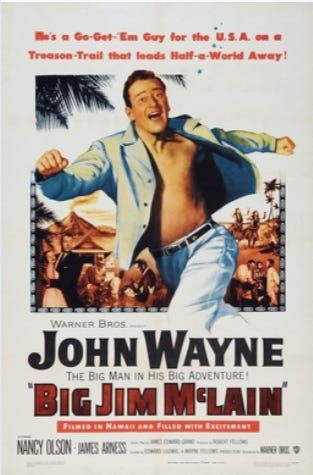
On the Political Toady Arthur Schlesinger see his journals, as collected and edited by his sons. The Sons have been a bit too honest, as to their fathers political enthusiams! Schlesinger pere, in some sections, makes noises like Joe McCarthy and his Fellow Travelers! In some ‘scenes’ in this collection, Schlesinger echoes that Hollywood Potboiler Big Jim McLain,1952.
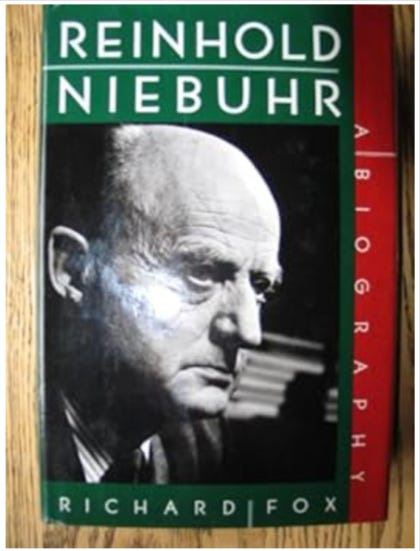
I’ve just finished a Reinhold Niebuhr biography by Richard Fox published in 1985. That I find Mr. Niebuhr repugnant as person and Christian Moralist is a statement of my prejudice, without apology. I felt that I wanted to understand who the man was and where he came from. Those questions are answered in some detail in Mr. Fox’s biography, although Mr. Fox seems to be satisfied with hagiography rather that critical engagement with Mr. Niebuhr as theopolitician. Niebuhr appears to be a religious and political conformist swept along from Socialism to Cold War Liberalism: always a little too anxious to prove his patriotism, his Americaness. Niebuhr has become the object of a cult headed by President Obama, perhaps because of the tough minded moralizing represented by Christian Realism: which could be more accurately named Christian Imperialism. It has something in common with the Protestant Christian Politics of Woodrow Wilson, with an emphasis on the necessary use of violence, to reach political ends deemed important enough to warrant it. In the name of the greater political good, even as necessary to emancipate, if only temporarily, man from his natural sinful and irredeemable self-hood. This cliché of the Christian Tradition reeks of the self-hating Augustine, and his successors, who institutionalized the persistent, morally destructive Christian anti-humanism. Imperial Politics with a thin veneer of carefully cultivated piety is an American tradition. I would call Niebuhr hopelessly Middlebrow: more about the care and maintenance of bourgeois political respectability and the self-exculpatory, as key to ex post facto rationalizations identified as ‘Philosophy’ . I was impressed, and moved by one person’s character in Mr. Fox’s biography of Reinhold, and that was the love, devotion and steadfastness of his brother Richard. Engaging with the ‘Philosophy’ of Mr. Niebuhr using the valuable historical frame provided by Mr. Fox will enrich my further reading.
“Ambitious reform” of funding and regulation is needed to stave off financial crisis in UK higher education as competition for students is stopping cash-strapped universities joining forces to cut costs, a review has warned.
Sir Nigel Carrington, chair of the Transformation and Efficiency Taskforce, said the “marketisation” of higher education since tuition fees in England rose to £9,000 in 2012 had led institutions to “operate as islands”.
Last year ministers agreed to increase domestic tuition fees in England in line with inflation for three years, taking the annual payment to £9,535 in 2025-26 and likely above £10,000 this parliament.
But Carrington, former vice-chancellor of the University of the Arts London, said the funding situation was still “unsustainable” as the real value of fees had fallen by about 40 per cent since 2012.
Securing the sector’s future required a “fundamental rethink of how higher education operates at a national level” and a commitment to “ambitious reform” from universities and policymakers, he added.
The review by the task force set up by Universities UK, the main lobby group, called for ministers to stabilise university finances, create a “transformation fund” and remove regulatory barriers to collaboration.
But it added that universities also needed to “urgently” look at cutting costs by integrating services and procurement.
A long-term funding squeeze and softening enrolment of international students has exacerbated a financial crisis in higher education, with universities taking drastic cost-cutting measures to avert a wave of insolvencies.
…
Half of UK institutions have said they have closed courses, while one-quarter have made compulsory redundancies in the past three years.
Carrington said there had already been “an enormous amount” of retrenchment in the sector, warning that without more support from government the UK was in “real danger of falling down the global league tables” and compromising the quality of teaching and research objectives.
As well as stabilising the sector’s income, Carrington called for clarification on competition laws around university collaboration and a shift in “philosophy” from the Office for Students, the sector regulator, which had been “built on a foundational pillar of promoting competition”.
The report pointed to examples of collaboration such as the University of London, a federation of 17 institutions that share services, and the joint campus operated by Falmouth and Exeter universities in Cornwall.
Efficiencies could also be made by leveraging sector buying power with a “more strategic, cross-institutional approach to purchasing” in areas such as software, it found.
While mergers “may be appropriate in a few cases”, Carrington said they were not a “quick fix” and were unlikely to be desirable for most institutions.
Nick Hillman, director of the Higher Education Policy Institute, a think-tank, said the report confirmed the sector would emerge from the current crisis “looking very different”.
“Universities know they need to balance their past fierce competition with a bit more co-operation,” he said, adding that the task force was right to question whether full mergers would deliver effective change.
“The key test will be following through. There have been past comparable sector-wide initiatives which have gone nowhere.” Baroness Jacqui Smith, skills minister, said that while the government had taken “tough decisions to put universities on a firmer financial footing . . . universities must do more to deliver opportunity for students and growth for our economy”.
Editor: I post this on Sunday 6/1/2025 5:59 PM California Daylight Savings Time: Only 3 comments so far!
But any trust-the-plan case for Trump’s approach underrates how much time can be wasted and policy opportunities lost unraveling problems of your own making. The idea that we’re going to end up with the optimal form of re-industrialization at the end of all the Trump trade drama is, let’s just say, extremely unproven; a scenario where the economy just survives the drama seems more like Trump’s best case, with worse ones still very much in the picture.
And then there is just the inherent danger in living, for three years and eight months more, with a president who we know from the experience of Jan. 6, 2021, doesn’t always backtrack when he enters dangerous terrain.
A contained, checked form of Trumpian aggression seems to be what a subset of Americans want from this presidency. But their support, now as last November, rests on a gamble — that there will be forces strong enough to check him even if he decides not to chicken out.
Editor: the above is an example of the ‘Lowbrow Douthat’ in the ending of his essay at the
The some selected paragraphs of Mr. Doutaht on Gaza :
…
How would you weigh the wars in Ukraine and Gaza, with reference to a decadent empire’s ability or inability to maintain a Pax Americana?
One could imagine a synthesis of Biden’s Ukraine policy and Trump’s impulses that would be correct. The us overextended itself in making guarantees to Ukraine that it was never going to be able to fulfil; like our failures in Afghanistan, that was an example of imperial overreach. Once Russia invaded Ukraine, it made sense to support the Ukrainians. The failure of the Biden Administration was not recognizing the moment to cut a deal—which is hard to do. But there was a window, when Ukraine had regained a certain amount of territory, when the Administration should have said, ok, this is the frontier of our empire. Ukraine is never going to be in nato, it’s not going to get all its territory back; but they could have cut a deal to end the war in a way that would have allowed Ukraine to retain territorial integrity. There are people in the Trump Administration who want to do that. But there is also an impulse to just wash our hands of this. The outcome will depend on which impulse prevails. But Russia is in a better position now than it was two years ago. A Harris Administration would have ended up pushing in a similar direction. But Trump’s wash-his-hands impulse might leave Ukraine in a more unsustainable position than it should be.
And Gaza?
There, too, there’s a version of the Trump position which says we’re broadly on the Israeli side, but we’re not letting them just set the agenda, that could be correct. But the absence of a solution for Gaza is an intractable problem. Biden was in an impossible position, caught between his own base and the Republican Party, and his own senility and inability to be an effective actor on the world stage, which made America basically a bystander. Notwithstanding rising sympathy for the Palestinians, America’s going to retain a basic pro-Israel alignment for the next twenty years, but within that it needs to exert more influence over Israel than Biden was able to do. But toward what endgame, I don’t know. If I knew that, I’d be Jared Kushner.
To describe Washington’s role in the war in Gaza as that of ‘bystander’—given that the us has supplied Israel with tens of thousands of massive bombs and the aircraft dropping them to obliterate the Strip, together with the requisite diplomatic coverage operation at the un and elsewhere—isn’t that a euphemism of the kind you otherwise tend to avoid?
‘Bystander’ in the sense of the Biden Administration not exerting any clear strategic influence over Israel, over the conduct of the war or over the larger regional drama. That largely reflected Biden himself being effectively checked out as a major actor in his own presidency. The us remains a patron of Israel and remains directly involved in the conflict. By virtue of being a hegemonic power, the us is not a bystander in any absolute sense.
Editor: In these paragraphs The Reader discovers that Douthat is just another New York Times Political/Moral conformist, like Friedman, Brooks, Stephens and the rest of the second-stringers at this newspaper. Douthat, in his New York Times iteration, plays the role of just another political mediocrity! Yet Nick Burns interview of Douthat is revelatory of what?
Political Observer.
Added 6/1/2025
Editor : I do recall reading four of Douthat’s essay at the Spectator, which I’m having trouble finding, yet the writer of those essays seemed to be less of The New York Times persona, and more like an actual Conservative voice!
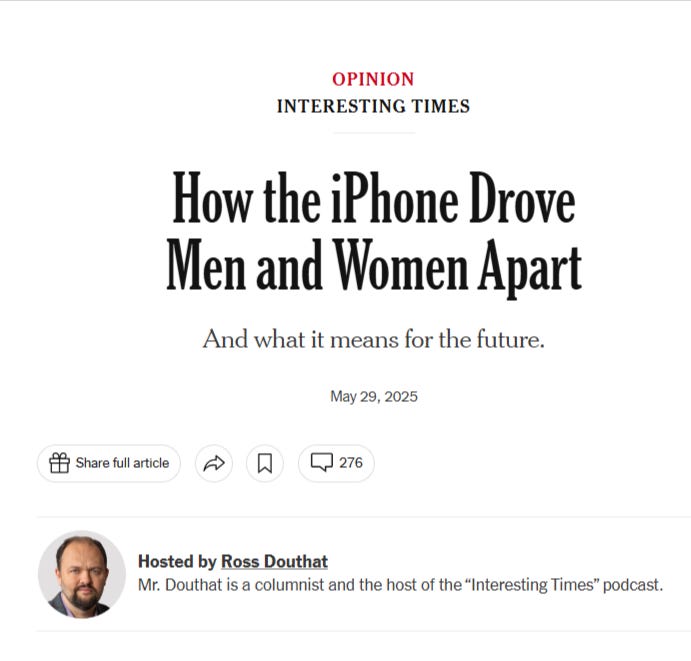
Editor: Another question: what can the reader make of the utterly talentless Douthat, that conflates the iphone as a threat to Men an Women , and the declining birthrate?
Claims that left and right, terms born during the French Revolution in the divisions of the National Assembly of 1789, are becoming, or are already, anachronisms have been a recurrent political trope since the last century. If there is no more reason to credit it now than there was in the past, evidence of confusion between the two has been visibly increasing, in an ideological flux dramatized in Brazil by Roberto Schwarz, historicized by Christopher Clark in Britain, and enacted daily in the cross-cutting populisms of Europe and America. Scenes like these speak to a slow erosion of the liberal order, with no clear-cut alternative to challenge its rule, whose upshot is the jumbled discourses cartwheeling through social media and broadcast politics, open feedstock for clinical scrutiny.
The world of ideas proper, where articulated systems of thought confront each other, is another matter. There, a serious left needs to respond, not with self-segregation or withdrawal to any Abgrenzung of its own, but with open-minded curiosity and principled critique, where these are in order. In that spirit, we lead this issue with an interview with Ross Douthat, the conservative columnist who is the most consistently original mind writing about American politics in the pages of the New York Times. In doing so, the journal continues a tradition of treating thinkers and writers of an outlook antithetical to its own with respect—and, if merited, admiration—that started with Michael Oakeshott in the sixties, and from the nineties onwards continued with Francis Fukuyama, Giovanni Sartori, J. G. A. Pocock, Karl-Heinz Bohrer and others. Author of some seven books on a wide range of subjects, covering class and culture, demography and religion, technical progress and economic stagnation, the organizing subject of Douthat’s writing is the condition of his own country, America, placed within the setting of the world. In the Victorian era there were equivalents in the press of Britain, France, Italy and elsewhere, writers about their time enjoying significant public authority. But today’s Europe lacks any real counterpart, and in the United States itself there is no journalist of comparable imaginative scope. A firebrand of the student right in his youth—incendiary entries in the Harvard Salient, an inaugural salvo of ‘Cheney for President’ in the nyt of 2009—by the time Trump ran in the primaries of 2016, Douthat was one of his sharpest critics. At no point part of what became the Never Trump brigade, Republicans—Cheney’s daughter in the lead, along with Kristol Jr and the like—scandalized by his lack of regard for Cold War pieties, Douthat would develop into one of the astutest analysts of the trajectory of the current President, whose zigzagging threats of an all-round trade war he judges condemned to failure. Here our contributor Nick Burns questions him about his intellectual formation, political evolution, international horizon and the gains and limits of his role as a tribune on America’s leading newspaper. The result is a portrait, perhaps unlike any other so far available, of a far from typical conservative intelligence.
What would make you want to have more children? This week on “Interesting Times,” Ross Douthat speaks with Dr. Alice Evans, a social scientist who is as concerned about the global decline in fertility as Ross is. The two discuss why this isn’t just a gender issue — it’s “a solitude issue” — and whether there’s a way to bring relationships back.
….
Ross Douthat: From New York Times Opinion, I’m Ross Douthat, and this is Interesting Times.
Fifty years ago, the world feared a population bomb, an explosion of population growth that would yield famine, war and disaster. But for most of my career, I’ve been trying to persuade people that actually, population decline is now the greater peril. And in the last few years, the world has finally caught up with my once eccentric anxieties. We’re undeniably headed toward a period of global population collapse, one that threatens to maroon today’s children — mine, yours, if you have them, and by the way, you really should — in a world of emptying cities and slowing economies.
Our guest today has literally traveled the world studying this issue, trying to answer the hardest question, not just why birthrates have declined, but why they’ve declined so far and so fast in so many different places. Alice Evans, welcome to Interesting Times.
Editor: The above Mr. Douthat at near full screech! Mr Douthay of 2012, you can’t accuse him of inconsistaney !
To characterize Ross Douthat, in his essay of December 1, 2012 titled More Babies, Please, as sounding like some turn of the century Germanic prophet of doom and inevitable decadence. This, as more and more people realize that their lives are important in themselves, set free from a ‘civilizational’, religious, nation state, even biological context: the realization of the possibilities of human freedom, is revelatory of his linkage of the sine qua non of growth, in Capitalism, and the Catholic Church’s belief in unfettered procreation.
Philosophical Apprentice
What I missed in my 2012 comment on More Babies, PleaseDouthat resorts to the crime of decadence, and the rehabilitation of ‘individual choice’: it attempts to hint as some kind of ‘revelation’ that Douthat dare not speak its name @NYT!
…
Beneath these policy debates, though, lie cultural forces that no legislator can really hope to change. The retreat from child rearing is, at some level, a symptom of late-modern exhaustion — a decadence that first arose in the West but now haunts rich societies around the globe. It’s a spirit that privileges the present over the future, chooses stagnation over innovation, prefers what already exists over what might be. It embraces the comforts and pleasures of modernity, while shrugging off the basic sacrifices that built our civilization in the first place.
Such decadence need not be permanent, but neither can it be undone by political willpower alone. It can only be reversed by the slow accumulation of individual choices, which is how all social and cultural recoveries are ultimately made.
Political Observer on Mount’s contining attempts to self-emacipate from his Thatcherism, by means of political prestidigitation wedded to a selective re-telling of American History!
Headline: Conservatives Have Lost Their Grip on the World — and Themselves
September 26, 2024
Editor: in a mere 3151 word essay this Thatcherite continue to self-present as a ‘voice of reason’ in the Age of Trump! The opening paragraphs of his political monster are instructive, in fact act as a diagnosis of a kind?
The British Conservative Party has long boasted of being the most successful political party on the planet. The unimaginable scale of its defeat on July 4, when it won the fewest seats in its history, looks like the downfallof moderate conservatism. It appears to be the final straw for the center-right parties offering pragmatism, prosperity and opportunity that have dominated Western politics since World War II. Almost everywhere conservatism’s brash rival, nationalist populism, is on the march: already in power with its colorful leaders in Hungary, Italy and Argentina; on the brink of it in the United States and France; and eroding the old-style conservatives in Germany, the Netherlands and now Britain. The rivalry on the right is in danger of becoming a rout, with the senior, steadier force swallowed by its insurgent challenger.
These shocks to our established ways of thinking are so violent that we immediately assume that this must be a unique apocalypse, the product of unprecedented social and economic forces. This, I think, is a temptation to be resisted. The reality is that something similar has often happened or nearly happened before, at different times and in different places. Nationalist populism, my umbrella term for the smorgasbord of hard-right forces, always sings the same song. The circumstances that gain it a sympathetic hearing are usually much the same, too: decline of old industries and loss of well-paid jobs for men, undercutting by rising nations and, of course, fresh waves of immigrants from new places. It’s when mainstream conservatism visibly flounders in dealing with the challenge — as it has so clearly done in recent years — that such movements can hope to surge.
The upshot is both concerning and consoling. Conservatism has been here before — and it can get through it again.
Editor: As interesting as the attempt at explication , Trump and Trumpism is the child of the Ameican Tea Party that devored itself in internacine political warfare that Trump exploited! Yet note that Mr. Mount’s ‘The New Few’ was a wan attempt to self-emancipate from his Thatcherite past, and note that on page 154 and 155 Mount uses the epithet ‘Loony Left’twice and the final chapter on ‘The Riots and after’ of August 6 and 10 of 2011: Recall that the collapse of the Neo-Liberal Swindle, 2007-2008 that Mount acted as a co-conspipertor, advocate, even a True Believer took time to manifest itself in the lives of ordinary people. And the fact that The Neo-Liberal apologists like Mount re-wrote a History Made to Measure. And that he had the brass to lecture Americans, about their own History: Oxbrider Brass is Eternal !
Editor: Nothing quite prepares The Reader for these 509 words ofHistory that seeks to enlighten The American Reader?
Nationalist populism is not a weird deviation from the natural flow of history. Since the dawn of the nation-state, it has been an ever-present threat, sometimes lurking in the shadows, sometimes derided as a throwback, but never quite disappearing from view. The possibilities for its success are often visible well in advance to keen observers, at times when most people are thinking about something else. In 1922, when the rest of Europe was convulsed by the threat of Bolshevism and Adolf Hitler was still a nonentity, the German chancellor declared “There is no doubt about it: The enemy is on the right.” In 1994, when all of Europe was still celebrating the fall of the Berlin Wall and the end of history, Edward Luttwak foresaw a “space that remains wide open for a product-improved fascist party.”
It’s in the United States where the most stunning example of something like that has taken place. But the Trump phenomenon did not come out of a calm blue sky. Donald Trump’s discarded guru Steve Bannon saw in his master echoes of earlier populist orators, such as William Jennings Bryan, who could rage against bankers to rural audiences for hours on end. Mr. Bannon prepped Mr. Trump for his inauguration by telling him tales of his predecessor Andrew Jackson, whose inauguration had drawn to Washington thousands of obstreperous supporters who drank the capital dry and outstayed their welcome — echoing what was to come four years later, on a more violent and terrifying scale.
Mr. Trump’s critics, and his fans too, preferred to think of him as a unique irruption into American history. But Mr. Bannon was right in thinking that most of his instincts and his policies have roots going way back. Before the aviator Charles Lindbergh helped lead the America First Committee to keep the United States out of World War II, Woodrow Wilson had used the slogan “America First” in his doomed 1916 pledge to keep America out of World War I. The press baron William Randolph Hearst used it in his campaigns almost as often as he played up the threat of Chinese immigration. (Orson Welles’s “Citizen Kane,”based on Mr. Hearst, is Mr. Trump’s favorite film.) In the 1920s, the Ku Klux Klan took up the slogan, and as recently as 2016, David Duke, a former leader of the Klan, ran for a Louisiana Senate seat as an “America First” candidate.
For Mr. Trump, “America First” meant withdrawing from pretty much every international organization. At one time or another as president, he demanded that the United States withdraw from NATO, the North American Free Trade Agreement, the World Health Organization, the Paris climate accords and the World Trade Organization. He was equally hostile to bilateral agreements, with nations such as South Korea and Iran. This isolationism also has plenty of precedents, going back to the failure of the Senate to ratify the Treaty of Versailles in 1919 and join the League of Nations the year after, under the influence of such implacable America-aloners as Senator William Borah of Idaho.
Editor: Reader only 2333 more words ….
Political Observer
Reader how could I had forgotten Francis Mulhern ‘A Tory Tribune?’ from 105•May/June 2017 of The New Left Review?
A review of Ferdinand Mount’s ‘English Voices: Lives, Landscapes, Laments’ Simon and Schuster: London 2016
Reader note that I do not share inFrancis Mulhern’s generosity of spirit! I offer this revelatory excerpt:
…
The great politico-ideological contests of the twentieth century ranged Mount on the side of the bold Western David, of course. The closing words of his appreciation of Hugh Trevor-Roper, from 2005, recall a once-mighty ideological adversary:
The causes for which he battled with such ferocious glee have come out on top, in the Cold War no less than in the English Civil War. In politics as in historiography, the Marxists and the marxisants have been routed. It is easy to forget how their premises and arguments were once taken for granted and how quirky and perverse seemed those who spoke out against them.
And indeed such moments are a reminder of the voices that go unheard in Mount’s whispering gallery. With just a few idiosyncratic exceptions (Greer, Alan Bennett, Le Carré, Arthur Ransome, author of the children’s classic Swallows and Amazons, and the philo-Soviet ecclesiastic Hewlett Johnson, Dean of Canterbury), here is a spectrum without a Left. Of course, what is not published cannot be reviewed. But even a very short list of eligible-but-absent voices—salient authors or subjects of the kinds of book Mount chooses to write about—is telling for what it says about the national imaginary as mediated by him: Richard Hoggart, Jack Jones, Eric Hobsbawm, C. L. R. James, Dorothy Thompson, Angela Carter, Tony Benn.
Mount’s local party loyalties are more ambiguously framed. No great admirer of politicians in general, Conservatives included, he is damning in his judgements of Harold Macmillan, whose premiership he thinks was an anachronism and a historic mistake, and Edward Heath, the technocrat; the mock-heroic Lord Hailsham he dismisses as an exhibitionist. Among his contemporaries, two of his three touchstones are legends of the Labour right, Denis Healey and Roy Jenkins (the other, as always, is Margaret Thatcher); and the plainest statement of political inspiration in the whole collection comes aslant, in a sub-section nominally devoted to religion, in a portrait of a Liberal leader, Gladstone. For an uncomplicated Tory loyalist, Mount’s intellectual presence must be about as reassuring as Matthew Arnold’s higher journalism was for party Liberals in his own time. But Arnold’s free play of mind had a brake, which he applied in a motto from the French conservative thinker Joubert: ‘Force till right is ready.’ Mount’s equivalent statement of limits deserves the same notoriety. ‘There are times’, he wrote in Cold Cream, defending the domestic programme of the Thatcher governments—including the premeditated fight to the finish against the miners—‘when what is needed is not a beacon but a blowtorch.’
Mount did his bit to fuel the blowtorch, and would have done more had not the bearings of the Thatcher government shifted during her second term, now giving priority to the formulation of a new Östpolitik for the last days of the Cold War. As it was, he returned to full-time journalism and writing. If, more prosaically, the ratios of intellectual engagement in public affairs—the exercise of shadow authority—can be calculated from a scale ranging between the extremes of prophecy, or moral leadership, and policy, the formulation of practical goals for duly equipped institutions, Mount’s readings show a continuing pull towards the latter end. This practical bent, in the centre-right zone marked out by Thatcher and Blair, has been most obviously displayed in the book-length works he has written over the past twenty-five years: The British Constitution Now (1992), Mind the Gap (2004) and, most recently, The New Few (2012), an attack on the spread of oligarchy in British political and economic life. But it is present too even when, as often in English Voices, the occasion is not primarily political. Mount’s Gladstone is a working fusion of the two modes, a seer and an effective reforming politician in one. He is, moreover, a figure who defies the reductive polarizing terms of the given ‘political creeds’ and party shibboleths. He is ‘reverent’ among utilitarians, a communitarian in his own day, but tolerant—eventually—in the face of narrow confessional demands, and liberal in his sensitivity to popular conditions of life. There is something in him of Berlin’s philosophy and also Michael Oakeshott’s, two figures whose mutual hostility was unrelenting.
Editor: Should the Mount opening paragraph surprise any reader, who has experience of reading his mouldering prose, that pretends to wide learning and its collection of ‘bad political actors’ ?
It’s puzzling, unsettling even, to see ‘free speech’ rearing its head in public debate again, rousing passions which seemed long defunct. Wasn’t the doctrine definitively trumpeted by Milton and Locke, and knocked into some sort of final shape by John Stuart Mill? Even before you get to today’s remix of the debate, you cannot help noticing two features of it. First, the zealots today are no longer the progressives on the left – liberals, socialists, trade unionists. Instead they are predominantly on the right: campaigners against immigration, Brexiters, the enemies of Woke, aka Anti Social Justice Warriors, or ‘Anti-SJW’, as they proclaim themselves on their black T-shirts, available online for £15. This switch-around isn’t entirely new. Thirty years ago, in There’s No Such Thing as Free Speech, Stanley Fish wrote that ‘lately, many on the liberal and progressive left have been disconcerted to find that words, phrases and concepts thought to be their property … have been appropriated by the forces of neoconservatism. This is particularly true of the concept of free speech.’ Today, alleged infringements of free speech that would once have outraged Guardian readers are splashed all over the Daily Telegraph. As I write, the Telegraph front page leads on an apparent threat by the US State Department to scrap a trade deal with the UK, because it was ‘concerned about freedom of expression in the UK’, in relation to criminal charges against a Christian anti-abortion campaigner in Bournemouth. This concern echoed a statement made by Vice President Vance the previous month that he feared free speech ‘in Britain and across Europe’ was ‘in retreat’. The other stand-out feature of the debate today, and something it is hard not to see as ominous, is the growing gap, in law and practice, between the United States and the rest of the world which calls itself free.
…
Editor: Mr. Mount’s final paragraph abounds in his collection of evocative/decorative Names, and various ‘bad actors’.
But the case for some laws regulating libel, slander, hate speech, incitement to violence and verbal harassment of all sorts remains as strong as ever, though just as difficult to define and to police with any sort of fairness. So too, does the case for codes of conduct in public institutions, Parliament and the universities being only the most conspicuous examples. The lines are never easy to draw. At what point does ‘political correctness’ cease to be common civility and degenerate into censorship? When does ‘woke’ move from its original meaning of ‘alert to racism’ and turn into self-righteous hectoring? When should an anti-abortion campaigner be entitled to carry a placard outside an abortion clinic, or, come to that, when should a women’s-right-to-chooser be allowed to stake out the home of an anti-abortion campaigner? There is a right to demonstrate, yes, but there is also a right to some degree of personal tranquillity. ‘Watching and besetting’ is an ancient crime under English law, and to this day the courts are still defining its reach. As Dabhoiwala continually reminds us, context is everything, or almost everything. To warble on in an unfocused way about ‘cancel culture’ cannot conceal either the difficulties of the balancing act or its necessity for a flourishing society. The fabric of civility is as thin as gossamer and just as precious. Even John Stuart Mill might have had second thoughts about the innocuousness of speech if he had been shopping at the supermarket in Buffalo or El Paso. And that is even before we tiptoe into the wider political effects. Would the present incumbent of the White House have been able to swim along so effortlessly on his stream of lies and insults without the protection of the First Amendment? Doesn’t Donald Trump ultimately owe quite a lot to John Stuart Mill?
Editor: Should the carefully constructed persona of J.D. Vance, co-authored by Peter Thiel and his genuflection to Leo Strauss, and the others who acted as co-authores of Vance’s , what to name it? Raymond Chandler, in another but revelent context, named this ‘Hollywood Vomit’!
Editor: Reader aquaint yourself with Mr.Cruddas opening paragraphs:
Who invented the “Big Society”? I suggest Ferdinand Mount. While our MPs couldn’t be seen for dust, his 2004 book Mind the Gap reintroduced class as a political category. Ahead of its time, it confronted the benign take on globalisation dominant in Westminster. The book was a shout out against the “cold indifference” of contemporary capitalism; the disrespect afforded to those who fall on the wrong side of the new class divide. Its focus was on the economically and culturally dis-invented – “the tribes who live in the dark”. A brilliant book, it signalled a new readiness from the right to confront the realities of social rupture, well before the music stopped and Bear Stearns went to Chapter 11 insolvency.
Within the text we can identify the building-blocks for the “Red Tory” Phillip Blond, and the rise of the Cameroons. Mount argued we must “rebuild the little platoons”. The faith communities would be critical in delivering welfare; we need to see greater reciprocity and employee share ownership, localism and community control of the state. We should, in later parlance, “recapitalise the poor” through asset transfers – land and housing, school and health vouchers, in order to help the victims in the new “downer” class.
Here the causes of inequality lie at the feet of the welfare state. It crowds out working-class respect, fraternity and civics; community cohesion, duty and obligation. Ceteris paribus, we confront these inequalities once we reduce the power of the state.
…
The New Few then races through some corrosive examples. The still-shocking £9bn HSBC takeover of sub-prime vultures Household, culminating in £53bn set-aside to sweep up this folly; the “festering morass of bad debts” that was HBOS; vainglorious Fred the Shred, and many more. The central concern is the arbitrary power of the CEO and decline of the active shareholder, interlocked with the rise of the fund manager with their top-slice off every transaction: a “croupier’s take”. In short, there was systemic collusion between the two dominant groups. “One set of oligarchs- the fund managers – approve the size of salaries, bonuses and pension pots for another set of oligarchs – the CEOs, board members and senior managers”.
Why so little appetite to confront these excesses? Mount identifies three basic reasons- or excuses, or illusions – that sustain the system. “The market is always right”; “big is beautiful”, and “complexity equals progress”: they echo the dominance of neo-liberalism, of a system too big to fail, due to the sheer complexity of financial products with no appreciation of moral hazard. A brief history of oligarchy follows, and the forces that shape it: war, technology, bureaucracy, forms of ideology – the links between money and power.
…
Mount’s book is a brilliant attempt to import rigour and coherence; indeed, the case is better made than by anyone in the current administration. Yet can he really be suggesting across the City, within our hollowed-out party structures, across Whitehall and Westminster, that the Coalition is embarked on a systematic assault on power elites and oligarchy in defence of the little guy? It doesn’t look like that from my advice centre in East London.
The man behind the Big Society has attempted to write the Bible for the Coalition. It demands respect and has to be read. I strongly agree that there is “a sense that society has lost its recognisable moral shape, and with it, its legitimacy”. But it is because of this that people will demand more, so much more, than what is currently on offer.
Editor: ‘The West’ is collapsing from within! The Genocide perpetrated against a captive population in Gaza, and its ever widenning toxic peramiters by The Zinonist Faschest State, and its American and European suppliers of the weapons of Mass Murder. Mr. Mount never mentions this on going Crime, any surprise?
Yes, universities have made genuine blunders that predictably led to a widespread loss of trust. And yes, some corners of just about every American campus, including Harvard, are now subsumed by ideological hogwash. But like other leading institutions that have come under massive attack, Harvard does also remain at the forefront of research in extremely important fields, from semiconductors to artificial intelligence. If Trump was serious about wanting America to outcompete rivals like China over the course of the next decades, he would recognize that it is a very bad deal for the country to turn its advanced capabilities in the industries of the future into collateral damage in a fight against woke professors in, say, the Department of American Studies.
Anybody who is actually interested in “Making America Great Again” should be able to keep two truths—that universities have in the last years betrayed their mission in key ways, and that they nevertheless remain hugely important national assets—in mind at the same time. But in a bitterly ironic echo of the postmodern theories that its leading members purport to hate, the administration appears only to be interested in one form of Veritas: that which serves the whims and the wishes, the personal predilections and the partisan interests of its leader.






 StephenKMackSD's Blog