Books of Interest: Sorcery in the Black Atlantic, Parés, Sansi


Edited by Luis Nicolau Parés and Roger Sansi

304 pages | 6 x 9 | © 2011

Most scholarship on sorcery and witchcraft has narrowly focused on specific times and places, particularly early modern Europe and twentieth-century Africa. And much of that research interprets sorcery as merely a remnant of premodern traditions. Boldly challenging these views, Sorcery in the Black Atlantic takes a longer historical and broader geographical perspective, contending that sorcery is best understood as an Atlantic phenomenon that has significant connections to modernity and globalization. Continue reading →

Posted in Uncategorized | Leave a comment

Books of Interest:The Lady Anatomist: The Life and Work of Anna Morandi Manzolini, Messbarger

Rebecca Messbarger

248 pages | 50 color plates, 20 halftones | 7 x 10 | © 2010

Anna Morandi Manzolini (1714-74), a woman artist and scientist, surmounted meager origins and limited formal education to become one of the most acclaimed anatomical sculptors of the Enlightenment. The Lady Anatomist tells the story of her arresting life and times, in light of the intertwined histories of science, gender, and art that complicated her rise to fame in the eighteenth century. Continue reading →

Posted in Uncategorized | Leave a comment

Books of Interest:Gay Shame, Halperin, Traub

Edited by David M. Halperin and Valerie Traub

408 pages | 22 halftones, 1 DVD | 6 x 9 | © 2010
Ever since the 1969 Stonewall Riots, “gay pride” has been the rallying cry of the gay rights movement and the political force behind the emergence of the field of lesbian and gay studies. But has something been lost, forgotten, or buried beneath the drive to transform homosexuality from a perversion to a proud social identity? Have the political requirements of gay pride repressed discussion of the more uncomfortable or undignified aspects of homosexuality?
Gay Shame seeks to lift this unofficial ban on the investigation of homosexuality and shame by presenting critical work from the most vibrant frontier in contemporary queer studies. An esteemed list of contributors tackles a range of issues—questions of emotion, disreputable sexual histories, dissident gender identities, and embarrassing figures and moments in gay history—as they explore the possibility of reclaiming shame as a new, even productive, way to examine lesbian and gay culture. Continue reading →
Posted in Uncategorized | Leave a comment

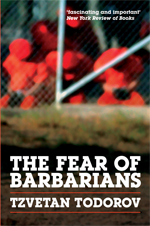
Books of Interest:The Fear of Barbarians: Beyond the Clash of Civilizations, Todorov, Brown

The relationship between Western democracies and Islam, rarely entirely comfortable, has in recent years become increasingly tense. A growing immigrant population and worries about cultural and political assimilation—exacerbated by terrorist attacks in the United States, Europe, and around the world—have provoked reams of commentary from all parts of the political spectrum, a frustrating majority of it hyperbolic or even hysterical. Continue reading →

Posted in Uncategorized | Leave a comment

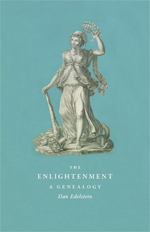
Books of Interest:The Enlightenment: A Genealogy, Edelstein

Dan Edelstein

184 pages | 1 table | 5-1/2 x 8-1/2 | © 2010

What was the Enlightenment? Though many scholars have attempted to solve this riddle, none has made as much use of contemporary answers as Dan Edelstein does here. In seeking to recover where, when, and how the concept of “the Enlightenment” first emerged, Edelstein departs from genealogies that trace it back to political and philosophical developments in England and the Dutch Republic. According to Edelstein, by the 1720s scholars and authors in France were already employing a constellation of terms—such as l’esprit philosophique—to describe what we would today call the Enlightenment. But Edelstein argues that it was within the French Academies, and in the context of the Quarrel of the Ancients and the Moderns, that the key definition, concepts, and historical narratives of the Enlightenment were crafted. Continue reading →

Posted in Uncategorized | Leave a comment

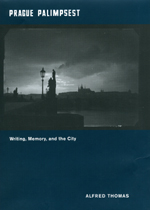
Books of Interest:Prague Palimpsest: Writing, Memory, and the City, Thomas

“Prague Palimpsest is one of the most intriguing and exciting books written about this ancient cosmopolitan city. Based on prodigious research, Thomas offers a complex close reading of the main figures and topics of Prague’s cultural and literary history. He begins with the foundational legends of the fascinating Libuše corpus before moving on to Kafka and his contemporaneous foreign visitors to Prague, like Apollinaire; he then considers the dramatic rupture of the Holocaust and the post-Shoah palimpsestic reelaborations in the works of Bachmann, Celan, and Sebald before concluding with an outlook on postmodern Czech authors. In doing so the book sets new and attractive standards of intertextual research and dialogical comparative cultural expeditions, inviting us to revisit Prague and at the same time to rediscover lost splinters of our own past or identity.”—Primus-Heinz Kucher, University of Klagenfurt, Austria

[shorter version]
“Prague Palimpsest is one of the most intriguing and exciting books written about this ancient cosmopolitan city. Alfred Thomas invites us to revisit Prague and at the same time to rediscover lost splinters of our own past or identity.”—Primus-Heinz Kucher, University of Klagenfurt, Austria

Posted in Uncategorized | Leave a comment

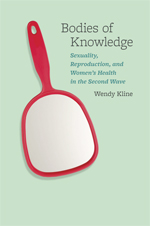
Books of Interest:Bodies of Knowledge: Sexuality, Reproduction, and Women’s Health in the Second Wave, Kline

Wendy Kline

200 pages | 10 halftones | 6 x 9 | © 2010

Throughout the 1970s and ’80s, women argued that unless they gained access to information about their own bodies, there would be no equality. In Bodies of Knowledge, Wendy Kline considers the ways in which ordinary women worked to position the female body at the center of women’s liberation. Continue reading →

Posted in Uncategorized | Leave a comment

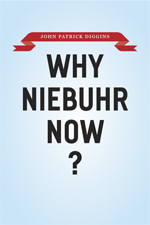
Books of Interest: Why Niebuhr Now?, Diggins

Barack Obama has called him “one of my favorite philosophers.” John McCain wrote that he is “a paragon of clarity about the costs of a good war.” Andrew Sullivan has said, “We need Niebuhr now more than ever.” For a theologian who died in 1971, Reinhold Niebuhr is maintaining a remarkably high profile in the twenty-first century. Continue reading →

Posted in Uncategorized | Leave a comment

The Good Doctor and The Arab Spring: The Conservative Thinkers, Episode XX of The American Political Melodrama

http://www.washingtonpost.com/wp-dyn/content/article/2011/03/03/AR2011030304239.html


The rhetorical frame of The Good Doctor’s (TGD) latest essay is unsurprisingly self congratulatory: could this be just another example of the self-obsession, even the blatant narcissism, of the Neo-Conservative thinker, in situ? Or might we just settle for the adolescent braggadocio of the schoolyard bully? These two questions can be considered as open. The question of the comparison of the ‘Mideast Spring’ and the Bush Doctrine of pre-emptive invasion, conquest and eventual stalemate is the TGD’s argument. Are they similar in any way? Can an indigenous, self propelled, revolutionary groundswell be compared to an invading army of the world’s super-power? Is this not the stuff of the post-war American comic book hero, of a puerile, self- serving political/theological imagination? It is hard to be patient with TGD, he engages in an intellectually dishonest, bogus comparitivism of the evil of Hussein and Gaddafi: to what end but the moral justification of the Bush Doctrine, as necessary, as indispensable, as an historical inevitability, leading to a moral clarity: an antidote to the ‘moral inversion’, that resides in this country’s major political actors, Obama and Clinton: a  Thinking mired in a free-floating, unresolved, irresolute state, in this crisis, of this historical/political moment. We then could argue that the ‘inversion’ that is taking place is a moral/political ‘inversion’ as argued by TGD as a cover, even a moral justification, for he first posits this as a moral problem, for the Bush Doctrine ex post facto: ‘Everyone is a convert to Bush’s freedom agenda’. Picking through this set of arguments in its convoluted conjectures and self-justifications leaves one in awe of the power of the stories that one can invent, and the twists that one’s reason can make in the pantomimes of good faith. 


Posted in Uncategorized | Leave a comment

Pretty Boy Reactionary,The Arab Spring and the Promise of Neo-Colonialism: Episode 1491 of the American Political Melodrama

http://www.newsweek.com/2011/02/27/un-american-revolutions.html

Pretty Boy Reactionary (PBR) sounds a solemn warning to Americans to give up their self-destructive romantic attachment to Revolution and Revolutionaries as nihilistic, even puerile: for Revolutionary fervor can lead to disastrous consequences: internecine war and the mass murder of partisans. Are we immune to the suffering of others no matter the cause? Is Emmanuel Levinas correct in founding an ethics on our recognition of human suffering as a reason for our action toward melioration?

The ‘Arab hordes’ are seemingly leaderless, now, but waiting just outside our view of the proscenium of History are the next Robespierre, Stalin or Mao! As the world’s moral and political arbiter can we allow this drift into mass murder?  Is this historical/political stance credible and at the same moment deeply troubling? Yes! But can we see quite clearly that as a Conservative Thinker PBR uses this political opportunity to criticize President Obama for a lack of prescience, a maladroit response to events, as they unfolded.  Although it could be argued that the uncertainties that the concatenations of the workings of History might led to the creation of imponderables, unknowns. Political generosity is not one of the characteristics that PBR ever expresses and the mention of the surmised or stated strategies of John McCain makes the political nature of PBR’s column absolutely unmistakable, although it was never in doubt. The large rhetorical frame of the lessons of a blood soaked History is in this case merely a garnish to the real business of politicking. Where to look for some kind of answer? The sage Andrew J. Bacevich in the same February 27, 2011 issue of Newsweek (The U.S. Must Resist the Urge to Meddle in the Mideast) offers an alternative view of necessary policy toward the  ‘Arab Spring’  and the challenges to American Interests that that indigenous, self propelled , imponderable Historical event offers to the thinkers , strategists and even partisan thinkers like PBR. Here is the second paragraph of Mr. Bacevich’s essay as illustrative of his thinking; one should pay particular attention to the very pointed criticism of British Colonialism:

‘But history, too, argues for restraint. Consider what several decades of outside meddling in the Islamic world has accomplished. Out of the ruins of the Ottoman Empire after World War I came a new map of the vast region, designed not to promote the well-being of its inhabitants, but to satisfy European (chiefly British) interests. The Allies drew boundaries, created nation-states, and installed monarchs to ensure Western access to oil and control of the Suez Canal.’

Does PBR provide any real answers to the vital questions of this historical moment? He offers more Conservative Scholarship as indicative of what is misleading in his political/historical analysis that is fully linked to the notion of a beneficent neo-colonialism, as fulfilling the paternalism at the root of his radical political nostalgia.

Here is the link to Mr. Bacevich’s commentary:

http://www.newsweek.com/2011/02/27/strategy-sit-on-your-hands.html

Posted in Uncategorized | Leave a comment