Truly Yours,
Myra Breckenridge
Film Critic at large
"I do not say any of this as criticism of the administration’s growing reliance on remote-controlled drones in the killing of terror leaders. I support the policy. But targeted killing should not rest entirely within the secret discretion of our leaders. The law professor Kenneth Anderson, perhaps the leading academic expert on the legality of drone warfare, has been arguing for some time now that the United States, as the dominant user of drone attacks, should be developing norms to regulate their use. Not rules, says Anderson—he does not envision lawyers standing behind every console operator—but norms, a set of shared ethical understandings to help our leaders decide when the use of targeted killing is necessary and appropriate. I agree.
The right way to develop an ethical sense about the use of drones is through robust public debate. Alas, that task may be difficult, because the drone war tends to slide off the screen. When we have, in the argot, boots on the ground, the public pays keen attention to war, engaging in often spirited argument over rights and wrongs. But the drone war poses little threat to American forces, and the attacks are rarely reported unless some major figure is killed, or a missile goes off course and strikes a wedding."
This alone seems to indicate that not much separates Mr. Miniter from Mr. Carter, except in terms of their mutual assignments by their editor. Let us simply look at the 'ethical issue' of drone strikes and the issue of 'collateral damage', i.e. innocent civilian deaths, and the felt political necessities of empire and imperialist. Professor Anderson will develop 'norms' for drone attacks not specific policies, that might hinder, arguably restrict, military action, in the national interest. We can now consign Nuremberg and the whole set of proscriptions and imperatives, that it entailed, into the dustbin. And celebrate the sophistry of victors who will write the History of America, in the Age of Terror. Mr. Miniter and Mr. Carter have helped to make permanent that Golden Age of Endless War: we have already secured our economic decline.
http://en.wikipedia.org/wiki/Stephen_L._Carter
http://www.latimes.com/news/opinion/commentary/la-oe-turley-civil-liberties-2…
Thank you to Glenn Greenwald for the link to this very important editorial.
http://www.nytimes.com/2011/09/27/opinion/brooks-the-lost-decade.html?_r=1&partner=rssnyt&emc=rss
The Lost Decade is the latest intellectual entity to make for a cliché ridden column by Mr. Brooks. It is Plato with a heavy garnish of Hegel, not the most palatable repast. But let us begin at the beginning. Mr. Brooks speaks as if The Lost Decade came out of nowhere, as if the acts of legislators, policy advocates, pundits, political hacks and political conformists are wholly meaningless, when these acts of advocacy are played out in historical time. The politics of the Free Market has brought us where we are today, in economic terms, not the mired problem solving ideas of ideological pols, although that has contributed to our burdens. In this excerpt Mr. Brooks almost sounds like a radical while maintaining his Conservative credentials:
“Simplify the tax code. End corporate taxes and create a consumption tax. Reshape the European Union to make it either more unified or less, but not halfway as it is now. Reduce the barriers to business formation. Reform Medicare so it is fiscally sustainable. Break up the banks and increase capital requirements. Lighten debt burdens even if it means hitting the institutional creditors.”
The world made new under Enlightened Capital has the familiar ring of the promise of the Financial Reform of 1999. Dare we trust a man and thinker whose policy advocacy, across many areas of concern, have ended in calamity?
Political Observer
Is Occupy Wall Street a harbinger of things to come? Social chaos is not good for business. So the mass arrests of protestors in New York City are probably not surprising. But the brutality of the police is being documented by the protestors using the new social media, and the spread of the news of these occurrences is instantaneous and utterly hard to control. But should we be surprised by these historical events? The Mass media are in their own disingenuous way trying to discredit the protesters, as fringe elements of discontent, in the vain hope that they will disappear. As if we are not subject to the dismal conservative governance of Obama and a Republican Party controlled by Tea Party Jacobins, whose stance toward governance is an unyielding nihilism. Add to that an economy that is headed toward an ever deepening recession and the failing Austerity Solution hailed as the only solution to our economic plight.
Americans believe themselves to be exceptional in all things: the notion that somehow the current course, that is failing, and is impeding a generation’s economic rise has only begun to work its way through the social fabric. American are also deeply conservative, but how much Austerity will it take to push a citizenry steeped in the dogmas of Free Market economics, and its political corollaries to rise up in revolt, no matter how seemingly inexplicable and unrelated they may first appear? The loss of hope for a better life can lead to destructive, seemingly irrational behavior, to constructive political action, or to a mix of both.
Almost Marx
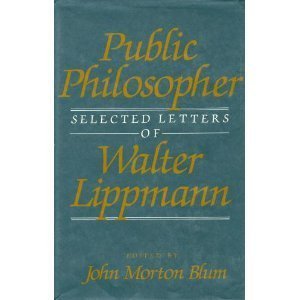
Excerpt from a letter dated October 25,1940 to Alexander Woollcott page 397:
“…For while I want my friends to understand what I do, I have a fanatical conviction that columnists who undertake to interpret events should not regard themselves as public personages with a constituency to which they are responsible.
It seems to me that once the columnist thinks himself as a public somebody over and above the intrinsic value and integrity of what is published under his name, he ceases to think as clearly and as disinterestedly as his readers have a right to expect him to think. Like a politician, he aquires a public character, which he comes to admire and to worry about preserving and improving; his personal life, his self-esteem, his allegiances, his interests and ambitions become indistinguishable from his judgements of events. In thirty years of journalism I think I have learned to know the pitfalls of the profession and, leaving aside the gross forms of corruption, such as profiting by inside knowledge and currying favor with those who have favors to give, and following the fashions, the most insidious of all the temptations is to think oneself as engaged in a public career on the stage of the world rather than as an observant writer of newspaper articles about some of the things that are happening in the world.
So I take the view that I write of matters about which I think I have something to say but that as a person I am nobody of any public importance, that I am not adviser-at-large to mankind or even those who read occasionally or often what I write. This is the code which I follow. …”
http://www.ft.com/intl/cms/s/0/fa9208f0-e480-11e0-92a3-00144feabdc0.html#axzz1YppvW0CO
Is it my imagination or does Mr. Christopher Caldwell, in his latest essay at the Financial Times web site titled ‘The president just does not get the American centre’, dated September 23, 2011, seem to be suffering from an acute case of political confusion or is his ideology just a bit askew? All during the campaign of 2008 the Right and its spokesmen and women continually reminded voters that Obama was not ‘one of us’. Coded or un-coded that was the central message of much of the rhetoric. But today Mr. Caldwell discards that well worn trope in favor of making President Obama an ordinary American; but characterized as grinning and inscrutable and unwilling to help someone in need, an unflattering description of Americans by an American. Is this the newest propaganda ploy of a desperate columnist needing to meet his word quota? Has this rhetorically pejorative description of the American character become the latest contribution of Neo-Conservatism to our national dialogue? Are Americans hypocritical, suspicious and unworthy of trust? Or is Mr. Caldwell striking a pose for arguments sake?
The crux of the matter is that Mr. Caldwell will, now, after this inauspicious but rhetorically useful introduction, begin his attack on the deeply conservative political practice of President Obama. Mr. Caldwell can’t resist larding his text with catch phrases, clichés and aphorisms that captivate the reader’s attention. After a catalogue of the most egregious Obama sins, and those are well known, even notorious to his critics, and indeed to most political observers. Mr. Caldwell comes to the point that Obama’s flaws are not ideological but personal. He is not one of us, even if he meets the definitional parameters laid out in Mr. Caldwell’s sketch of the American character. The question that remains to be answered: is Mr. Caldwell’s analysis of the American character correct?
Political Observer
Is it anything like a surprise that the Tea Party Jacobins now run the Republican Party? The confidence that the old guard expressed to everyone who would listen; to the hushed tone of confidence in the ability of Washington to change these radical nihilists into confident governors, fully vested in the power of long term occupancy of political office has proven to be not yet possible. Will it be possible or are the incorruptible blind to the benefits of playing the game? It has been almost a year since they were sworn in but their zeal is unslaked and the Republican leadership seems in total agreement with their unwillingness to compromise, to the point of a government shutdown, again? It is hard not to think of the Republican Party under Ronald Reagan and its meticulous attention to every nuance of the art of salesmanship, of its ability to blunt almost every criticism with the talent of probably the most brilliant political pitchman of recent history. His was the soft sell complete with a delivery bathed in a golden sentimental, nostalgic light: even if that political nostalgia was pure rhetorical invention. The Jacobins are hard, rigid and without anything resembling persuasiveness, or the cultivated charm of the Great Communicator.
Political Observer