LOVE IN A TIME OF HATE: Art and passion in the shadow of war, 1929–39 Translated by Simon Pare
As a reader of ‘The Brothers Mann: The Lives of Heinrich and Thomas Mann, 1871-1950 by Nigel Hamilton of 1975.
And Thomas Mann’s ‘Diaries, 1918-1939’ of 1982:
I had some knowledge of the milieu, the persons/characters and their shared fates, that is the subject of the the two books under review. This final paragraph of Chamberlin’s review is evocative of the that whole milieu:
They were all enemies of Nazism, certainly. But what kind of politics, what kind of society, would have best suited this licentious, aesthetic-minded generation, with its gigantic artistic talents and potential for deep moral waywardness? Presumably, our ultra-liberal own. Perhaps that’s why Illies remains so reserved in his moral judgements, finding the antisemitic vamp Alma Mahler pretty nasty, but only the Hitler-loving film-maker Leni Riefenstahl (“there was a strong streak of elitism to her nymphomania”) “diabolical”. He’s rather lenient, to this reviewer’s mind, and rather hard on Thomas Mann’s “noun-heavy moralizing”. I would have liked to hear him call Brecht not only a great artist, but also a pernicious moral fraud. Illies engages with some relish in his tale, where Wittstock, two generations older, is outraged and sad. In making these observations, though, I may be the product of a staider generation. So let me conclude by saying that, for all the compelling studies on the Weimar Republic, no one will want to miss either of these well-translated books on Weimar writers and Weimar in love.
Let me recommend Chamberlain’s ‘Motherland: A Philosophical History of Russia’.
The First two paragraphs of Marcus Wheeler’s essay seem to contradict what Mark Lilla offers in The New York Times review , below this entry:
Headline: Motherland: a Philosophical History of Russia by Lesley Chamberlain
Sub-headline: Marcus Wheeler is provoked by Lesley Chamberlain’s history of Russian philosophy.
This book is a tour de force if only in that it encompasses an enormous subject – the ‘long tradition’ of Russian philosophical thought from 1815 to 1991 – in fewer than 350 pages. The author is not a professional or academic philosopher but a writer and journalist: she has however studied Russian and German language and literature and philosophy, and the present work is informed by a deep understanding of these three intellectual disciplines. When she writes on the last page that Russian philosophy “is a branch of German philosophy, perhaps even of German poetry”, she restates, albeit in a deliberately provocative way, what British philosophy students used to be told fifty years ago – that philosophy in Russia was wholly derivative from Hegel and German Idealism (and, by implication, not worth bothering with). Like many of us, Lesley Chamberlain was first drawn to 19th century Russian thought by the writings of Isaiah Berlin – his celebrated articles in Encounter on “A Marvellous Decade” and these and the other essays assembled in Russian Thinkers and elsewhere. Chamberlain surprisingly presents Berlin himself as a philosopher in the Russian tradition: in fact, his claim to fame rests far less on his original, recognisably Western-style contributions to philosophy than on his work as a historian of social and political ideas.
Chamberlain owes much not only to Berlin but to more systematic historians of Russian thought, such as Andrzej Walicki, Frederick Copleston and James Scanlan (though she does not mention Derek Offord, who has published extensively in this field in recent years). She sets herself however the ambitious and original aim of distinguishing in the Russians between social and political ‘thought’ and ‘philosophy’ proper and of relating their teachings to the general tradition of Western philosophy from Descartes to present-day post-modernism. To this end she has divided the book into four parts. Part I – entitled “The Making of the Intelligentsia” – is a lucid and straightforward sequential summary of the principal figures and movements from 1815 to 1917 – Chaadaev, Westernisers and Slavophiles, Populists, Marxists and fin-de-siècle ex-Marxists and religious thinkers. The title of Part II – ‘The Making of Russian Philosophy’ – leads the reader to expect a parallel treatment of the evolution of philosophical views, but its three component chapters are more or less discrete self-contained essays. In the first of these, as at intervals throughout the book, Hegel appears prominently. The author is thoroughly versed in his teachings (to her credit, since in British universities Hegel and Idealism have been virtually mothballed since World War II) and explains cogently why his view of society as constantly subject to change through conflict appealed to young Russians suffocated by their static autocracy; as also why his identification of reality and rationality came to offend Belinsky and others by seeming to ignore human suffering and injustice. She presents nearly all the Russian dissident liberals (whom, confusingly, she later calls “anarchists”) as “Counter-Rationalists” preaching a “Counter-Enlightenment”. This, since she describes herself as a “Cartesian rationalist”, may account for her harsh judgment that Russian philosophical history amounted to “two short centuries of intellectual and moral defeat for Russia.”
Now, understanding the soul is also well and good. But what happens when soulfulness stands in the way of rational philosophy and science? Isn’t there a price to be paid? That is the question Lesley Chamberlain poses in “Motherland: A Philosophical History of Russia.” The question is not new, nor are most of her answers. There are very fine studies of 19th-century Russian thought available in English — by Isaiah Berlin, Joseph Frank, E. H. Carr, Martin Malia — and the interested reader will want to turn to those first. But by focusing specifically on how Western philosophical ideas from Descartes through Marx were absorbed into Russian thinking, Chamberlain does complicate the received picture somewhat. As she sees it, the decisive struggle was not simply between Westernizers and anti-Westernizers, but between Russians who stood by the philosophical legacy of France and England, and those who drew sustenance from the far murkier thinkers of modern Germany.
…
What did the Russians learn from the Germans? This is hard to make out from the badly confused accounts of Kant, Fichte, Hegel and Schelling given by Chamberlain, an English journalist and novelist. The main story, though, she gets about right. What the 19th-century Russian intellectuals found in, and partly projected onto, Germany was a romantic alternative to the supposedly cold, heartless logic of Descartes and his progeny. They were especially drawn to F. W. J. Schelling, whose philosophy of nature, a hash of intuition and metaphysical speculation, was closer to theosophy than to modern science. (Lots about “life,” nothing about the pancreas.) Schelling’s doctrines proved to be infinitely adaptable and unfalsifiable, and thus served as useful defenses against French and English rationalism. Like Napoleon’s troops, the modern ideas of Bacon, Descartes, Locke and Hume were turned back at the gates of Moscow and beat a slow retreat through the snow.
…
Marcus Wheeler seems to contradict Mr. Lilla’s assertions that somehow Chamberlain is less of an Historian than ‘ Isaiah Berlin, Joseph Frank, E. H. Carr, Martin Malia’? Does the question regarding Chamberlain reading of that History, about Lilla’s preference for himself and his brother Historians were more reliable? In the long quotation by Marcus Wheeler, above, I’ve placed in a bold font, his comment on Chamberlain reliance on Berlin’s scholarship. As a subscriber of The New York Review Of Books, of the time, I too read Berlin’s ‘Russian Thinkers’ and others.
Here is Chamberlain’s review of ‘Doubt, Atheism, and the Nineteenth-Century Russian Intelligentsia’ by Victoria Frede in 2012.
Headline: Between Belief and Despair
Sub-headline: A group of thinkers tried to explain Russia to a West that could understand it only in terms of “communism” or “freedom.”
We are used to thinking of a great parting of the ways dividing the Russian 19th century unevenly in half, from around 1860, with a rather uncouth and propagandizing atheism of “New Men” taking over from the subtle rhetoric of their more spiritual predecessors. Something of the kind did happen under the influence of materialist philosophies spreading from the West. But partly too—as Ms. Frede shows in a highly original study of minor figures attending the revolutionary Petrashevsky Circle in 1849—it happened because nonbelief was a daring political move in a cruel, inert country. No great theory of personal conduct or philosophical insight was required. Nonbelief itself could be a simple act of defiance. Dostoevsky, another young participant in the Circle who was nearly executed for his apparent political intentions, would later evoke doubt as an essential feature of Russian spiritual life.
Ms. Frede ends her study with a portrait of the radical critic Dmitri Pisarev, a man of the 1860s who is remembered, if at all, for once declaring that a pair of boots was more valuable than the works of Shakespeare. Pisarev deserves his rediscovery by Ms. Frede as the psychologically complex figure he is. Desperate to extract himself from a controlling family, Pisarev latched onto doubt, and the materialism of the body, as the only way he could secure his personal freedom. He spent time in prison and had a mental breakdown and might be best re-imagined as a figure in some unwritten novel, representing one of the many possibilities of Russian dissent.
“Doubt, Atheism, and the Nineteenth-Century Russian Intelligentsia” is an encouraging example of what the end of the Cold War has meant for Russian scholarship. In both Russia and the West, vested interests have been removed from the business of “atheism.” We can see much more clearly now how Lenin, who needed the commitment of the old spiritual intelligentsia but not their inwardness, used atheism as a tool. We can also see how Western historians upholding Enlightenment values underplayed Russian doubt, confusing it with irrationality and missing an enduring clue to what was culturally at stake.
I purchased and read “Doubt, Atheism, and the Nineteenth-Century Russian Intelligentsia” onChamberlain’s recommendation. Victoria Frede’s book was revelatory, to say the least! Chamberlain is part of a long and indispensable tradition, of Writers, Book Reviewers, Critical Intellectuals, who before the Internet nourished my mind in the Age Of Print, and into the Political Present!
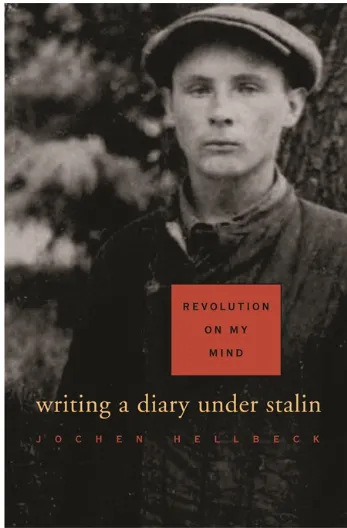
Below is a link to Jochen Hellbeck’s ‘Revolution on My Mind: Writing a Diary under Stalin’ an example of a revelatory History of the Soviet Union, with its focus on individual lives of its citizens.
Old Socialist’s long quotation from ‘Liberalism at Large: The World According to the Economist’ by Alexander Zevin provides long overdue historical context!
If Bagehot viewed America through the prism of the British Empire and its interests, what did he have to say about the latter? Bagehot’s editorship was less rich in incident than Wilson’s – sitting between bursts of warfare and annexation in the 1850s and 1880s–1890s – and Bagehot showed the same breezy, flexible confidence in imperial destiny as he did in English political economy. Whether in Canada, the Cape, New Zealand or Australia, he admitted that colonists could be difficult, demanding, costly, and confrontational with natives. But he opposed the idea of cutting them loose. ‘We are pre-eminently a colonizing people. We are, beyond all comparison, the most enterprising, the most successful, and in most respects the best, colonists on the face of the earth.’140 He countenanced force wherever that valiant spirit was obstructed by recalcitrant subjects, or non-Westerners, though in such cases he preferred it to be moderate, and directed from London.
Closest to home, he backed Gladstone’s efforts to ‘pacify Ireland’ after 1868: disestablishing the Church of Ireland – Protestant, in a country four-fifths Catholic – and passing very limited tenure reform to give evicted farmers compensation for their improvements to the land. Any step outside the 1801 Act of Union, however, was anathema. The Economist attacked both the Fenian Brotherhood, made up of armed republicans in America and Ireland, as well as the Home Rule League, which sought greater autonomy through conventional parliamentary forms. Gladstone was right to ‘tread out the Fenian folly’ following an uprising in 1867, which proved that the organization preferred sowing strife to practical politics. But since Home Rule was a ‘gigantic and impossible constitutional revolution’, it was hardly less of a folly. A parliament for Ireland would tear down the entire edifice of the British state, creating a federal instead of imperial parliament in London, unable to override the Irish one ‘without provoking something like a rebellion on every separate occasion’. Home Rulers would ‘be imprudent, but they would be far more logical, if they were to raise a cry at once for an independent Irish Republic’.141 The one consolation for the defeat of the Liberals in 1874 that so shocked Bagehot was, ‘at least it delivers us from the rule of the faction which is anti-English in essence, and which wishes to destroy the Empire’.142 His idea for political reform in Ireland was to suppress the office of viceroy: concentrating the symbolic majesty of the British state in such a person lent credence to the claim of Irish nationalists to live in a subjugated colony – as if Dublin were no different than Delhi.143
Perhaps the most far-reaching colonial crisis during the period was not in Ireland, but in the West Indian colony of Jamaica. Here, in 1865, Governor Edward John Eyre responded to an uprising of former slaves in Morant Bay with brutal force, declaring martial law and deploying troops, who burned and looted over a thousand homes, and killed several hundred black Jamaicans, including a mixed-race member of the Jamaica Assembly. This looked like an organized lynching designed to shore up the power of white sugar planters, whose fortunes had declined since the advent of free labour, free trade and lower-cost sugar a generation earlier – and these events caused massive
controversy when news of them reached Britain. Though Bagehot rebuked black rebels as ‘negro Fenians’, he was much more critical of Governor Eyre. For a time he made common cause with John Stuart Mill, who in 1866 set up the Jamaica Committee to press for Eyre to be put on trial; a host of liberals joined Mill, including John Bright, Charles Darwin, Herbert Spencer and many others. Opposite them stood Thomas Carlyle and the members of the Governor Eyre Defence and Aid Committee. Bagehot attacked Carlyle in the Economist for defending Eyre’s ‘carnival’ of violence as ‘the worship of brute force’, and a threat to law, justice and liberty – not just in Jamaica, but in England. ‘On Mr. Carlyle’s principles of judging human actions, as exemplified in this Eyre case, Philip II and Alva have a right to the honour and thanks of posterity.’144 But as might be expected, his objection was not primarily moral. Bagehot agreed that blacks were inferior to whites, and acknowledged the importance of maintaining order in the Empire. To assure this in keeping with the needs of capital, however, required some cooperation from subject peoples. The Economist pointed to the tantalizing investments to be made in China’s railways, canals, tea planting, silk growing, and steam navigation, ‘beyond any experience we have yet acquired’, and similar opportunities in ‘Japan, Indochina, Persia, Asiatic Turkey’ and Africa, ‘from Abyssinia to the Cape’. To unlock these treasures, one point had be kept in mind – ‘that very large bodies of dark laborers will work willingly under a very few European supervisors’.145
As it turned out, gaining access to these markets involved more than investment prospectuses. It required armed compulsion, especially in East Asia. Bagehot saw British and French interventions in China to prop up the tottering Qing dynasty against Taiping rebels – a radical millenarian rebellion that spread from rural Guangxi to convulse the country, in part due to prior Western wars to force it open – as a
regrettable necessity; but with Englishmen ‘leading the fleets and armies, and administering the finances of the Celestial Empire’, soon to be ‘Governors and Viceroys over vast provinces’, its violent repression had a silver lining. Farther east in Japan, trade – and the sort of extra-territorial legal treatment that British merchants should expect – was also at stake, in a nation that had shown still stronger distrust of Westerners than China. The Economist was unsure if the Royal Navy had legitimate grounds to bombard Kagoshima in 1863, to punish the ‘Daimio Satsuma’ for the death of a British merchant. But once begun, the paper pushed for widening the war. ‘Possibly we may have to bombard the Spiritual Emperor as well as the Feudal Baron, if his palace lie within a mile or two of the shore. Anyhow we are in for it: we must now hold our ground and make good our position; and we must do this by force and at the cost of blood.’146 As the smoke settled afterwards, it worried that in continuously shelling a town of 150,000 (‘as large as Sheffield’) for over forty-eight hours ‘we do seem to have outstepped all the now recognized boundaries of civilized and credible warfare’. Satsuma’s representatives later put the death toll at 1,500.147
Not all imperial undertakings were military during these years. Bagehot grumbled in 1875 when Disraeli, as prime minister, opted to buy 176,602 shares in the Suez Canal from the Khedive of Egypt, bringing the total Britain owned to just under half. As an investment yielding 5 per cent it was and would allow the Khedive to ‘reform his finances’. But Bagehot was unsure if it would solve the problem it was meant to address – making sure the passage to India stayed open, and in British hands. ‘We do not know what will be the course of history or the necessities of future times.’ ‘If we are prepared to take hold of Egypt, will this share in the Suez Canal help us in so doing? Will it not be better to take the country when necessary, without making public beforehand our intention to do so?’148 India itself was non-negotiable, whatever route was taken there, as Bagehot affirmed in 1863 at the death of Elgin – the man sent east to break Chinese resistance in the Second Opium War and open Japan, subsequently appointed viceroy of India. His successor, Sir John Lawrence, had the ‘single quality’ needed to ‘keep a vast population which wants to recede, perpetually advancing’. What was that? ‘Force’.149
Perhaps the most revealing example of the open-ended imperialism of the Economist under Bagehot was its enthusiasm for the least successful of all such ventures: the invasion of Mexico at the end of 1861 by France, with support from Spain and Britain. It applauded Napoleon III for rebuilding a failed state unable to pay its creditors in Europe, and for balancing the US, with its back turned fighting the Civil War. The installation of an Austrian archduke, Maximilian, on Mexico’s throne three years later, was a particular stroke of brilliance – a better administrator than ‘any obtainable half-caste or Indian president’, whose rule would ensure the export of everything from silver to apples, and timely interest payments on Mexico’s sovereign debt.150 Three years later Maximilian was executed by firing squad in Querétaro, after French forces hastily withdrew.
In Physics and Politics, Bagehot explained his approach to empire in more theoretical terms, as a complement to these snapshots in the Economist. Applying his take on positivism and the natural sciences to human societies around the world, he divided them into three evolutionary epochs: a ‘preliminary age’, primitive, tribal and customary; a ‘fighting age’, in which some nations prevailed over others thanks to their martial qualities; and a third, progressive, industrial and peaceful ‘age of discussion’, where the ‘higher gifts and graces have rapid progress’. This, of course, was Victorian Britain: the class rule of the ten thousand educated members of society that Bagehot had outlined in the English Constitution found an evolutionary basis in ‘adaptation’ and ‘natural selection’. Bagehot added that some law of imitation must operate inside nations to account for their success in the world – a copying process, working its way from ‘predominant manners’ down and then inherited, in a Lamarckian sense. Bagehot was himself copying social evolutionists – not least Herbert Spencer and John Lubbock – by making such claims, and then extending them outwards. British wars were justified in China, for example, since its ancient civilization had been arrested at an earlier stage of development. There, to ‘crack the cake of custom’ might indeed require cannonballs.151
Colby Smith and Sam Learner rely on evoctaive Graphs at three points in their essay. Not to speak of :
…
The latest survey, conducted in partnership with the Kent A Clark Center for Global Markets at the University of Chicago Booth School of Business, predicts the Fed will lift its benchmark rate to at least 5.5 per cent this year. Fed funds futures markets suggest traders favour just one more quarter-point rate rise in July.
Top Fed officials have signalled a preference for forgoing a rate rise at their next two-day meeting on Tuesday, while keeping the door ajar to further tightening. After 10 consecutive increases since March 2022, the federal funds rate now hovers between 5 per cent and 5.25 per cent, the highest level since mid-2007.
…
A selection of sentences is more than in order :
Of the 42 economists surveyed between June 5 and June 7, 67 per cent forecast the federal funds rate to peak between 5.5 per cent and 6 per cent this year.
More than half of the respondents said the peak rate will be achieved in or before the third quarter, while just over a third expect it to be reached in the final three months of the year.
“They haven’t done enough for long enough yet to get inflation down,” said Dean Croushore, who served as an economist at the Fed’s Philadelphia Reserve Bank for 14 years.
Despite mounting expectations that the Fed is not yet done with its tightening campaign, most of the economists thought the Fed would skip a June move.
“The economy turned out to be much more resilient than we originally thought and the question is: is that resilience temporary and the hikes in the pipeline are sufficient or does the Fed need even further hiking?
An added complication is the pullback by regional lenders following the collapse of Silicon Valley Bank, First Republic and a handful of other institutions.
Among respondents, however, concerns about inflation appeared to outweigh banking sector worries.
By the end of 2024, roughly a third of the respondents said it was “somewhat” or “very” likely that core PCE would exceed 3 per cent. More than 40 per cent said it was “about as likely as not”.
“There has barely been any progress on core inflation, the real economy is performing vastly better than anyone could possibly have expected and policymakers have yet to fully adjust to that reality,” said Jason Furman,
The biggest factors driving down the rate of inflation will be rising joblessness and falling wage gains, 48 per cent of the economists said, followed by global headwinds stemming from a weakening Chinese economy and strong US dollar.
The Final Two Paragraphs:
Recession calls have been pushed back as well. Most economists do not see the National Bureau of Economic Research declaring one until 2024, compared to surveys conducted last year in which roughly 80 per cent expected a recession in 2023.
About 70 per cent said the peak unemployment rate in a forthcoming recession would not be reached until the third quarter of 2024 or later. Gabriel Chodorow-Reich of Harvard University said he is bracing for a mild recession in which unemployment rises to about 6 per cent.
Philosophical Apprentice collects some of the evocative dross of his ‘Class Day Ceremony’.
JUN 8, 2023
Stephens always plays the victim:
This is a speech about speaking your mind when other people don’t want you to.
To those of you who are protesting or planning awalkout, I thank you for not seriously disrupting my speech. And though I’m sorry you won’t hear me out, I completely respect your right to protest any speaker you dislike, including me, so long as you honor the Chicago Principles. It is one of the core liberties that all of us have a responsibility to uphold, protect and honor.
A Neo-Conservative ‘strikes a pose’, like that faded Pop Star?
Next Bob Zimmer, rhetorically brought aboard for needed ballast:
To those of you who choose to stay, I thank you for honoring another Chicago principle, one that was dear to my dear friend, Bob Zimmer: Namely, that a serious education is impossible except in an environment of unfettered intellectual challenge — an environment that, in turn, isn’t possible without the opportunity to encounter people and entertain views with whom and with which you might profoundly disagree.
A quick walk-on of Mr. Stephens, in his youth… like Wm. F. Buckley Jr., he was a self-entitled, would be polymath, in waiting. This self ascription, the purest comedy : when I was a nervous 17-year-old freshman…
To John Boyer, who welcomed me to Chicago in 1991 when I was a nervous 17-year-old freshman, I want to salute you for everything you’ve done to make the college so much better, while preserving what always made it great: the conviction that to think clearly, we must be able to speak freely; that to disagree intelligently, we must first understand the views of our opponents profoundly; that to change people’s minds, we must be open to the possibility that our minds might be changed. All of this asks us to listen charitably, argue candidly, consider deeply, examine and re-examine everything, above all our own deeply held convictions — and, unlike at so many other universities, to respond to ideas we reject with more and better speech, not heckling or censorship.
The above testimony to the ‘values’ of ‘Free Intellectual Inquiry’ from an unapologetic Neo-Conservative, in sum an apologist for The Zionist Faschist State, and the American Proxy War in Ukraine. Mr. Stephens is a bellicose Straussian in its American iteration. Stephens never served, but his appetite for War takes inspiration from an etiolated pastiche of Ernst Jünger…
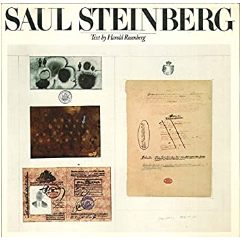
Harold Rosenberg’s essay, that Stephens links to, is from the September 1948 Commentary, not the Commentary Magazine edited by Neo-Con John Podhoretz. I spent many years reading the works of Harold Rosenberg e. g. The Tradition of The New, Discovering The Present, and his monograph on Saul Steinberg:
Decades ago, the art critic Harold Rosenberg coined the phrase “the herd of independent minds.” It’s a line I think about often.
The herd of independent minds are the people who say they make up their own minds when it comes to politics, and yet somehow, and generally without exception, arrive at precisely the same long list of political conclusions as millions of others. The herd of independent minds were the Republicans who were ardent NeverTrumpers in 2015, fervent Trumpers from 2017-21, NeverTrumpers again after Jan. 6, and are now tilting back toward Trump: In other words, Lindsey Graham. The herd of independent minds are those who think “La La Land” is a great movie but “Miss Congeniality” isn’t.
The final paragraph lapses in Anti-Trump screeching, a favorite gambit of the New Centrist Alliance: The New Democrats/ Neo-Liberals and the Neo-Cons.
Mr. Stephens, in this paragraphs riffs on the passé territory of ‘The Coddling of the American Mind’ by Jonathan Haidt and Greg Lukianoff.
The point is: There are very few people who don’t see themselves as independent thinkers. There are even fewer people who are.
This is true wherever you go, in most walks of life. But it seems to be especially true in places and institutions heavily populated by people with elite educations: The kinds of places and institutions that many of you will soon be a part of. Groupthink is the affliction of those who ought to be — and often think of themselves as — the least vulnerable to it.
The ‘Elite Education’ a reference to the Haidt/Lukianoff postulation of a 10% of spoiled malcontents, that harbor a natural ill will to an Enlightened Cadre of Technocrats like Haidt/Lukianoff . Note that Haidt is a New Democrat.
Headline: Jonathan Haidt: ‘We got fooled into thinking liberal democracy is easy’
Sub-headline: The social psychologist on the ‘darts’ of social media, our dangerous present moment — and a decade of stupidity in America
His willingness to engage thoughtfully in debates often characterised by tribalism and virtue-signalling has helped him win considerable influence — Barack Obama and Jeff Bezos have both recommended his most recent essay. But Haidt, professor of ethical leadership at NYU’s Stern School of Business, is not without his detractors. To his critics, he falsely equates the excesses of the progressivist activism of the left with the disregard for truth, science or the democratic process of some on the right; they accuse him of “bothsidesism”.
…
While some feel Haidt focuses too much of his fire on the left, he has only ever voted Democrat. “I cannot imagine voting Republican because the Republican party has completely lost all sense of constitutional responsibility and has lost all touch with conservatism. I have a lot of respect for liberalism, but there’s a lot of illiberalism on the left, and I have a lot of respect for conservatism, but there’s not much conservatism left on the right,” he says.
This Reader feels sympathy for the students and faculty who had to listen to the remaining 2,106 words of his address, let me present some of his cast of characters in this first paragraph:
Meta, Mark Zuckerberg, Metaverse, New Coke, Federal Reserve, C.I.A, Afghanistan, Taliban, Ukraine, Russian Army (its the Soviet Army), Wall Street, Saddam Hussein,-Not to forget this bit of dangling hysteria: ‘Why were so many people convinced that overpopulation was going to lead to catastrophic food shortages, and that the only sensible answers were a one-child policy and forced sterilizations?’
Call this section of Mr. Stephens ‘stream of consciousness’ from his appointment with his strict Freudian Psychoanalyst? Think again of the audience, having to listen to this diatribe as it metastasizes, in the voice of a bankrupt newspaper scribbler.
Keir Starmer is swimming against the European current. Across the continent, traditional parties of the Left have been wiped out. The Dutch Labour Party won 5.7 per cent at the last election, the French Socialist Party 1.8 per cent in the presidential election. Only in Scandinavia and Iberia have parties of the mainstream Left clung on. And even that is about to change, with Spain set to give its socialists a brutal clubbing.
The notion that Starmer is a ‘Socialist’ in a product of Hannan’s imagination, in search of a reason, the New Labour dullard Starmer is headed for a defeat ?… un-mentioned is that the Labour Party, New and Old is still experiencing a continuing purge of the once ascendant Corbyn Wing of the Party. And that Corbyn was the target of defamation from The Times, The Guardian and The Telegraph. While this from Al Jazeera Investigations is subject to an historical erasure -its a Stalinist gambit. And Starmer’s banning Corbyn from running as a Labour candidate.
Mr. Hannan resorts to the role of Political Oracle, in times past, ‘thinkers’ like Alvin Toffler were deemed ‘Futurists’ who described what the possible New World would be like. Hannan riffs on those themes of yesterday, in the final sentence of my quotation. He trades upon a past that lives in the present: in France Macon’s unconstitutional Pension Reforms have re-ignited those ‘syndicalist embers’ ?
Before we get to Spain, though, it is worth delving into why the old Left has seen its support collapse. It has to do mainly with changing work patterns. I don’t expect my children to have “a job” as we understood that word in the 20th century. Rather, they will go through life constantly reskilling, freelancing and adapting as technology accelerates.
Artificial intelligence won’t make us redundant; that claim has been made of every advance in mechanisation since the industrial revolution, yet the number of people in work keeps rising. What it will do is diversify the employment market even more. When machines take on our old tasks, they free us up to find niches that no one had previously imagined.
In such a world, parties linked to mass industrialised workforces look not so much old-fashioned as cultish. The structures, slogans and symbols of syndicalist struggle seem to belong, quite literally, to another century.
Its not that Mr. Hannan doesn’t offer some interesting analysis of the Spanish Election, but that he garnishes it with …
…
Tellingly, Tony Blair could never bring himself to pronounce its name. Knowing how electorally toxic the word “socialist” was, he referred to it incorrectly as “the European Labour group”. Perhaps that is why, of the eight leaders Labour has gone through over the past 45 years, Blair is the only one to have won a general election.
…
He then presided over a coalition of separatists and Left-wing extremists; precisely the kind of wacky alliance, in fact, that Starmer might end up leading here. Almost immediately, he started losing elections – in Galicia, Madrid, Old Castile, Andalusia and, now, the whole country.
…
The above quote, reminds me of Ferdinand Mounts book ‘The New Few’ the chapter titled ‘Closing the local’ pages 154 and 155 ‘the looney left’ an epithet usedtwiceby one of Mrs. Thatcher’s cadre of the ultra respectable.
…
No, our Labour Party will find scant comfort in what is happening across the Pyrenees. But our Conservative Party might learn a thing or two.
…
So, in shops, in cafés and in queues (which Spaniards are much better at than they used to be)…
…
First, young people are not monolithically Left-wing. Indeed, many of them support Vox, the party that overseas commentators almost always describe as far-Right.
…
It is here, I think, that our Tories have the most to learn. The head of Madrid’s regional government is the unapologetically Thatcherite Isabel Díaz Ayuso. If the PP had had the sense to make her its national leader last year, it would now be sweeping the board.
Spain had a bad pandemic, combining a strict lockdown with a high death rate. But Ayuso kept Madrid open, campaigning under the one-word slogan Libertad. She went on to cut taxes and give people more choice over which schools and hospitals to use. Her most recent campaign was launched in the bullring. Madrileños repaid her with an absolute majority.
…
All that the Left can do in response – beyond unleashing the personal abuse that female conservatives always seem to attract – is to accuse her of being too close to Vox and, by implication, an extremist.
…
Isabel Díaz Ayuso is an ‘ unapologetically Thatcherite’ : she is an Extremists, by definition, Thatcherism was a political catastrophe! Daniel Hannan attempts to re-write History.
The final three paragraphs this essay:
If calling your enemies fachas doesn’t work any more, what does? The old infrastructure of organised labour has gone. Wokery in its various forms – racial, gender-based or sexuality-based – is unpopular. Greenery has a certain appeal but, as the sheer expense of net zero becomes clear, voters want it toned down.
The strongest argument for the Left is the unpopularity of the other side. Since 2004, when José María Aznar stood down, the PP has been seen by many of its supporters as a milk-and-water alternative to the socialists, who made all the running. That is why Vox came into existence in the first place.
If there is a lesson from Spain’s local elections, it is that voters don’t much care about accusations of extremism. But they do care about rising taxes and rising prices. When Rightist parties are trusted on those issues, the Left has nothing left.
‘Woke’ is a term of political abuse, its meaning lost in the fog of accusation. In the British context Mr. Hannan has missed the the rising star of Mick Lynch, the most articulate leader of ‘syndicalist nostalgia’ that is experiencing unparalleled political vigor, in the face of Tory maleficence.
There’s a memorable scene in Experience during which Amis kicks Hitchens’s shins under the table to get him to stop grilling Saul and Janis Bellow about Israeli atrocities. Amis’s capacity for ancestor-worship was boundless: (at least) 8 articles on Bellow, 9 on Nabokov. But I wonder if he might have benefitted more from reading less of them. From Bellow he took the street-wise tough guys (already often unpersuasive in the original) and made them even more street-wise until many of them simply became vessels of Translatlantic Amis-speak, while from Nabokov Amis cribbed a kind of cliff-notes postmodernism, furnishing pointless doppelgängers for his plots, and making his narrators pick up a toilet brush and see a ‘moustachioed sceptre’ (a parody of Nabokov, even in the mouth of a character). With the exception of Inside Story, an unexpectedly moving coda to his career, the first half of his output outshines the second by some distance. High-flown English
Thomas Meaney offer a link to this essay by James Wolcott of 2012:
Marti Amis has reached that not entirely enviable plateau in an eminent literary career where he (and we) might be better off if he gave up writing novels and just granted interviews from now on. He could air his observations on issues throbbingly relevant in the republic of letters, then retire to his den for a nip or a nap. Giving up fiction would lighten his workload considerably, and take the pressure off having to re-prove himself to the growing sector of the literary punditry that treats him with such jaded familiarity.
Since London Fields or so, I find myself anticipating the profiles, chat sessions, and drink visits promoting the novels more than I do the results themselves—reminiscent of the patch in Mel Brooks’s career when his guest spots on “The Tonight Show” plugging his latest self-wallow were funnier, jazzier, and more turned-on to the audience than the actual releases, as any bleary survivor of Spaceballs or Robin Hood: Men in Tights can attest. The Q&A format seems to smoke out more reverie from Amis, unclenching his clam-tight control. Not that he puts on a command performance for the journalists who gingerly approach, fretful of running afoul of a verbal scowl, however graciously he offers them a suitable beverage. Nearly every Amis interview expresses the wary, battle-weary tone of a veteran interviewee hiking Boot Hill again. But within this monochromatic range he is far more engaging, perceptive, interesting, and adept at cultural landscaping than he is in the novels themselves, the forced labors of Night Train, Yellow Dog, House of Meetings.
And perhaps it really is so, with some novelists. But Martin’s talent wasn’t like that. Those reviewers had made the most basic category error. His style was his vision; or rather, that vision expanded, deepened and darkened, took on life sentence by sentence, coterminously with the growing richness and inventiveness of his verbal gifts, his linguistic imagination – his voice. So, he was content to let plot take care of itself, while his novels proceeded according to a recurring set of patterns or obsessions (his “doublings” and pairings, his characters unsure of their parentage, his rivalries among siblings and friends, his patch of west London), and his creative energies went into the sentences, thus into unforgettable human grotesques and exorbitantly funny exchanges, crescendos, laments … His was a Dickensian talent, and one – at its best – of Dickensian amplitude. It remade the world, not as we knew it but in the image of whatever the English language – his English language – could accommodate.
Martin achieved what he did, not through talent alone but also dedication – and crucial to that was appreciation, of writers he himself loved and admired: beyond all others, Vladimir Nabokov and Saul Bellow in prose, Shakespeare and Milton in verse. Love and admiration came naturally to him, just as naturally as sharp reproof of anything that struck him as inauthentic or incompetent. His was a wonderfully witty, warm and responsive presence (his launch parties were, appropriately, bacchanals): that much I knew from experience. From Experience I learnt that he was, too, a loving father and son, unabashedly affectionate with family and close friends. Those who were much closer to him than I was will have more to say about all these qualities in the coming days. But I mourn his loss, which is a loss to us all, British or American, who care about art, about sentences and the novels and essays built from them, about talent, and about Martin’s great abiding instinct, the belief on which he built his life: “Writing is freedom”.
On the questions of Saul Bellow and Vladimir Nabokov see the long quote from Thomas Meaney, above.
Literary Apprentice
P.S. For some further insights into Martin Amis, this from The New York Times of March 9, 2008
Headline: Amis and Islam
By Rachel Donadio
…
In England’s left-leaning intellectual culture, traditionally somewhat hostile toward Israel and the United States, Amis has emerged as sympathetic to the two countries’ situation. Although he opposed the Iraq war and is skeptical of American power, “The Second Plane” draws admiringly on books often dismissed by some on the left: Paul Berman’s “Terror and Liberalism,” Bernard Lewis’s “What Went Wrong?” and Mark Steyn’s “America Alone.” (He also draws on the neo-atheist Sam Harris.)
On the phone last month, Amis talked about the transAtlantic divide. “The anti-Americanism is really toxic in this country, and the anti-Zionism,” he said, attributing the sentiments to empire envy. “I think we ceased to be a world power just as America was unignorably taking on that role.” The dominant ideology “told us that we don’t like empires, we’re ashamed of ever having one.” In England, he continued, “we’ve infantilized ourselves, stupefied ourselves, through a kind of sentimental multiculturalism,” Amis said. He called for open discussion “without self-righteous cries of racism. It’s not about race, it’s about ideology.”
I’m bored; you’re bored; we’re all bored. By our books and movies and television shows, the endless blandness of the Netflix queue, by our music and theater and art. Culture now is strenuously cautious, nervously polite, earnestly worthy, ploddingly obvious, and above all, dismally predictable. It never dares to stray beyond the four corners of the already known. Robert Hughes spoke of the shock of the new, his phrase for modernism in the arts. Now there’s nothing that is shocking, and nothing that is new: irresponsible, dangerous; singular, original; the child of one weird, interesting brain. Decent we have, sometimes even good: well-made, professional, passing the time. But wild, indelible, commanding us without appeal to change our lives? I don’t think we even remember what that feels like.
End:revelation
A great audience, Fran Lebowitz once remarked, is more important for the creation of great art than even great artists are. She was thinking, in fact, of the postwar audience, specifically in New York, the one that nurtured Balanchine, Rauschenberg, Miles Davis, and so many others. Great audiences create great artists, she explained, by giving people the freedom to take chances: to be irresponsible, dangerous, difficult, strange. When people compete to be sophisticated, artists win. Then we all win.
Recall that old European Dependable, the feuilleton? William Deresiewicz almost resuscitates it, in this ‘essay’.
Yours,
Myra Breckenridge
P.S.
Dear Reader: note the careful , evocative namedropping, and the utter absence of American theologian Johnathan Edwards, as the homegrown bearer of Calvinism’s self-hatred, inherited from Augustine, among others.
As preface to Mr. Stephens singing the praises of Israel, let me present this from Unites States Department of State:
SECURITY ASSISTANCE AND COOPERATION
The abiding U.S. commitment to Israel’s security is buttressed by robust security assistance to Israel – including the 10-year, $38 billion MOU that was concluded in 2016. Consistent with the MOU, the United States provides $3.3 billion annually in Foreign Military Financing and an additional $500 million in missile defense funding. Missile defense funding supports several cooperative missile defense programs, including David’s Sling and Iron Dome, as well as Arrow, Arrow II, and Arrow III, whose life-saving capabilities have proved vital to Israel’s security. In 2022, the United States provided $1 billion in supplemental funding to replenish Israel’s stock of missile interceptors for the Iron Dome.
The United States and Israel also participate in a variety of security-related exchanges, including joint military exercises, research, and weapons development. Through the annual Joint Counterterrorism Group and other regular strategic dialogues, the United States and Israel are able to collaborate closely to address a range of regional threats.
In sum, the state of Israel is the protectorate of The American National Security State. A reality that Mr. Stephens, in his long apologetic fails to address. Should The Reader be surprised? As Mr. Stephens presents the ‘current mood’ of This State:
The Jewish state turned 75 on Sunday, mostly in a sour mood.
The country is governed by a coalition that includes political extremists, proud homophobes, ideological monomaniacs, and the merely corrupt. A proposed judicial reform that would have gutted the principal institutional check on rank majoritarianism has been paused, but not quite stopped, by some of the largest protests in Israeli history. Secular Israelis fear the country’s demographic balance is tilting to the religious extreme. Benjamin Netanyahu can’t get an invitation to the White House. It doesn’t seem to bother most American Jews, who struggle to understand, much less justify, the prime minister’s characteristically self-serving, but uncharacteristically inept, leadership.
…
The Framing of ‘most American Jews, who struggle to understand’ – on twitter daily, The World views the wonton oppression, land stealing, and murder of Palestinians enacted, by Israeli Soldiers and Settlers. The Eternal Victimhood self-presentation of Stephens doesn’t even qualify as … the cry of victimhood, from the son of absolute privilege, is now the first and last resort of the Crusaders Against Anti-Semitism: from a position of dominance founded upon a myth.
To top it off, Israelis just endured five days of rocket fire from the Gaza-based, Iranian-backed terrorist group Palestinian Islamic Jihad. It’s a reminder that, notwithstanding Israel’s recent successes in normalizing diplomatic relations with parts of the Arab world, many of its neighbors still want it wiped off the map.
And for all this, Israel is doing remarkably well.
Next to appear are other states that share a common political fate like Israel?
It helps to remember the circumstances in which the country was born. Israel is a post-colonial state. It started its national life dirt-poor. Its peer group of countries includes Syria, Pakistan, India, Indonesia, Myanmar, Sri Lanka and North and South Korea. These states came into being with many of the same core problems: hostile neighbors, unsettled borders, deep poverty, restive ethnic and religious minorities and other unresolved dilemmas from their independence struggles.
As with Israel, many of those problems still dog most of those states. The Koreas don’t have a settled border. India and Pakistan have painful memories of forced population transfers. Those who think the Palestinian issue is unique should consider the situation of Kashmiris in India, Tamils in Sri Lanka, or Kurds in Syria.
Should The Reader look at Stephens collection of States, as in large part, the former Colonies of The British Empire: might that reader look to the political toxin of Sikes-Picot and The Belfour Declaration? – Stephens writes a History Made To Measure , with Israel… to engage in hyperbole, Israel is the central axis in Stephens’ Ptolemaic Political Universe?
In his political desperation to find scapegoat’s he resorts to Sweden:
As for Israel’s disreputable political figures, to whom shall they be compared? The ruling coalition in Sweden governs “in cooperation” with the far-right, xenophobic Sweden Democrats party; nobody thinks of Sweden or most other democracies with unsavory figures like this as exemplars of political extremism. Elsewhere, when would-be despots come to power, they ban public protests, imprison or assassinate their political opponents, impose a reign of terror.
Mr. Stephens last sentence of this paragraph is:
‘Elsewhere, when would-be despots come to power, they ban public protests, imprison or assassinate their political opponents, impose a reign of terror.’
I’ll just quote this sentence of mine:
The World views the wonton oppression, land stealing, and murder of Palestinians enacted, by Israeli Soldiers and Settlers.
Mr. Stephens is an incompetent, indeed a mendacious apologist for Israel!
Begin with the History Made to Measure of the first paragraph. The political reach from the 1940 to the present is breathtakingly caricatured:
In the 1940s and early 1950s America built a new world order out of the chaos of war. For all its shortcomings, it kept the peace between superpowers and underpinned decades of growth that lifted billions out of poverty. Today that order, based on global rules, free markets and an American promise to uphold both, is fraying. Toxic partisanship at home has corroded confidence in America’s government. The financial crisis of 2007-09 dented faith in markets. America’s failures in Iraq and Afghanistan undermined its claim to spread democracy. Today most countries refuse to heed its call to enforce sanctions on Russia. And China’s rise has spurred American politicians to take a more selfish, zero-sum approach to geopolitics.
I’ve highlighted, for the reader, this collection of Atlanticist political clichés!
This next paragraph features Henry Kissinger, as the Voice of Political Reason?
China’s rise has also increased the threat of war. In a conversation with The Economist, Henry Kissinger, who will be 100 this month, warns that China and America are “on the path” to confrontation. “Both sides have convinced themselves that the other represents a strategic danger,” he says. The stakes could not be higher: both are nuclear-armed. Both are also dabbling with unpredictable artificial intelligence (ai). The elder statesmen’s eldest statesman worries that, just as before the first world war, the superpowers will stumble into catastrophe.
Biden advisor, Neo-Conservative Jake Sullivan is next to appear.
Since arriving in the Oval Office in 2021, Joe Biden has developed a new strategy to preserve American pre-eminence and reduce the risk of conflict. Jake Sullivan, the latest of Mr Kissinger’s successors as national security adviser, recently gave the fullest account yet of this Biden doctrine. His narrative weaves together middle-class prosperity, defence and climate change. He repudiates the free-market “Washington consensus” and calls for the government to play a muscular role in society, with a strong emphasis on national security.
Hyperactive Industrial Policy enters Stage Right:
This means hyperactive industrial policy. Big subsidies will catalyse private investment in semiconductors and clean energy. Export controls will create “a small yard and high fence” to keep selected technology with potential military uses out of unfriendly hands. At the same time, the administration is softening its rhetoric. Instead of “decoupling” from China’s economy, it talks of “de-risking”. It wants to find common ground on climate change, African debt and even Ukraine. On May 10th and 11th Mr Sullivan spent eight hours with his Chinese counterpart, the first high-level contact for months.
Behind the doctrine is a belief that a virtuous circle can make America and the world safer. State intervention and protectionism will boost industry, helping the middle class and cooling America’s populist fevers. Less erratic leadership (after Donald Trump’s) will restore America’s authority abroad, even if the Biden team breaks a few global economic rules. The relationship with China will be managed with “strategic maturity”. As a precaution America will keep spending large sums on its military forces to deter China from aggression
.
The Economist writers, and or the final Editor, ask the searching questions, with the final two sentences pronouncing the negative on ‘The Biden Doctrine’ as ‘flawed’ and will ‘make America weaker’. That toxic nostalgia for that ‘post-1945 order’ is about an unrealizablepolitical delusion, when pragmatism is about a realism, born of facts, not of deeply held political fictions.
Will the new doctrine work? After the chaos of the Trump years, Mr Biden’s commitment to diplomacy is welcome. It will be on display at the g7 summit this week. He is right that American foreign policy must deal with new challenges, from Chinese coercion to climate change. However, especially when compared with the post-1945 order, the Biden doctrine is flawed. Its diagnosis of America’s problems is too pessimistic, and some of its prescriptions would make America weaker.
The Economist offers this:
The main source of America’s strength is creative destruction and open markets in a rules-based global economy. So although Mr Biden is right to reinforce the social safety-net, his state-led, insular economic vision may ultimately erode living standards and American clout.
The above more of the same resort to cliché: ‘creative destruction’, ‘open markets’, ‘rules-based global economy’, ‘his state-led, insular economic vision may ultimately erode living standards and American clout.’
Some further selective quotations of this essay are instructive:
…
Mr Sullivan wants to combine export controls with co-operative trade, and an arms race with collaboration.
…
Never mind rules on ai, America and China have no system for nuclear-arms control: China’s arsenal will almost quadruple by 2035.
…
Yet America’s unpredictable economic nationalism and unwillingness to offer access to its markets undermines its influence. Europe fears a subsidy race and worries escalating tensions with China will cause it severe damage: our calculations show Germany’s economy is twice as exposed to China as America’s is. The decay of global rules is accelerating the embrace of a transactional approach to foreign policy by emerging economies. The post-1945 order rested on American constancy: each administration was guided by predictable interests. Today allies and enemies know chaos may follow the election in 2024. Trumpian dysfunction is not Mr Biden’s fault, but it makes it vital to be predictable and open now.
…
Unfortunately the Biden doctrine fails to rebut the narrative of American decline and so has not resolved the tension between the country’s toxic politics and its role as the linchpin of a liberal order. Unless America looks out at the world with self-confidence, it will struggle to lead it.
…
What The Economist writers and Editors offer is more misplaced toxic nostalgia for that ‘post-1945 order’ , as the sine qua non of an American Future: based on a post WWII American Hegemony, that cannot be exhumed!
This discussion begins at the 01:20 point and ends before the 21:18 point. Katy Balls asks questions of her two guests
Ferguson and Grey act the parts of Political Technocrats, relying on ‘Polling Data’ as a reliable source- the mention, and reliance on the ‘polls’, as some kind of measure of actual reliable information, about outcomes, the cornerstones of both Ferguson and Grey, is utterly misplaced, given this from the Pew Research Center, about the 2016 American Election.
November 9, 2016
Headline: Why 2016 election polls missed their mark
The results of Tuesday’s presidential election came as a surprise to nearly everyone who had been following the national and state election polling, which consistently projected Hillary Clinton as defeating Donald Trump. Relying largely on opinion polls, election forecasters put Clinton’s chance of winning at anywhere from 70% to as high as 99%, and pegged her as the heavy favorite to win a number of states such as Pennsylvania and Wisconsin that in the end were taken by Trump.
How could the polls have been so wrong about the state of the election?
There is a great deal of speculation but no clear answers as to the cause of the disconnect, but there is one point of agreement: Across the board, polls underestimated Trump’s level of support. With few exceptions, the final round of public polling showed Clinton with a lead of 1 to 7 percentage points in the national popular vote. State-level polling was more variable, but there were few instances where polls overstated Trump’s support.
The fact that so many forecasts were off-target was particularly notable given the increasingly wide variety of methodologies being tested and reported via the mainstream media and other channels. The traditional telephone polls of recent decades are now joined by increasing numbers of high profile, online probability and nonprobability sample surveys, as well as prediction markets, all of which showed similar errors.
It isn’t that the ‘insights’ that Ferguson and Grey are not interesting, to a point. This featured quotation from Ferguson, is about his notion of what constitutes a possible ‘Left Wing’ in America?
‘The night that it’s clear that Trump has been re-elected, heads will be exploding on the Harvard campus, in the New York Times offices, in the CNN offices, and the market will be rallying.’
What is left unsaid, by both Ferguson and Grey, is that Trump is a symptom of the complete collapse of the political/ moral legitimacy of both the Republican and New Democrats, as viable political entities.
In the final portion of this interview Katy Balls asks Ferguson who he, as an American citizen, will vote for: the answer is Trump.