Newspaper Reader
Apr 02, 2026
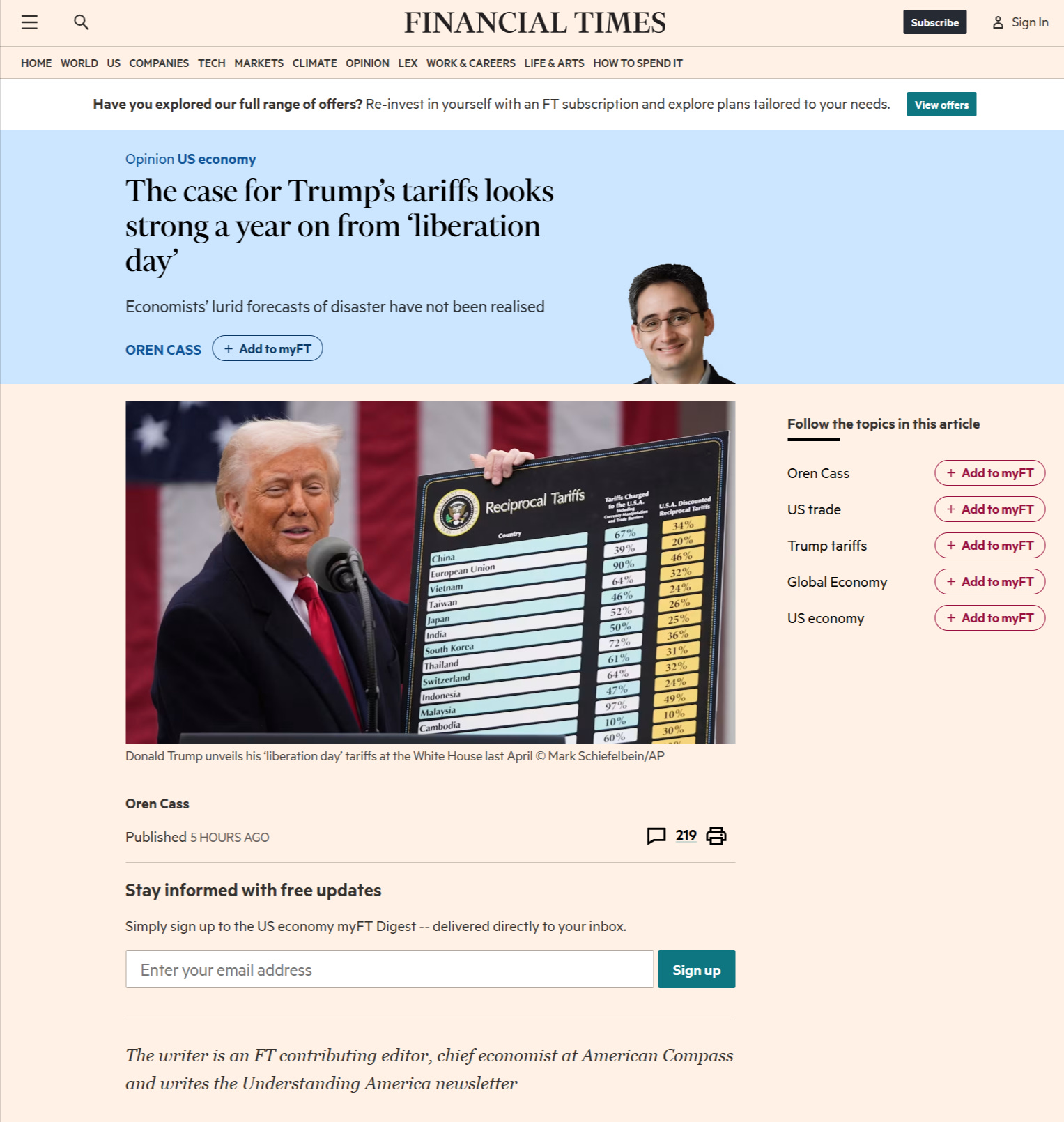
A year has passed since President Donald Trump appeared in the White House Rose Garden to announce sweeping tariffs on US imports. “Liberation day” marked a dramatic turning point for the international economic system and its seemingly inexorable march towards lower trade barriers and global integration. The results have been remarkable.
The past year has also proved as disruptive to the discipline of economics and the overconfidence of its most prominent practitioners as it has been to supply chains. The folly of tariffs was among their most deeply held beliefs, hard-coded into their models, proudly professed in every interview. Tariffs, they insisted, would lead to sharply higher inflation and much slower growth, a likely recession and millions of jobs lost. They would prompt retaliation and lead to appreciation of the dollar, crippling exporters and leading to further deindustrialisation.
But none of this happened. The dollar weakened. Countries came to the table rather than retaliating and reached agreements favourable to the US. Inflation slowed, logging an increase in the price level of 2.4 per cent over the past 12 months, as compared to 2.8 per cent for the previous year. Real GDP growth accelerated, up an annualised 2.9 per cent over the last three quarters of 2025, as compared to 2.5 per cent in 2024.
Tellingly, the response from doomsayers has not been to admit error, but rather to argue that they would have expected strong economic performance given the president’s many revisions to the tariff policy. The retroactive tolerance for robust protectionism underscores the extent to which the old orthodoxy has collapsed and the window for new thinking opened.
…….


Editor: if you need more:


 StephenKMackSD's Blog