Newspaper Reader.
Feb 20, 2026

Venezuelan democracy cannot be defended through military intervention
Maduro was committing crimes against humanity — but nothing about the US’s history in Latin America suggests deploying the military there is the right solution.
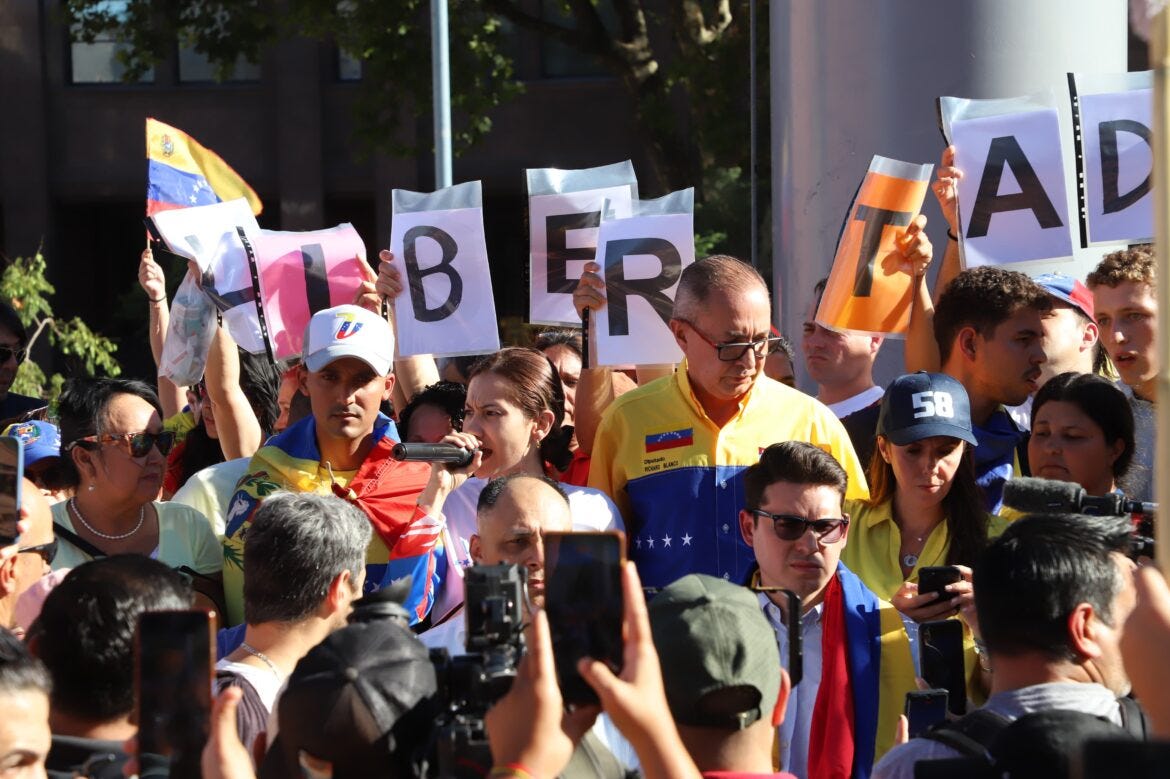

January 3, 2026
Buenos Aires Herald editorial (versión en español a continuación)
In the early hours of Saturday, January 3, 2026, the United States once again claimed to be “defending democracy” as it captured Nicolás Maduro in a military intervention in Venezuela.
Yet, this false premise is merely a way of sugarcoating the gravity of turning the armed forces into the gatekeepers of democracy in a foreign country.
Not only do these actions violate Venezuelan sovereignty, they also hark back to a long history of military coups in Latin America that have resulted in serious violence and human rights violations.
For at least a decade, the Maduro government itself has been committing atrocities that organizations including the United Nations have classified as crimes against humanity.
However, there is little reason to believe that the U.S. sending in its military and “running the country,” as President Trump said they will do, will bring the lasting peace and restoration of rights that Venezuela needs.
U.S. military intervention in Latin America has always spelled disaster. Perhaps its most egregious interference was the support it lent to a joint campaign of political repression launched in November 1975 called Operation Condor.
The initial phase saw the military intelligence services of Argentina, Bolivia, Chile, Paraguay, and Uruguay come together to coordinate the persecution of political activists opposed to the dictatorships of those countries regardless of borders.
Brazil, Ecuador, and Peru would later join, between 1976 and 1978. The operation entailed coordinated kidnappings, disappearances, and child appropriations all across the region. Many perpetrators of these crimes have been tried and convicted in Argentine courts.
Democracy can only be defended at the ballot box by guaranteeing citizens can freely decide who their leaders will be. The armed forces should never get involved.
As we stated in an editorial in August 2024, Venezuela has in recent years experienced such an acute humanitarian, economic and political crisis that around a quarter of the population has left the country. The disputed election results, the persecution of political opponents, and the dire economic crisis undoubtedly required a political solution.
The actions of the Maduro regime have caused a years-long humanitarian crisis in Venezuela, which has been worsened by U.S. sanctions that have hit the civilian population. International organizations and human rights activists have long denounced the government’s abuses and called for aid for the civilian population.
The solution to these serious problems, however, must be institutional, never military. Respect for international law must never be set aside, as it opens the door to further instances of mass human rights violations.
Trump said on Saturday in a press conference about the operation that his country will govern Venezuela to ensure an orderly transition.
He avoided giving details of how long this period would last, but did say that it would be linked to the reconstruction of the country’s oil infrastructure, which he claimed had been “stolen” from U.S. companies. Interference in Venezuela’s internal affairs seems to be the excuse for doing business with the backing of the US government.
Almost 50 years after the 1976 coup that brought the deadliest military dictatorship Argentina has ever experienced, institutions and rights defenders here have shown that the answer lies in the judiciary and respect for due process. Only by going this route can respectable political processes that protect people’s rights be built.
Newspaper Reader.


 StephenKMackSD's Blog