Political Observer provides a sample of Anderson’s 47 page evaluation, and a link to the full text!

Jun 03, 2025
Editor: The final paragraphs of Anderson’s revelatory text.
…
When writing in this vein, Tooze has certainly earned his place on the left of liberalism. But the compound is labile. Elsewhere in Crashed, he can write without demur of Obama’s failure to deliver ‘a concerted drive to unify American society around a sustained programme of investment-driven growth and comprehensive modernization’.footnote89 Unify American society—or, power against power—cleave it?
If there is no clear-cut resolution of these tensions in Crashed, it is in part because so much rhetorical emphasis falls on the technical complexity of the ‘giant “systems” and “machines” of financial engineering’, and the vital role of a pragmatic managerialism in keeping them running. Central banks, Tooze has insisted, far from being stoppers of democracy, have often been flywheels of progress. After all, without the good sense of the Bank of England and the Federal Reserve, could the Entente have won the First World War, or the Allies the Second? Without helpful counteractions by Carney and Draghi, could the fall-out of unfortunate developments like the victory of Brexit in one referendum, or the defeat of Renzi in another, have been contained? ‘It would be a grave theoretical error and missed practical opportunity if technocratic structures were held to be a diminution of politics’. They can enhance them. Think of the ‘astounding flair for the situation’—magic term!—of someone like Mario Draghi.footnote90
When he writes in this mode, rather than looking to possible avenues of democratic control over them, Tooze explains that ‘there are good reasons to defend technocratic government against the unreasoning passions of mass democracy. It is all too obvious today how important it is to be able to identify matters of potential technical agreement beyond politics.’ Sanity and lunacy so distributed, how can irrational masses be brought to accept rational decisions taken by the Bernankes and the Draghis? There, essential is that ‘coalitions be assembled for unpopular but essential actions’—not just as a conjunctural, but as a permanent necessity: ‘building such ad hoc and lopsided political coalitions is what the governance of capitalism under democratic conditions entails’.footnote91
Unpopular but essential actions: Tooze’s indictment of the eu brutalization of Greece is searing enough. But does he have anything to say about Tsipras’s shredding of a referendum to comply with it? Nothing. A silent sigh of relief can be deduced. For wasn’t such surrender the responsible course of action, as Stresemann showed? It is enough to recall Durand’s verdict in Fictitious Capital on the overall tale Tooze’s book tells to see the difference between the two writers: ‘Finance is a master blackmailer. Financial hegemony dresses up in the liberal trappings of the market, yet captures the old sovereignty of the state all the better to squeeze the body of society to feed its own profits.’ That note is missing in Crashed. There, blackmail—not called as such—is regrettable, but acceptable.
Ad hoc and lopsided coalitions: to date, the most specific illustration Tooze has offered comes in a recent piece on Germany, his European land of reference, in the lrb. In it, he argues for the creation of a Red–Red–Green alliance of the spd, Die Linke and the Greens, in place of the current Black–Red coalition of the cdu–csu–spd that has ruled the country since 2013, as previously from 2005 to 2009. Within the alternative bloc of his hopes, his preference plainly goes to the spd, hailed as ‘no ordinary political party’, but one that for 150 years, from the time of Bismarck to that of Merkel, has ‘stood for a vision of a better, more democratic and socially just Germany’—as if these were adjectives that could encompass the vote for war credits in 1914, the use of the Freikorps to dispatch Luxemburg and Liebknecht, the McCarthyism of the Radikalenerlass in the seventies, and the practice of renditions in this century: not the whole record, but an indelible part of it. Today, obstructing the prospect of a Red–Red–Green alliance is ‘Die Linke’s ingrained hostility to nato’.footnote92 The good sense of the spd’s Kaisertreu fealty to it goes without saying.
Such questions aside, what should be the programme of a future Red–Red–Green government? Formally speaking, Tooze’s article is a review of four recent books on Germany, to which he adds three others as he proceeds, though as often in the lrb reference to them is cursory, none accorded the dignity of an actual review. Much of the substance of the piece is devoted to the social consequences of Hartz iv, Schröder’s ‘tough new system of welfare and labour-market regulation’, imposed in 2005. Though he prefers a more to a less lenient view of its neoliberal agenda, and complains that the spd gets no credit for ‘earnest efforts to rebalance’ its consequences—a minimum-wage law has since belatedly ended a situation in which Germany was one of the last countries in Europe without onefootnote93—Tooze leaves no doubt that the condition of the country is far from ideal: inequality has soared, precarity has spread, and with it social and political unrest. To remedy such ills, what agenda of social repair does he outline for a Red–Red–Green coalition? Answer: Germany needs ‘a more pro-European government’, one capable of responding to the ‘bold vision of Europe’s future’ offered by a ‘charismatic’ Emmanuel Macronfootnote94—a leader famously capable of constructing a transverse, if lopsided coalition and taking unpopular, but essential decisions. Nothing else. ‘Europe can ill afford further delay’. That empty signifier is all.
It would be wrong to make too much of this. Tooze spreads himself widely, and his accents and formulations vary from place to place. That’s often the price of a growing reputation—la primadonna é mobile—and shouldn’t be taken too seriously. To criticisms of inconsistency, he can in any case reply quite reasonably that nothing he has written falls outside the parameters of a basic commitment to liberalism as it has developed in the West from the time of Wilson and Lloyd George to that of Geithner and Macron, and no one can accuse Crashed of lacking a social sensibility in keeping with this tradition. Yet in today’s world, the question can be asked: how far does that differ from running with the hare and hunting with the hounds—indignant sympathy for the hare, awed admiration for the hounds? ‘Power must be met with power’. Truly?
https://newleftreview.org/issues/ii119/articles/perry-anderson-situationism-a-l-envers
Editor: if in search of an historical/political analogy to describe the ‘Liberalism’ of Tooze, look to Americans for Democratic Action, and two of its founders Arthur Schlesinger and Reinhold Niebuhr:
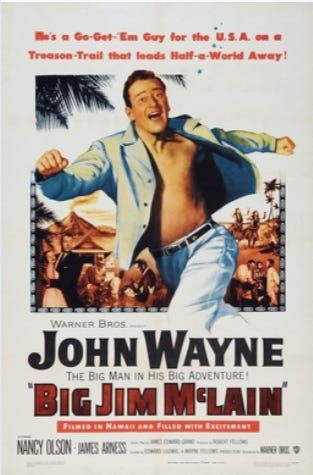
On the Political Toady Arthur Schlesinger see his journals, as collected and edited by his sons. The Sons have been a bit too honest, as to their fathers political enthusiams! Schlesinger pere, in some sections, makes noises like Joe McCarthy and his Fellow Travelers! In some ‘scenes’ in this collection, Schlesinger echoes that Hollywood Potboiler Big Jim McLain,1952.
On Reinhold Niebuhr
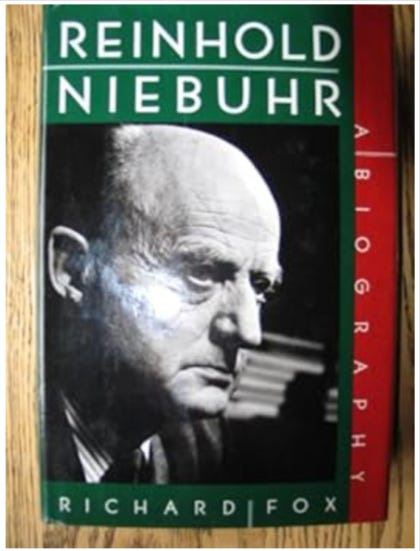
By Richard Wightman Fox
…
On The Theopolitics of Reinhold Niebuhr by Political Observer
Posted on May 24, 2012 by stephenkmacksd
I’ve just finished a Reinhold Niebuhr biography by Richard Fox published in 1985. That I find Mr. Niebuhr repugnant as person and Christian Moralist is a statement of my prejudice, without apology. I felt that I wanted to understand who the man was and where he came from. Those questions are answered in some detail in Mr. Fox’s biography, although Mr. Fox seems to be satisfied with hagiography rather that critical engagement with Mr. Niebuhr as theopolitician. Niebuhr appears to be a religious and political conformist swept along from Socialism to Cold War Liberalism: always a little too anxious to prove his patriotism, his Americaness. Niebuhr has become the object of a cult headed by President Obama, perhaps because of the tough minded moralizing represented by Christian Realism: which could be more accurately named Christian Imperialism. It has something in common with the Protestant Christian Politics of Woodrow Wilson, with an emphasis on the necessary use of violence, to reach political ends deemed important enough to warrant it. In the name of the greater political good, even as necessary to emancipate, if only temporarily, man from his natural sinful and irredeemable self-hood. This cliché of the Christian Tradition reeks of the self-hating Augustine, and his successors, who institutionalized the persistent, morally destructive Christian anti-humanism. Imperial Politics with a thin veneer of carefully cultivated piety is an American tradition. I would call Niebuhr hopelessly Middlebrow: more about the care and maintenance of bourgeois political respectability and the self-exculpatory, as key to ex post facto rationalizations identified as ‘Philosophy’ . I was impressed, and moved by one person’s character in Mr. Fox’s biography of Reinhold, and that was the love, devotion and steadfastness of his brother Richard. Engaging with the ‘Philosophy’ of Mr. Niebuhr using the valuable historical frame provided by Mr. Fox will enrich my further reading.
Political Observer


 StephenKMackSD's Blog