Political Observer shares the wealth?

May 09, 2025
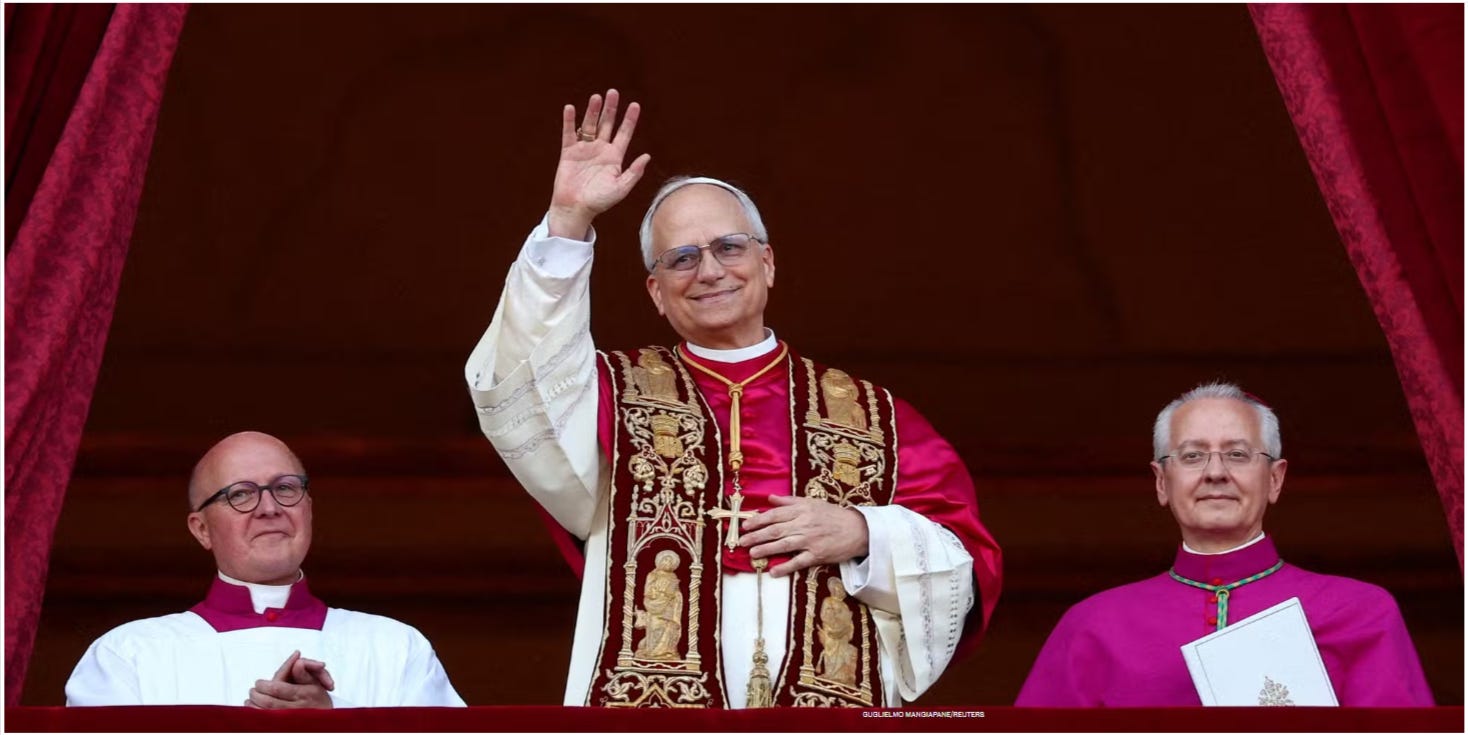
Leo XIV, a pope of balance and appeasement
By Benoît Vitkine, Sarah Belouezzane and Amanda Chaparro (Cuzco (Peru) correspondent)
Published today at 10:29 am (Paris), updated at 11:45 am
ProfileThe American Robert Francis Prevost’s affiliation with the mendicant order of the Augustinians, known for their commitment to tradition and charity, and his understanding of the Curia contribute to a reassuring image. Grounded in modernity and mindful of the marginalized, his pontificate promises ‘unity’ and collegiality.
When his name was announced, there was a murmur of confusion among the crowd gathered in Saint Peter’s Square, Rome. “Prevost? Who is he?” In the election for the Throne of St. Peter, observers saw him as a serious candidate due to his ability to unite and bring peace to the Church. However, to the general public, Robert Francis Prevost, the 267th pope of the Catholic Church and the first to come from the United States, is unknown.
When white smoke appeared from the chimney of the Sistine Chapel on Thursday, May 8, shortly after 6 pm, onlookers were still betting on the victory of Pietro Parolin, former second in command to Francis and the anticipated favorite for the papacy. “It will be him, Parolin, with the papal name Paul VII,” predicted two French priests. The speed with which the election was concluded – four rounds of voting, totaling 24 hours of conclave – seemed to support this hypothesis.
But it was Robert Prevost, from the Order of Saint Augustine, who was elected. He took the papal name Leo XIV. This choice places the new pontiff in the continuity of Leo XIII, the pope who forged the Church’s social doctrine, notably through the encyclical Rerum Novarum (“Of New Things”), published in 1891. In short, the promise of a pontificate rooted in modernity and concerned for the poor, the marginalized, the excluded – the “peripheries,” as Francis would have said, to whom Leo XIV paid a heartfelt tribute in his first speech.
…
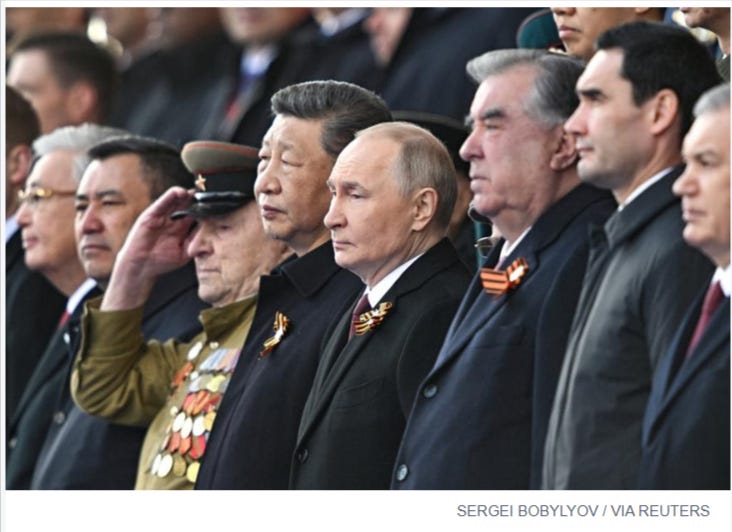
Sergey Parkhomenko, Russian journalist: ‘Vladimir Putin privatized the 1945 victory for his own benefit’
Interview by Isabelle Mandraud
Published today at 5:46 am (Paris), updated at 3:46 pm
7 min readLire en français
Interview: The Russian journalist, in an interview with Le Monde, analyzes the militaristic propaganda created by the Kremlin around the end of World War II, celebrated in Russia on May 9, which led to the invasion of Ukraine in 2022.
Sergey Parkhomenko, 61, founder of the Russian news magazine Itogi – created in 1996 in cooperation with the American weekly Newsweek – has not only had a rich career as a journalist He is also behind several civic initiatives, such as Dissernet, a platform that tracks plagiarism in Russian science, and Last Address, which places hundreds of commemorative plaques for victims of Stalinism on buildings in Moscow, Saint Petersburg and Yekaterinburg.
Close to the non-governmental organization Memorial, Parkhomenko has lived in exile since 2021, the year when the renowned human rights group, dedicated to the preservation of the memory of victims of Soviet power, was dissolved. Today, he leads the project Redkollegia (“editorial board”), funded by philanthropist businessman Boris Zimin, which rewards Russian journalists unaffiliated with the government for the quality of their work.
What do the 1945 victory commemorations represent in today’s Russia, currently involved in a war it initiated?
Since Vladimir Putin, the change has been dramatic. I remember that before, at my grandparents’ house, there was a set table and friends were invited, but it was above all a celebration of pain, of remembrance. And then, the celebrations of the Great Patriotic War [as World War II is called in Russia] became an instrument of militaristic propaganda, a celebration of aggression against everyone under the theme of “We can do it again.”
…
Political Observer.


 StephenKMackSD's Blog