Old Socialist asks a New York Times kind of question!

Nov 23, 2024
Jorden Peterson is the almost natural inheritor of the mantle of Allan Bloom! There is present in both thinkers/actors/politicians the scolding/shaming mentality of the Old Testament Prophet, tintured in The Abrahamic Tradition, that is an ever-present toxin, in Human History!
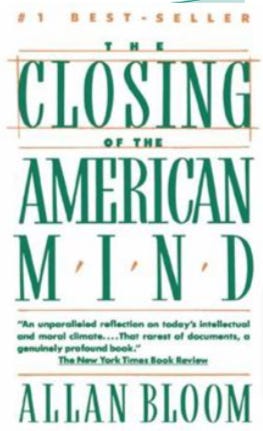
Peterson’s personal melodrama adds a certain luster to his turn tword GOD, but his turn tword Nietzsche is not just befudding, but expressive of his particular expression- his scatter-gun approach to the vexing questions facing ‘Humanity’ in the political present.
Editor: If you are interested in Nietzsche let me recommend Nietzsche: A Philosophical Biography Rüdiger Safranski, Shelley Frisch (Translator)
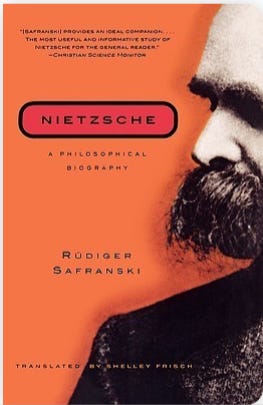
And
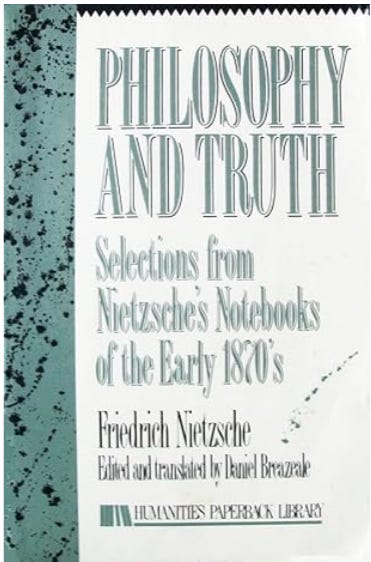
Borrow: https://archive.org/details/philosophytruths00niet/page/n235/mode/2up
Editor: On Heidegger & Nietzsche:
Political TheoryVol. 15, No. 3, Aug., 1987Review: Heidegger’s Nietzsche
Journal Article -Review: Heidegger’s Nietzsche
Reviewed Work: Nietzsche by Martin Heidegger, David Farrell Krell, Frank A. Capuzzi, Joan Stambaugh
Review by: Michael Allen Gillespie
Political Theory, Vol. 15, No. 3 (Aug., 1987), pp. 424-435 (12 pages)
Editor: Theodor Adorno and Nietzsche:
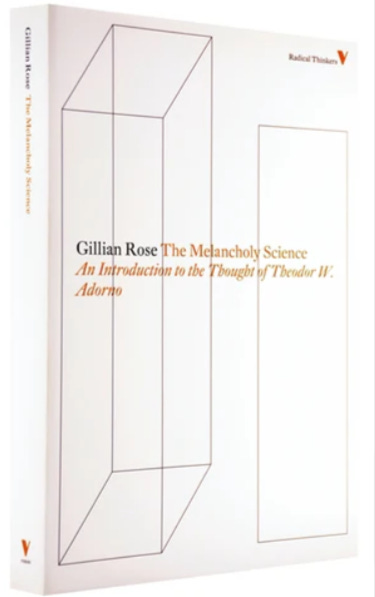
The Melancholy Science: An Introduction to the Thought of Theodor W. Adorno
by Gillian Rose
…
Adorno’s engagement with Nietzsche is evident throughout his work. He believed that he was confronted by the same paradox which beset Nietzsche, namely, how to present or ground a philosophy or point of view when the aim of that philosophy is to criticise reality or society altogether and thus the prevailing norms of philosophical or sociological discourse as well. Both writers, therefore, according to Adorno use ‘indirect methods’92 to express their criticism and to avoid grounding their philosophy in the ways which they deem undesirable. Adorno selfconsciously but unobtrusively weaves many of Nietzsche’s positions into his own thought, often by inverting them as a way of appropriating them. For example, Adorno’s pronouncement that ‘Life does riot live’ (Das Leben lebt nicht),93 which introduces the first part of Minima Moralia, is an inversion of the message which runs through Nietzsche’s philosophy – the commandment to ‘live life’. These connections between Nietzsche and Adorno inform all of the latter’s œuvre, but they are most explicit in Minima Moralia.
Like Nietzsche, Adorno’s work is inimitable and idiosyncratic and his convictions are often arrogantly stated in a way which contrasts strangely with the modest attempt to present a philosophy which is ungrounded and ungroundable. Yet both Nietzsche and Adorno undercut and contradict even their most sacred assertions and provide instructions for interpreting their strongly-voiced claims. The works of both must be read from a methodological point of view and not literally. In both cases too, their work was designed to resist popularisation, but in effect encouraged it. They tried, in very different ways, to make their style esoteric in order to defy the norms which they opposed, and they wrote in essays or in fragments to avoid the appearance and presuppositions of the traditional philosophical system. Yet fragments and aphorisms are easily detachable and equally easily misunderstood, since their significance can only be appreciated on the basis of an understanding of the whole of which they are the fragments – hence the paradoxes that such idiosyncratic and radical thinkers can be so widely and quickly assimilated but so often misunderstood. Nietzsche wrote for the most part a lapidary, brilliant German which was often deceptively clear, while Adorno’s German ranges from the poetic to the obtuse. Both men, nevertheless, fired the imagination of the younger generation, and had a strong effect on the work of their respective epigoni.
Adorno shared Nietzsche’s programme of a ‘transvaluation of all values’.94 ‘Morality’, ‘values’ and ‘norms’ do not imply a moral dimension distinct from other dimensions but characterise the construction and imposition of ‘reality’. Nietzsche, according to Adorno, refused ‘complicity with the world’95 which, where Adorno is concerned, comes to mean rejecting the prevalent norms and values of society on the grounds that they have come to legitimise a society that in no way corresponds to them – they have become ‘lies’.96 Adorno shared Nietzsche’s epistemological aim to demonstrate that the apparent fixity of the world or values arises from the systematic debasement of dynamic aspects of reality in our thinking and philosophy. Like Nietzsche, Adorno was a moralist, concerned toAdorno’s engagement with Nietzsche is evident throughout his work. He believed that he was confronted by the same paradox which beset Nietzsche, namely, how to present or ground a philosophy or point of view when the aim of that philosophy is to criticise reality or society altogether and thus the prevailing norms of philosophical or sociological discourse as well. Both writers, therefore, according to Adorno use ‘indirect methods’92 to express their criticism and to avoid grounding their philosophy in the ways which they deem undesirable. Adorno selfconsciously but unobtrusively weaves many of Nietzsche’s positions into his own thought, often by inverting them as a way of appropriating them. For example, Adorno’s pronouncement that ‘Life does riot live’ (Das Leben lebt nicht),93 which introduces the first part of Minima Moralia, is an inversion of the message which runs through Nietzsche’s philosophy – the commandment to ‘live life’. These connections between Nietzsche and Adorno inform all of the latter’s œuvre, but they are most explicit in Minima Moralia.
…
Editor: The Reader just might wonder what the chaos is that Petersons enveighs against? The Internet Archive offers a copy of his book:
Editor: Perhaps the answer to his vexing question is that this Chaos, is the expression of the inner life of Jordan Peterson, to engage in a bit of worn out Pop Psychololgy: recall the long gone time of I’m OK Your OK ! Allied with the Melodrama that is the Peterson Saga, that resembles that long forgotten Hollywood Vomit, as Raymond Chandler dubbed those movies, and the their cadre of synchophants, called reporters: Hedda and Louella needed a Dominick Dunne and a Canadian Fronteersman to give hysteria mongering a kind of legitimacy?
Old Socialist,


 StephenKMackSD's Blog