What is the Magic of Freud that sends his apologists, explicators, defenders and even his cadre of worshipers, to such dross? Here is George Prochnik in the TLS:
The first time Sigmund Freud wrote of destroying his papers he was twenty-one years old. He was writing to Eduard Silberstein, an intimate friend of his youth and the sole other member of the Academia Castellana, a make-believe Spanish literary society anchored in Cervantes trivia, which served them as a secret forum for airing playful fantasies and precocious world-weariness. Freud invited Silberstein to help expunge the record of their relations by conjuring up a pleasant winter evening in which they could come together to burn their archives “in a solemn auto-da-fé”. The next occasion was eight years later, in a letter to his then fiancée Martha Bernays, during what he described as a “bad, barren month”, waiting for money from a chemist to finance further research into cocaine, doing almost nothing except browsing through Russian history and toying with two rabbits who continually nibbled turnips and messed up his floor. His only real accomplishment, he told Martha then, was to have nearly completed his intention of doing something that would dismay various unborn, unfortunate people – namely his future biographers. He’d destroyed all his notes from the past fourteen years, along with correspondence and the original manuscripts of his scientific papers. In 1907, he once again burned a huge trove of private documents. Finally, in 1938, just before escaping Nazified Vienna, he delegated to his daughter Anna the task of overseeing another bonfire of his letters, which she undertook together with his disciple Marie Bonaparte.
The Reader is put directly within the early Freudian milieu, as recreated in Prochnik’s vivid evocation, across a lifetime? It’s like a bad movie, or a thriller, though not like Graham Greens ‘entertainments’, or even like Eric Ambler’s beautifully realized novels!
But Prochnik can’t quite emancipated himself from his status of acolyte/apologist, in a minor key, tending to the imperative of the care and the maintenance, of his would be Historical Sketch, as a kind of apologetic? Think of each paragraph as a entry in a loose-leaf notebook.
Freud has often been approached by biographers not only as a subject whose life merits fresh exposition owing to evolving perspectives on psychoanalysis, but also as someone who masked and elided key parts of his story. His distaste for the very premiss of the biographical project is on record. When his friend the novelist Arnold Zweig told Freud that he wanted to write his life story, Freud retorted that he felt far too affectionately toward Zweig to permit such a misstep. “Anyone who writes a biography is committed to lies, concealments, hypocrisy, flattery and even to hiding his own lack of understanding, for biographical truth does not exist, and if it did we could not use it.” Topping off the critique he announced, “Truth is unobtainable, mankind does not deserve it, and in any case is not our Prince Hamlet right when he asks who would escape whipping were he used after his desert”. In light of all Freud’s suppressive tactics and declarations, it seems fair to wonder what he was trying to keep under wraps.
In the last sentence Prochnik wonders of Freud’s motives. He offers this :
Freud’s standard biographers have typically fallen into two categories: those who believe his obfuscations are meant to cover up the fraudulence of his entire undertaking, and those who view Freud’s cloaked actions and emotions as either irrelevant or misunderstood features of his transcendent genius. Into this vexed arena comes Mortal Secrets, an accessible, fluent introduction to Freud’s life and work by the clinical psychologist and prolific author Frank Tallis. Tallis’s book moves crisply between biographical scenes, snapshots of Vienna’s golden age, retellings of Freud’s significant case histories, and well-crafted summaries of Freud’s principal theories. Interspersed throughout are brief discursions into Freud’s relevance to contemporary psychologists and neurologists, along with efforts to show how Freud’s ideas continue to reverberate through popular culture
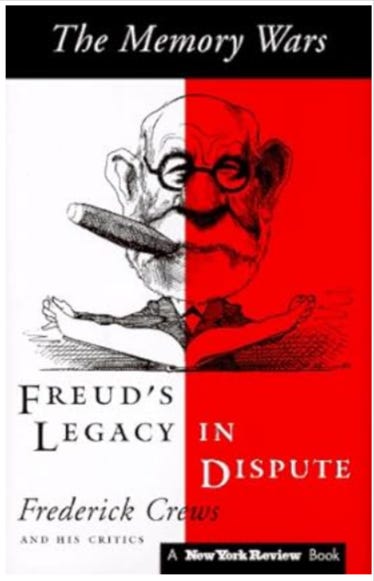
But just rhetorical moments away lurks… I’ll place in italics the various attacks on the ‘Science of Psychoanalysis’ because Freud was its ‘inventor/practitioner’ over time. Yet a regular reader of its current partitioners, notices that they have completely eliminated that arcane Freudian vocabulary. ‘Freud bashers”, like Frederick Crews’ Crews laid waste to the cult of Freud in the pages of the New York Review Of Books.
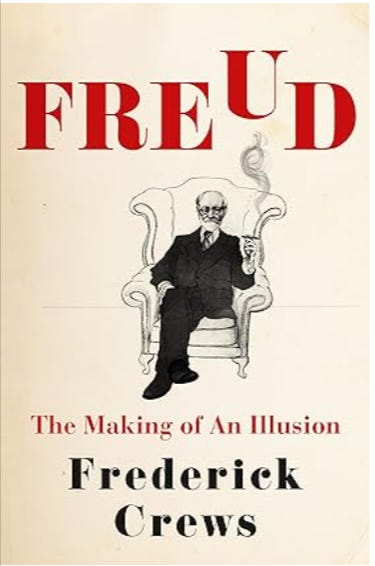
And in his Freud biography
George Prochnik next paragraph features more … I’ll put in italics this collection with the comparison of Freud with Isaac Newton. In sum for Prochnik there is an enlightened position on Freud, balanced by a collection of acolytes, hero’s and scoundrels!
In contrast to both the “Freud bashers”, like Frederick Crews, and the dwindling tribe of dazzled, truculent hagiographers, Tallis aims for an even-handed portrait of his subject, and in large measure succeeds. The heat of the attacks on Freud’s legacy has cooled with the fading of his iconic status and the sheer passage of time. Tallis is thus able to acknowledge the justice of many specific critiques of Freud’s record – especially with respect to his problematic treatment of particular patients – without needing to suggest that these failures require us to jettison the entire Freudian project. “Dismissing Freud because of his shortcomings is like dismissing Sir Isaac Newton because he was a disagreeable misanthrope whose personal papers reveal a gullible fascination with alchemy and esotericism”, Tallis writes. Newton may not be the optimal analogue, since the scientific legitimacy of his core project is almost universally accepted, whereas the stature of psychoanalysis as an empirically verifiable scientific endeavour has been continually contested, but the general message is clear: when it comes to Freud’s contributions, our gains dramatically outweigh the deficiencies.
Reader there are 2377 more words: I offer this synopsis:
Editor: On ‘The Psychopathology of Everyday Life’ : 113 words.
Editor: On the utterly preposterous the Oedipus complex: 504 words
Editor : On ‘Civilization and Its Discontents’ : 34 words
Editor: On The Interpretation of Dreams’ : 363 words
Editor : Autobiographical Study: 178 words
The Reader confronts more of George Prochnik unimpressive attempt, at the marriage of Literary Pretention, and the moldering remains of Psychoanalyses!
Throughout his life, Freud famously suffered from acute anxiety about growing old and infirm, even going so far as to suggest that after the age of fifty psychoanalysis might no longer work since by then “the elasticity of the mental processes, on which treatment depends, is as a rule lacking”. Was that the secret he most longed to bury? Not some sensational personal escapade like the rumoured affair with his sister-in-law Minna, nor a shocking misrepresentation of a patient’s biography, but the skull hidden behind the defiant countenance in his photographs? This would mark the point at which what Freud describes as the psychologically determinative “instinct for knowledge” breaks down.
Whatever else, it appears that along with his Oedipal situation, Freud had a colossal Sphinx complex, and this remains unresolved.
Rootless cosmopolitan,down at heels intellectual;would be writer.
'Polemic is a discourse of conflict, whose effect depends on a delicate balance between the requirements of truth and the enticements of anger, the duty to argue and the zest to inflame. Its rhetoric allows, even enforces, a certain figurative licence. Like epitaphs in Johnson’s adage, it is not under oath.'
https://www.lrb.co.uk/v15/n20/perry-anderson/diary


 StephenKMackSD's Blog