As a regular reader of The Financial Times’ ‘Ganesh Chatter’ is always worthy of my attention, not to say of my political contempt, for his pretentious imitation of a boulevardier/raconteur. He resembles the Goncourt Brothers in a highly idiosyncratic, hybrid interpretation/political iteration.
On the question of hybridity see
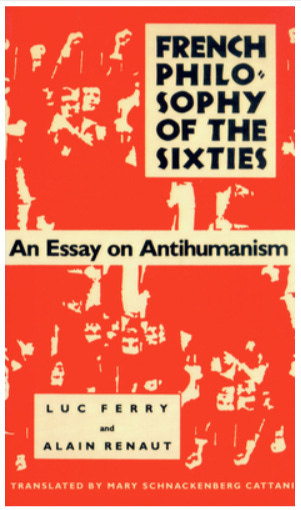
Reader look what I found in my internet search, that may not be completely relevant to ‘Ganesh Chatter’ but don’t miss r/badhistoryreveltory comments on Jordan Peterson & French Philosophy here:
Jordan Peterson butchers French intellectual history of the 1960s: “the most reprehensible coterie of public intellectuals that any country has ever managed”
What happened to French intellectualism in the 1960s? Where did “identity politics” come from? What’s the connection to Marxism? And how do they differ in France and North America? If you’re interested in remaining confused yet angry about all of these questions, and vilifying a shape-shifting cast of (neo)marxists, postmodernists, radicals, and sundry scapegoats, allow me to introduce you to the narratives of Jordan B. Peterson, armchair intellectual historian of the transatlantic journey of French ideas to North American academia:
What happened in the late 1960s, as far as I can tell—this happened mostly in France, which has probably produced the most reprehensible coterie of public intellectuals that any country has ever managed—is that in the late 1960s when all the student activists had decided that the Marxist revolution wasn’t going to occur in the western world and finally had also realized that apologizing for the Soviet system was just not going to fly anymore given the tens of millions of bodies that had stacked up, they performed what I would call a philosophical sleight of hand and transformed the class war into an identity politics war. And that became extraordinarily popular mostly transmitted through people like Jacques Derrida, who became an absolute darling of the Yale English department and had his pernicious doctrines spread throughout north America partly as a consequence of his invasion of Yale. And what happened with the postmodernists is that they kept on peddling their murderous breed of political doctrine under a new guise. [Harvard talk]
He inhabits a world before David Ricardo, if not before Adam Smith, in which wealth is understood as a cake that nations compete for a cut of. More for thee means less for me.
…
(If Vladimir Putin had collective defence arrangements on another continent, the alt-right would hail it as “strategic depth”, not knock it as a burden.)
…
In other words, when Trump grumbles about “delinquent” allies, he doesn’t mean something wider or deeper or grander. It isn’t contempt for the west or admiration for predatory dictators talking.
…
The challenge for big thinkers in the Trump age is to accept that here is someone immersed in the bathos of accounts and invoices.
…
In 2018, he settled for a revised version of the North American Free Trade Agreement — achieving some demands, letting others go — instead of quitting it outright.
…
His amour propre is double-edged, spurring him to start quarrels but also to settle them on whatever terms he can spin as his own. It is hard to know which offends him more, in fact: being the mug in a deal, or being considered impotent to amend it.
…
The more practical one is how to stop him leaving or underfunding Nato in the meantime, or undermining it with his rhetoric. The answer is to take him at his word, and address the cash question. It isn’t code for something else.
…
but his followers and his enemies alike put a philosophical weight on him — as savior of Christendom, or 1930s fascist — that he doesn’t bear. His concerns aren’t at that level of abstraction.
…
Trained in ideas, the political class sees in grand terms — “authoritarian” this, “isolationist” that — a man who is, at bottom, a miser. The ultimate rule of negotiating with Trump is that no one will be worse at it than an intellectual.
Rootless cosmopolitan,down at heels intellectual;would be writer.
'Polemic is a discourse of conflict, whose effect depends on a delicate balance between the requirements of truth and the enticements of anger, the duty to argue and the zest to inflame. Its rhetoric allows, even enforces, a certain figurative licence. Like epitaphs in Johnson’s adage, it is not under oath.'
https://www.lrb.co.uk/v15/n20/perry-anderson/diary


 StephenKMackSD's Blog